TL;DR:
- Mallorca’s strict zoning and UNESCO protections ensure limited supply and sustained price growth.
- No restrictions prevent Americans from purchasing property in Mallorca, but legal and tax obligations apply.
- The island offers high safety and stable investment conditions, emphasizing long-term asset quality and licensing.
Mallorca’s luxury real estate market posted a 9.8% price increase in 2026, a number that stops most skeptical American investors mid-sentence. The default assumption is that buying property abroad means accepting murky legal systems, currency chaos, and limited recourse if things go wrong. Mallorca breaks that pattern. Between Spain’s transparent property laws, the island’s strict land-use controls, and a luxury demand base that keeps growing, this market offers a combination of capital protection and appreciation potential that rivals anything in the continental US. This guide walks you through market safety, legal clarity, personal security, and realistic ROI so you can make a fully informed decision.
Key Takeaways
| Point | Details |
|---|---|
| Legal security for Americans | US buyers face no ownership restrictions and have strong property rights in Mallorca. |
| Market resilience | Strict building limits and high demand ensure luxury real estate value remains robust even in downturns. |
| Safety standards | Mallorca offers high personal and property safety compared to many US or EU destinations. |
| ROI with smart strategy | Long-term holding of licensed, prime properties yields solid returns despite upfront costs. |
| Expert guidance matters | Local advisors help navigate legal, tax, and licensing nuances for a truly safe investment. |
What makes Mallorca’s real estate market uniquely safe?
Most luxury markets grow until supply catches up and prices flatten. Mallorca can’t follow that script. The island’s strict zoning and UNESCO protections permanently limit new construction across large swaths of the island, particularly in the Serra de Tramuntana mountain range. That constraint is structural, not political. It won’t be reversed by a change in government. When supply is capped and demand keeps climbing, prices have one direction to move.
Compare Mallorca to other top-tier luxury markets and the picture becomes even clearer.
| Market | 2026 price growth | Supply constraint | Foreign buyer protection | Regulatory clarity |
|---|---|---|---|---|
| Mallorca | 9.8% | Very high (UNESCO, zoning) | Strong (EU legal framework) | High |
| Monaco | 2-4% | Extreme (geography) | Strong | High |
| Miami | 3-5% | Moderate | Strong | High |
| French Riviera | 4-6% | High (coastal limits) | Strong | Moderate |
Mallorca’s growth rate stands out, especially given that it is achieved within a framework of tight regulation rather than in spite of it. Explore current Mallorca market trends to see how individual submarkets are performing.
Several structural factors reinforce this stability:
- Tourism infrastructure: Mallorca receives over 13 million visitors annually, sustaining consistent rental demand across all seasons.
- International buyer base: Buyers from Germany, the UK, Scandinavia, and increasingly the US provide demand diversity that insulates the market from single-economy shocks.
- Political environment: Spain’s EU membership means property rights are governed by a mature legal system with clear recourse mechanisms.
- Infrastructure investment: Ongoing upgrades to Palma’s airport, road networks, and healthcare facilities support long-term residential appeal.
“The same constraints that frustrate developers are exactly what protect your investment. Scarcity is the oldest form of asset protection.”
For a deeper look at where the strongest returns are concentrated, the southwest Mallorca insights break down the island’s most coveted micro-markets.
How secure is property ownership for Americans?
Spain imposes no foreign ownership restrictions on Americans buying real estate. The purchase process is well-established, legally transparent, and has been navigated successfully by thousands of US buyers. That said, Americans carry additional compliance obligations on both sides of the Atlantic that you need to plan for before you wire any funds.
Here is how the purchase process works for US citizens:
- Obtain a NIE number (Número de Identificación de Extranjero). This is Spain’s foreigner tax ID and is required for any property transaction.
- Open a Spanish bank account to handle the transaction and ongoing expenses like utilities and property taxes.
- Engage a local independent lawyer to review the title, confirm zoning status, check for outstanding debts on the property, and verify any rental license status.
- Sign the Contrato de Arras (reservation contract) and pay a deposit, typically 10% of the purchase price.
- Complete due diligence over a 4-8 week period, then sign the final deed (Escritura Pública) before a Spanish notary.
- Register the property with the Land Registry and pay applicable taxes, which typically total 10-13% of the purchase price in the Balearics.
On the US compliance side, owning a Spanish bank account and property creates reporting obligations. You must file an FBAR (FinCEN 114) if your foreign accounts exceed $10,000 at any point during the year, and FATCA reporting applies to foreign financial assets above certain thresholds. Spanish non-resident rental income is taxed at a flat 24% rate, though the US-Spain tax treaty prevents double taxation on most income categories. Review the full American buyer guidelines before you begin, and use the Mallorca buying checklist to track every step.
One important update for 2026: Spain’s Golden Visa program, which previously offered residency in exchange for a €500,000 property investment, ended in April 2025. Buying property no longer provides a path to Spanish residency. If residency is part of your plan, you will need to explore alternative visa routes separately.
Pro Tip: Always hire a local lawyer who is independent of the selling agent. They will check title history, outstanding community fees, pending planning violations, and license status. This single step prevents the majority of costly surprises. See the full Mallorca property laws guide for what to look for.
Personal safety and property security: Mallorca on the ground
Numbers matter here. Mallorca scores 80.87 out of 100 for overall safety, placing it well above most major European and American cities. Violent crime is genuinely rare. The island’s social fabric, strong community ties, and active local policing create an environment where residents and property owners feel secure year-round.
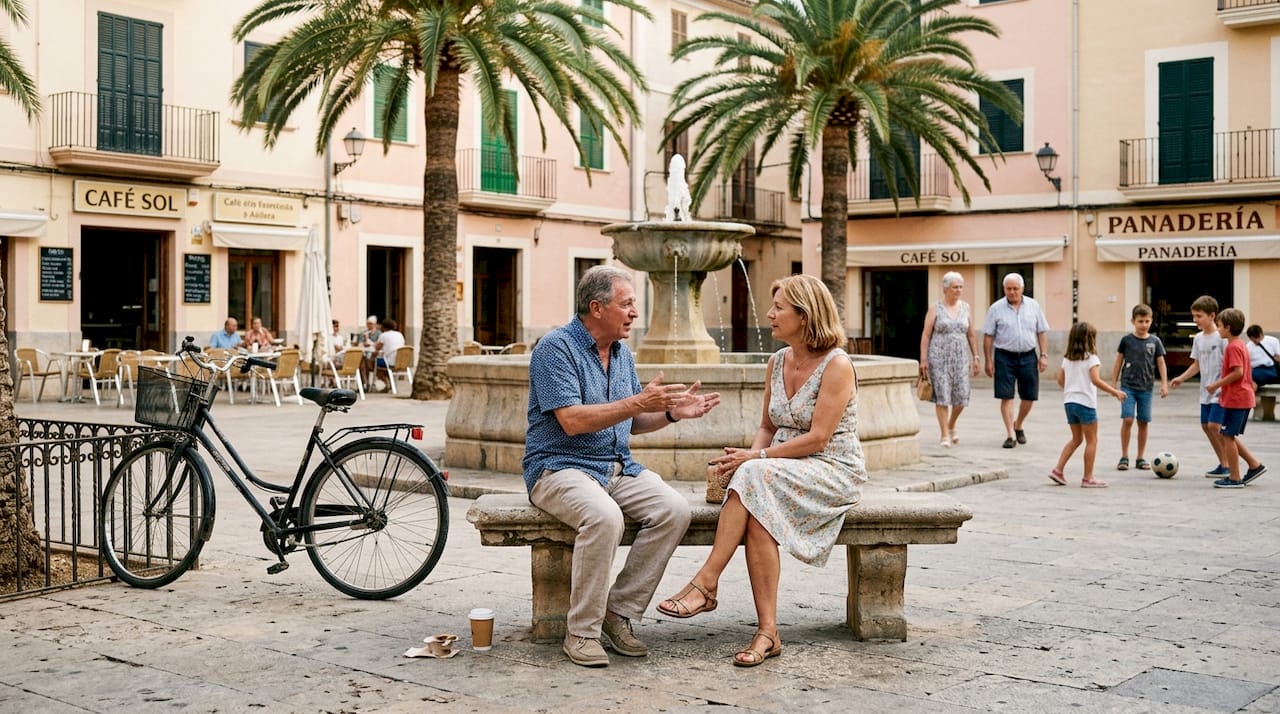
The honest caveat is petty crime. Balearic petty crime rose 4.4 to 7% between 2024 and 2025, concentrated in high-traffic tourist zones like Palma’s old town, the Playa de Palma strip, and popular beach areas in summer. For luxury property owners in residential areas, this uptick has minimal practical impact.
| Safety metric | Mallorca | New York City | London | Barcelona |
|---|---|---|---|---|
| Overall safety score | 80.87/100 | ~51/100 | ~60/100 | ~58/100 |
| Violent crime level | Very low | Moderate | Low-moderate | Low-moderate |
| Petty crime risk | Low-moderate | Moderate-high | Moderate | Moderate-high |
| Property crime trend | Slight increase | Stable | Stable | Slight increase |
“Mallorca’s safety profile is one of its most underrated selling points. Buyers focus on price and returns, but living or renting in a genuinely secure environment has real financial value too.”
For property owners who are not on the island full-time, these practical steps significantly reduce risk:
- Use a licensed property management company with verifiable references and a track record with international owners.
- Install monitored security systems, which are now standard in high-end Mallorca properties and often required by insurance providers.
- Secure comprehensive landlord insurance that covers both structural damage and liability for rental guests.
- Vet rental guests carefully through established platforms with verified ID and payment protection.
- Join the local community of owners in your area; neighbors are often the best early warning system for anything unusual.
For a full picture of what life and ownership look like on the ground, the Mallorca safety and perks overview covers both the lifestyle and practical ownership advantages.
ROI potential and emerging risks to watch
Mallorca’s luxury segment has delivered consistent appreciation over the past decade, with the 2026 growth rate of 9.8% representing one of the strongest performances in recent years. For long-term holders, the combination of capital gains and rental income creates a compelling total return picture.
But the risks are real and worth naming clearly. Rental license scarcity and tourism regulations significantly affect short-term rental income potential, and high transaction costs make a 5 to 10 year holding period the sensible baseline. The Balearic government has actively capped tourist licenses in many zones, meaning a property without an existing license may never qualify for short-term rental use.
For USD-based investors, currency fluctuation adds another layer. A strengthening dollar reduces the euro value of your rental income when converted back. This is manageable with proper planning but should be factored into your return projections from day one.
Strategies that consistently outperform in this market:
- Buy fully licensed properties: Existing rental licenses are increasingly valuable and nearly impossible to obtain in many areas. A licensed property commands a premium on purchase but delivers far superior ROI.
- Focus on prime locations: Palma, the southwest coast (Andratx, Port d’Andratx, Portals Nous), and the north (Pollença, Alcúdia) hold value better and attract higher-quality tenants.
- Hold for the long term: US investors benefit from the US-Spain tax treaty and from capital gains treatment that rewards patience over short-term flipping.
- Prioritize asset quality: A well-built, architecturally distinctive property in a prime location will always outperform a bargain buy in a secondary area.
Pro Tip: Walk away from any project where the developer cannot provide confirmed rental license documentation. In Mallorca, a promised license that hasn’t been granted yet is not a license. Check the ROI in Mallorca forecast to benchmark realistic return expectations before you commit.
The real story: What most guides miss about ‘safe’ investment in Mallorca
Most investment guides treat safety as a checklist: stable government, clear title, low crime. Mallorca ticks all those boxes. But after working with American buyers in this market, we have learned that the real safety story is more nuanced.
The investors who get burned are rarely victims of fraud or market collapse. They are buyers who rushed the process, skipped the independent legal review, or bought a property with an unresolved license situation because the price looked attractive. The same regulatory environment that protects your asset long-term is also the environment that will penalize shortcuts.
Short-term data can mislead. A 9.8% growth year is exciting, but what actually protects your capital is the structural supply constraint that will still be there in 15 years. Focus on that, not the headline number. And do not underestimate the paperwork. FBAR filings, Spanish tax returns for non-residents, community fee obligations, and license renewals all require consistent attention. Understanding the closing process pitfalls before you sign anything is worth more than any market report.
The contrarian truth: Mallorca’s complexity is a feature, not a bug. Markets that are easy to enter are easy to flood with supply. The friction here is what keeps the investment grade high.
Start your safe Mallorca property journey with trusted expertise
Navigating Mallorca’s luxury market as an American buyer requires more than a property search. It requires someone who understands both the local legal landscape and the specific compliance obligations that come with being a US citizen investing abroad. That is exactly what ULI & LISA provide.
As independent buyer agents, we represent your interests exclusively, with no ties to any developer or listing agency. Our AI-powered search tools give you access to the full Mallorca market, and our on-the-ground expertise helps you avoid the pitfalls that catch first-time international buyers off guard. Explore our Mallorca real estate services, learn more about safe investment guidance tailored to American buyers, or connect directly with the ULI & LISA buyer agents team to start a conversation.
Frequently asked questions
Can Americans buy and own property in Mallorca without restrictions?
Yes, Americans can freely buy and own real estate in Mallorca with no ownership restrictions, though US and Spanish tax reporting obligations apply to all buyers.
Is Mallorca safe compared to other European investment destinations?
Mallorca scores 80.87 out of 100 for overall safety, placing it significantly above most major European cities and well above comparable US urban markets.
What are the main risks when investing in Mallorca real estate?
Key risks include rental license scarcity, high transaction costs that favor long-term holding, USD to euro currency fluctuation, and the end of the Golden Visa program in April 2025, which removed the residency pathway via property investment.
How does ROI in Mallorca luxury real estate compare to the US?
Mallorca delivered a 9.8% price increase in 2026, but higher upfront costs and regulatory controls mean the strongest total returns come from holding fully licensed, prime-location assets for five years or more.
Recommended
- Reasons to Invest in Mallorca: Luxury Returns and Security - ULI & LISA Mallorca Property Blog
- Mallorca Luxury Homes: Investment and Lifestyle Perks - ULI & LISA Mallorca Property Blog
- Reasons to Invest in Mallorca: Luxury and Value Unveiled - ULI & LISA Mallorca Property Blog
- Understanding Mallorca Luxury Real Estate Explained - ULI & LISA Mallorca Property Blog