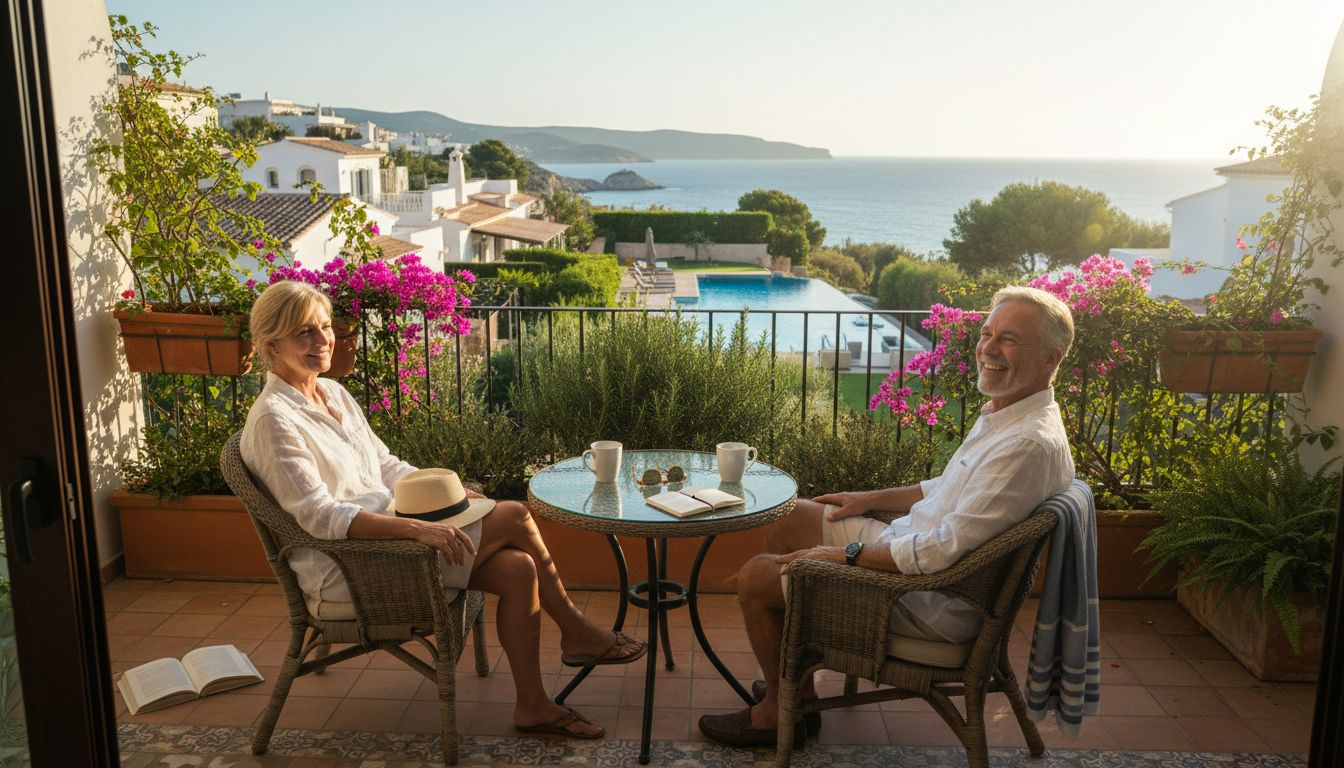
Over the past year, Mallorca real estate has surged with a remarkable 10.5 percent annual price growth, making this Mediterranean hotspot impossible for the American investor to ignore. With international buyers driving almost a fifth of property sales in Spain, the American appetite for luxury homes, historic villas, and strong rental yields continues to rise. If you are curious about what sets Mallorca apart from other European destinations, this guide unpacks the unique opportunities, processes, and ongoing costs American buyers need to know before investing.
Key Takeaways
| Point | Details |
|---|---|
| Investment Opportunities | Mallorca’s property market shows significant growth potential, with prices appreciating by 10.5% annually, attracting international buyers, particularly Americans. |
| Diverse Property Types | American investors can choose from a variety of properties, including seafront villas and restored fincas, each tailored to different lifestyle preferences and investment goals. |
| Understanding the Buying Process | The Spanish property buying process requires different legal protocols and documentation, necessitating the involvement of a bilingual lawyer to navigate complexities. |
| Tax and Financial Considerations | Non-resident property owners must be aware of unique tax obligations, including a 24% income tax on theoretical rental income, which differs from U.S. tax structures. |
Mallorca Property Market for Americans Explained
The Mallorca property market represents a unique opportunity for American investors, with significant annual price growth of 10.5% making it one of Spain’s most attractive real estate destinations. Unlike other European markets, Mallorca offers a combination of luxury properties, stable appreciation, and lifestyle appeal that continues to draw international buyers, especially Americans seeking Mediterranean investments.
International buyers currently comprise approximately 20% of property sales in Spain, with Americans emerging as a particularly dynamic segment. Factors driving this trend include favorable dollar-euro exchange rates, relatively affordable living costs compared to other Western European destinations, and Mallorca’s reputation as a premium vacation and investment locale. The island’s real estate market features diverse property types, from historic fincas in traditional stone to modern seafront villas, catering to different investment strategies and lifestyle preferences.
Recent market data indicates national property prices averaging around 82,000 per square meter, though Mallorca’s premium locations can command significantly higher rates. The market is characterized by steady appreciation, robust rental potential, and strong demand from high-net-worth international buyers. Americans specifically are attracted to Mallorca’s combination of tax advantages, lifestyle quality, and potential for both personal use and investment income.
Pro Tip: Research Local Market Variations: Not all Mallorca properties appreciate equally. Focus your search on established regions like Port d’Andratx, Santa Ponsa, and Son Vida, where property values tend to be most stable and offer the highest potential returns.
Types of Properties Popular With US Buyers
Mallorca offers American buyers a diverse range of property types, from traditional fincas to modern seafront villas. Each property category presents unique advantages for US investors seeking Mediterranean real estate, with options ranging from historic countryside estates to contemporary urban apartments. Understanding these property types is crucial for making an informed investment decision that aligns with lifestyle preferences and financial goals.
The most popular property types among US buyers in Mallorca typically include:
- Seafront Villas: Luxurious properties with panoramic Mediterranean views
- Restored Fincas: Traditional Spanish country houses offering historical charm
- Modern Apartments: Turnkey properties in prime urban locations like Palma
- Townhouses: Compact properties in historic neighborhoods with classic architectural features
- New Construction: Contemporary homes with advanced amenities and energy-efficient designs
Each property type offers distinct advantages for American buyers. Seafront villas provide maximum privacy and potential rental income, while restored fincas appeal to those seeking authentic Spanish architectural heritage. Modern apartments attract professionals looking for low-maintenance urban living, and townhouses offer a balance between traditional charm and convenient location. New construction properties represent an opportunity for buyers seeking cutting-edge design and minimal renovation requirements.
Pro Tip: Location Research Strategy: Before committing to a specific property type, spend at least two weeks exploring different Mallorca neighborhoods to understand micro-market variations and identify areas that best match your lifestyle and investment objectives.
Differences in Spanish and US Buying Process
The Spanish property buying process differs significantly from the typical American real estate transaction, presenting unique challenges and opportunities for US buyers. In Spain, the purchase typically begins with a reservation contract that requires a 10% deposit, a stark contrast to the earnest money practices common in US markets. This initial step legally binds both parties and establishes a framework that protects both the buyer and seller’s interests in ways that differ from standard American real estate protocols.
Key differences between Spanish and US buying processes include:
- Deposit Structure: Spanish contracts require larger upfront deposits
- Legal Documentation: More complex notarial involvement in Spain
- Property Transfer: Requires public deed signing before a Spanish notary
- Tax Obligations: Different capital gains and property transfer tax rules
- Registration Process: Mandatory property registration in Spain’s land registry
The culmination of a Spanish property purchase involves signing the Public Deed of Sale before a Spanish Public Notary, a formal step that does not have a direct equivalent in the US real estate market. This process includes detailed documentation, comprehensive property verification, and specific legal protocols that ensure complete transparency and legal protection for both parties. American buyers must be prepared for a more bureaucratic and structured approach compared to the relatively streamlined US property acquisition process.
Here’s a summary of how buying property in Mallorca differs from the US process:
| Aspect | Spain (Mallorca) | United States |
|---|---|---|
| Initial Contract | Reservation contract, 10% deposit | Earnest money, usually smaller |
| Legal Oversight | Notary public legally required | Attorney or escrow company often used |
| Key Documentation | Public Deed of Sale (Escritura) | Title deed at closing |
| Registration | Compulsory land register entry | Public record, varies by state |
| Tax Treatment | Property transfer tax, varied rules | State/Local transfer tax, capital gains |
| Timeline | Often longer, more formal steps | Potentially faster with fewer legal steps |
Pro Tip: Professional Navigation Strategy: Always engage a bilingual Spanish real estate lawyer specializing in international transactions to help you successfully navigate the unique complexities of the Spanish property buying process.
Legal Steps and Cross-Border Compliance
US citizens navigating the Spanish property market must carefully navigate a complex legal landscape that differs significantly from domestic real estate transactions. Securing a Número de Identificación de Extranjero (NIE) is the critical first step for any American buyer, serving as the essential identification number required for all financial and legal transactions in Spain. This unique identifier is mandatory for opening bank accounts, purchasing property, paying taxes, and establishing legal presence in the Spanish system.
Key legal compliance requirements for American property buyers include:
- NIE Registration: Mandatory foreigner identification number
- Tax Identification: Spanish tax number and US tax reporting obligations
- Banking Requirements: Spanish bank account for local transactions
- Property Verification: Comprehensive legal due diligence
- International Tax Compliance: Reporting requirements in both US and Spanish jurisdictions
Independent legal representation is crucial for conducting thorough property due diligence, with a Spanish lawyer performing critical tasks like obtaining a Nota Simple from the Property Registry. This document provides comprehensive details about property ownership, existing financial charges, potential liens, and the property’s complete legal status. American buyers must understand that the Spanish legal system requires more extensive documentation and verification compared to US real estate transactions, making professional guidance essential for navigating potential complexities.
Pro Tip: Documentation Preparation Strategy: Compile a comprehensive file of all financial and personal documents before beginning your property search, including passport, tax returns, proof of funds, and NIE application materials to streamline the cross-border buying process.
Understanding Taxes and Ongoing Costs
American property buyers in Mallorca must navigate a complex tax landscape that differs significantly from US real estate taxation. Non-resident property owners face unique tax obligations, including an annual tax return even if the property remains unoccupied, a requirement that catches many international investors by surprise. This non-resident imputed income tax is calculated based on the property’s cadastral value, not its market price, representing a fundamental difference from US property tax structures.
Key tax and ongoing cost considerations for American buyers include:
- Non-Resident Income Tax: 24% on theoretical rental income
- Property Transfer Tax: Ranges from 8% to 11% depending on property value
- Annual Property Taxes: Based on cadastral value, not market price
- Maintenance Fees: Typically higher for luxury and seafront properties
- Utility Connection Costs: Additional expenses for setting up services
Non-resident property owners are subject to a 24% tax rate on either deemed or actual rental income, with no allowable deductions for expenses. This flat tax rate applies regardless of whether the property generates actual rental revenue, creating a unique financial consideration for international investors. American buyers must also factor in additional costs such as community fees, insurance, utility expenses, and potential property management fees, which can significantly impact the overall investment economics.
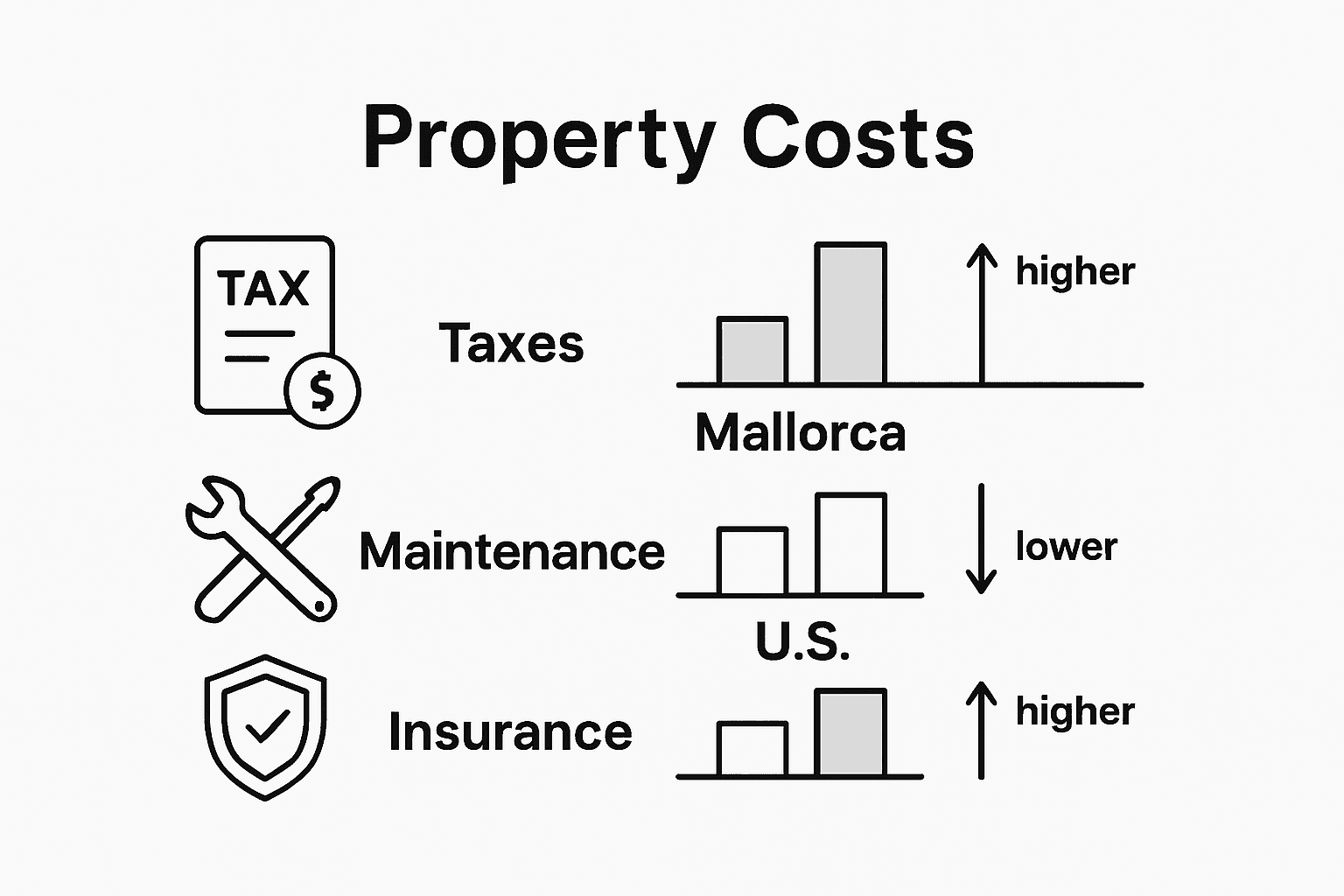
For reference, here are typical ongoing costs for an American property owner in Mallorca:
| Cost Category | Typical Range | Notes |
|---|---|---|
| Non-Resident Income Tax | 24% of imputed rent | Applies even if not rented |
| Property Transfer Tax | 8%–11% of value | Paid at purchase |
| Annual Property Tax | €500–€3,000+ | Based on cadastral value, property size |
| Maintenance/HOA Fees | €1,000–€5,000/year | Higher for luxury/seafront properties |
| Utilities & Insurance | €200–€500/month | Electricity, water, insurance combined |
Pro Tip: Tax Planning Strategy: Consult with a cross-border tax specialist who understands both US and Spanish tax regulations to develop a comprehensive tax strategy that minimizes your overall tax liability and ensures full compliance with international reporting requirements.
Financing Options for US-Based Buyers
American property buyers in Mallorca have several financing strategies available, with Spanish banks offering specialized mortgage products for non-resident international investors. Major financial institutions like Santander, BBVA, and CaixaBank provide mortgage options specifically designed for foreign buyers, recognizing the growing market of international real estate investment in Spain. These institutions understand the unique needs of American buyers and have developed tailored financing solutions to facilitate cross-border property purchases.
Key financing options for US buyers include:
- Spanish Bank Mortgages: Covering 60-70% of property value
- International Bank Loans: Leveraging US-based financial institutions
- Private Equity Financing: Alternative funding for high-net-worth individuals
- Retirement Account Investments: Using self-directed IRA funds
- Cash Purchases: Preferred method for investors with significant liquid assets
Non-resident mortgage terms typically range from 10 to 30 years, with interest rates between 2% and 4%, presenting competitive financing opportunities for American investors. Most Spanish banks require a down payment of 30-40% for non-resident buyers, with loan-to-value ratios significantly lower compared to traditional US mortgage products. American buyers should anticipate more stringent documentation requirements, including proof of international income, credit history, and comprehensive financial documentation.
Pro Tip: Financial Documentation Strategy: Prepare a comprehensive financial portfolio in advance, including tax returns, income verification, credit reports, and bank statements in both English and Spanish to streamline the international mortgage application process.
Navigate Mallorca Property Buying with Confidence and Expert Support
Buying property in Mallorca as an American involves navigating complex legal steps like securing the NIE, understanding Spanish tax obligations, and managing differences in the buying process compared to the US. These challenges can feel overwhelming when facing unfamiliar reservation contracts, notary involvement, and ongoing costs that affect your investment. You want personalized guidance combined with reliable tools to find the best luxury or investment property that fits your goals and lifestyle.
That is where ULI & LISA step in with their specialized, independent service for Americans purchasing in Mallorca. Using advanced AI-powered property search capabilities paired with in-depth local knowledge, they help you identify prime locations and property types highlighted in the article such as traditional fincas or seafront villas. Their team guides you through legal compliance, cross-border tax planning, and financing options tailored to international buyers. Don’t let complex requirements delay your dream of owning Mallorca real estate. Visit ULI & LISA today to start your personalized Mallorca property search and receive trusted guidance every step of the way.
Frequently Asked Questions
What are the key steps for Americans buying property in Mallorca?
The key steps for Americans include securing a Número de Identificación de Extranjero (NIE), conducting property due diligence, understanding the tax obligations, and navigating the financing options available for non-residents.
How does the property buying process in Spain differ from the US?
The Spanish property buying process often involves a reservation contract with a larger upfront deposit, notarial oversight, and mandatory property registration, making it more bureaucratic compared to the typically faster and simpler US process.
What types of properties are popular among American buyers in Mallorca?
American buyers typically favor seafront villas for luxury, restored fincas for historical charm, modern apartments for low-maintenance living, and new construction properties for advanced amenities and energy efficiency.
What tax obligations should American property owners be aware of in Mallorca?
American property owners should be aware of the non-resident income tax at 24% on imputed rental income, property transfer taxes ranging from 8% to 11%, and annual property taxes based on the property’s cadastral value.
Recommended
- How to Finance Property in Mallorca: A Step-by-Step Guide - ULI & LISA Mallorca Property Blog
- Mallorca Real Estate Closing Process: A Step-by-Step Guide - ULI & LISA Mallorca Property Blog
- Essential Steps to Buying Mallorca Real Estate Successfully - ULI & LISA Mallorca Property Blog
- Remote Property Buying Mallorca: Complete Guide - ULI & LISA Mallorca Property Blog
- Real Estate in Probate: California Planning Guide for Wealthy Families 2025 - Law Office of Eric Ridley