
Choosing a luxury villa in Mallorca is more than a dream for many American retirees—it is a bold financial move with long-term consequences. The appeal of Mediterranean sunsets comes with complex realities, from foreign tax regulations to ongoing expenses that differ sharply from United States property ownership. This guide helps you assess your true purchasing power and highlights the importance of expert guidance on Spanish real estate and tax law to protect both your investment and your retirement plan.
Quick Summary
| Important Insight | Explanation |
|---|---|
| 1. Assess Financial Readiness | Evaluate your financial situation to ensure you can afford the Mallorca purchase without compromising retirement goals. |
| 2. Understand Ongoing Costs | Be aware of recurring expenses, including property taxes, community fees, and maintenance, which can significantly impact your budget. |
| 3. Choose the Right Location | Research different Mallorca regions to align property choices with lifestyle preferences, investment goals, and potential rental income. |
| 4. Engage Local Experts | Hire an independent buyer’s agent and a gestor to navigate local laws, financial structures, and ensure a smooth transaction. |
| 5. Verify Legal Compliance | Confirm property ownership and legal compliance to avoid inheriting debts or facing unexpected issues after purchase. |
Step 1: Assess financial readiness for Mallorca purchase
Before you fall in love with a whitewashed villa overlooking the Mediterranean, take an honest look at your financial position. This step determines whether a Mallorca purchase fits your retirement or investment goals, or whether you need to adjust your timeline. You’re not just buying property—you’re making a significant international investment that involves currency exchange, foreign taxes, and ongoing expenses that differ from what you know in the States.
Start by calculating your total liquid assets and determining how much you can actually allocate to this purchase without compromising your retirement income. Research shows that financial literacy impacts key financial behaviors during major purchases, so understanding your actual purchasing power matters more than emotional attachment to a property. Many American buyers in your demographic set aside 20 to 30 percent of their liquid net worth for European real estate, but this varies based on your overall financial picture. Add to this calculation the down payment required in Spain (typically 20 to 40 percent), plus closing costs running 6 to 8 percent of the purchase price. If you’re buying a €2 million villa, you’re looking at €600,000 to €900,000 just for down payment and closing costs before you own the keys.
Next, understand the ongoing costs that many first-time international buyers underestimate. Property taxes in Mallorca run approximately 0.4 to 1.1 percent of the property’s cadastral value annually, though luxury properties often reassess higher than their actual purchase price. Community fees for managed properties or urbanizations can range from €300 to €1,500 monthly depending on amenities. Utilities, maintenance, and potential rental management costs (if you’re using an ETV license for vacation rentals) add another layer of expense. Getting expert guidance on how to finance property in Mallorca ensures you understand both the purchase costs and the financial structure of ownership in Spain. Consider your exchange rate exposure as well. The Euro fluctuates against the dollar, which affects your purchasing power if you’re funding from US accounts and also impacts property value if you eventually sell.
Your credit history and borrowing capacity matter even for cash buyers, because Spanish banks evaluate your financial credibility if you ever want to refinance or borrow against the property later. Spanish lenders typically require proof of income, tax returns from the past three years, and a solid credit history. If you plan to finance any portion of the purchase through Spanish banks, expect interest rates between 3.5 and 4.5 percent, with loan terms capped at 20 to 25 years for non-resident buyers. Understanding the legal requirements and tax implications of property ownership gives you clarity on how your purchase affects your overall financial position, especially regarding capital gains taxes and Spanish wealth taxes if you establish residency.
Don’t skip the currency conversation. If you’re funding from US dollars, lock in your exchange rate timing when possible, and consider working with a currency specialist who understands international property transactions. A one percent swing in Euro strength can cost you tens of thousands of dollars on a million-dollar purchase. Finally, stress test your numbers. Ask yourself what happens if property values dip 10 percent, if rental income drops below expectations, or if you need to access capital quickly. Real estate is illiquid, and selling a property in Mallorca takes time.
Summary of key ongoing expenses for Mallorca properties:
| Expense Type | Typical Annual Cost | Factors Influencing Amount |
|---|---|---|
| Property Taxes | 0.4–1.1% of cadastral value | Property size, location |
| Community Fees | €3,600–€18,000 | Amenities, urbanization type |
| Maintenance & Utilities | €4,000–€10,000 | Pool, garden, property size |
| Rental Management | 15–20% of rental income | Frequency of rentals, services |
| Currency Fluctuation | Varies with market rates | Exchange timing, amount sent |
Pro tip: Have a Spanish tax advisor or gestor review your specific financial situation before making an offer, as they can identify tax-efficient structures for your purchase and help you understand your liability for Spanish wealth taxes based on your residency status and citizenship.
Step 2: Research and select ideal Mallorca locations
Now that you understand your financial capacity, it’s time to identify which part of Mallorca aligns with your lifestyle, investment goals, and retirement vision. Location determines everything from property appreciation potential to how you’ll spend your days, so this deserves careful thought rather than romantic impulse. Mallorca isn’t monolithic. The island divides into distinct regions, each with completely different character, amenities, and buyer demographics.
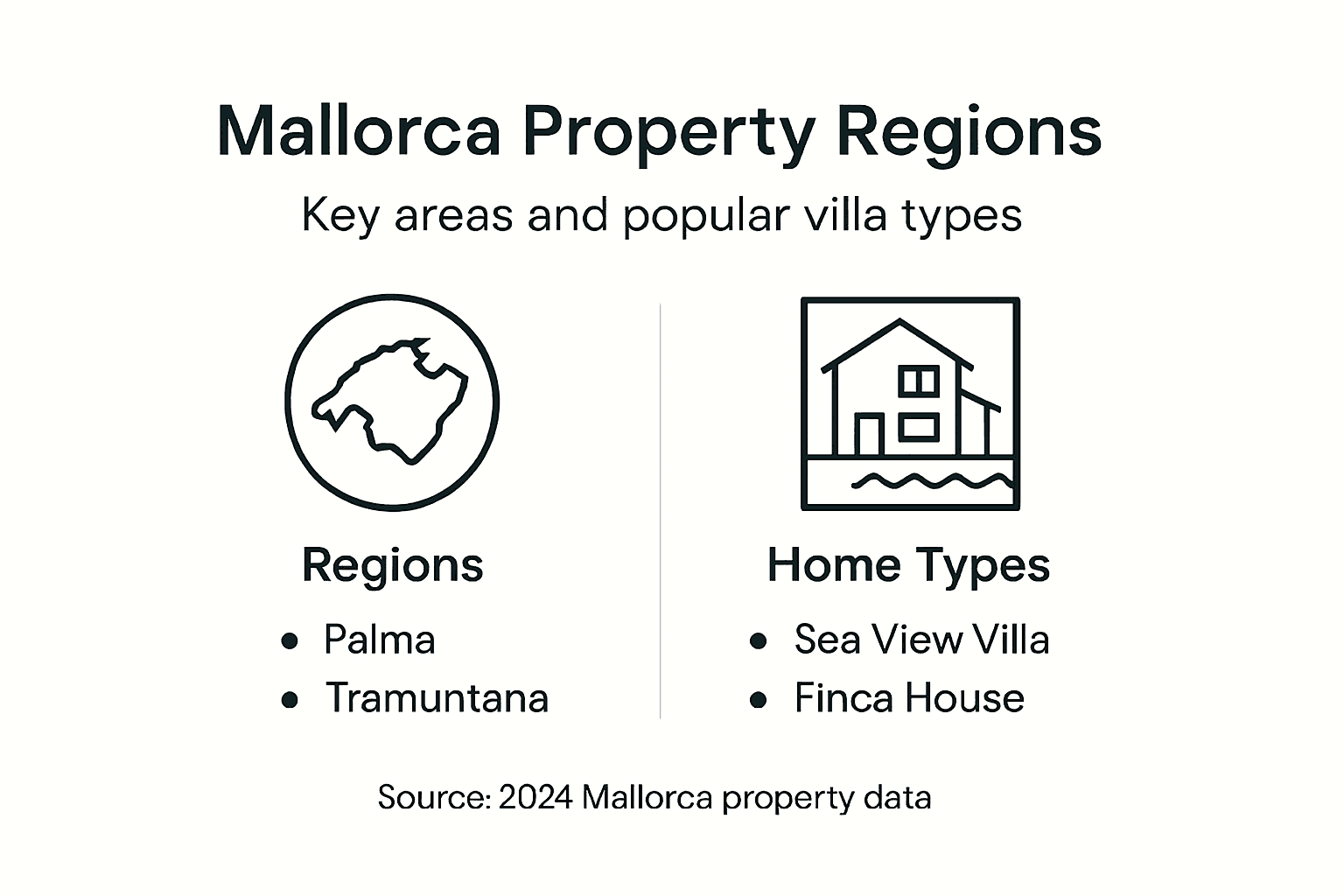
Start by understanding what each region offers. The Serra de Tramuntana mountains in the northwest deliver dramatic landscapes and quieter living if you’re seeking mountain villages and cultural immersion. Towns like Sóller and Deià attract artists and intellectuals seeking authenticity over beach resorts. Palma de Mallorca, the capital on the southwest coast, offers urban sophistication with world-class restaurants, galleries, and winter weather that remains mild. The coastal towns scattered around Mallorca’s distinct regional divisions range from jet-set enclaves like Puerto Pollença to family-oriented beach communities. The Pla de Mallorca plains in the center offer agricultural charm and lower property prices if you’re comfortable farther from the coast. The Migjorn beaches to the south provide stunning Mediterranean access with fewer crowds than the northern coast. The Llevant hills in the east blend mountain scenery with easier beach access than the west side.
Your first research move should focus on matching location to your actual lifestyle. Ask yourself hard questions: Do you want year-round beach access, or does mountain scenery matter more? Are you planning to rent the property seasonally through an ETV license, or is this purely personal use? Do you value proximity to Palma’s cultural offerings and international airports, or do you prefer isolation? Will you spend entire summers there or visit quarterly? Properties in high-tourism areas like Cala d’Or or Pollença command premium prices and generate strong rental income if that’s your strategy. Properties in quieter inland villages like Binissalem or Campanet appreciate more slowly but offer genuine local living if you’re seeking a residential experience rather than a resort property. Property values vary dramatically. A waterfront villa in Puerto Pollença runs €3 million to €5 million for luxury properties, while an equivalent villa in a mountain village might cost €1.5 million to €2.5 million.
Research the seasonal tourism patterns because they affect both your enjoyment and rental income potential. July and August bring intense tourism and crowds to popular coastal towns. Spring and fall offer perfect weather with fewer visitors. Winter is quiet and peaceful but cooler, especially in mountain areas. If you’re buying for investment income, understand that seasonal rental demand peaks in summer months and holiday periods, but year-round demand is weaker. If you’re buying for personal use, consider which season you’ll actually spend time there. Many American buyers in your demographic choose the west coast around Sóller or Deià for stunning natural beauty and intellectual community, while others prefer the sophistication of Palma or the beach access of Cala Millor. Property viewing experiences help clarify which neighborhoods match your preferences through real observation rather than photos alone.
Evaluate infrastructure and accessibility. Properties within 20 minutes of Palma Airport command premium prices and offer easier access for visiting family from the States. Rural properties farther from airports may offer better values but require planning for transportation logistics. Check internet reliability if you’re planning to maintain business connections or work remotely from Mallorca. Verify healthcare access if medical facilities matter to you, particularly for retirement planning. Research neighborhood amenities, local restaurants, shopping centers, and whether the area feels developed or remote. Talk to other American expat buyers if possible to understand which communities attract your demographic and whether those neighborhoods feel isolated or integrated. The goal is selecting a location you’ll genuinely enjoy spending time in, not just a property on a map.
Here’s how Mallorca regions differ for American property buyers:
| Region | Typical Property Type | Lifestyle Appeal | Price Range (Luxury Villa) |
|---|---|---|---|
| Serra de Tramuntana | Stone villas, mountain homes | Tranquil, culturally immersed | €1.5M – €2.5M |
| Palma de Mallorca | City apartments, penthouses | Urban, sophisticated, social | €2M – €5M |
| Puerto Pollença | Waterfront villas | Jet-set, beach access | €3M – €5M |
| Pla de Mallorca | Rural fincas, farmhouses | Quiet, agricultural, local | €1M – €2M |
| Migjorn (South coast) | Beachfront houses | Relaxed, fewer tourists | €1.5M – €3M |
| Llevant (East hills) | Rural, coastal properties | Blended scenery and access | €1.3M – €2.8M |
Pro tip: Visit your target locations during different seasons before committing to a purchase, staying at least 10 to 14 days to experience daily life rather than tourist highlights, and connect with local real estate agents who can provide honest insights about neighborhood trajectories, rental potential, and seasonal dynamics that affect your long-term satisfaction and investment returns.
Step 3: Engage expert real estate professionals
Finding the right real estate agent in Mallorca is non-negotiable. This is not the time to save money or settle for convenience. The agent you choose will influence your entire purchase experience, from identifying off-market properties to navigating Spanish legal requirements to negotiating the best price. Unlike residential real estate in the States, buying luxury property in Mallorca requires agents who understand international buyers, Spanish regulations, currency considerations, and the nuances of the Balearic market.

Start by understanding what qualifications matter. Spanish real estate agents must hold official registration with their regional professional body, though licensing standards vary compared to United States requirements. Look for agents who specialize in international buyers and specifically in luxury properties, not generalists handling everything from apartments to commercial spaces. The agent should have demonstrated experience with American purchasers, understanding your specific concerns around tax implications, currency risk, and Spanish legal structures. Interview multiple agents and ask direct questions: How many transactions have you completed with American buyers in the past two years? Can you explain Spanish property law and the role of a gestor in the purchase process? What is your fee structure and are you representing the buyer exclusively or working both sides of the transaction? Transparent answers to these questions reveal professionals worth working with. Professional standards for real estate agents in Europe emphasize transparency and ethical conduct, and you should expect agents in Mallorca to operate with similar rigor regardless of formal certification.
Understand the difference between agents working with you and agents working against you. In Spain, unlike some American markets, dual agency is common, meaning a single agent represents both buyer and seller. This creates an inherent conflict of interest because the agent profits equally regardless of the final price. The best protection is hiring your own independent buyer’s agent who works exclusively for you, not splitting commissions with seller’s agents. ULI & LISA operates as a boutique buyer’s agency, representing your interests exclusively rather than juggling competing loyalties. Your agent should have comprehensive market access through multiple listing platforms and personal relationships with hundreds of other agencies across Mallorca. Ask directly: How many properties can you show me beyond your own listings? Do you have established relationships with agents representing off-market luxury properties? Can you provide market analysis showing recent comparable sales? The agent’s answer to these questions determines whether you’re getting genuine market coverage or just properties they want to sell quickly.
Beyond the agent, you’ll need a Spanish gestor, which is a certified tax and legal advisor essential for property transactions. The gestor handles property registration, tax filings, and legal compliance throughout the purchase. They also advise on residency status, Spanish wealth tax obligations, and whether your purchase triggers other tax reporting requirements in the US. Do not skip this step. The combination of your buyer’s agent and your gestor creates the team you need. Your agent navigates the emotional and transactional sides of finding and purchasing a property. Your gestor handles the legal and financial sides. Work with your agent to identify a reputable gestor with English-speaking capability and experience with international buyers from North America.
Verify references and track record. Request at least three references from recent American clients who purchased luxury properties in Mallorca through this agent. Contact them and ask specific questions: Did the agent represent your interests? Did you feel pressured or supported? Would you use them again? Did they explain hidden costs before you discovered them yourself? Reference checks separate legitimate professionals from smooth talkers who prioritize their commission over your satisfaction.
Pro tip: Choose an independent buyer’s agent rather than one tied to a single brokerage, as this ensures you access the entire Mallorca market rather than being steered toward in-house listings that benefit the agency but may not match your specific needs and budget criteria.
Step 4: Verify property legal compliance and ownership
Before you commit financially to any property, verify that what you’re buying is actually what the seller claims to own and that no legal encumbrances or claims exist against it. This step protects you from inheriting someone else’s debt, discovering undisclosed liens, or learning that the property has restrictions you cannot accept. Spanish property law provides public access to ownership records through the Property Registry, a transparent system that differs significantly from title insurance concepts familiar to American buyers.
Your first move is obtaining a certified extract from the Spanish Property Registry, called an informe registral or nota simple. This document shows the current registered owner, any mortgages or liens against the property, easements, and other rights or restrictions affecting the property. Request this document through your gestor, as they have direct registry access and can obtain official certifications. The registry extract is public information, but certified copies carry legal weight in transactions. Review the extract carefully with your gestor and ask specifically: Who is the current registered owner? Are there active mortgages listed? Do easements or public rights affect the property? Are there any pending legal claims or encumbrances? A clean registry extract shows only the owner and perhaps a mortgage being paid off at closing. Anything unusual should trigger detailed discussion with your legal team. Spain’s Property Registry system maintains the public record of all property rights and registrations, and accessing these records is straightforward for anyone with professional assistance.
Beyond the registry extract, verify that the property complies with local building codes and zoning regulations. Spanish municipalities issue a certificate of compliance called a cédula de habitabilidad or certificado de eficiencia energética, depending on the property age and jurisdiction. This certificate confirms the property meets current building standards and utilities are legally connected. Request this from the seller or have your gestor verify its status. Properties built decades ago may lack current certifications, requiring upgrades before you can legally occupy or rent the property. If you plan to use an ETV license for vacation rentals, compliance with building codes becomes essential because rental regulations explicitly require certified properties. Properties without proper certifications can be fined or forbidden from operating rental activity. Confirm that water, electricity, and sewage connections are properly registered and not drawing from unofficial or shared systems that could create future complications.
Check for any pending litigation or administrative issues. Your gestor should investigate whether the property faces disputes with neighbors, municipal violations, unpaid community fees, or tax arrears. Spanish properties in shared urbanizations have mandatory community associations that levy monthly fees. If the current owner has not paid these fees, the debt transfers to you as the new owner. Request a certified statement from the community association showing the property is current on all fees and has no outstanding balances. Similarly, verify that the seller has paid all property taxes through the current year. Unpaid taxes become your responsibility as the new owner. A certified tax statement from Spanish authorities confirms the property has no outstanding municipal or regional tax debt.
Request a structural inspection by an independent engineer if the property is older than 30 years or shows signs of water damage, foundation issues, or significant wear. While this differs from a standard home inspection in the United States, Spanish properties can harbor issues that surface only through professional evaluation. The inspection costs approximately 800 to 2,000 euros and provides protection against inheriting expensive repair obligations. Document everything in writing. Have your gestor prepare a detailed legal opinion confirming ownership, absence of encumbrances, compliance with building codes, and tax status. This written verification becomes evidence if disputes arise later and protects you if the seller misrepresented the property.
Pro tip: Have your gestor obtain the property’s complete legal file from the registry, including all historical registrations and transfers, not just the current status, as this reveals whether the property has changed hands frequently or faced past legal complications that might indicate underlying issues affecting its value or your ability to use it as planned.
Step 5: Finalize purchase and ensure tax obligations
You’ve found your property, negotiated the price, and verified ownership. Now comes the final phase where you actually transfer money, sign legal documents, and become the official owner. This step involves navigating Spanish notary requirements, understanding transfer taxes specific to the Balearic Islands, and ensuring you comply with both Spanish and United States tax obligations. Getting this right protects you from unexpected tax bills and legal complications after closing.
The Spanish purchase process centers on a document called the escritura, which is the property deed signed before a notary. The notary in Spain serves as a government official who verifies identities, confirms both parties understand the transaction, and ensures the document meets legal requirements. Schedule this signing through your gestor approximately one to two weeks after your offer is accepted. Before signing, your gestor should provide you with a detailed breakdown of all closing costs and tax obligations. Transfer tax, called Impuesto sobre Transmisiones Patrimoniales in Spanish, varies by region but typically runs 6 to 10 percent of the purchase price in the Balearic Islands. Some regions offer reduced rates for first-time homebuyers, though as an American investor, you may not qualify. Additionally, you’ll pay stamp duty (Actos Jurídicos Documentados) at approximately 0.5 to 1.5 percent of the purchase price. Spain’s property transfer tax requirements have undergone recent changes affecting ownership structures and rates, making it critical to understand your specific liability based on how you structure the purchase. Your gestor calculates these amounts and ensures payments reach Spanish authorities before the deed is recorded.
Bring certified funds in the exact amount to the notary’s office on signing day. Spanish law prohibits wire transfers directly from notaries, so you’ll arrange the transfer separately through your bank or a currency specialist. Expect the notary signing to take one to two hours, during which you’ll review the complete deed, confirm all details match your agreement, and sign multiple copies. The notary will answer questions about clauses or obligations you don’t understand. This is not a moment to rush. After signing, the notary registers the deed with the Property Registry, a process that takes approximately two to four weeks. Once registered, you officially own the property and the deed is recorded as public information. The notary will provide you with a certified copy called a copia de la escritura, which serves as your proof of ownership.
Immediately after purchase, notify Spanish tax authorities of your new property ownership. Your gestor handles this filing, but you should understand the implications. If you establish Spanish residency, you become liable for Spanish wealth tax on worldwide assets exceeding certain thresholds, though as an American citizen you also file US taxes on worldwide income and assets. Spain and the United States have a tax treaty preventing double taxation, but you must file returns in both countries to benefit from it. Non-resident owners of Spanish properties must file annual property income tax returns if the property generates income through rentals, and must also file wealth tax returns if applicable based on asset thresholds. These obligations exist even if the property sits vacant and generates no income. Your gestor ensures these filings happen on schedule, typically due in June each year for the prior calendar year.
Understand your United States tax obligations as well. The Foreign Account Tax Compliance Act (FATCA) requires you to report foreign property ownership to the IRS if your total foreign assets exceed reporting thresholds. You’ll likely need to file FinCEN Form 114 if you have financial accounts in Spain. Capital gains taxes apply when you eventually sell the property, calculated on the difference between your purchase price and sale price. Spain charges capital gains tax on your sale proceeds, and the United States does as well, though the tax treaty provides credits for taxes paid to Spain. Working with a cross-border tax specialist who understands both Spanish and American tax law prevents costly mistakes and ensures you structure the purchase efficiently. Some buyers choose corporate structures or other ownership methods that reduce tax burden, but these require setup before closing.
Finally, register the property with local authorities and utility companies in your name. Update electricity, water, and gas accounts to reflect you as the owner. Register with the local municipal office for property tax purposes. These administrative steps seem minor but ensure you receive official tax bills, utility bills, and property tax notices. Missing these registrations can lead to surprise bills or complications when you attempt to refinance or sell years later. Your gestor typically handles most of this coordination, but verify that each step completes before you consider the transaction fully closed.
Pro tip: File your Spanish tax returns through a local gestor even in your first year of ownership, as this establishes your compliance history with Spanish authorities and creates official records protecting you if audits arise years later, which is far simpler than scrambling to reconstruct documentation after the fact.
Simplify Your Mallorca Property Journey with Expert Guidance
Navigating the complex financial readiness, diverse Mallorca locations, and legal verifications outlined in the “Mallorca Property Buying Checklist for Americans Simplified” can feel overwhelming. You may be worried about unexpected costs like transfer taxes, ongoing community fees, or even the challenge of finding trustworthy agents who understand both American buyer concerns and Spanish property law. The good news is you do not have to face these challenges alone. At ULI & LISA, we specialize in providing independent, unbiased real estate services tailored for American buyers who want to make informed and confident purchases in Mallorca’s luxury and investment markets.
Our advanced AI-powered tools deliver comprehensive property searches across Mallorca so you have access to more options beyond typical listings. Combined with personalized, trustworthy guidance, we help you understand critical concepts like financing, tax impact, and legal compliance discussed in the article. Stop worrying about navigating currency fluctuations or complex Spanish regulations on your own. Let our expert team connect you with reputable Spanish gestors and provide step-by-step support to ensure your peace of mind.
Are you ready to turn your Mallorca property dreams into reality with clarity and confidence? Visit ULI & LISA today and discover how our expertise aligns perfectly with the challenges and goals you face. Learn more about how we help international buyers and begin your smooth, successful buying experience now.
Frequently Asked Questions
What should I assess first when considering a property purchase in Mallorca?
Before making a property purchase, assess your financial readiness to ensure the investment aligns with your retirement or investment goals. Calculate your total liquid assets and determine how much you can allocate without compromising your financial stability.
How do I find the right location in Mallorca for my property?
Research each region of Mallorca to identify the one that suits your lifestyle and investment objectives. Consider factors like proximity to amenities, types of properties available, and lifestyle preferences, and then visit potential locations to see them firsthand.
Why do I need a real estate agent when buying property in Mallorca?
Engaging a specialized real estate agent ensures you navigate Spanish regulations and market nuances effectively. Choose an agent experienced with international buyers to improve your chances of finding the right property and securing the best deal.
What legal checks should I conduct before finalizing a property purchase?
Verify property legal compliance by obtaining a certified ownership extract from the Spanish Property Registry. Ensure the property is not encumbered by debts, isn’t involved in pending litigation, and that it meets local building codes and utilities requirements.
What are the closing costs I should anticipate when buying a property in Mallorca?
Expect closing costs to be approximately 6 to 10 percent of the purchase price, including transfer taxes and legal fees. Prepare these funds in advance to ensure a smooth transaction on signing day, and ensure your funds are ready to cover all closing expenses.
How can I ensure tax compliance after purchasing property in Mallorca?
After purchase, notify Spanish tax authorities of your new property and file necessary tax returns. Work with a gestor to manage your tax obligations in both Spain and the United States, ensuring timely filings and proper documentation to avoid penalties.
Recommended
- Buying Property in Mallorca: Key Steps for Americans - ULI & LISA Mallorca Property Blog
- How to Finance Property in Mallorca: A Step-by-Step Guide - ULI & LISA Mallorca Property Blog
- How to Finance Property in Mallorca: A Step-by-Step Guide - ULI & LISA Mallorca Property Blog
- How to Finance Property in Mallorca: A Step-by-Step Guide - ULI & LISA Mallorca Property Blog