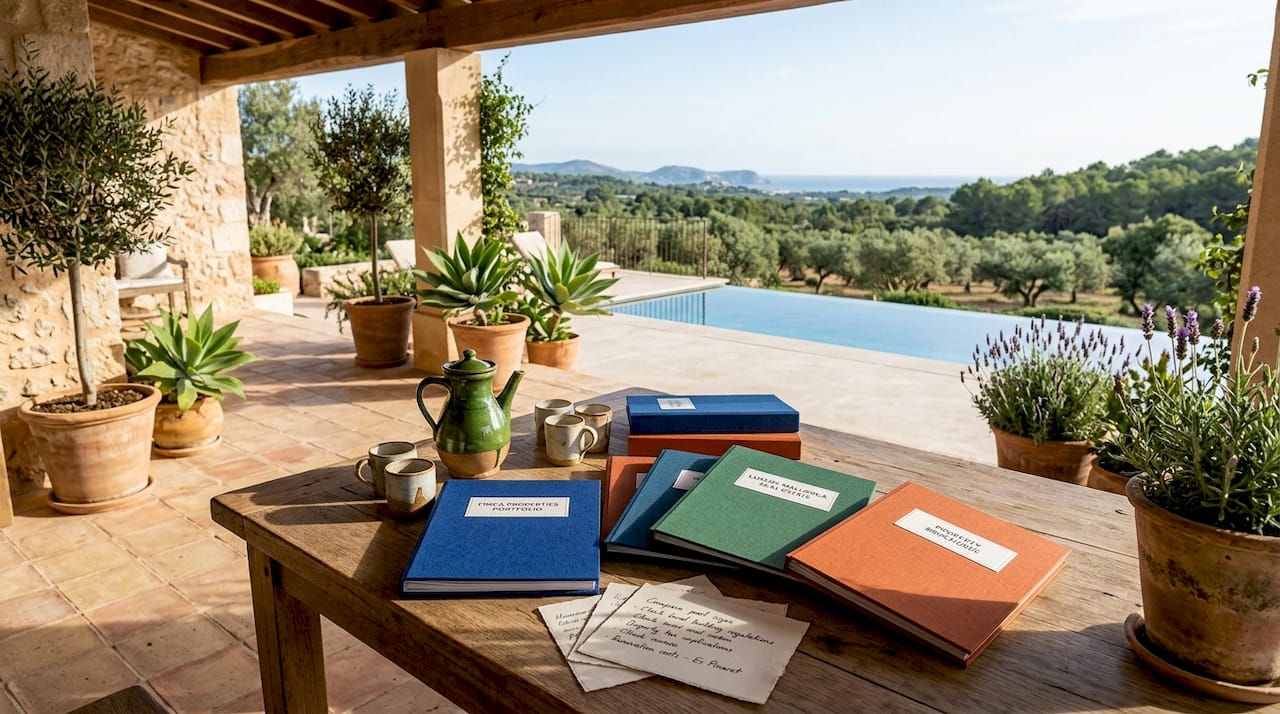
TL;DR:
- Owning a Mallorca finca offers both financial gains and a transformative lifestyle but requires careful navigation of Spanish property laws and zoning.
- Key criteria include legal compliance, verified water rights, accurate titles, and AML documentation, especially for American buyers.
Owning a luxury finca in Mallorca is one of those rare investments that delivers both financial upside and a lifestyle transformation. For high-net-worth Americans, a stone estate surrounded by ancient olive groves, rolling hills, and Mediterranean light is an incredibly compelling asset. But unlike buying a vacation home in Florida or Colorado, acquiring a Mallorcan finca means crossing into a world of Spanish property law, EU compliance requirements, cross-border tax reporting, and rural zoning rules that can trip up even experienced investors. This guide gives you the full picture: criteria, process, costs, and strategy, all from the perspective of agents who work exclusively with international buyers in Mallorca’s luxury market.
Key Takeaways
| Point | Details |
|---|---|
| Full legal checks required | Only certified, compliant fincas should be considered—always verify all title and use rights. |
| Budget 10–15% extra | Expect purchase taxes and transaction costs to add significantly to the listing price. |
| Expert due diligence | Hiring an independent lawyer is critical to avoid costly compliance mistakes. |
| Special rules for US buyers | Americans face extra scrutiny, must handle FATCA reporting, and often get 60–70% mortgage LTV. |
| Optimal structure matters | How you buy—personally or through a company—shapes your taxes and compliance surface. |
Key criteria for evaluating fincas in Mallorca
Before diving into available fincas, it’s vital to define the criteria that safeguard your investment and lifestyle aspirations.
The most critical starting point is legal compliance. In Spain, a finca must hold a valid cédula de habitabilidad (occupancy certificate) confirming it meets habitability standards. Without it, you cannot legally connect utilities or rent the property. Buyer due diligence must also confirm clear boundary definitions and verified water rights, since rural Mallorcan estates often draw from wells or shared irrigation channels governed by ancient agreements.
Zoning and usability deserve equal attention. Rural land in Mallorca falls under sòl rústic (rural land classification), which severely limits what you can build, expand, or modify. Adding a pool, a guesthouse, or even a terrace may require specific permits that many sellers simply do not have in order. Buying a property with unauthorized improvements can leave you legally exposed or facing demolition orders from local authorities. Always confirm the permit status of every outbuilding, annexe, and pool before making an offer.
Title and debt verification is your next filter. Request a Nota Simple (official land registry extract) for every property you seriously consider. This document reveals the current owner, the exact registered boundaries, any mortgages, liens, or easements attached to the land, and any outstanding debts. Sellers in Spain can sometimes pass unpaid community fees or local taxes to the new buyer if you are not careful.
For Americans specifically, there are unique AML and cross-border compliance considerations. Spanish banks and notaries are required to verify the source of funds for large transactions. This means your attorney will need to document the origin of your purchase funds clearly. Additionally, as a US citizen, you remain subject to FATCA (Foreign Account Tax Compliance Act) reporting obligations, meaning all foreign financial accounts and real estate income must be disclosed to the IRS. Using a Mallorca property checklist designed for American buyers saves enormous time here.
Financing is another differentiator for US buyers. Spanish banks typically offer 60 to 70% loan-to-value (LTV) for non-residents, meaning you need to bring a meaningful equity position. Documentation requirements are extensive, especially for self-employed or business-owner buyers. If your target purchase exceeds €500,000, the Spanish Golden Visa program opens up an attractive residency pathway.
Pro Tip: Review all essential buying steps for international buyers before even beginning your property search. Going in informed dramatically strengthens your negotiating position and protects you from time-wasting mistakes.
Key evaluation filters to apply to every finca:
- Valid occupancy certificate (cédula de habitabilidad)
- Confirmed water rights and well permits
- Clean Nota Simple with no undisclosed encumbrances
- All structures and pools are permit-verified
- Zoning classification confirmed (sòl rústic subcategory matters)
- Source of funds documentation ready for AML review
- US tax reporting obligations identified and pre-planned
Top fincas for sale in Mallorca: Market overview
With the right evaluation checklist in hand, let’s explore what’s available and what makes a finca truly stand out in Mallorca’s luxury market.
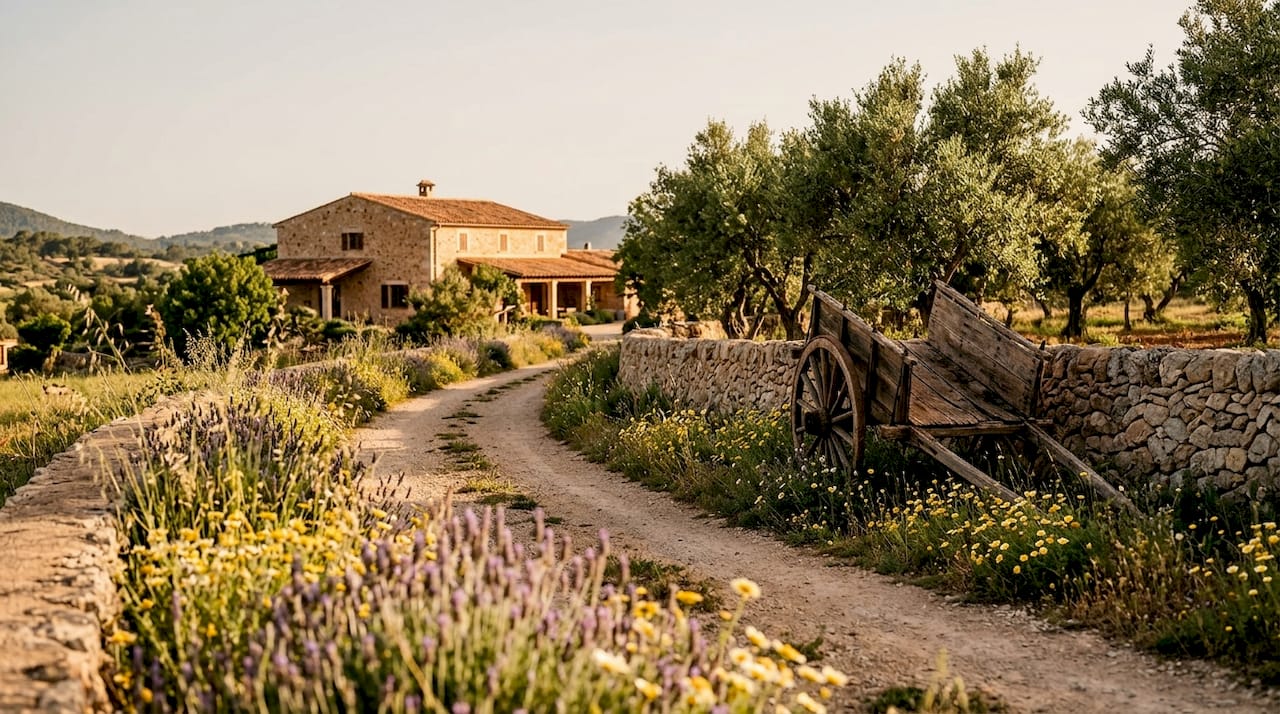
Mallorca’s luxury finca market is exceptionally diverse. At the lower end of the premium segment, you’re looking at renovated stone farmhouses of around 300 to 500 square meters on two to five hectares of land, priced from approximately €1.5 million to €3 million. Mid-range luxury fincas, those with guest cottages, private pools, and professional landscaping, typically fall between €3 million and €7 million. At the top of the market, historic estates with original 18th-century features, vineyards, olive oil production facilities, and panoramic views command prices of €8 million and above.
What genuinely differentiates a prime finca from an average one includes:
- Authentic historical restoration: Original stonework, beamed ceilings, and traditional Mallorcan tafona (olive press rooms) that are preserved rather than modernized away
- Elevated views: Panoramic views of the Tramuntana mountain range or the Mediterranean coastline add measurable premium value
- Acreage and privacy: Properties with five or more hectares offer buffer zones that protect your lifestyle from encroaching development
- Legal upgrades already completed: Sellers who have invested in formal permit regularization represent significantly lower risk for buyers
American buyers tend to focus on the areas of Sóller, Pollença, Valldemossa, and the inland municipality of Santa Maria del Camí. Each location offers a different character. Sóller delivers dramatic mountain and sea views; Pollença combines rural scale with proximity to the coast; Valldemossa offers cultural prestige and UNESCO-adjacent scenery; and Santa Maria provides easy airport access without sacrificing authentic rural atmosphere.
| Feature | Why it matters to American buyers |
|---|---|
| Permitted pool and guesthouse | Avoids costly post-purchase legal issues |
| Recent renovations with permits | Reduces future capital expenditure |
| Freehold title (plena propiedad) | Simplest ownership structure for US reporting |
| Active rental license (ETV) | Enables legal short-term rental income |
| Well water rights registered | Protects irrigation and domestic supply |
Pro Tip: Always ask for a full permit file (expediente técnico) for any advertised outbuilding or extension. Rural building regulations in Mallorca are strict, and the need to verify legal usage rights for structures is non-negotiable before signing any contract.
Mallorca finca purchase process for non-resident Americans
Selecting a property is just the beginning. Here’s how the acquisition unfolds step by step for Americans investing in Spain.
The full process, from first offer to keys in hand, typically runs 6 to 12 weeks for a well-prepared buyer. Delays usually happen when NIE numbers are not obtained in advance or when due diligence uncovers title issues that need resolution.
Here is the step-by-step process:
- Obtain your NIE number (Número de Identificación de Extranjero): This is your Spanish tax ID, mandatory for all property transactions. You can apply at a Spanish consulate in the US, or through a lawyer in Spain with a power of attorney.
- Open a Spanish bank account: Required for tax payments and deed signing. Some banks are more accommodating of American clients given FATCA constraints.
- Engage an independent lawyer: This is your most important move. Your lawyer performs title searches, reviews planning permissions, checks for debts, and protects your interests throughout.
- Sign a reservation contract and pay deposit: A small initial deposit (typically €6,000 to €15,000) takes the property off the market while due diligence proceeds.
- Sign the contrato de arras: This private purchase contract formalizes the deal and requires a 10% deposit. If the seller backs out, they must return double the deposit; if you back out, you lose it.
- Complete at the notary (escritura pública): The formal deed is signed before a Spanish notary. The balance of the purchase price is paid here.
- Pay all applicable taxes and fees: These must be settled before the property is registered in your name.
- Register at the Land Registry: Your lawyer submits the signed deed for registration, completing your legal ownership.
| Step | Typical timeline | Key cost |
|---|---|---|
| NIE application | 1 to 4 weeks | Minimal |
| Due diligence | 2 to 4 weeks | Included in legal fee |
| Reservation to arras | 1 to 2 weeks | 10% deposit |
| Notary closing | 1 to 2 weeks | Final balance + taxes |
| Land Registry | 2 to 4 weeks post-closing | Registry fee |
A common misconception worth addressing directly: the notary in Spain confirms that the documents are correctly signed and legally formatted, but does NOT independently investigate the property’s legal history or planning status. That is exclusively your lawyer’s role. Skipping independent legal representation is the single costliest mistake American buyers make.
Pro Tip: Coordinate your real estate closing process timeline carefully. A luxury property purchase over €1 million often requires additional source-of-funds documentation that can take 2 to 4 weeks to gather and certify. Start early.
“The notary certifies the legality of the transaction itself, not the property’s planning or title history. Independent legal due diligence is indispensable for every international buyer.” — Experienced Spanish property law practice
For a deep-dive on key steps for Americans specifically, including FATCA-aware banking setup and IRS coordination, reviewing a US-focused resource before starting your search saves significant time.
Taxation and total cost breakdown: What to expect
A luxury finca’s price tag is just the starting point. Accurate budgeting means understanding the full ownership costs.
The headline purchase price typically understates your total outlay by 10 to 15%. That additional cost breaks down as follows for resale properties:
| Tax or fee | Rate | Example on €2M property |
|---|---|---|
| Transfer tax (ITP) | 8–13% (progressive) | Approx. €210,000 |
| Notary fees | 0.5–1% | €10,000 to €20,000 |
| Land Registry fee | 0.5% | €10,000 |
| Legal fees | 1% | €20,000 |
| Total additional costs | 10–15% | €250,000 to €300,000 |
For new build properties, the structure changes: instead of ITP, you pay 10% VAT (IVA) plus 1.2 to 1.5% stamp duty (AJD).
Statistic to note: On a €3 million finca, Americans should budget an additional €330,000 to €450,000 purely in taxes and transaction fees before factoring in furnishing, renovation, or maintenance costs.
Americans also need to plan for ongoing US reporting obligations:
- FBAR filing: Required if Spanish bank account balances exceed $10,000 at any point during the year
- Form 8938 (FATCA): Required for foreign financial assets above certain thresholds
- Rental income reporting: If you rent the finca, income must be declared in both Spain and the US, though the US-Spain tax treaty prevents genuine double taxation in most situations
Using a property cost calculator guide tailored for Mallorca gives you a reliable total cost estimate. Exploring your Mallorca property financing options early also helps you structure the transaction in the most tax-efficient way.
Comparison of buying strategies for American investors
With the numbers laid out, let’s compare the main approaches Americans use to optimize their finca investment in Mallorca.
| Strategy | Advantages | Disadvantages | Best for |
|---|---|---|---|
| Personal purchase | Simple, direct ownership | Full dual US/Spain reporting | Buyers seeking simplicity |
| Spanish company (SL) | Separation of assets | Added compliance, ongoing costs | Portfolio investors |
| Spanish mortgage | Preserves US liquidity | 60–70% LTV, FATCA scrutiny | Buyers with strong cash flow |
| Golden Visa route | Residency pathway | €500k minimum investment | Buyers seeking EU residency |
For most first-time American buyers, a personal purchase is the cleanest path. It avoids the complexity of maintaining a Spanish company while keeping ownership transparent for US tax reporting purposes.
The corporate route can make sense for buyers assembling a portfolio of several properties or planning active rental operations, since a Spanish Sociedad Limitada (limited company) separates personal and property liability. However, the ongoing audit, filing, and management costs add real overhead.
FATCA compliance genuinely complicates Spanish mortgage applications for Americans. Several Spanish banks are reluctant to open accounts for US citizens due to FATCA reporting burdens. When a mortgage is your preferred path, working with financing options in Mallorca specialists who have established relationships with FATCA-compliant Spanish lenders is essential.
Key considerations by strategy:
- Personal: Ideal for lifestyle buyers; requires clear FBAR and FATCA planning
- Corporate: Better tax deferral potential for rentals, but higher ongoing admin
- Mortgage: Releases capital for other investments; adds time and documentation to the process
- Golden Visa: Valuable if EU mobility is a medium-term goal; residency requires physical presence
The essential mindset for American buyers: Long-term value beyond the closing
Here’s the view most buyer guides skip. After years of helping American clients navigate Mallorca’s luxury market, the pattern is consistent: the buyers who regret their purchase almost never lost money on the property itself. They lost money on what they didn’t discover beforehand.
The most common story goes like this: a buyer falls in love with a beautifully staged finca, moves quickly to secure it, and skips deep due diligence because the property “feels right.” Six months later, they discover the charming stone annexe is an unauthorized structure, the well has no registered water rights, and the dream of adding a tennis court is blocked by rural zoning rules. The renovation budget doubles. The lifestyle vision they bought into simply isn’t deliverable on that land, under those rules.
The top mistakes foreign buyers make in Mallorca consistently trace back to prioritizing aesthetics over legal clarity. A beautifully photographed property with soft morning light and impeccable staging will always look more compelling than a dry planning document. But that planning document is the real investment.
The deeper insight is this: the best finca purchases happen when lifestyle ambitions and legal reality are aligned before the offer is made, not negotiated retroactively. This takes time, local expertise, and a willingness to walk away from properties that simply do not check the compliance box, no matter how beautiful they are. That discipline is what separates satisfied long-term owners from stressed post-closing problem-solvers.
True investment value in Mallorca comes from properties where everything is clean, documented, and future-adaptable. That usually means paying a small premium for a fully regularized property versus chasing a lower-priced finca with unresolved permit issues. The premium is almost always worth it.
Next steps: Secure your Mallorca finca with expert guidance
Ready to move from research to action? Working with independent buyer agents who specialize exclusively in representing American purchasers in Mallorca makes every stage of this process more efficient and more protected. At ULI & LISA, we combine AI-powered property search technology with deep local legal and compliance expertise to surface properties that genuinely meet your investment criteria, not just your wish list. Our luxury real estate services cover the full buying journey from initial property identification through negotiation, legal coordination, and post-purchase setup. If ensuring a safe property investment in a complex cross-border market is your priority, we’re the team built specifically for that goal.
Frequently asked questions
How long does it take to buy a finca in Mallorca as a US citizen?
Most transactions are completed within 6 to 12 weeks once all documents are in order, though NIE applications and source-of-funds preparation can add time if not started early.
What taxes will I pay when buying a finca in Mallorca?
Resale properties are subject to 8 to 13% transfer tax; new builds have 10% VAT plus 1.2 to 1.5% stamp duty, pushing total transaction costs to 10 to 15% above the purchase price.
Can Americans get a mortgage for a finca in Mallorca?
Yes, but banks generally offer 60 to 70% LTV for US buyers, with greater paperwork due to FATCA obligations and some banks’ reluctance to onboard American clients.
What legal documents are essential before closing on a finca?
You’ll need an NIE, thorough lawyer due diligence, a reservation contract, a formal contrato de arras, and a notary-signed deed (escritura pública) before the property can be registered in your name.
Do rural Mallorcan fincas have special restrictions?
Yes. Rural fincas face strict rules on expansions, pools, and new structures, and you should always verify that the cédula de habitabilidad is current and that all existing structures hold valid building permits.
Recommended
- Mallorca Fincas: Unique Benefits for U.S. Buyers - ULI & LISA Mallorca Property Blog
- Beach house Mallorca: Guide for luxury US buyers - ULI & LISA Mallorca Property Blog
- How to buy property in Palma: expert steps for US buyers - ULI & LISA Mallorca Property Blog
- Luxury property in Mallorca: essential buyer’s checklist - ULI & LISA Mallorca Property Blog