Over 60 percent of American buyers encounter unexpected legal hurdles when purchasing overseas real estate. The dream of owning property in Mallorca can quickly become complicated without careful planning and the right expert support. This guide explains how Americans can protect their interests and complete each step with confidence, offering clear strategies for navigating Spanish regulations, financial rules, and property contracts.
Quick Summary
| Key Point | Explanation |
|---|---|
| 1. Find Bilingual Legal Representation | Secure a lawyer who understands both American and Spanish laws to navigate property transactions effectively. |
| 2. Conduct Thorough Due Diligence | Verify property legality, check for debts, and ensure all permits are in order before purchasing to avoid risks. |
| 3. Understand Financing Requirements | Be prepared for a 30-40% down payment and know that loan terms differ for non-residents; consider local banking options. |
| 4. Review the Purchase Contract Carefully | Ensure your legal advisor explains all contract terms to avoid misunderstandings and financial penalties during the purchase. |
| 5. Prepare for Notary Closing | Bring all necessary documents to the closing appointment to finalize the property transfer and ensure ownership is registered. |
Step 1: Secure American-Friendly Representation and Legal Guidance
Navigating the complex Spanish real estate market requires strategic legal representation that understands both American and Spanish legal frameworks. As recommended by the U.S. Commercial Service, acquiring local legal advice is crucial before entering any sophisticated property transaction in Spain.
To secure reliable representation, focus on finding a bilingual legal professional specializing in international real estate transactions. Look for attorneys with proven experience handling American client portfolios who can provide comprehensive guidance through Spanish property acquisition protocols. These experts will help you understand critical nuances like property ownership structures, tax implications, residency requirements, and potential investment restrictions that differ significantly from US regulations.
Warning: Not all Spanish lawyers have experience with American buyer needs. Vet potential legal representatives carefully by requesting specific references from previous international clients and confirming their familiarity with cross-border real estate transactions. Your ideal legal partner will offer transparent communication, detailed documentation translations, and proactive guidance throughout the entire purchasing process.
The next step involves initiating a comprehensive property search with your newly secured legal representation as your strategic advisor and protective partner.
Step 2: Conduct Comprehensive Due Diligence on the Property
Conducting thorough due diligence is your critical shield against potential legal and financial risks when purchasing a Mallorca property. As outlined by Registradores, this process involves meticulous verification of the property’s legal standing and potential complications.
Your buyer’s lawyer will initiate a comprehensive investigation starting with the Land Registry. According to Legal Clarity, this includes verifying the property’s legal status, checking for any outstanding debts or encumbrances, and confirming all necessary planning permits are current. Key areas of focus include examining property title deeds, checking for any legal claims or restrictions, and ensuring the property matches its official registered description.
Warning: American buyers must be especially vigilant. Some Spanish properties might have complex historical ownership structures or unresolved legal issues not immediately apparent. Request comprehensive documentation including recent property certificates, urban planning reports, and a detailed historical ownership record. Consider hiring an independent inspector to verify the property’s physical condition and confirm all structural elements align with legal documentation.

Once due diligence is complete, you’ll be prepared to move forward confidently with your property purchase or make an informed decision about potential risks.
Step 3: Coordinate Financing and Transfer of Funds Internationally
Securing international financing for your Mallorca property requires strategic planning and understanding of Spanish banking regulations. As noted by Spanish Citizenship, many Spanish banks offer mortgages to non residents, but with specific requirements that differ from standard US lending practices.
Navigating the financial landscape means preparing for a substantial down payment typically ranging from 30 to 40 percent of the property’s value. Non resident borrowers often receive more conservative loan terms compared to Spanish citizens, with mortgage periods extending between 15 and 25 years. Legal Clarity recommends opening a local Spanish bank account to streamline transactions and manage ongoing property related expenses. This approach simplifies fund transfers, enables direct bill payments, and establishes a financial footprint in Spain.
Warning: International wire transfers can incur significant fees and exchange rate fluctuations. Work with a financial advisor experienced in cross border transactions to minimize transfer costs and optimize currency exchange strategies. Consider using specialized international transfer services that offer more competitive rates than traditional banking channels.
With financing secured and funds strategically transferred, you are now positioned to move forward with the formal property purchase agreement.
Step 4: Sign the Private Purchase Contract and Prepare Notarial Deed
The private purchase contract represents a critical milestone in your Mallorca property acquisition journey, formalizing your intent to purchase and establishing clear legal protections. As explained by Legal Clarity, this document requires a substantial deposit typically representing 10% of the property’s total purchase price, which serves as a binding commitment from both buyer and seller.
Preparing for the notarial deed involves comprehensive document review and understanding the specific terms outlined in your purchase contract. Registradores emphasizes the importance of meticulously examining all conditions, including completion dates, penalties for contract breaches, and specific property transfer conditions. Your legal representative will play a crucial role in translating and explaining complex Spanish legal terminology, ensuring you comprehend every aspect of the agreement.
Warning: The private purchase contract is legally binding. Any misunderstandings or overlooked details can result in significant financial penalties or potential contract termination. Ensure your bilingual legal advisor thoroughly reviews every clause, explaining potential implications and protecting your interests throughout the transaction.
Once the contract is signed and the initial deposit transferred, you are now positioned to progress toward the final property transfer and ownership registration.
Step 5: Complete Closing at the Notary and Register Ownership
The final stage of your Mallorca property acquisition culminates in a formal notary appointment that legally transfers property ownership. According to Legal Clarity, this critical meeting involves signing the public deed of sale (Escritura Pública), where a public notary verifies the transaction’s legality, confirms identities, and oversees the final payment.
During the closing, Registradores emphasizes the importance of registering your ownership with the Spanish Land Registry (Registro de la Propiedad). This official registration ensures legal recognition of the property transfer and protects your rights as the new property owner. Your legal representative will guide you through presenting all required documentation, verifying the accuracy of property details, and completing the necessary administrative procedures.
Warning: Bring all original documents, including your NIE (Foreigner Identification Number), passport, and proof of funds. Any discrepancies or missing paperwork can delay the closing process or potentially invalidate the transaction. Confirm with your legal advisor that you have a complete set of authenticated and translated documents before the notary appointment.
With the keys now in your possession and ownership officially registered, you have successfully navigated the complex process of acquiring a property in Mallorca.
Simplify Your Mallorca Property Purchase with Expert Guidance
Buying a property in Mallorca can feel overwhelming with the complex legal steps, intense due diligence, and the challenge of coordinating international financing described in the “Mallorca Real Estate Closing Process: A Step-by-Step Guide.” Key concerns like securing bilingual legal support, understanding the binding private purchase contract, and navigating notarial procedures highlight why having trustworthy expertise is vital. Avoid costly mistakes or delays by partnering with professionals who truly understand the American buyer’s journey and Spanish property laws.
At ULI & LISA, we specialize in easing your path through Mallorca’s real estate market by leveraging AI-powered property searches tailored to your needs. Our independent agents provide clear, personalized advice at every critical stage—from identifying the right investment to coordinating your closing process—so you can make confident decisions with peace of mind. Ready to experience a smooth and informed property purchase? Visit ULI & LISA today and take the first step toward owning your dream Mallorca home with expert support by your side.
Frequently Asked Questions
What steps are involved in the Mallorca real estate closing process?
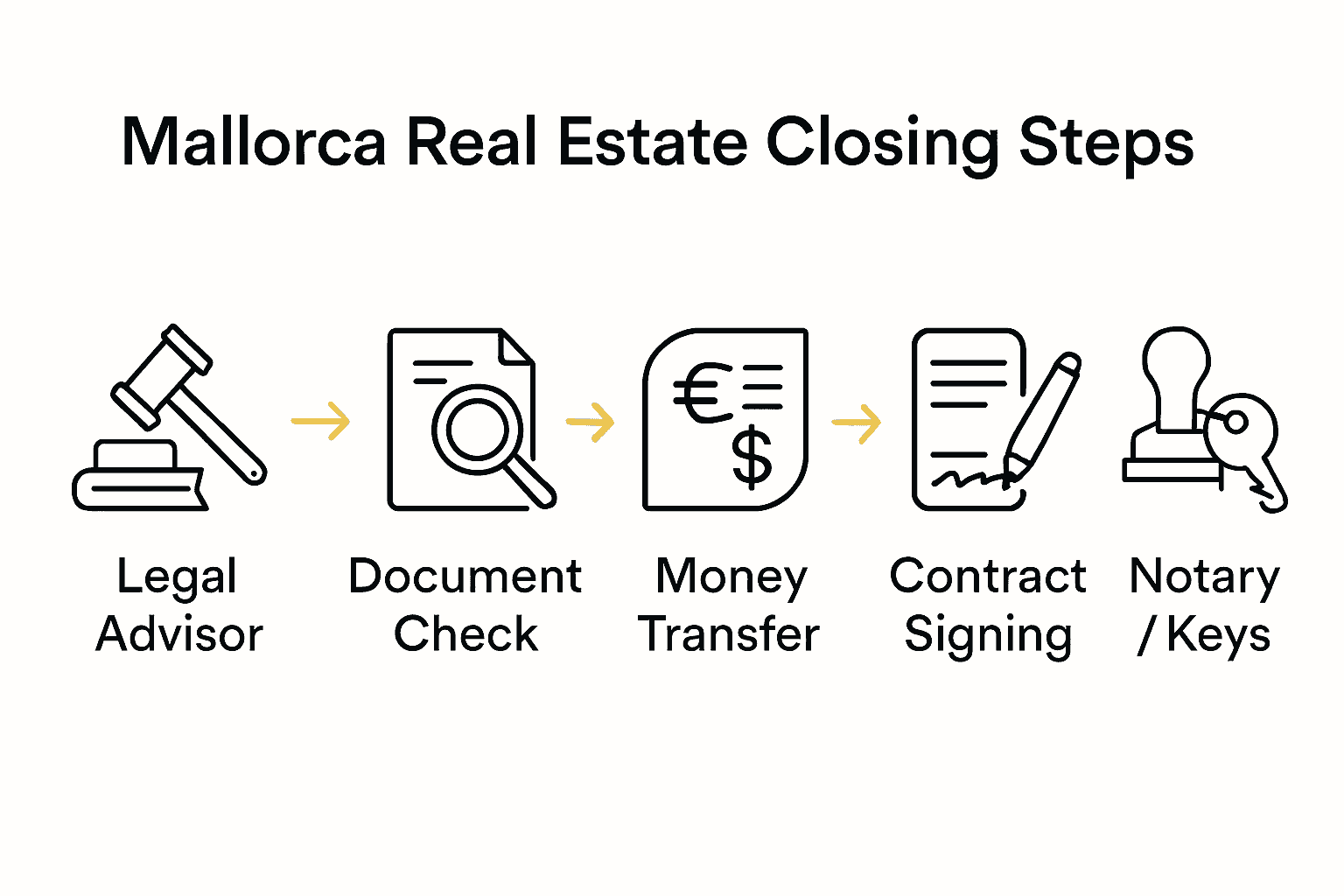
The Mallorca real estate closing process involves several key steps: securing legal representation, conducting due diligence on the property, coordinating financing and fund transfers, signing the private purchase contract, and completing the final closing at the notary. Follow each step carefully to ensure a smooth transaction.
How do I ensure my legal representation is suitable for international property transactions?
To find suitable legal representation, look for a bilingual attorney who specializes in international real estate and has experience working with American clients. Ask for specific references and verify their familiarity with cross-border transactions to ensure they can effectively guide you through the process.
What kind of documents should I gather for the closing process in Mallorca?
You will need several documents for the closing process, including your passport, NIE (Foreigner Identification Number), proof of funds, and the private purchase contract. Gather these documents well in advance to avoid delays on the day of closing.
How can I minimize costs when transferring funds internationally for my property purchase?
To minimize costs when transferring funds internationally, work with a financial advisor experienced in cross-border transactions and consider using specialized international transfer services that offer more competitive rates than traditional banks. Aim to transfer funds within a scheduled timeframe to lock in favorable exchange rates.
What should I expect during the notary appointment for my property closing?
During the notary appointment, you will sign the public deed of sale, which legally transfers ownership of the property. Ensure you bring all original documents and be prepared for the notary to verify your identity and oversee the final payment, solidifying your ownership legally.
What potential risks should I be aware of during the property purchase process in Mallorca?
Potential risks include unresolved legal issues with the property, discrepancies in documentation, and misunderstandings of contractual terms. To mitigate these risks, conduct thorough due diligence, work closely with your legal advisor, and review all documents carefully before signing any agreements.
Recommended
- Essential Steps to Buying Mallorca Real Estate Successfully - ULI & LISA Mallorca Property Blog
- Understanding the Property Transfer Process Mallorca - ULI & LISA Mallorca Property Blog
- Understanding the Property Transfer Process Mallorca - ULI & LISA Mallorca Property Blog
- Complete Guide to Mallorca Property Search - ULI & LISA Mallorca Property Blog
- Guía completa de requisitos legales taxis en Mallorca - Mallorcab