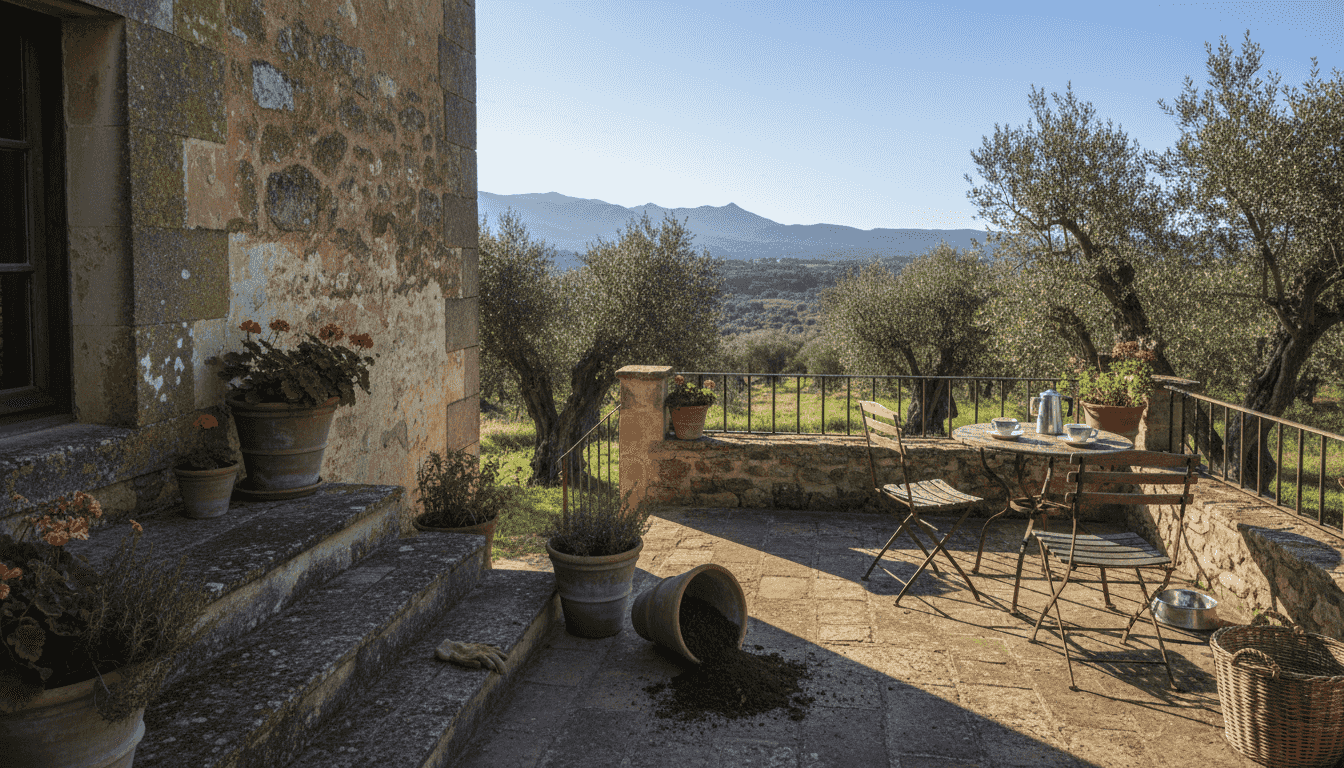
Finding the perfect balance between privacy, luxury, and genuine cultural immersion is no small feat for American professionals dreaming of retirement overseas. Mallorca’s fincas offer more than square footage or amenities—they open the door to a lifestyle rooted in history, tranquility, and authentic Spanish heritage. Whether you’re drawn by centuries-old stone architecture or world-class comforts, understanding the appeal and investment value of these unique properties is crucial before taking the next step.
Key Takeaways
| Point | Details |
|---|---|
| Fincas Are Unique Investments | Fincas offer a blend of heritage and modern luxury, appealing to buyers seeking authenticity and connection to Mallorca’s culture. |
| Privacy and Space | Owning a finca provides significant privacy and land, promoting a tranquil lifestyle away from urban centers. |
| Understanding Legalities Is Essential | American buyers must navigate Spanish property laws and regulations, making legal representation crucial for successful transactions. |
| Anticipate Total Costs | Beyond the purchase price, buyers should account for acquisition and annual holding costs to ensure financial viability of finca investments. |
Defining Mallorca Fincas and Their Allure
A finca is far more than just a property—it’s a lifestyle choice that has captivated American buyers for decades. At its core, a finca represents rural or agricultural land with a traditional cottage, farmhouse, or estate building that often carries centuries of history.
Many Mallorcan fincas date back over 300 years, combining rustic charm with natural beauty in ways that modern developments simply cannot replicate. These properties blur the line between heritage preservation and contemporary luxury living.
What Makes a Finca Different
Unlike a villa or apartment, a finca offers something distinctly different: connection to the land. You’re not just buying a building; you’re acquiring a piece of Mallorca’s agricultural and cultural heritage.
Key characteristics of a traditional finca include:
- Original stone architecture reflecting centuries-old construction methods
- Extensive grounds often featuring olive groves, almond orchards, or vineyards
- Rural location providing genuine privacy and tranquility
- Agricultural elements that preserve island traditions
- Organic gardens producing seasonal fruits and vegetables
The appeal lies in this combination. A finca gives you space, history, and the sense of owning something authentic rather than a cookie-cutter resort property.
The Modern Finca Evolution
Today’s luxury fincas have transformed while maintaining their character. Properties like Finca Son Salas near Soller, a 17th-century estate, demonstrate this evolution perfectly. These modernized fincas combine traditional rural architecture with contemporary amenities: infinity pools, professional kitchens, climate control, and high-speed internet.
You get the best of both worlds—authentic Mallorcan heritage with the comforts American buyers expect. This blend explains why fincas command premium prices in the luxury market.
Why American Buyers Choose Fincas
For American investors and retirees, fincas offer distinct advantages over other property types. The privacy factor alone sets them apart; you’re typically not sharing walls or dealing with homeowners’ associations.
Fincas also provide:
- Investment diversification: Land holdings appreciate independently from building values
- Rental appeal: Holiday seekers actively seek authentic finca experiences
- Negotiation flexibility: Unique properties often have fewer comparables, giving you more latitude in pricing discussions
- Legacy potential: Generational wealth tied to tangible Spanish real estate and cultural significance
When evaluating property options, understanding how villas, fincas, and apartments compare helps clarify which investment truly matches your lifestyle and financial goals.
A finca isn’t just a vacation home—it’s ownership of authentic Mallorcan heritage with modern luxury built in, making it one of the most compelling property types for serious American investors.
Pro tip: When evaluating a finca, request documentation of its historical significance and any restoration work completed. Properties with documented heritage value often appreciate faster and attract premium rental rates from travelers seeking authentic experiences.
Distinct Types of Fincas in Mallorca
Mallorca’s finca market isn’t one-size-fits-all. Properties vary dramatically based on their history, current use, and location across the island. Understanding these distinctions helps you identify which type aligns with your investment goals and lifestyle preferences.
Fincas are traditionally categorized by their agricultural function and the amenities present on the land. This classification system remains relevant today, even as modern fincas serve purposes far removed from their original agricultural roots.
Historic Estate Fincas
These are the crown jewels of Mallorca’s property market. Historic estates often date back centuries, featuring original stone construction, expansive grounds, and significant cultural value. Many sit on 50+ acres with olive groves, almond orchards, or vineyards intact.
Historic fincas appeal to American buyers seeking:
- Proven appreciation tied to heritage significance
- Potential tax benefits for property restoration and preservation
- Authentic character that cannot be replicated in new construction
- Generational wealth tied to tangible assets
These properties typically command premium prices but offer unmatched prestige and investment stability.
Rural Holiday Home Fincas
These modernized fincas blend traditional architecture with contemporary comfort. They’re designed specifically for vacation rentals or short-term luxury stays. You’ll find updated kitchens, multiple en-suite bedrooms, and professional pool installations.
They’re ideal if you want:
- Year-round rental income from holiday seekers
- Personal use during peak seasons
- Lower maintenance compared to large agricultural estates
- Faster rental turnaround and marketing appeal
These fincas generate strong returns while maintaining authenticity.
Exclusive Residential Fincas
Designed purely for private living, these properties prioritize personal comfort over rental potential. You get expansive grounds with privacy, modern amenities throughout, and often include staff accommodations or guest quarters.
Perfect for retirees or second-home buyers who value privacy above income generation.
Commercial Agricultural Fincas
These properties maintain active farming or agricultural production. Some produce olive oil, wine, or almonds for commercial sale. They require understanding of Spanish agricultural regulations and operational management.
Consider this type only if you’re genuinely interested in agricultural involvement or want diversified income streams.
The finca type you choose directly impacts your tax obligations, rental income potential, and maintenance requirements—select based on your actual lifestyle plans, not perceived prestige.
Pro tip: Request a detailed land survey and crop inventory for any finca with agricultural elements. Properties with productive orchards or vineyards often qualify for special Spanish tax incentives that significantly reduce your overall holding costs.
Here’s how the main finca types compare for investors and lifestyle buyers:
| Finca Type | Key Benefit | Primary Use | Typical Buyer Profile |
|---|---|---|---|
| Historic Estate | Heritage appreciation | Private/Legacy | High-net-worth collectors |
| Rural Holiday Home | Strong rental yields | Short-term let | Income-focused investors |
| Exclusive Residential | Maximum privacy | Personal use | Retirees, second-home owners |
| Commercial Agricultural | Active income streams | Farming/Business | Agri-entrepreneurs |
Luxury Features and Lifestyle Benefits
Mallorca fincas deliver a lifestyle that simply doesn’t exist in American suburbs or typical resort communities. You’re gaining access to something fundamentally different: authentic Mediterranean living combined with world-class amenities.
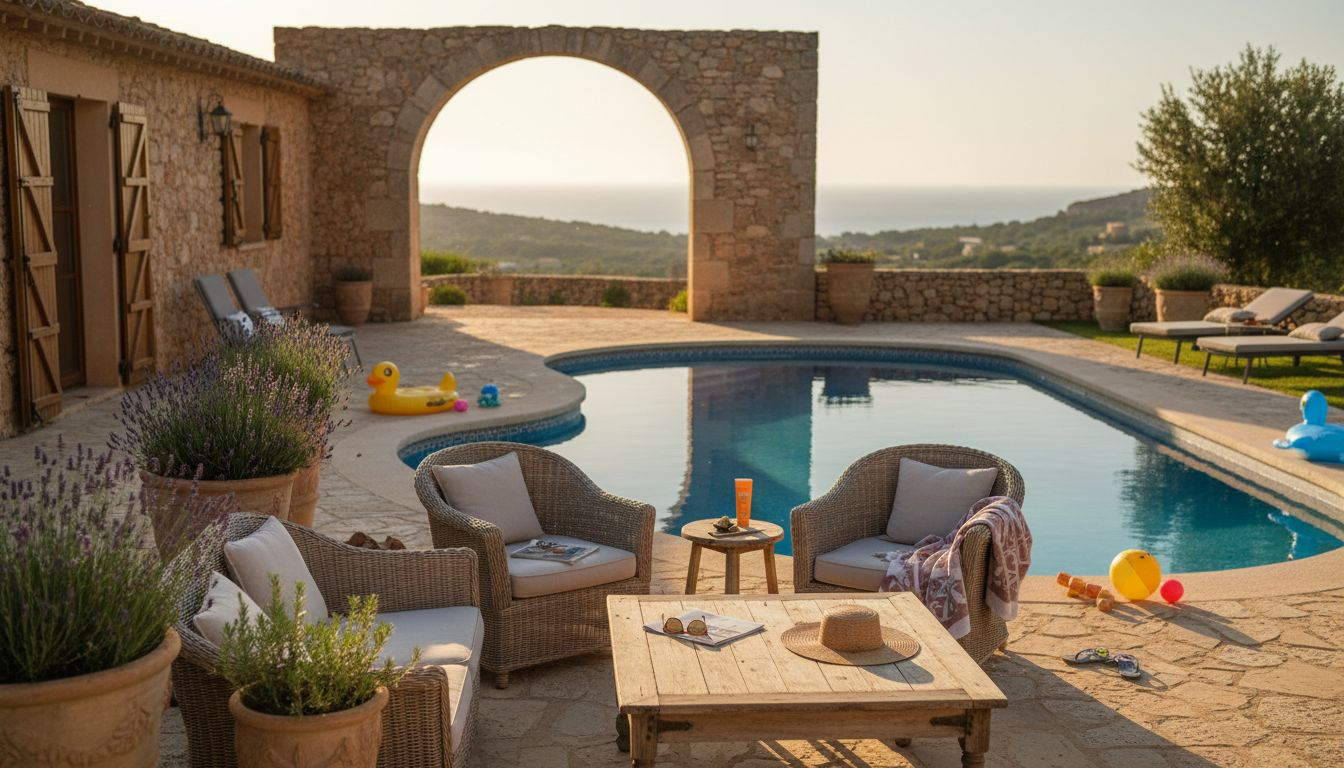
Luxury fincas typically feature private swimming pools, tennis courts, and extensive landscaped gardens alongside traditional stone architecture upgraded with modern interiors. This blend creates spaces that feel both timeless and completely contemporary.
The Physical Amenities
What sets fincas apart from other luxury properties isn’t just size—it’s thoughtful design. Most include:
- Private infinity pools overlooking valley vistas or Mediterranean views
- Professional-grade tennis or paddle courts on the grounds
- Separate guest houses with full amenities for visitors
- Wine cellars, olive oil production facilities, or agricultural storage
- Climate-controlled indoor living spaces with heated outdoor lounges
- Multiple kitchens (main kitchen plus guest kitchen for rentals)
These aren’t cosmetic upgrades. They’re functional investments that directly support your lifestyle and rental income.
Privacy and Exclusivity
Fincas sit in scenic rural or mountainous locations that provide genuine isolation from crowded urban centers. You won’t have neighbors within walking distance. You won’t hear traffic or construction noise.
This privacy factor matters more than most buyers initially realize. After spending careers in competitive American markets, many find the quiet transformative.
The Lifestyle Integration
Owning a finca means integrating into local Spanish culture and outdoor living traditions. You gain access to hiking trails, cultural experiences, and seasonal festivals that tourists never encounter. Families find ample space for activities, while retirees appreciate the connection to nature without feeling isolated.
The lifestyle appeals to buyers seeking a genuine connection to local living experiences rather than typical vacation resort amenities. You’re not buying a hotel property—you’re buying a real home in a real community.
Space That Matters
American buyers often underestimate how much land transforms daily life. A 10-acre finca provides space for gardens, guest accommodations, vehicle storage, and simply room to breathe. Children can play safely without supervision concerns. You can entertain without feeling crowded.
Luxury in a finca isn’t defined by square footage alone—it’s the combination of privacy, land, amenities, and authentic community integration that creates genuinely elevated living.
Pro tip: When evaluating finca features, prioritize infrastructure quality over novelty amenities. A reliable water system, modern electrical panels, and excellent pool equipment require expensive repairs if neglected—far more costly than upgrading dated design elements later.
Spanish Legalities for American Buyers
Navigating Spanish property law as an American requires understanding a fundamentally different legal system. Spain’s civil law framework operates differently than the common law system you know, and ignorance of these distinctions can cost you significantly.
The legal landscape is also evolving. Recent legislative discussions in the Balearic Islands consider restrictions on home purchases by non-residents to prioritize local housing. While not yet law, this reflects policy trends that could impact future acquisition rights.
Current Legal Framework
Presently, American citizens can purchase property in Mallorca under European Union regulations. You’ll need a Spanish tax identification number (NIF) to complete any transaction. This is non-negotiable and relatively straightforward to obtain through your lawyer.
Key legal requirements include:
- Property registration with the Spanish Land Registry
- Compliance with Spanish real estate transfer taxes
- Proof of legal origin of funds
- Title insurance verification
- Municipal zoning compliance checks
Each step involves Spanish bureaucracy, but it’s navigable with proper legal guidance.
Mortgage Considerations
American buyers can obtain mortgages in Spain but face stricter lending conditions than residents, including lower loan-to-value ratios and higher interest rates. Most Spanish banks lend only 60-70% of property value for foreigners, compared to 80% for Spanish residents.
Expect:
- Higher interest rates (typically 0.5-1% above resident rates)
- More extensive documentation requirements
- Longer approval timelines
- Currency exchange considerations if financing in euros
Many American buyers bring capital from home rather than finance locally, avoiding these complications entirely.
Tax and Ownership Structure
How you own property matters legally and financially. Most American buyers establish Spanish legal entities to optimize tax treatment and simplify future sales or transfers. This isn’t tax evasion—it’s tax-efficient planning within Spanish law.
Consider discussing ownership structures with both Spanish and American tax professionals. The right approach depends on your citizenship status, residency plans, and long-term goals.
Working With Legal Professionals
Don’t cheap out on legal representation. You need a Spanish property lawyer who understands American tax implications, not just Spanish law. Many transactions fail or become unnecessarily expensive because buyers cut corners here.
Your lawyer should handle title searches, contract negotiation, and closing procedures. This isn’t optional—it’s insurance against costly mistakes.
Spanish property law is not intuitive for American buyers; the combination of civil law, EU regulations, and evolving local policies requires expert guidance to navigate safely and efficiently.
Pro tip: Hire your Spanish lawyer before making any offers, not after. A good lawyer prevents problems instead of solving them after money changes hands, and the upfront cost is negligible compared to potential legal complications.
Investment Value and Cost Considerations
Most American buyers underestimate the true cost of acquiring a Mallorca finca. The purchase price is just the beginning. You’ll face significant additional expenses that dramatically impact your real investment outlay and must be factored into your financial planning.
The total cost of buying a finca includes taxes ranging 6-10%, notary fees, legal fees of 1-2%, and registration charges, typically amounting to 10-15% on top of the property price. A €2 million finca purchase could cost €200,000 to €300,000 in additional fees alone.
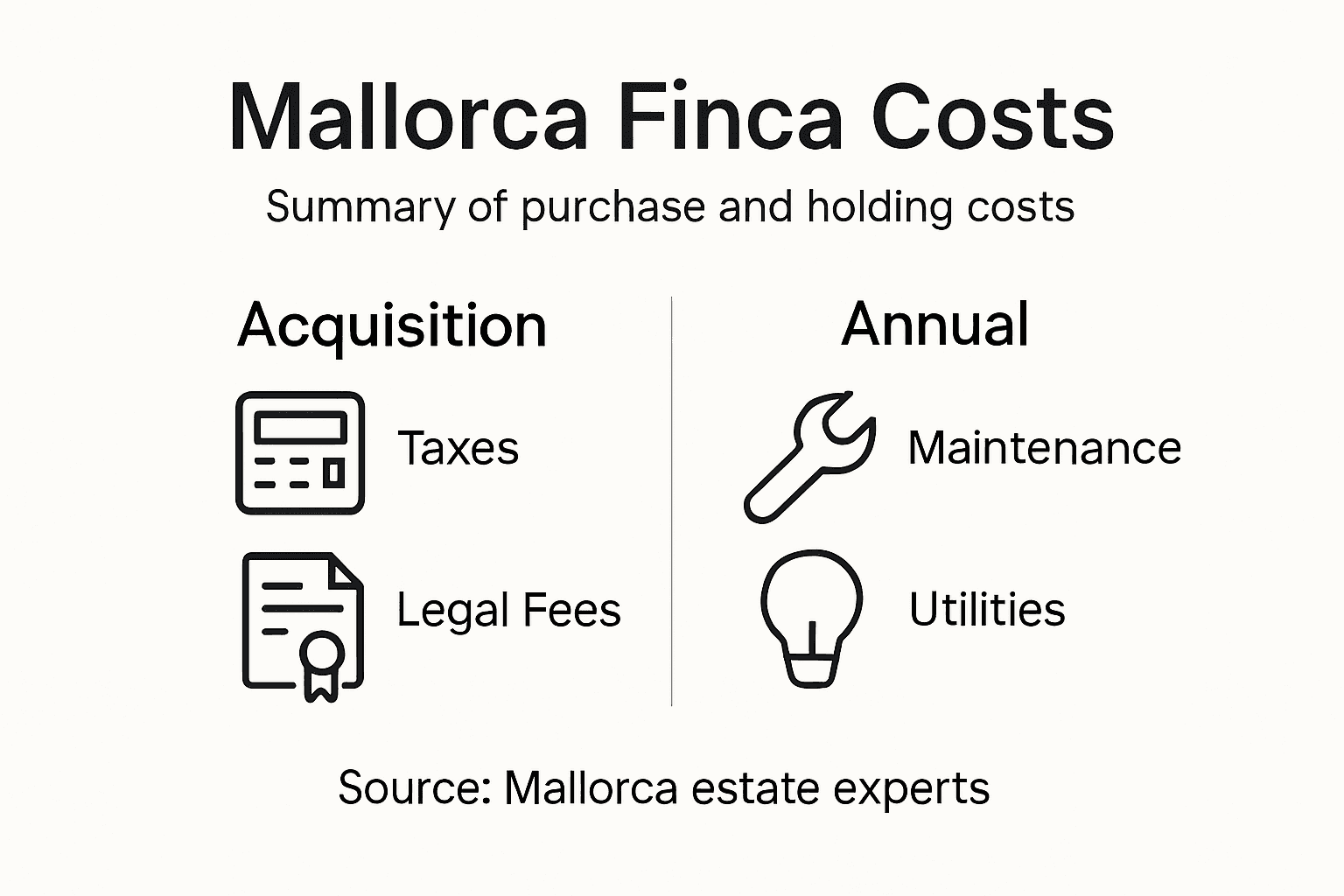
Breaking Down Acquisition Costs
Understanding each cost category prevents surprises at closing. These aren’t estimates—they’re predictable, mandatory expenses.
Typical acquisition costs include:
- Transfer tax: 6-10% depending on region and property type
- Notary fees: 0.5-1% of purchase price
- Legal and administrative fees: 1-2% for lawyer and filing
- Property registration: €300-€600 depending on value
- Property survey and appraisal: €1,500-€3,000
- Currency conversion fees: 1-2% if transferring funds internationally
Add these up before committing. A €2 million property suddenly requires €2.2-€2.3 million total capital.
Annual Holding Costs
Once you own the finca, ongoing expenses continue every year. These aren’t optional if you want to maintain property value and legal compliance.
Annual costs typically include:
- Property tax (IBI): €800-€3,000 annually depending on size and location
- Community fees: €0-€500 annually if applicable
- Insurance: €1,500-€4,000 annually for comprehensive coverage
- Maintenance and repairs: Budget 1-2% of property value annually
- Utilities: €200-€400 monthly for electricity, water, heating
- Pool maintenance: €100-€200 monthly if applicable
These add €15,000-€30,000 annually for most luxury fincas. Factor this into your return-on-investment calculations if you’re considering rental income.
Compare annual holding costs for a typical luxury finca:
| Expense Category | Low Estimate/Year | High Estimate/Year | Cost Driver Example |
|---|---|---|---|
| Property Taxes (IBI) | €800 | €3,000 | Location/size |
| Insurance | €1,500 | €4,000 | Level of coverage |
| Maintenance/Repairs | €20,000 | €40,000 | Age, condition, pool |
| Utilities | €2,400 | €4,800 | Number of amenities |
Investment Return Potential
Despite high acquisition costs, fincas have proven strong appreciation. Mallorca properties historically appreciate 3-5% annually, and unique fincas often outpace this. Properties with rental licenses generate 4-8% annual rental yield, depending on location and amenities.
The math works if you hold long-term and maintain the property properly. Short-term flipping typically doesn’t work here given acquisition costs.
Hidden Costs to Anticipate
Many buyers encounter unexpected expenses they didn’t budget for. Anticipating these prevents financial surprises.
Common hidden costs:
- Pool system repairs: €5,000-€15,000
- Roof repairs or replacements: €10,000-€30,000
- Electrical system upgrades: €3,000-€8,000
- Water system improvements: €2,000-€6,000
Request professional property inspections before purchasing. The €3,000 inspection cost is cheap insurance against €50,000 in repairs.
True investment returns in Mallorca fincas require understanding total cost of ownership—acquisition expenses, annual holding costs, and realistic maintenance budgets must align with your financial goals and timeline.
Pro tip: Request an independent property inspection covering structural, electrical, plumbing, and pool systems before finalizing your offer. Budget an additional 5-10% of purchase price as a contingency reserve for discovered repairs or upgrades.
Discover Your Perfect Mallorca Finca with Expert Guidance
Navigating the unique challenges of buying a Mallorca finca requires trusted expertise and local knowledge. From understanding Spanish legalities and tax implications to evaluating historic estates and modern luxury fincas, American buyers face complex decisions at every step. Whether your goal is private retreat, profitable rental, or legacy investment, managing property inspections, acquisition costs, and lifestyle integration can feel overwhelming.
ULI & LISA specialize in helping U.S. buyers turn these challenges into opportunities. We combine advanced AI-powered property searches with personalized advice tailored to your goals. Explore authentic Mallorca fincas without compromise, backed by professionals who know how to navigate local regulations and market trends. Start your journey with ULI & LISA to access the depth of Mallorca’s finca market.
Ready to find a finca that matches your lifestyle and investment vision? Use our Comprehensive Property Search to explore listings or contact us today for a personalized consultation. Don’t wait — Mallorca’s finest fincas attract discerning buyers quickly. Secure your slice of Mediterranean heritage now with trusted partners by your side.
Frequently Asked Questions
What distinguishes a finca from other property types?
A finca differs from a villa or apartment by offering a connection to the land, often featuring rustic architecture and extensive agricultural grounds that reflect the region’s heritage.
What are the modern amenities available in luxury fincas?
Modern luxury fincas typically feature infinity pools, professional kitchens, climate control, high-speed internet, and other contemporary comforts combined with traditional stone architecture.
What are the potential financial advantages of purchasing a finca?
Purchasing a finca can provide investment diversification, strong rental appeal, negotiation flexibility, and the potential for legacy wealth tied to tangible real estate.
What legal considerations should U.S. buyers be aware of when purchasing a finca?
U.S. buyers should understand the Spanish legal framework, ensure compliance with property registration and tax regulations, and consult a Spanish property lawyer to navigate the transaction process effectively.
Recommended
- Why Buy a Villa in Mallorca for U.S. Buyers - ULI & LISA Mallorca Property Blog
- Property Types in Mallorca – What U.S. Buyers Should Know - ULI & LISA Mallorca Property Blog
- Mallorca Property Market – Key Insights for U.S. Buyers - ULI & LISA Mallorca Property Blog
- Buying Property in Mallorca: Key Steps for Americans - ULI & LISA Mallorca Property Blog
- FSBO in Real Estate: Impact on Agent Strategies