
Buying luxury property in Mallorca can feel daunting for any american, especially with the unique requirements that come with international real estate. Most americans are surprised to learn that a typical down payment in Spain can reach 30 to 40 percent, far above what most are used to at home. Understanding what sets the Mallorca real estate process apart helps you make confident decisions, avoid costly pitfalls, and take the right first steps toward owning your dream getaway.
Quick Summary
| Key Takeaway | Explanation |
|---|---|
| 1. Assess your financial readiness | Understand budget requirements including down payments and additional costs before purchasing. |
| 2. Secure essential documentation | Obtain an NIE and open a Spanish bank account to facilitate real estate transactions. |
| 3. Explore tailored mortgage options | Research specialized mortgages for U.S., UK, and Swiss buyers to find the best rates. |
| 4. Navigate legal and tax requirements | Consult a local lawyer to understand the complexities of ownership laws and tax obligations. |
| 5. Verify and finalize property purchase | Carefully review all documentation and conduct a final inspection prior to the property transfer. |
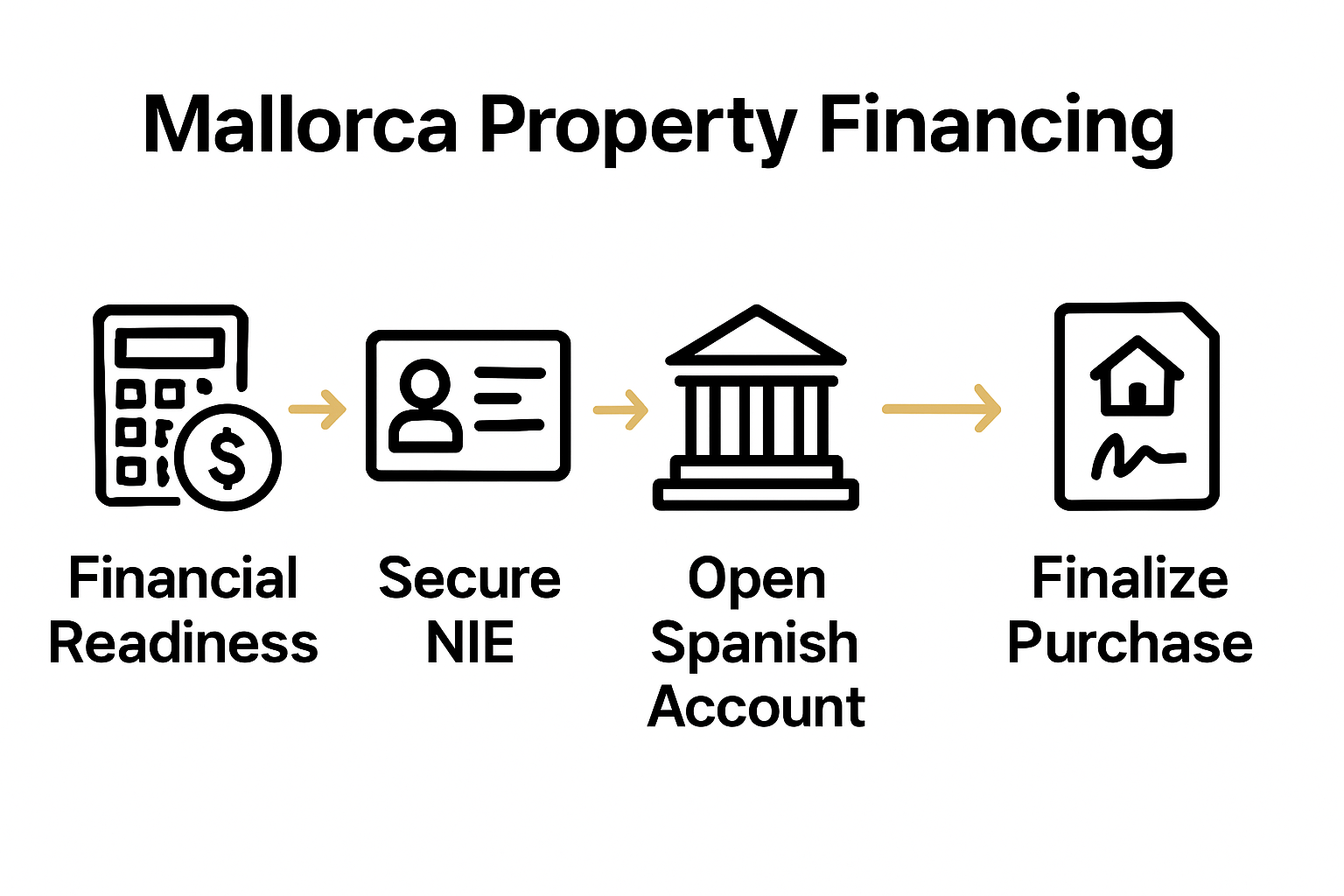
Step 1: Assess your financial readiness for Mallorca real estate
Before diving into Mallorca’s luxury property market, you need a comprehensive financial assessment that goes beyond basic savings. According to spanishcitizenship.org, American buyers should anticipate requiring a 30–40% down payment for Spanish real estate, which is significantly higher than typical US mortgage requirements.
Your financial readiness starts with understanding your total budget and liquidity. This means calculating not just your purchase price capacity, but also accounting for additional expenses like property taxes, legal fees, transfer taxes, and potential renovation costs. Accounting Insights emphasizes that non-resident buyers must demonstrate a stable income and favorable debt-to-income ratio to qualify for Spanish mortgages. Prepare documentation showing consistent earnings, minimal existing debt, and substantial financial reserves.
Pro tip: Work with a financial advisor who specializes in international real estate transactions. They can help you navigate currency exchange risks, understand Spain’s unique mortgage structures, and optimize your investment strategy for Mallorca’s dynamic property market. Your next step will involve gathering precise financial documentation and exploring specific mortgage options tailored for international buyers.
Step 2: Secure necessary documents and set up accounts
Navigating the legal and financial landscape of international property investment requires specific documentation and financial infrastructure. According to spanishcitizenship.org, foreign buyers must obtain an NIE (Número de Identificación de Extranjero) which serves as a critical legal and tax identification number for property transactions in Spain.
Accounting Insights emphasizes that establishing a Spanish bank account is not just recommended but essential for non resident property buyers. This account will facilitate mortgage payments, property related expenses, and demonstrate financial commitment to Spanish financial institutions. To secure your NIE, youll need to schedule an appointment at a local Spanish consulate or police station, bringing essential documents including your valid passport, proof of property interest, and potential financial documentation.
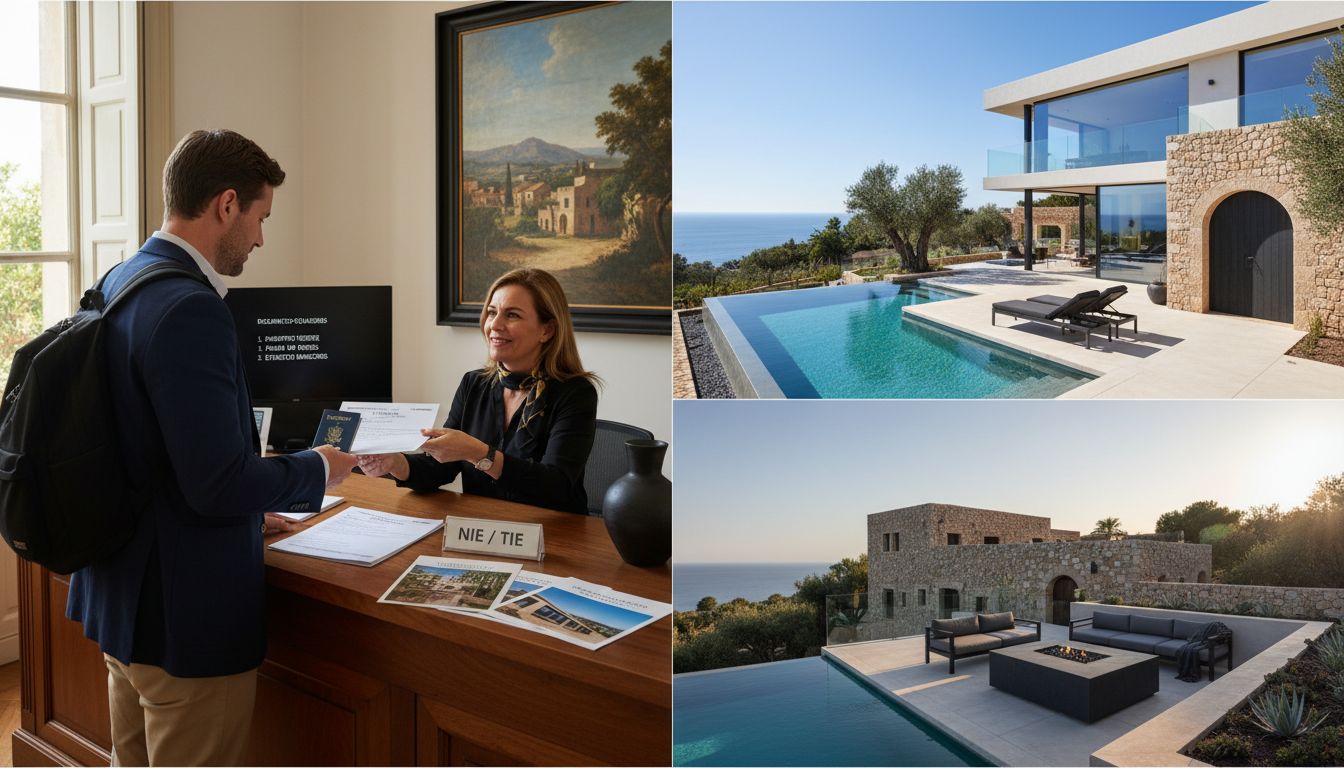
Pro tip: Start the NIE and bank account process early. Processing times can vary, and having these documents prepared in advance will streamline your property acquisition journey. Your next step involves working with local professionals who can guide you through the specific requirements and help you navigate potential bureaucratic challenges.
Step 3: Explore mortgage options for U.S., UK, and Swiss buyers
Securing a mortgage for international property investment requires understanding the unique landscape of cross border financing. Offshore Online highlights that non resident buyers have specialized mortgage products designed specifically for their unique financial situations. For U.S., UK, and Swiss buyers, this means navigating a complex but navigable process of proving financial stability and meeting specific lending criteria.
Typically, international mortgage options for Mallorca real estate vary significantly between countries. Offshore Online notes that UK expats often have more flexible lending options, with many Spanish banks offering tailored mortgage products that accommodate international income sources and credit histories. U.S. and Swiss buyers will find that most Spanish lenders require comprehensive documentation including proof of income, tax returns, bank statements, and a solid credit history. Loan to value ratios for non residents typically range between 60 to 70 percent, meaning youll need a substantial down payment.
Pro tip: Work with mortgage brokers who specialize in international property financing. They understand the nuanced requirements for each nationality and can help you identify the most competitive rates and terms.
Learn more about financing Mallorca property with our comprehensive guide that breaks down the entire process. Your next step involves gathering detailed financial documentation and preparing for a thorough mortgage application process.
Step 4: Navigate Spanish legal and tax requirements
Successfully purchasing property in Mallorca requires a comprehensive understanding of Spain’s complex legal and tax landscape. Spanish Citizenship emphasizes that American buyers must prioritize obtaining an NIE (Número de Identificación de Extranjero), a critical identification number that allows legal property transactions and tax registration in Spain.
Accounting Insights highlights the intricate tax obligations for non resident property owners. International buyers must prepare for multiple tax responsibilities including property transfer tax (typically 6 to 11 percent), annual property taxes, and potential capital gains taxes. These financial considerations require strategic planning and potentially significant upfront and ongoing expenses. Non resident property owners will also need to file annual tax declarations and potentially register with local tax authorities.
Pro tip: Hire an independent Spanish lawyer specializing in international real estate transactions. Explore our guide on understanding the property transfer process to gain deeper insights into navigating these complex requirements. A local legal expert can help you avoid costly mistakes, ensure full compliance with Spanish regulations, and provide crucial guidance throughout your property acquisition journey. Your next step involves selecting a reputable legal professional who understands the nuances of international property ownership in Spain.
Step 5: Verify approval and finalize your Mallorca property purchase
Spanish Citizenship provides critical insights into the final stages of property acquisition in Spain. The verification process involves a comprehensive review of all financial approvals, legal documentation, and mortgage conditions. This stage requires meticulous attention to detail and typically involves multiple critical checkpoints where both the buyer and financial institutions validate all transaction requirements.
Accounting Insights emphasizes the importance of thorough documentation verification. International buyers must carefully review mortgage approval documents, ensuring all terms align with initial discussions and financial capabilities. This includes confirming interest rates, repayment schedules, and any specific conditions attached to the non resident mortgage. At this stage, you will need to prepare for the final property transfer deed (escritura de compraventa), which legally transfers property ownership and must be signed before a Spanish notary.
Pro tip: Schedule a final property inspection before completing the purchase. Understand the complete property transfer process to ensure you have covered all necessary steps. Your legal representative should conduct a comprehensive review of property titles, outstanding liens, and ensure all local registration requirements are met. The final step involves transferring funds, signing official documents, and receiving your property ownership certificate. Be prepared for a potentially complex but exciting conclusion to your Mallorca real estate journey.
Make Your Mallorca Property Dreams a Reality with Expert Support
Navigating the complexities of financing property in Mallorca can feel overwhelming. From securing an NIE and understanding Spanish tax obligations to exploring mortgage options for U.S., UK, and Swiss buyers, these challenges can stall your dream of owning a luxurious home on this stunning island. You want expert guidance that not only simplifies these steps but also safeguards your investment with transparent advice and trusted local knowledge.
At ULI & LISA, we specialize in supporting international buyers just like you. Our AI-powered property search and personalized service help you explore the most suitable luxury and investment properties in Mallorca. With our deep understanding of financing challenges outlined in the guide, we provide tailored mortgage assistance, coordinate with trusted local professionals, and streamline your purchase process. Do not wait to let complexity hold you back. Visit our main website to start your journey and discover how our expert team turns complicated steps into confident decisions. Take the first step today and experience a smooth, transparent buying process you can rely on.
Frequently Asked Questions
How much should I budget for a down payment on property in Mallorca?
You should budget for a down payment of 30–40% of the property’s purchase price when buying in Mallorca. Start by calculating your total budget and ensuring you have sufficient funds for this substantial upfront cost.
What documents do I need to purchase property in Mallorca?
You will need to obtain an NIE (Número de Identificación de Extranjero) and set up a Spanish bank account. Organize your valid passport, proof of property interest, and financial documentation to streamline the process.
How can I secure a mortgage as a non-resident buyer in Mallorca?
To secure a mortgage, you’ll need to provide documentation proving stable income and favorable debt-to-income ratios. Gather your income proof, tax returns, and bank statements to prepare for the mortgage application process.
What are the tax implications for property owners in Mallorca?
As a property owner, you’ll face various tax obligations such as property transfer tax and annual property taxes. Plan for these costs by budgeting for a range of 6% to 11% of the property price for transfer taxes and additional amounts for annual taxes.
What should I do before finalizing my property purchase in Mallorca?
Before finalizing your purchase, conduct a thorough review of all financial approvals and legal documents. Schedule a final inspection of the property and ensure that all title and lien checks are completed satisfactorily before signing.
How can I navigate the legal requirements when buying property in Mallorca?
Hire a local legal expert specializing in international real estate transactions to help you understand the necessary legal requirements. This step ensures compliance with Spanish regulations and helps you avoid costly pitfalls.
Recommended
- Mallorca Property Buying Guide: Everything Explained - ULI & LISA Mallorca Property Blog
- Essential Steps to Buying Mallorca Real Estate Successfully - ULI & LISA Mallorca Property Blog
- Complete Guide to Mallorca Property Search - ULI & LISA Mallorca Property Blog
- Why Buy Real Estate in Mallorca Explained - ULI & LISA Mallorca Property Blog
- Blog - Mallorcab
- Learn How To Finance A Property Portfolio