
TL;DR:
- Mallorca’s tourist rental laws are strict, requiring licenses for short-term rentals and strict enforcement.
- Non-compliance can result in fines exceeding €300,000 and invalidates investment value.
- Foreign investors must navigate licensing, tax, and legal requirements carefully to protect their investment.
Owning a luxury property in Mallorca sounds like the ultimate investment, but the island’s rental laws are among the strictest in Spain, and enforcement is anything but relaxed. Authorities issued a €300,000 fine against a single Palma building in 2025 for operating multiple illegal holiday units. That is not an isolated case. For American investors and retirees eyeing Mallorca’s luxury market, understanding the legal framework before you buy or let is not optional. This guide walks you through rental law basics, licensing steps, enforcement realities, and the cross-border tax issues that catch U.S. buyers off guard.
Key Takeaways
| Point | Details |
|---|---|
| Strict rental laws | Mallorca maintains robust rental regulations, especially for tourist lets. |
| Severe penalties for violations | Fines can exceed €300,000 for illegal rentals, with proactive local enforcement. |
| Legal license increases value | Licensed properties fetch a 15-25% premium and enjoy greater resale opportunities. |
| U.S. investors need compliance | Cross-border buyers must navigate taxation, licensing, and due diligence to invest safely. |
The Mallorca rental law landscape: What you need to know
Mallorca’s rental market divides into two clearly defined categories, and confusing them is one of the most expensive mistakes a foreign investor can make. Tourist rentals are short-term lets, typically under 30 days, marketed to vacationers through platforms like Airbnb or Booking.com. Long-term residential rentals are contracts of 30 days or more, governed by Spain’s Urban Leasing Law. Each category carries its own licensing requirements, tax treatment, and compliance obligations.
The Balearic Islands government has steadily tightened tourist rental regulations since 2017, driven by housing pressure and community concerns about over-tourism. In many urban zones, including large parts of Palma, new tourist rental licenses are effectively frozen. That scarcity has a direct financial upside: properties with licenses trade at a 15 to 25% premium over comparable unlicensed properties. Compliance is not just a legal obligation. It is a market advantage.
For Mallorca investment tips that go deeper into ROI strategy, it helps to first understand who must comply:
- Any owner renting to tourists for short stays must hold a valid holiday rental license (Licencia de Alquiler Turístico)
- Properties in urban zones face the most restrictions; rural and semi-rural classifications often have more flexibility
- Apartment buildings in Palma are largely excluded from new tourist licenses under current law
- Long-term lets do not require a tourist license but must still be registered with regional authorities
- Community of owners (homeowners associations) can vote to ban tourist rentals, even if a license exists
“The license is not just paperwork. It is the difference between a premium asset and a liability that regulators can seize income from at any time.” — ULI & LISA advisory team
Mallorca’s luxury rental demand remains exceptionally strong, with high-season weekly rates for premium villas routinely exceeding €10,000. That revenue potential makes compliance worth every step of the process.

Fines, enforcement, and inspection: Understanding the risks
Enforcement in Mallorca is no longer a theoretical risk. Regional inspectors, local police, and digital monitoring teams actively scan rental platforms for unlicensed listings. The data is sobering.
| Location | Fine amount | Reason | Year |
|---|---|---|---|
| Palma building | €300,000 | Multiple illegal holiday units | 2025 |
| Palma district (prior) | €1,000,000 | Systemic unlicensed operation | Prior to 2025 |
| Ibiza apartment | €177,000 | Single illegal tourist let | Recent |
| Ibiza properties | €740,000 | Multiple unlicensed rentals | Recent |
These enforcement examples show a clear pattern: authorities are targeting both individual owners and entire buildings, and the fines scale with the number of illegal units.
How does the inspection process actually work? Authorities use a combination of digital intelligence and physical verification. Platforms like Airbnb are legally required to share listing data with Spanish tax and tourism authorities. Inspectors cross-reference active listings against the official license registry. If your property appears online without a valid license number, it triggers an investigation. Physical inspections then verify occupancy, signage, safety certifications, and guest records.
Common triggers for inspection include:
- Listings without a valid license number displayed
- Neighbor complaints about noise or excessive guest turnover
- Discrepancies between declared income and platform booking data
- Properties in zones where tourist licenses are banned
For a detailed look at the Mallorca property inspections process, and what protecting U.S. buyers looks like in practice, these resources break down exactly what to expect.
Enforcement is not random. It is data-driven, and the digital footprint of an unlicensed rental is nearly impossible to erase once it exists.
Pro Tip: Before listing any property, conduct a formal eligibility audit with a local legal advisor. Confirm the property’s zone classification, building rules, and license status. Catching a problem before you list costs a fraction of what a fine will.
Holiday rental licenses: Steps to legal compliance
Securing a holiday rental license in Mallorca is a structured process, but it requires patience and precise documentation. Here is the step-by-step path most investors follow:
- Confirm zone eligibility. Check whether your property’s municipality and zone classification permits new tourist licenses. Many urban areas in Palma do not.
- Verify building consent. Obtain written confirmation from the community of owners that tourist rentals are permitted in the building.
- Obtain a habitation certificate (cédula de habitabilidad), confirming the property meets minimum living standards.
- Prepare technical documentation. This includes floor plans, proof of ownership, property registry extract, and energy performance certificate.
- Submit the Declaración Responsable Turística to the Balearic Islands Tourism Directorate. This is a self-declaration of compliance, not a formal approval, but it activates your legal right to operate.
- Display your license number on all listings and at the property entrance.
- Register with the tax authority (Agencia Tributaria) to declare rental income correctly.
Long-term rentals follow a simpler path: register the contract with the regional housing authority and ensure the lease meets Spain’s Urban Leasing Law minimums. No tourist license is needed, but income must still be declared.
| Factor | Licensed property | Unlicensed property |
|---|---|---|
| Resale value | 15 to 25% premium | Discounted or unsellable |
| Legal risk | Minimal with compliance | Fines up to €1M+ |
| Platform access | Full, with license number | Removable at any time |
| Buyer appeal | High for investors | Low, liability concern |
For a full breakdown of how to get a rental license and the holiday rental key rules that apply in 2026, those resources cover the current regulatory specifics in detail.
Pro Tip: Work with a local gestor (administrative advisor) who specializes in Balearic tourism law. The process involves multiple agencies, and a specialist can cut processing time significantly while catching documentation errors before they cause delays.
Cross-border considerations: Taxes and transactional pitfalls
Once you are licensed and renting legally, the cross-border compliance layer kicks in. For American investors, this is where many well-intentioned plans go sideways.
Spain and the United States have a double-taxation treaty, which means you generally will not pay full tax twice on the same rental income. But the treaty does not eliminate your obligations on either side. Spain taxes rental income earned on Spanish soil. The U.S. taxes its citizens on worldwide income, regardless of where they live. You must report and reconcile both.
Common pitfalls American investors face:
- Failing to declare Spanish rental income on their U.S. federal tax return (IRS Form 1040 with Schedule E)
- Not filing the FBAR (FinCEN Form 114) if Spanish bank accounts holding rental proceeds exceed $10,000 at any point during the year
- Ignoring capital gains on eventual property sale, which Spain taxes at rates between 19% and 28% for non-residents
- Overlooking VAT obligations if services beyond basic accommodation are offered (cleaning, concierge, etc.)
- Skipping due diligence on title, zoning, and existing encumbrances before purchase
For properties near the coast, coastal property regulations add another compliance layer, including restrictions on modifications and environmental protections. Before any acquisition, work through a full investment property checklist to verify legal standing.
Pro Tip: Retain both a Spanish tax advisor (asesor fiscal) and a U.S. CPA with international experience before your first rental season. The cost is modest compared to the penalties for non-disclosure, which the IRS and Spanish tax authority both pursue actively.
Properties with valid licenses also command that 15 to 25% resale premium, meaning compliance directly improves your exit value, not just your operating income.
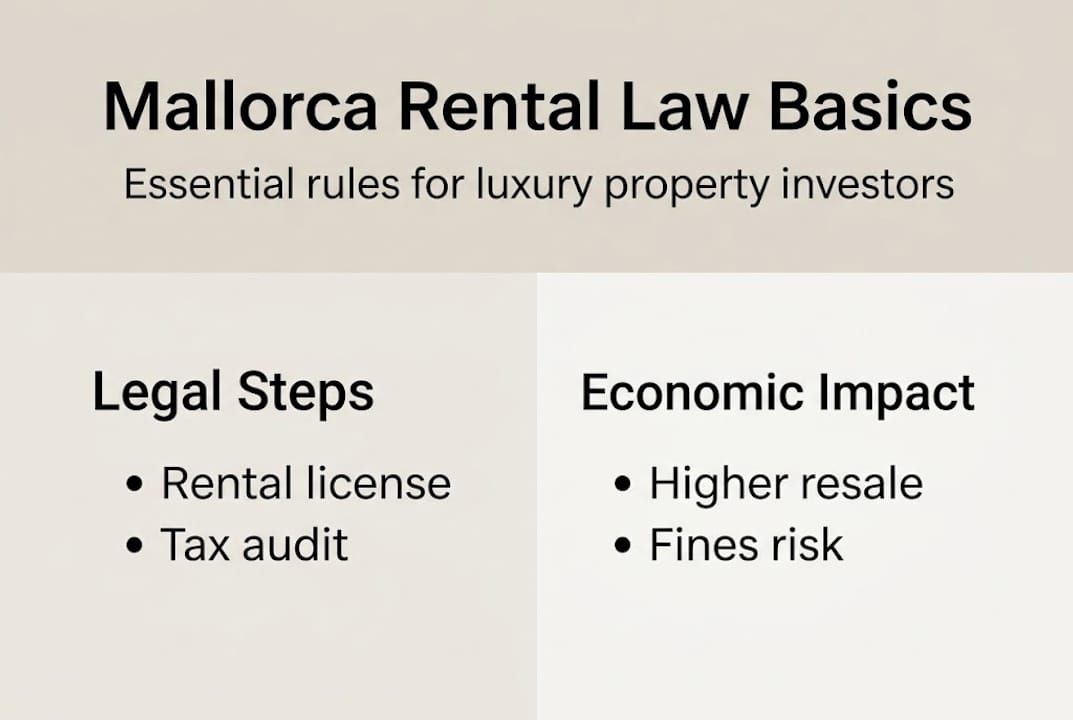
Our perspective: What investors really need to know about Mallorca rentals
Here is the truth most guides skip: the investors who struggle most with Mallorca’s rental laws are not the ones who ignored the rules entirely. They are the ones who assumed the rules were flexible, or that enforcement would not reach them specifically.
U.S. buyers in particular tend to underestimate how sophisticated digital enforcement has become. Platforms share data. Algorithms flag anomalies. Inspectors follow up. The idea that a luxury villa quietly listed under a friend’s name or a shell arrangement will fly under the radar is a costly myth.
What we see consistently is that compliance, done properly from the start, is not a burden. It is a strategic asset. A licensed property rents at higher rates, attracts more serious tenants, and sells faster at a premium. Consider renting before buying in a specific area to understand the local rental dynamics before committing capital.
The investors who win in Mallorca are the ones who treat legal compliance as part of the investment thesis, not an afterthought. That mindset shift changes everything.
Secure your Mallorca investment with expert guidance
Navigating Mallorca’s rental laws, licensing requirements, and cross-border tax obligations is genuinely complex, but it does not have to be overwhelming. At ULI & LISA, we work exclusively with international buyers, including many American investors and retirees, to identify luxury properties that are already compliant or have a clear path to licensing. We combine AI-powered market search with hands-on legal and compliance guidance, so you are never left guessing. Whether you are at the research stage or ready to make an offer, our team can connect you with the right advisors and properties to protect and grow your investment in Mallorca.
Frequently asked questions
Do all Mallorca properties require a rental license to be let out legally?
Only properties used for short-term tourist rentals require a designated holiday rental license; long-term lets of 30 days or more follow different registration rules under Spain’s Urban Leasing Law. Licensed properties also carry a measurable resale premium over unlicensed equivalents.
What are the penalties for renting out a property illegally in Mallorca?
Fines for illegal tourist lets can exceed €300,000 per case, with enforcement targeting both property owners and the platforms listing the illegal rentals.
Can foreign nationals legally hold and profit from licensed rental properties in Mallorca?
Yes, foreign nationals including Americans can own and operate licensed rental properties in Mallorca, but they must comply with Spanish licensing requirements, local tax obligations, and U.S. cross-border income reporting rules.
Does holding a holiday rental license increase the value of my Mallorca investment?
Yes, licensed properties command a 15 to 25% resale premium over unlicensed equivalents, making compliance a direct driver of investment value.
Recommended
- Mallorca Investment Property Checklist: Legal Essentials - ULI & LISA Mallorca Property Blog
- Holiday Rental Licenses Mallorca – Key Rules for Investors - ULI & LISA Mallorca Property Blog
- Mallorca Investment Tips: Maximize ROI and Navigate Rental Laws - ULI & LISA Mallorca Property Blog
- Mallorca Luxury Property Guide: Everything You Need to Know - ULI & LISA Mallorca Property Blog