
Securing a luxury holiday rental in Mallorca appeals to many American investors, yet the real challenge lies in achieving full legal compliance. Spain’s ETV license is not just a formality but a requirement that shapes investment value, guest capacity, and ongoing income. With a government moratorium in place until 2026, existing ETV licenses are exceptionally valuable assets that protect your operations, ensure maximum returns, and keep your property out of legal jeopardy.
Key Takeaways
| Point | Details |
|---|---|
| Importance of ETV License | Securing an ETV license is essential for operating a legal vacation rental in Mallorca, avoiding fines and protecting investment value. |
| Zoning and Compliance Issues | Understanding local zoning regulations is critical, as not all properties are eligible for ETVs due to community consent requirements. |
| Tax Obligations | American investors must navigate complex tax frameworks, including obtaining a NIE and filing Spanish tax returns on rental income. |
| Avoid Common Pitfalls | Many issues stem from operating without a valid license or inadequate documentation, leading to severe penalties or property bans. |
Holiday Rental Licenses in Mallorca Explained
A holiday rental license in Mallorca is your legal permission slip to operate a vacation rental property. Known officially as an Etiqueta de Vivienda Turística (ETV), this is the authorization that separates legitimate property operators from those operating in gray legal territory. Without it, you’re exposed to significant fines, property seizures, and damage to your investment value. American investors entering the Mallorca market quickly learn that understanding the licensing framework isn’t optional—it’s foundational.
The ETV license essentially certifies that your property meets Balearic regulations for short-term tourist accommodation. This includes safety standards, habitability requirements, and proper registration with local authorities. When you hold a valid ETV, you’re allowed to legally market your property on booking platforms, collect payment from guests, and operate the vacation rental as your business. The license also provides tax legitimacy, meaning you can properly deduct expenses and claim business income without triggering audit flags. Many American investors overlook this detail until they’re already deep into their first tax year—getting it right from the start saves thousands in potential penalties.
What makes the ETV system distinctive compared to other jurisdictions is how it ties directly to your property’s community consent requirements and zoning status. Not all properties in Mallorca can obtain an ETV. Apartment buildings with shared walls, for instance, often face stricter approval processes because building communities must agree to vacation rental activity. Single-family homes and certain types of independent villas typically qualify more easily. The licensing process itself requires submitting property documentation, proof of compliance with safety standards, and registration with the regional tourism board. This is why working with agents experienced in holiday rental licensing procedures prevents costly delays and rejections that could push back your rental launch timeline by months.
Setting up an ETV isn’t just about legal compliance—it’s about protecting your capital. A licensed property commands higher booking rates, attracts premium guests, and maintains stronger resale value because future buyers know the property has legitimate operational status. Without the license, you’re essentially betting on illegal operation continuing without consequences, which no serious investor should consider. The investment in proper licensing typically pays for itself within the first few months of operations through increased bookable days and guest trust.
Pro tip: Begin your licensing application process at least four months before your intended rental launch date, as permit approval timelines in Mallorca average 90 to 120 days, and delays happen when documentation is incomplete or community approval takes longer than expected.
Types of Licenses and ETV Distinctions
Mallorca has multiple licensing pathways for short-term rentals, but understanding which one applies to your property is critical for legal operation. The ETV (Etiqueta de Vivienda Turística) is the most common and valuable license type for investors, but it’s not the only option. Some properties qualify for alternative arrangements, and confusion between these categories costs investors significant time and money. The distinction matters because each license type carries different operational rules, guest capacity limits, and tax implications.
The ETV license is specifically designed for year-round holiday rentals and is the gold standard for American investors building a vacation rental business in Mallorca. An ETV license enables year-round rental operations while establishing the maximum number of guests your property can accommodate. Once you hold an ETV, your property must be registered in the Single Registry of Tourist Rentals, which is mandatory for legal operation. You’ll need to maintain occupancy certificates, carry liability insurance covering guest accidents, and provide emergency contacts to local authorities. This registration also gives your property legitimacy when marketing on international booking platforms, which platforms now require for listings in Mallorca.
Here’s what separates ETV from other rental arrangements you might encounter. Some older properties operate under transitional licenses or grandfather provisions, but these are being phased out. Short-term rentals without any license exist in Mallorca’s market, but operating without one exposes you to fines starting at €3,000 and escalating quickly for repeat violations. Property seizures have occurred in extreme cases. Then there are seasonal licenses (limited to specific months), which appeal to some investors but generate significantly lower annual revenue compared to year-round ETV operations. The government moratorium preventing new ETV issuances until 2026 makes existing licenses extraordinarily valuable—if you’re acquiring a property with an active ETV, you’re inheriting an asset that cannot be easily replaced.
Here’s a summary of the main license types and their investor impact:
| License Type | Rental Duration | Guest Capacity Rule | Impact on Investment Value |
|---|---|---|---|
| ETV (Standard) | Year-round | Set by property size | Maximizes income & strong resale |
| Transitional (Legacy) | Limited, being phased | Varies, often restricted | Lower value, operational risk |
| Seasonal | Selected months only | Seasonal limitations | Lower annual revenue potential |
| No License | Not legal | None | Severe fines, property risk |
What confuses many American investors is that licensing varies by municipality within Mallorca. Palma has different requirements than Pollensa or Andratx. Some towns have stricter building community approval processes, while others focus more on tax compliance. This is why the licensing distinction isn’t just about the license itself but about understanding your specific location’s regulatory environment. A property that qualifies easily for an ETV in one municipality might face rejection in another due to zoning or community composition rules. This local variation is one reason many investors partner with agents who understand municipal-level regulatory nuances rather than attempting the process independently.
Pro tip: If you’re purchasing an existing rental property, always request written confirmation that the ETV license is active and transferable to you as the new owner, as some licenses require reapplication or face complications during ownership transfers.
Legal Requirements for Foreign Investors
As an American investor purchasing a holiday rental property in Mallorca, you’re entering a regulatory environment that differs fundamentally from U.S. state laws. Spain treats foreign property owners as business operators once they begin vacation rentals, which means compliance obligations extend far beyond simply obtaining a license. The Spanish government requires managing rental properties involves meeting legal requirements that foreign investors often underestimate, particularly around residency status, tax registration, and liability exposure. What seems straightforward in the U.S.—renting out your second home—becomes a formal business operation under Spanish law, complete with mandatory registrations and reporting obligations.
Your first legal requirement is establishing tax residency status with Spanish authorities. If you’re a non-resident property owner (which most American investors are), you must register with the Spanish tax authority (Agencia Tributaria) and obtain a NIE (Número de Identidad de Extranjero), essentially your Spanish tax identification number. This isn’t optional. Once you operate a vacation rental, Spain requires you to file income tax returns on rental earnings and maintain detailed financial records. Additionally, you’ll need to register your business activity with local authorities and understand your obligations for Value Added Tax (IVA), which runs 21% on most transactions. Many American investors discover too late that their accountant back home cannot file Spanish taxes, forcing them to hire a Spanish tax advisor mid-year at premium rates.

Guest liability presents another critical legal area that American investors misjudge. When someone books your property and gets injured, you’re potentially liable under Spanish tort law. Your standard homeowner’s insurance from the U.S. typically does not cover liability for rental operations on Spanish property. This means securing Spanish liability insurance specific to vacation rentals becomes mandatory for legal compliance and financial protection. Some properties require additional liability coverage if they have pools or other amenities. You’re also responsible for vetting guests and maintaining safe conditions, and Spanish law holds property owners accountable for predictable guest misconduct or dangerous conditions you failed to address.
Zoning and building regulations add another compliance layer. Not every property is zoned for vacation rental use, and some buildings have restrictions embedded in their community bylaws. Before purchasing, you need verification that your specific property legally qualifies for tourist rental activity. This requires reviewing municipal zoning documents and the property’s building community approval. Many properties purchased without this verification later discover they cannot legally operate vacation rentals, leaving investors with expensive properties that generate no income.
This table outlines essential compliance requirements for Americans investing in Mallorca rentals:
| Compliance Area | Spanish Requirement | U.S. Comparison |
|---|---|---|
| License | Mandatory ETV or seasonal permit | Varies by state, often simpler |
| Tax Registration | NIE required, Spanish returns annually | Social Security/Tax ID, U.S. returns |
| Liability Insurance | Spain-specific vacation rental policy | Homeowner policy, less strict |
| Tourist Tax | Must be collected and remitted | Rare in U.S. short-term rentals |
Pro tip: Hire a Spanish gestoría (tax and legal advisor) before closing on your property, not after, so they can guide your business structure setup, ensure proper registrations happen simultaneously, and prevent costly compliance mistakes during your first operating year.
Tax Obligations and Rental Income Rules
Tax compliance for holiday rental income in Mallorca operates under a completely different framework than American short-term rental taxation. Spain views vacation rental income as business revenue, not passive investment income, which dramatically changes your reporting obligations and tax treatment. Understanding these distinctions prevents costly audits and penalties that can wipe out multiple years of rental profits. The Spanish tax authority scrutinizes rental properties closely, particularly those owned by foreign investors, making accurate filing non-negotiable from year one.
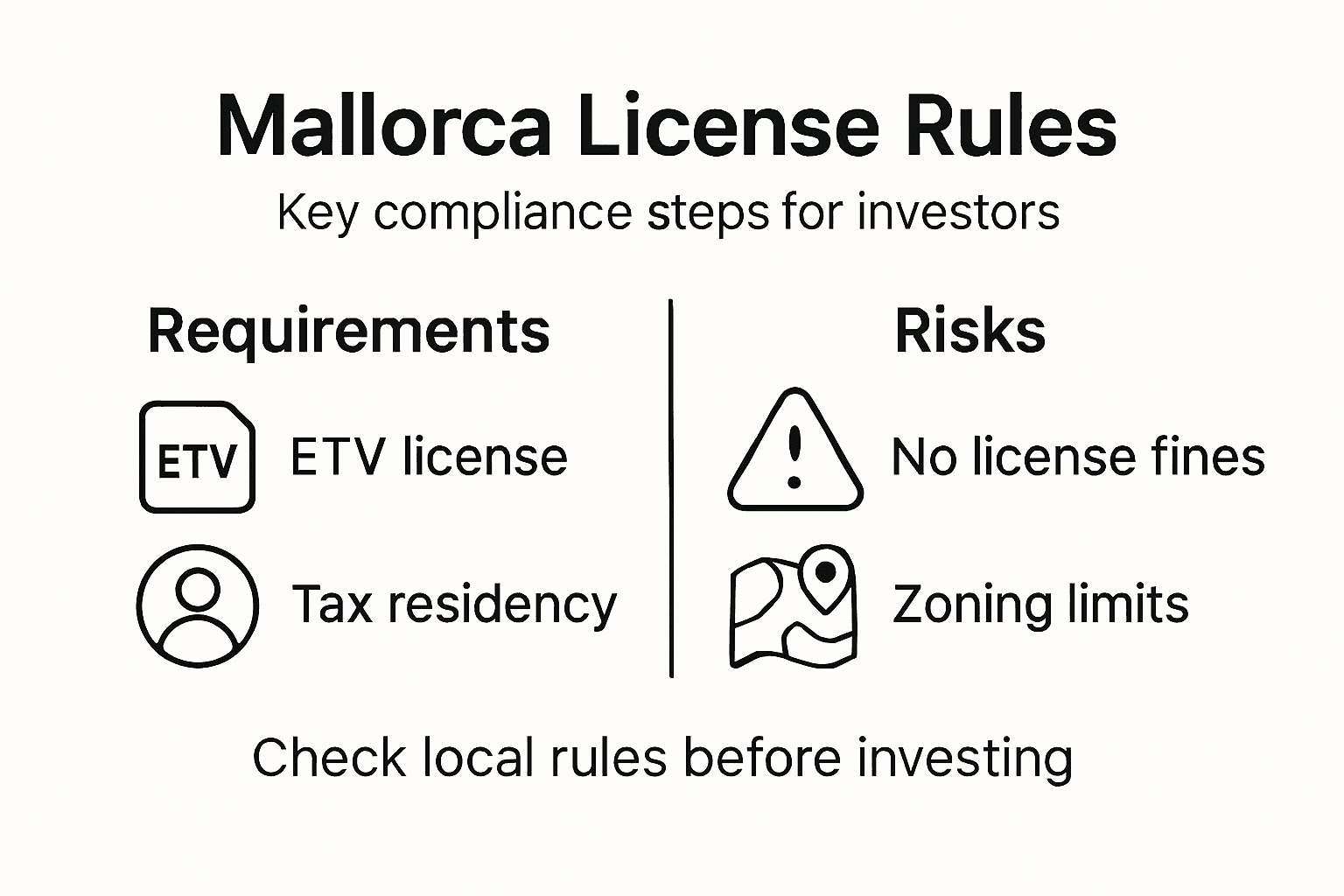
Your primary tax obligation involves holiday rental income subject to specific tax regulations that include filing annual income declarations through the Spanish tax authority. Non-resident property owners must declare all rental income, regardless of whether you reinvest profits back into the property or transfer money to the U.S. Spain applies standard income tax rates (ranging from 19% to 45% depending on income level) plus applicable regional taxes. You cannot simply report this income on your U.S. tax return and ignore Spanish obligations, as Spain requires reporting even if you’re not physically present in the country. Additionally, you’re obligated to collect and remit tourist tax (Impuesto de Estancia) directly to local authorities, which typically runs 0.55 to 3.25 euros per guest per night depending on the municipality. This tax must be collected separately and forwarded to the government, not mixed with your personal income.
Value Added Tax (IVA) adds another layer of complexity for certain rental scenarios. If your property qualifies as a commercial holiday rental operation (which most do), you may need to register for IVA and charge 21% on guest payments. However, IVA rules vary based on how you structure your rental activity and whether you provide additional services beyond basic accommodation. Some investors structure their operations to avoid VAT registration, but this requires careful planning with a Spanish tax advisor. Attempting to avoid VAT through creative structuring can trigger aggressive audits if the tax authority identifies inconsistencies in your reporting.
Maintaining meticulous records becomes your legal requirement and financial protection. Spain requires you to keep detailed documentation of rental income, guest payments, dates of occupancy, and all expenses related to property maintenance and operation. Bank statements alone are insufficient. The Spanish government conducts random audits on foreign-owned rental properties, and when they do, missing documentation can result in penalties exceeding your actual tax liability. Property management platforms like Airbnb and Booking.com now share guest booking data directly with Spanish tax authorities, eliminating any possibility of underreporting income. If your declared income doesn’t match platform records, you’ll face immediate audit notices.
Pro tip: Use accounting software designed for Spanish rental operations and hire a Spanish accountant to file your annual tax declaration (declaración de la renta) by June 30th each year, as late filings trigger automatic penalties even when you’re owed a refund.
Common Pitfalls and Compliance Risks
Most American investors who encounter serious problems with Mallorca rental properties didn’t stumble into issues by accident. They walked directly into predictable traps that experienced investors recognize immediately. The difference between a profitable investment and a financial disaster often comes down to understanding which shortcuts look tempting but carry catastrophic consequences. Common compliance failures don’t just cost money in fines—they can result in property seizures, rental bans that last years, and legal battles that drain resources faster than any rental income could replenish them.
Operating without a valid license remains the most dangerous and surprisingly common mistake. Some investors purchase properties with expired or transferable licenses, assuming they can simply continue operations. Common pitfalls include operating without required licenses and failing to comply with zoning restrictions that can trigger immediate enforcement action. When local authorities discover unlicensed rental activity, they don’t issue warnings. They issue fines starting at €3,000 and escalating with each violation, and they can ban your property from rental activity for extended periods. The moratorium preventing new ETV licenses until 2026 means if you lose your license, you cannot obtain a new one, essentially rendering your property worthless as a rental investment. Misunderstanding moratorium conditions or advertising your property without displaying your actual license number creates additional vulnerability to enforcement actions.
Zoning violations present another insidious pitfall because they often appear invisible at first. A property might technically exist in a residential zone where vacation rentals face restrictions, or your building community might have bylaws explicitly prohibiting short-term rentals. Many investors discover these restrictions only after investing in renovations and marketing. Non-compliance with regulations can result in significant fines and legal actions that extend to negative community relations when neighbors view your rental as violating agreed-upon building standards. Some community associations take legal action against property owners, forcing expensive litigation even if you ultimately prevail.
Documentation failures create audit vulnerabilities that can persist for years. Investors who fail to maintain proper records of guest payments, occupancy dates, and expense documentation face penalties that multiply throughout an audit. Tax authorities cross-reference platform data from Booking.com and Airbnb against your reported income, and discrepancies trigger immediate investigations. Additionally, failing to collect and remit tourist tax creates separate violations that compound your exposure. Inadequate understanding of evolving local council policies means regulations that applied last year might have changed, and relying on outdated information can land you in violation before you realize it.
Pro tip: Before purchasing any rental property, request written verification from local authorities confirming the property’s current license status, zoning eligibility, and any community restrictions, then have a Spanish lawyer review all documentation to identify hidden compliance issues before you close escrow.
Secure Your Mallorca Investment with Expert Guidance
Navigating Mallorca’s complex holiday rental licensing system, particularly the critical ETV license requirements, can feel overwhelming. American investors face unique challenges such as zoning restrictions, community consent hurdles, and rigorous Spanish tax and liability regulations. Without proper guidance, these obstacles risk costly fines and jeopardize your rental income and property value.
At ULI & LISA, we specialize in supporting international buyers like you through these exact challenges. Using advanced AI-powered tools, we offer thorough, unbiased property searches tailored to ensure your investment meets all legal requirements, including verifying active ETV licenses and compliance with local regulations. Our team provides personalized advice on zoning issues, license transfers, and tax registration essentials so you can build your vacation rental business with confidence.
Ready to make your Mallorca holiday rental investment a success without risking compliance pitfalls? Discover how our experts can simplify the process from start to finish at ULI & LISA and learn more about holiday rental licensing procedures. Contact us today to secure your property with full legal peace of mind.
Frequently Asked Questions
What is a holiday rental license in Mallorca?
A holiday rental license, known as an Etapa de Vivienda Turística (ETV), is a legal authorization required to operate a vacation rental property in Mallorca. It verifies that your property meets local regulations for short-term rentals, ensuring compliance with safety and habitability standards.
Why is obtaining an ETV license essential for investors?
Obtaining an ETV license is crucial as it allows investors to legally market their rental property, collect guest payments, and operate as a business. Without this license, property owners face the risk of significant fines, property seizures, and loss of investment value.
How long does it take to obtain a holiday rental license in Mallorca?
The approval timeline for a holiday rental license in Mallorca typically averages between 90 to 120 days. It is advisable to start the application process at least four months before your intended rental launch date to account for potential delays.
What are the consequences of operating a vacation rental without a license?
Operating a vacation rental without a valid license can lead to severe penalties starting at €3,000 for first-time violations, escalating for repeat offenses. Additionally, property owners risk having their rental activities banned and may face property seizures in extreme cases.
Recommended
- Property Investment Strategies Mallorca: Complete Guide - ULI & LISA Mallorca Property Blog
- How to Get a Holiday Rental License in Mallorca - ULI & LISA Mallorca Property Blog
- How to Get a Holiday Rental License in Mallorca - ULI & LISA Mallorca Property Blog
- Mallorca Investment Properties – Licensed Villas with Rental Potential (ETV) | ULI & LISA