Securing premium real estate in Mallorca means understanding more than just market trends. The allure of this Mediterranean destination attracts American investors who value both exclusivity and reliable portfolio growth. With rigorous legal requirements and evolving rental regulations, navigating Mallorca’s property landscape demands expert insight and careful planning. This article uncovers key investment property fundamentals, luxury asset categories, and compliance strategies to protect your interests and maximize return.
Key Takeaways
| Point | Details |
|---|---|
| Investment Categories | Mallorca offers various investment property types, including residential rentals, vacation homes, commercial real estate, and land. Understanding these categories is essential for investors. |
| Legal Considerations | US buyers must navigate complex legal requirements such as obtaining an NIE number, ensuring property title verification, and understanding tax obligations in both Spain and the US. |
| Rental Regulations | Compliance with local rental regulations, including obtaining necessary licenses and maintaining thorough documentation, is crucial for successful property management in Mallorca. |
| Tax Implications | Investors should be aware of various taxes, including transfer tax and non-resident income tax, and engage tax specialists for effective planning and compliance. |
Mallorca investment property basics defined
Mallorca offers a compelling landscape for property investors seeking premium real estate opportunities. Investment properties in this Mediterranean paradise represent more than just a financial asset - they are a strategic entry into one of Europe’s most desirable markets. Understanding investment property fundamentals is crucial for making informed decisions about Balearic real estate.
In the context of Mallorca, an investment property typically falls into several key categories:
- Residential Rental Properties: Apartments and houses purchased specifically to generate rental income
- Vacation Homes: Properties intended for personal use and potential short-term rental revenue
- Commercial Real Estate: Hotels, retail spaces, and office buildings in prime locations
- Land Investments: Undeveloped parcels with potential appreciation or development opportunities
The legal framework surrounding investment properties in Spain involves specific regulations that international buyers must carefully navigate. These include tax implications, rental licensing requirements, and ownership structures that differ significantly from other European markets.
Successful Mallorca property investments require understanding local market dynamics, legal constraints, and potential revenue streams.
Investors should recognize that Mallorca’s property market is not uniform. Different regions like Palma, Andratx, and Pollensa offer distinct investment characteristics, with varying rental potential and property appreciation rates. Thorough due diligence and professional guidance are essential for mitigating risks.

Pro tip: Always consult with a local real estate expert who specializes in international property transactions before making any investment decisions in Mallorca.
Types of luxury property investments
Mallorca represents a premier destination for high-end property investments that extend far beyond traditional real estate acquisitions. Luxury asset investments encompass a sophisticated range of opportunities for discerning investors seeking both financial returns and lifestyle enhancement.
The primary types of luxury property investments in Mallorca include:
- Seafront Villas: Exclusive properties with panoramic Mediterranean views
- Historic Finca Estates: Restored traditional Mallorcan farmhouses with significant architectural value
- Modern Minimalist Residences: Contemporary designed homes in prime locations like Son Vida
- Waterfront Apartments: High-end units in premium coastal developments
- Boutique Commercial Properties: Unique retail or hospitality spaces in historic areas
Investors can also explore alternative investment structures such as Real Estate Investment Trusts (REITs) that provide exposure to Mallorca’s property market without direct ownership complexities. Real estate investment options offer flexible strategies for those seeking diversified property portfolios.
Luxury property investments in Mallorca are not just financial transactions, but strategic lifestyle choices that combine potential appreciation with personal enjoyment.
Each luxury property investment category presents unique characteristics, risk profiles, and potential returns. Factors like location, architectural design, historical significance, and potential rental income significantly influence investment attractiveness. Sophisticated investors typically conduct comprehensive due diligence, examining market trends, legal frameworks, and potential renovation or development opportunities.
Here’s a summary of luxury property investment types and their key attributes in Mallorca:
| Investment Type | Main Appeal | Example Location | Potential Benefit |
|---|---|---|---|
| Seafront Villas | Panoramic Mediterranean views | Andratx, Pollensa | High resale premium |
| Historic Finca Estates | Architectural heritage, privacy | Rural Mallorca | Stable long-term value |
| Modern Minimalist Residences | Contemporary design, amenities | Son Vida | Strong rental potential |
| Waterfront Apartments | Direct access to coast & marinas | Palma Bay Area | Consistent rental income |
| Boutique Commercial Spaces | Unique locations, niche markets | Old Town Palma | Business diversification |
Pro tip: Consult with specialized Mallorcan real estate professionals who understand the nuanced luxury property market and can provide comprehensive investment insights.
Legal requirements for US buyers
Navigating the legal landscape for property acquisition in Mallorca requires US buyers to understand complex international real estate regulations. Real property legal frameworks demand comprehensive due diligence and meticulous documentation to ensure seamless property transactions.
US investors must address several critical legal considerations:
- NIE Number: Mandatory tax identification number for foreign property buyers
- Spanish Bank Account: Required for transaction processing and utility payments
- Property Title Verification: Comprehensive background check on property ownership
- Tax Registration: Compliance with Spanish and US tax reporting requirements
- Inheritance and Estate Planning: Special considerations for international property ownership
The Property Registry documentation plays a crucial role in validating property ownership. US buyers must obtain a ‘nota simple’ - an official property registry excerpt that confirms the property’s legal status, existing encumbrances, and ownership history.
Foreign property investments require rigorous legal preparation to mitigate potential risks and ensure smooth ownership transfer.
Additional legal complexities include navigating Spanish property transfer taxes, understanding local zoning regulations, and complying with international investment reporting requirements. Professional legal counsel specializing in Spanish real estate transactions is essential for US buyers to successfully navigate these intricate processes.
Pro tip: Engage a bilingual Spanish-American real estate lawyer who specializes in international property transactions to provide comprehensive legal guidance and protect your investment interests.
Rental regulations and licensing rules
Mallorca’s rental market is governed by complex regulatory frameworks that demand meticulous compliance from property investors. Property rental regulations require comprehensive documentation and strict adherence to local housing codes.
Key licensing requirements for rental properties include:
- ETV License: Mandatory tourism rental permit for short-term accommodations
- Tax Registration Number: Specific fiscal identification for rental income
- Property Inspection Certification: Mandatory safety and quality standards documentation
- Insurance Requirements: Comprehensive liability and property damage coverage
- Municipal Registration: Official property rental declaration with local authorities
Rental property registries play a critical role in tracking and regulating property rentals. Investors must maintain accurate records, including rental agreements, occupancy rates, and tenant information to ensure full legal compliance.
Successful rental property management in Mallorca requires proactive navigation of intricate regulatory landscapes and consistent documentation.
The Balearic Islands have particularly stringent regulations designed to balance tourism development with local community interests. Violations can result in significant financial penalties, ranging from €1,000 to €500,000 depending on the severity of the infraction. Investors must stay updated on evolving legal requirements and maintain robust compliance strategies.
Pro tip: Engage a local property management specialist who understands the nuanced ETV licensing process and can help you maintain continuous regulatory compliance.
Taxation and closing costs explained
Understanding the complex tax landscape for property investments in Mallorca requires comprehensive knowledge of various financial obligations. Property taxation mechanisms encompass multiple layers of financial responsibilities that US investors must carefully navigate.
Key taxation components for property investors include:
- Transfer Tax: Ranging from 8-11% of property value
- Non-Resident Income Tax: Annual tax on potential rental income
- Capital Gains Tax: Applicable when selling the property
- Wealth Tax: Annual tax based on property value
- Inheritance and Gift Tax: Special considerations for property transfers
Closing cost structures typically represent an additional 10-15% of the property’s purchase price. These expenses include notary fees, property registry costs, legal documentation, and various administrative charges that are critical to completing a successful real estate transaction.
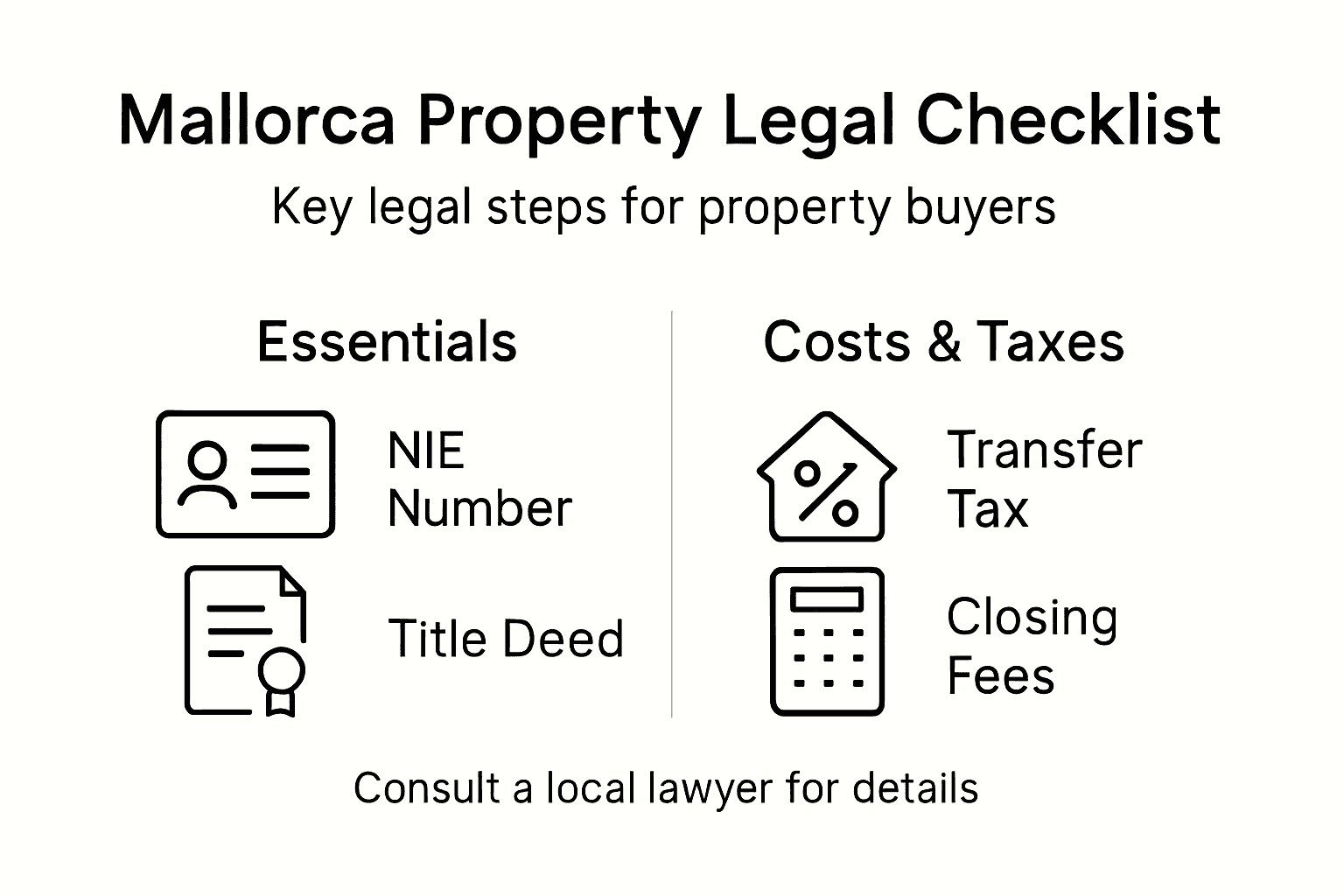
Compare the main taxes and costs US buyers should budget for when investing in Mallorca real estate:
| Cost Type | Description | Typical Range/Rate |
|---|---|---|
| Transfer Tax | Paid on property acquisition | 8%–11% of property value |
| Closing Costs | Notary, legal, and registry fees | 10%–15% of purchase price |
| Non-Resident Tax | Annual tax on rental potential | ~19% of net rental income |
| Wealth Tax | Applies to high-value properties | Progressive, region specific |
| Capital Gains Tax | Payable upon selling property | 19%–23% of capital gain |
Sophisticated investors recognize that taxation is not just an expense, but a strategic consideration in overall investment planning.
US buyers must also consider the complex interplay between Spanish and American tax regulations. This includes potential foreign tax credits, reporting requirements through FBAR and FATCA, and the need for specialized international tax planning to optimize their investment structure and minimize potential double taxation scenarios.
Pro tip: Engage a cross-border tax specialist with expertise in both US and Spanish tax law to develop a comprehensive tax strategy for your Mallorca property investment.
Common pitfalls and how to avoid them
Investing in Mallorca’s real estate market requires strategic navigation of complex legal and financial landscapes. Real property investment challenges demand comprehensive due diligence to mitigate potential risks and protect your investment.
Common pitfalls for US buyers include:
- Incomplete Title Research: Failing to verify full property ownership history
- Overlooking Hidden Costs: Underestimating renovation or maintenance expenses
- Tax Compliance Gaps: Misunderstanding international tax reporting requirements
- Regulatory Non-Compliance: Ignoring local rental and zoning regulations
- Currency Exchange Risks: Neglecting potential currency fluctuation impacts
Investment fraud prevention strategies are crucial in international property markets. Investors must remain vigilant about potential red flags such as unlicensed sellers, unrealistic return promises, or high-pressure sales tactics.
Successful international property investment relies on thorough research, professional guidance, and a strategic approach to risk management.
Navigating Mallorca’s property market requires understanding nuanced local regulations, cultural considerations, and potential legal complexities. US investors should prioritize building a network of trusted local professionals, including real estate agents, legal advisors, and tax specialists who deeply understand both Spanish and American property investment landscapes.
Pro tip: Allocate a minimum of 10% of your investment budget as a contingency fund to address unexpected challenges and protect against potential unforeseen expenses.
Master the Legal Essentials of Mallorca Investment Properties with Expert Guidance
Navigating the complex legal requirements of buying investment property in Mallorca can be overwhelming. The article highlights key challenges like obtaining the NIE number, understanding rental licensing rules such as the ETV license, verifying property titles, and managing tax obligations including transfer and non-resident income taxes. These essential legal steps are critical to avoid pitfalls that could jeopardize your investment or cause costly delays.
At ULI & LISA, we specialize in empowering international buyers, especially Americans, with comprehensive, unbiased property searches and personalized support for every stage of the legal process. Using advanced AI-powered tools combined with deep local expertise, we help you confidently navigate Mallorca’s property regulations and ensure full compliance with all legal and tax requirements.
Take control of your Mallorca investment journey today by partnering with trusted real estate professionals. Visit ULI & LISA to access tailored luxury property options and expert legal guidance. Start now and protect your investment with our dedicated support that makes the complicated simple and stress-free.
Frequently Asked Questions
What legal requirements must US buyers fulfill when investing in Mallorca real estate?
US buyers must obtain an NIE number, open a Spanish bank account, verify property titles, complete tax registration, and consider inheritance planning related to international property ownership.
What is an ETV license, and why is it necessary for rental properties?
An ETV license is a mandatory tourism rental permit required for short-term accommodations in Mallorca. It ensures compliance with local rental regulations and allows property owners to legally operate rental properties.
How can I ensure compliance with rental regulations in Mallorca?
To ensure compliance, you should obtain an ETV license, maintain proper tax registration, perform property inspections, secure necessary insurance, and register your property with local authorities as a rental unit.
What are the tax implications for property investors in Mallorca?
Property investors in Mallorca face several taxes, including a transfer tax upon purchase, an annual non-resident income tax on rental income, capital gains tax when selling, and a potential wealth tax, all of which require careful financial planning.
Recommended
- ULI & LISA | Independent Luxury Real Estate Agent Mallorca
- ULI & LISA | Independent Luxury Real Estate Agent Mallorca
- ULI & LISA | Independent Luxury Real Estate Agent Mallorca
- ULI & LISA | Independent Luxury Real Estate Agent Mallorca
- Estate Agents San Pedro - Luxury Villas and Apartments for Sale | Marbellapads