
The 2026 Palma ban on new tourist rental licenses has fundamentally reshaped Mallorca’s luxury property investment landscape. High-net-worth American investors now face a dramatically different market where existing licenses command premium prices and strategic location selection determines success or failure. This guide reveals expert-backed strategies to navigate Spain’s evolving regulations, identify compliant investment opportunities, and structure purchases for maximum returns while avoiding costly legal pitfalls that can result in fines up to €500,000.
Key Takeaways
| Point | Details |
|---|---|
| Prioritize licensed properties | Properties with existing ETV licenses command a premium and are essential for legal short-term rentals. |
| New Palma rentals banned | As of 2026, Palma forbids all new short-term rental licenses, shifting opportunities to other Mallorca areas. |
| Diligence is critical | Always verify the legal standing of a property’s license to avoid fines up to €500,000. |
| Tax structure strategies | Joint ownership and correct structuring can significantly reduce Spanish wealth tax exposure. |
| Expert guidance pays off | Working with knowledgeable local agents drastically reduces risk and increases ROI. |
Understanding the Mallorca property market in 2026
Mallorca’s appeal to American investors remains strong despite regulatory shifts. The island offers year-round Mediterranean climate, direct flights from major U.S. cities, and world-class amenities that attract affluent travelers willing to pay premium rates. However, Palma’s February 2026 ban on new tourist rental licenses has created a two-tier market where properties with existing permits trade at significant premiums.
Demand patterns have shifted dramatically. Investors now prioritize municipalities outside Palma where new licenses remain possible, or they target properties with transferable permits already in place. The Palma rental accommodation ban affects only new applications, meaning existing licensed properties have become scarce assets. Southwest coastal areas and northern villages now see increased investor interest as alternatives to the capital.
Key market dynamics for 2026:
- Properties with valid ETV licenses command 20% price premiums
- Palma properties without licenses face long-term rental-only futures
- Northern and southwestern municipalities offer new license opportunities
- Due diligence on license validity is now critical for every purchase
Understanding these shifts is essential before committing capital. The regulatory landscape rewards informed investors who verify compliance and target the right locations. For comprehensive insights on why Mallorca remains attractive despite changes, explore Mallorca holiday rentals ROI strategies.
Key regulations and rental license requirements for investors
Spain’s tourist rental framework centers on two license types. ETV permits allow short-term rentals in detached villas and single-family homes, while ETVPL licenses apply to apartments in multi-unit buildings. Both require properties to meet specific safety, accessibility, and registration standards before approval.
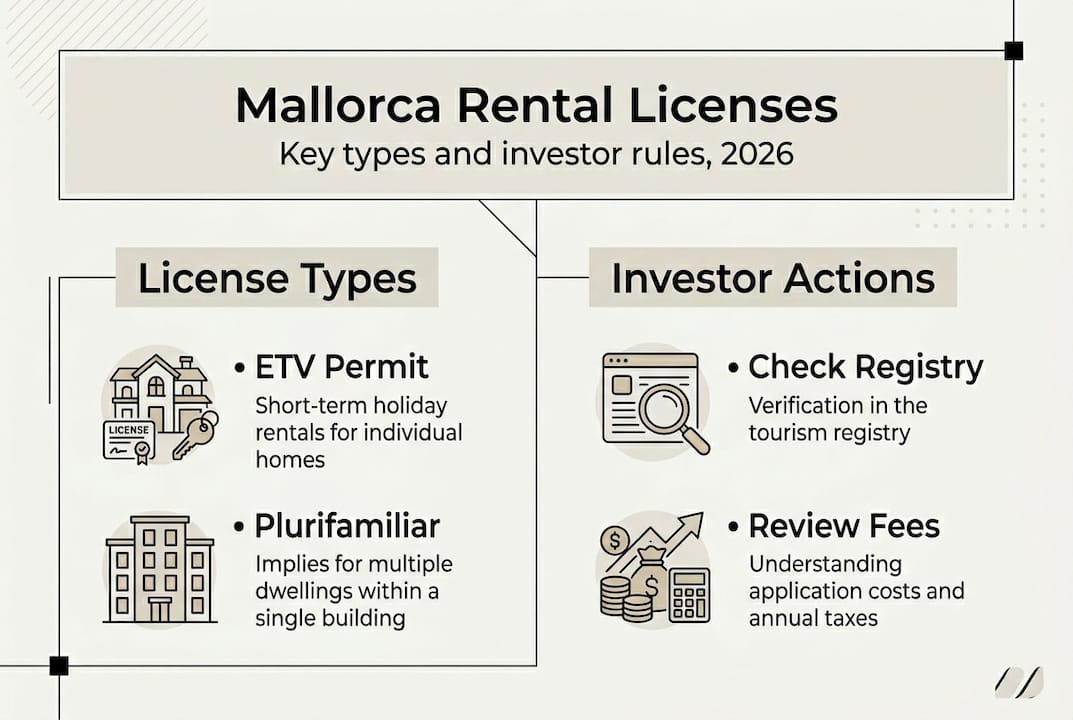
ETV license fees total €3,500 per guest place, with additional costs for inspections and legal documentation. The application process involves municipal approval, tourism registry enrollment, and ongoing compliance reporting. Properties must display license numbers in all marketing materials and maintain guest registration records.
The Palma ban represents the most significant regulatory shift. As of February 2026, the capital accepts zero new tourist rental applications, effectively freezing the supply of legal short-term accommodations. This policy aims to address housing affordability concerns but creates scarcity that drives up values for grandfathered properties.
License comparison:
| License Type | Property Category | Application Fee | Palma Status | Transfer Rules |
|---|---|---|---|---|
| ETV | Detached villas | €3,500/guest place | Banned (new) | Transfers with property |
| ETVPL | Apartments | €3,500/guest place | Banned (new) | Transfers with property |
| Long-term | All types | None | Allowed | N/A |
Penalties for unauthorized rentals are severe. Fines range from €5,000 to €500,000 depending on violation severity, repeat offenses, and property size. Enforcement has intensified with online monitoring and neighbor reporting systems. Operating without proper permits risks financial ruin and potential property seizure.
For detailed guidance on securing permits, review the holiday rental license process and current holiday rental license rules.
Pro Tip: Always verify license validity through official tourism registry databases before making offers. Sellers sometimes claim transferable permits that have expired or face pending violations.
Choosing the best investment properties: Location, type, and license value
Location strategy has become paramount post-ban. Southwest municipalities like Calvià, Andratx, and Santanyí continue issuing new ETV licenses for qualifying properties, making them prime targets for investors seeking rental income. Northern areas including Pollença and Alcúdia offer similar opportunities with lower entry prices and strong summer demand.
Villas consistently outperform apartments for tourist rentals. Detached properties avoid community restrictions, offer privacy that luxury travelers demand, and face fewer regulatory hurdles. However, properties with existing ETV licenses trade at a 20% premium regardless of type, reflecting the scarcity value of legal rental rights.
Investment location comparison:
| Area | New License Availability | Average Villa Price | Rental Yield Potential | Market Liquidity |
|---|---|---|---|---|
| Palma | None | €1.2M - €3M | Long-term only | High |
| Southwest Coast | Yes (limited) | €1.5M - €4M | 5-7% gross | High |
| North Coast | Yes | €800K - €2M | 4-6% gross | Medium |
| Interior Villages | Yes | €500K - €1.2M | 3-5% gross | Low |
The premium for licensed properties creates a strategic choice. Pay more upfront for immediate rental capability, or purchase unlicensed properties at standard prices for long-term appreciation and residential rental income. The right answer depends on your investment timeline and income requirements.
Long-term rentals offer an alternative path. Properties without tourist licenses can generate steady income from annual leases to residents or digital nomads. This strategy avoids regulatory complexity but typically yields 3-4% annually versus 5-7% for successful short-term rentals.
Pro Tip: Target properties in municipalities with clear, stable licensing policies. Avoid areas where local governments debate new restrictions that could impact future transferability.
Explore Mallorca investment examples and Mallorca property types for detailed case studies.
Financial strategies for maximizing net returns
Tax structure significantly impacts net returns. Spain imposes wealth tax on assets exceeding certain thresholds, but joint ownership for married couples can minimize liability, with exemptions potentially applying to combined assets over €6 million. Proper structuring at purchase protects wealth and reduces annual tax burdens.
License transfers require careful attention. When purchasing properties with existing ETV permits, ensure the license appears in official registries and has no pending violations. The permit typically transfers automatically with property ownership, but documentation must be updated within 30 days to maintain validity.
U.S. investors face dual reporting requirements. Spanish rental income must be declared to both Spanish tax authorities and the IRS. Tax treaties prevent double taxation, but proper accounting and professional guidance are essential to claim credits correctly and avoid penalties.
Wealth protection strategies:
- Structure ownership through Spanish entities for properties over €2 million to optimize tax treatment
- Maintain separate accounts for rental income to simplify reporting and demonstrate compliance
- Document all property-related expenses meticulously for deduction claims in both jurisdictions
- Review ownership structure annually as tax laws and personal circumstances evolve
Pro Tip: Engage Spanish tax advisors before closing to structure the purchase optimally from day one. Restructuring after acquisition often triggers additional taxes and fees.
For comprehensive planning approaches, review Mallorca investment strategies and Mallorca smart moves 2026.
Practical steps to execute a successful Mallorca investment
Successful execution requires systematic due diligence. Start by verifying license status through official tourism registries, not just seller representations. Confirm the property meets all current safety and accessibility standards, as regulations have tightened since many older licenses were issued.
Investment execution checklist:
- Verify ETV license validity through Balearic tourism registry
- Conduct full legal title search to confirm ownership and identify liens
- Inspect property for compliance with current safety and accessibility codes
- Review community rules if purchasing an apartment to ensure rentals are permitted
- Engage local attorney to handle closing and registry updates
- Register license transfer within 30 days of purchase completion
- Establish tax reporting systems for both Spanish and U.S. requirements
- Implement ongoing compliance monitoring for annual reporting obligations
Common pitfalls include assuming licenses are transferable without verification, overlooking community restrictions in apartment buildings, and failing to budget for ongoing compliance costs. Illegal rental fines reach €500,000, making shortcuts catastrophically expensive.
Ongoing compliance involves annual tourism registry renewals, guest registration reporting, and maintaining property standards. Budget 2-3% of property value annually for maintenance, management, and compliance costs. Properties that fall out of compliance risk license revocation, eliminating rental income potential.
Pro Tip: Establish relationships with local property managers before closing. They provide invaluable guidance on compliance requirements and can identify issues during due diligence that might escape notice.
For additional guidance, explore real estate tips Mallorca and consider renting before buying to understand local markets firsthand.
Secure your Mallorca investment with expert local guidance
Navigating Mallorca’s complex regulatory environment requires local expertise that understands both Spanish law and American investor needs. Experienced buyer agents identify properties with valid licenses, verify compliance status, and handle regulatory diligence that protects your investment from costly surprises. They access off-market opportunities and negotiate terms that account for license premiums and transfer requirements.
Working with independent Mallorca buyer agents who represent your interests exclusively ensures unbiased guidance throughout the process. Unlike listing agents who work for sellers, buyer representatives focus solely on finding properties that match your investment criteria and protecting your financial interests during negotiations. This alignment is critical when evaluating license validity and structuring offers.
Comprehensive luxury real estate services include due diligence coordination, legal referrals, tax planning introductions, and post-purchase support for license transfers and compliance setup. On-the-ground expertise transforms regulatory complexity into competitive advantage, helping you identify opportunities others miss while avoiding pitfalls that derail uninformed investors. For complete peace of mind, explore how to secure safe property in Mallorca with professional guidance.
Frequently asked questions
Can non-EU investors buy property in Mallorca?
Yes, Americans and other non-EU citizens can legally purchase real estate in Mallorca without restrictions.
How do I transfer a rental license when buying a property?
You must ensure the ETV license is valid and registered; permits typically transfer with the property but require proper documentation and due diligence.
What’s the penalty for renting without a license?
Fines for illegal holiday rentals range from €5,000 to €500,000 depending on severity.
Are there still good short-term rental investments outside Palma?
Yes, areas outside Palma, especially the southwest and north, offer potential if the property holds an existing ETV license.
How can I minimize Spanish wealth tax on a Mallorca property?
Joint ownership for married couples can reduce liability, as combined assets over €6 million may be exempt.
Recommended
- Renting Before Buying Mallorca – Maximize Investment Smartly - ULI & LISA Mallorca Property Blog
- Mallorca Investment Property Checklist: Legal Essentials - ULI & LISA Mallorca Property Blog
- Why Invest in Mallorca Holiday Rentals for ROI - ULI & LISA Mallorca Property Blog
- Property Investment Strategies Mallorca: Complete Guide - ULI & LISA Mallorca Property Blog
- Office Markets in Europe: A Comprehensive Guide - Offices in Malta To Let & For Sale