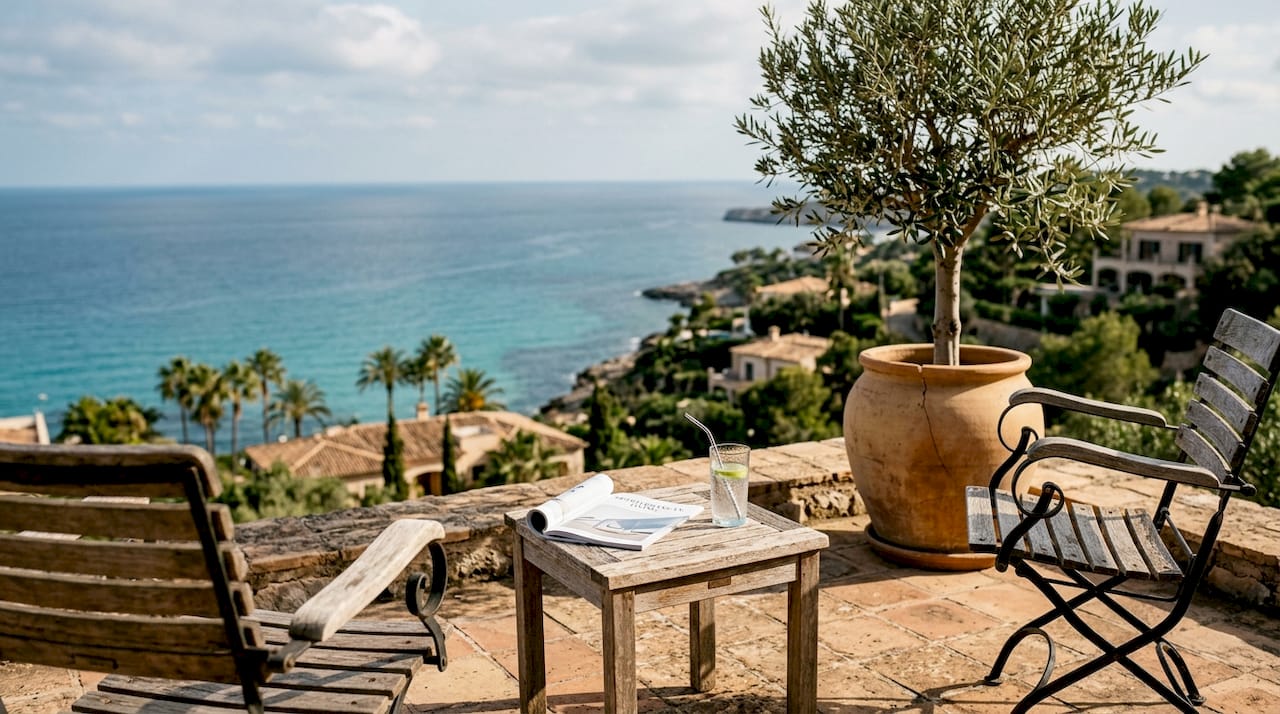
Mallorca’s luxury property market offers high-net-worth American buyers a compelling mix of Mediterranean lifestyle and investment potential, yet confusion about property types and legal nuances often derails purchase decisions. Fincas, villas, apartments, and townhouses each carry distinct characteristics, pricing structures, and regulatory requirements that demand expert navigation. With Spain’s Golden Visa program ending in 2025 and rural property restrictions tightening, understanding these differences is critical for making informed decisions in 2026. This guide clarifies Mallorca’s luxury property landscape, regional pricing benchmarks, legal considerations, and investment strategies to help you confidently select and acquire your ideal Mediterranean property.
Key takeaways
| Point | Details |
|---|---|
| Four main property types | Fincas offer rural privacy, villas provide coastal luxury, apartments deliver urban convenience, and townhouses blend historic charm with modern living. |
| Pricing varies dramatically | Luxury properties average €5,000 per square meter island-wide, but premium zones like Son Vida and Port d’Andratx command €10,000-€20,000 per square meter. |
| Golden Visa ended 2025 | Property purchases no longer grant residency rights, requiring alternative visa pathways for Americans seeking extended stays. |
| Legal compliance essential | Rural property restrictions, energy certifications, and tourism license limitations demand thorough due diligence before purchase. |
| Strong investment fundamentals | Limited supply and steady demand drive 5-10% annual appreciation, with licensed fincas delivering 8.5-11.5% total returns. |
Understanding Mallorca’s main property types
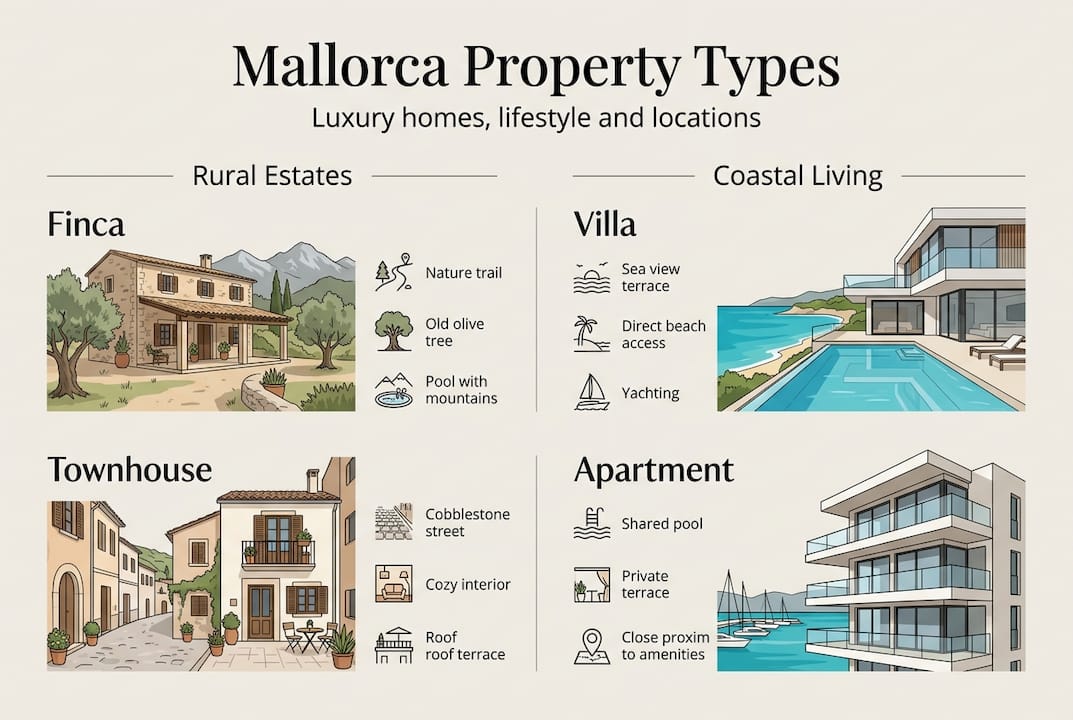
Mallorca’s luxury real estate market encompasses four distinct property categories, each offering unique lifestyle benefits and investment characteristics. Understanding these differences helps align your purchase with personal goals and financial objectives.
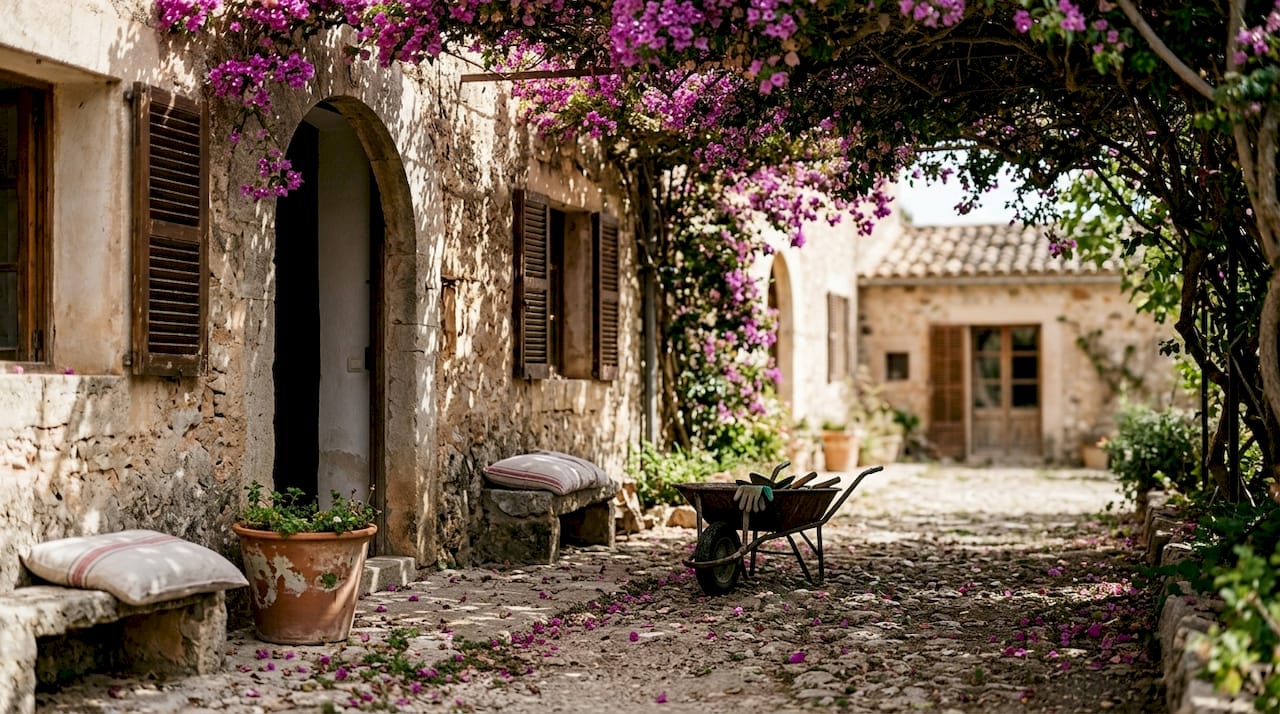
Fincas represent traditional countryside estates featuring substantial land plots, rustic architecture, and complete privacy. These properties typically sit on 10,000+ square meter plots in rural zones, offering mountain or valley views, original stone construction, and agricultural heritage. Luxury fincas include modern renovations with pools, guest houses, and premium finishes while maintaining authentic character. Prices range from €1.5 million to €10 million+ depending on location, land size, and renovation quality.
Villas deliver contemporary luxury in coastal and elevated locations, emphasizing modern design, sea views, and resort-style amenities. Most luxury villas feature 300-800 square meters of living space, infinity pools, landscaped gardens, and smart home technology. Prime locations include Port d’Andratx, Puerto Portals, and Cala d’Or, where properties command €3 million to €30 million. New construction villas offer energy efficiency and customization options unavailable in historic properties.
Apartments provide low-maintenance urban living in Palma’s historic center, marina districts, and beachfront resort complexes. Luxury units range from 100-300 square meters with communal pools, gyms, and concierge services. Prices span €500,000 to €5 million based on location, views, and building quality. These properties suit buyers seeking walkable neighborhoods, rental income potential, and minimal property management responsibilities.
Townhouses blend historic architecture with modern comfort in Palma’s old town, Sóller, and traditional villages. These multi-level properties feature original details like exposed beams, courtyards, and rooftop terraces, typically offering 200-400 square meters across three to four floors. Renovation projects range from €800,000 to €4 million, with prime locations commanding premium prices. Townhouses appeal to buyers valuing authentic Mediterranean character and village lifestyle.
Pro Tip: Visit properties during different seasons to assess natural light, temperature control, and neighborhood activity levels, as coastal and rural areas experience dramatic seasonal shifts.
| Property Type | Typical Size | Prime Locations | Price Range | Best For |
|---|---|---|---|---|
| Finca | 10,000+ m² land | Countryside, valleys | €1.5M-€10M+ | Privacy, space, rural lifestyle |
| Villa | 300-800 m² built | Coastal, elevated zones | €3M-€30M+ | Modern luxury, sea views |
| Apartment | 100-300 m² | Palma, resort areas | €500K-€5M | Urban living, low maintenance |
| Townhouse | 200-400 m² | Historic centers | €800K-€4M | Authentic charm, village life |
Explore Mallorca luxury homes advantages for detailed analysis of lifestyle benefits across property types.
Luxury market benchmarks and pricing in Mallorca 2026
Mallorca’s luxury property market demonstrates remarkable pricing diversity, with average prices reaching €5,000 per square meter island-wide while premium zones command substantially higher rates. Understanding these benchmarks helps calibrate expectations and identify value opportunities.
Son Vida and Port d’Andratx represent the island’s pinnacle luxury markets, where properties reach €10,000-€20,000 per square meter. Son Vida villas with golf course views and gated security sell for €5 million to €15 million, while Port d’Andratx waterfront estates command €10 million to €30 million. These areas attract international ultra-high-net-worth buyers seeking absolute exclusivity and Mediterranean prestige.
Villas in Andratx average €4.38 million with steady 5-10% annual appreciation driven by limited inventory and sustained demand. The municipality’s strict building regulations prevent new construction in many zones, creating supply constraints that support price growth. Southwest coastal areas including Puerto Portals and Bendinat show similar dynamics, with luxury properties appreciating consistently since 2020.
Fincas in desirable rural zones like Alaró, Sóller valley, and countryside areas near Palma range from €3,000-€7,000 per square meter for renovated properties. Original fincas requiring renovation start at €1,500-€2,500 per square meter, offering value-add opportunities for buyers willing to navigate approval processes. Properties with tourism licenses command 20-30% premiums due to rental income potential.
Palma’s luxury apartment market spans €4,000-€12,000 per square meter depending on neighborhood and sea views. Santa Catalina, Portixol, and historic center properties with modern renovations reach the upper range, while emerging neighborhoods offer entry points at €3,000-€5,000 per square meter. New developments with premium amenities price at €6,000-€10,000 per square meter.
Pro Tip: Compare Mallorca pricing to equivalent U.S. luxury markets where coastal properties often exceed €15,000-€25,000 per square meter, highlighting the Mediterranean island’s relative value proposition.
| Location | Property Type | Price per m² | Typical Range | Annual Growth |
|---|---|---|---|---|
| Son Vida | Villa | €10,000-€20,000 | €5M-€15M | 8-12% |
| Port d’Andratx | Villa | €12,000-€20,000 | €10M-€30M | 7-10% |
| Andratx municipality | Villa | €7,000-€12,000 | €3M-€8M | 5-10% |
| Rural zones | Finca | €3,000-€7,000 | €1.5M-€6M | 5-8% |
| Palma center | Apartment | €6,000-€12,000 | €800K-€4M | 6-9% |
Current Mallorca market trends 2025 show resilient demand despite Golden Visa termination, with luxury segment outperforming mid-market properties. Review the Mallorca real estate market forecast for detailed projections through 2028. The Mallorca luxury investment guide provides comprehensive market analysis and return expectations.
Legal considerations and market nuances for foreign buyers
Navigating Mallorca’s regulatory environment requires understanding recent legislative changes and compliance requirements that directly impact American luxury buyers. Spain’s Golden Visa program ended in April 2025, eliminating property purchase as a pathway to residency rights. Americans now need alternative visa options for extended stays beyond 90-day tourist allowances, including non-lucrative residence visas requiring proof of income and health insurance, or digital nomad visas for remote workers.
Rural property regulations impose strict limitations on expansions and modifications, particularly for rustic fincas classified under ARIP (Área Rural de Interés Paisajístico) zones. Many older countryside properties contain illegal extensions built before current enforcement, creating liability risks for buyers. Verification of legal building status through municipal records and architect review is essential before purchase. Legalization of non-compliant structures often proves impossible, leaving buyers with demolition requirements or reduced property value.
Energy Performance Certificates frequently rate older fincas and townhouses at E, F, or G levels, indicating poor insulation and inefficient systems. While not prohibitive for purchase, low ratings signal renovation needs and higher operating costs. EU directives increasingly pressure member states to improve building efficiency, potentially mandating future upgrades. Budget for energy improvements when acquiring properties with poor certifications.
Tourism licenses remain difficult to obtain, especially for rural properties in protected zones or areas with license moratoriums. Municipalities like Palma and several coastal towns have frozen new license issuance, limiting rental income potential. Properties with existing licenses command significant premiums but require verification of license validity and compliance with rental regulations. Operating without proper licensing risks substantial fines and legal complications.
Pro Tip: Obtain your NIE (Número de Identidad de Extranjero) immediately upon deciding to purchase, as this tax identification number is required for all property transactions and can take 4-8 weeks to process through Spanish consulates.
- Verify water rights and road access through official registries, not seller representations
- Confirm property boundaries match land registry records with surveyor verification
- Review building permits for all structures, pools, and improvements
- Check municipal urban planning classifications and future development restrictions
- Assess utility infrastructure capacity, especially in rural areas with limited services
“The post-Golden Visa regulatory landscape demands heightened due diligence for foreign buyers. Legal compliance verification, from building permits to tourism licenses, protects investment value and prevents costly surprises after purchase.”
Understanding buying property key steps for Americans and the Mallorca closing process guide helps navigate these complexities systematically.
Investment outlook and practical buying advice for luxury buyers
Mallorca’s luxury property market offers compelling investment fundamentals driven by supply constraints and sustained international demand. Strict planning regulations limit new construction in desirable zones, creating scarcity that supports price appreciation. Fincas with tourism licenses deliver 8.5-11.5% total returns, combining 3.5-4.5% rental yields with 5-7% annual appreciation. Properties without licenses still appreciate but lack income generation potential.
Foreign buyers represent approximately 30% of Mallorca transactions, with Americans, Germans, and Scandinavians comprising the largest segments. This international buyer base provides liquidity and supports price stability, as diverse demand sources reduce market volatility. The luxury segment shows particular resilience, with properties above €2 million experiencing minimal price corrections during economic downturns.
Renovation projects can substantially increase property value, but require realistic timelines and budget expectations. Permit approvals for rural properties take 6-18 months depending on scope and municipality, while historic center renovations face additional heritage restrictions. Quality renovations in prime locations typically return 15-25% value uplift beyond costs, but rushed or non-compliant work destroys value. Engage licensed architects and contractors familiar with local regulations from project inception.
Pro Tip: Visit properties during off-season months to realistically assess infrastructure, utility reliability, and neighborhood character without tourist season activity masking potential issues.
Key buying steps for American luxury buyers:
- Obtain NIE through Spanish consulate before property search begins
- Engage independent buyer representation familiar with cross-border transactions
- Conduct comprehensive due diligence including legal, structural, and title verification
- Arrange Spanish mortgage pre-approval if financing, as foreign buyer terms differ from domestic loans
- Structure purchase through optimal ownership entity considering tax and estate planning implications
- Review all contracts with bilingual legal counsel before signing reservation or purchase agreements
- Verify utility connections, especially water rights and high-speed internet in rural areas
- Confirm insurance availability and costs for property type and location before commitment
Investment considerations for maximizing returns:
- Prioritize locations with established luxury markets and strong rental demand
- Verify tourism license status and renewal requirements before purchase
- Assess renovation potential and permit feasibility for value-add opportunities
- Consider property management requirements and local service provider availability
- Evaluate total ownership costs including taxes, utilities, maintenance, and community fees
- Review exit liquidity and typical time-to-sale for property type and location
Explore top real estate tips Mallorca 2025 for additional strategic guidance. The Mallorca buying checklist Americans provides step-by-step purchase process details. Understanding financing property in Mallorca helps structure optimal funding arrangements. The Mallorca luxury investment guide offers comprehensive return analysis and market projections.
Why choose ULI & LISA for your Mallorca luxury property purchase?
Navigating Mallorca’s luxury property market requires specialized expertise in cross-border transactions, local regulations, and investment analysis tailored to American buyers. As independent buyer agents in Mallorca, we provide comprehensive representation focused exclusively on your interests, not seller objectives. Our AI-powered property search tools scan the entire island market, identifying opportunities that match your specific criteria across all agencies and private listings. We guide you through legal compliance verification, negotiate optimal terms, and coordinate with trusted local professionals including attorneys, architects, and financial advisors. Our reputation is built on helping international buyers, particularly from the USA, achieve smooth, successful purchases while avoiding costly mistakes. Whether you seek a coastal villa, countryside finca, or historic townhouse, our personalized approach ensures you find the right property and complete the transaction with confidence. Contact ULI & LISA services to discuss your Mallorca property goals and discover how our expertise delivers safe property investment Mallorca.
FAQ
Which Mallorca property type offers the best luxury investment potential?
Fincas with valid tourism licenses provide the strongest total returns, combining 3.5-4.5% rental yields with 5-7% annual appreciation for 8.5-11.5% total performance. However, coastal villas in premium zones like Port d’Andratx deliver superior appreciation potential at 8-12% annually despite lower rental yields. Your optimal choice depends on income priorities versus capital growth objectives and personal use intentions. Review Mallorca market trends 2025 for detailed performance analysis across property types.
How does the end of the Golden Visa impact residency options for American buyers?
Property purchases no longer grant residency rights after the Golden Visa program ended in April 2025. Americans seeking extended stays beyond 90-day tourist allowances need alternative visa pathways including non-lucrative residence visas requiring €28,000+ annual income proof, or digital nomad visas for remote workers earning €40,000+ annually. Property ownership still offers investment and lifestyle benefits but requires separate residency planning. Consult immigration specialists early in your purchase process.
What legal steps do Americans need to take before buying property in Mallorca?
Obtain your NIE tax identification number through Spanish consulates as the foundational requirement for all transactions. Engage bilingual legal counsel to verify property title, building permits, and regulatory compliance before signing contracts. Open a Spanish bank account for transaction processing and ongoing expense payments. Structure ownership through appropriate entities considering tax implications in both Spain and the USA. Follow the comprehensive buying property key steps for Americans checklist to ensure complete preparation.
What are typical price ranges for high-end villas versus fincas in 2026?
Luxury villas in prime coastal locations range from €3 million to €30 million depending on size, views, and specific municipality. Port d’Andratx and Son Vida command the highest prices at €10-€30 million for exceptional properties. Renovated fincas in desirable rural zones span €1.5 million to €10 million based on land size, building quality, and location proximity to Palma or coastal areas. Properties with tourism licenses command 20-30% premiums across both categories due to income generation potential.
How should buyers approach financing and renovation approvals for Mallorca properties?
Spanish banks typically offer foreign buyers 60-70% loan-to-value mortgages with interest rates 0.5-1% higher than domestic borrowers, requiring substantial documentation of income and assets. Arrange pre-approval before property search to clarify budget parameters. For renovations, engage licensed architects before purchase to assess permit feasibility and timeline expectations, as rural and historic properties face significant approval complexities. Budget 15-25% above contractor estimates for permit costs, delays, and scope adjustments during execution.
Recommended
- Mallorca Luxury Property Guide: Everything You Need to Know - ULI & LISA Mallorca Property Blog
- Mallorca Property Buying Guide: Everything Explained - ULI & LISA Mallorca Property Blog
- How to Navigate Mallorca Real Estate Market: Luxury Buyer’s Guide - ULI & LISA Mallorca Property Blog
- Mallorca Property Viewing Guide for Luxury Buyers - ULI & LISA Mallorca Property Blog