TL;DR:
- Obtaining a building permit in Mallorca is a complex legal process that ensures compliance with local regulations and zoning laws.
- Investors must carefully classify work as major or minor and obtain necessary community and municipal approvals to avoid enforcement risks.
Many international investors assume a building permit in Mallorca is a straightforward administrative box to check. It is not. Understanding what is building permit Mallorca really means separates investors who complete projects on schedule from those who face work stoppages, fines, or worse. Building permits here are full legal authorizations governed by Spanish planning law, local municipal codes, and Mallorca’s own zoning framework. Get them wrong and your investment is exposed. Get them right and you hold a legally protected, valuable asset in one of Europe’s most stable real estate markets.
Key takeaways
| Point | Details |
|---|---|
| Two core permit types | Obra mayor covers major structural works; obra menor covers minor renovations with far shorter approval timelines. |
| Zoning determines eligibility | A project on rural or protected land faces different permit requirements than one in a classified urban zone. |
| Accelerated pathways now exist | New ECU and declaration responsible procedures can reduce permit approval from months to days under qualifying conditions. |
| Multi-owner buildings add complexity | Façade or common element works require a qualified majority homeowners’ association vote before any municipal application. |
| Enforcement is real and costly | Unauthorized works can result in fines, mandatory demolition, and liabilities that transfer to future buyers at purchase. |
What is a building permit in Mallorca
A building permit in Mallorca (known locally as a licencia de obras or licencia urbanística) is a mandatory legal authorization issued by the relevant municipal council before any construction, renovation, or significant modification work can legally begin. This is not a formality. It is the legal foundation of your project.
The permit confirms that your planned works comply with local building regulations Mallorca authorities have established, including zoning rules, structural requirements, environmental constraints, and urban planning codes. Without it, any work you carry out is technically illegal, regardless of how structurally sound or aesthetically appropriate it may be.
Permits apply to both residential and commercial projects. A new luxury villa, a hotel extension, a terrace enclosure on a penthouse apartment, or even replacing windows in certain contexts all require prior authorization. The scope and category of work determine which permit type applies, and choosing the wrong category is itself a compliance risk.
Types of permits: obra mayor vs. obra menor
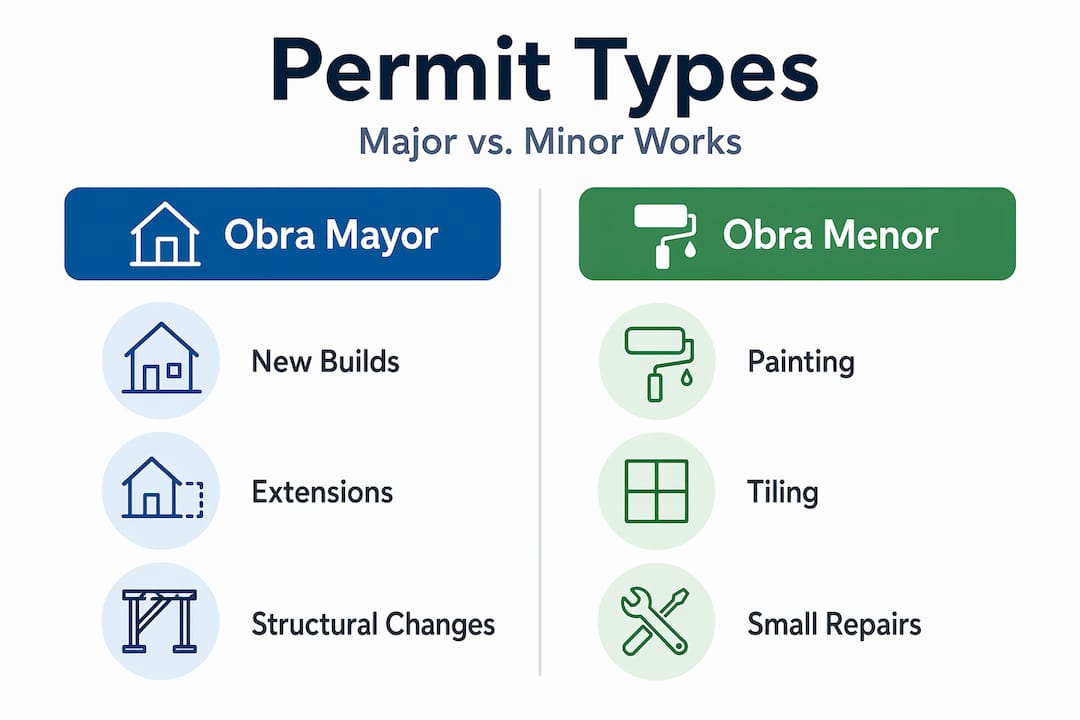
The most practical distinction in Mallorca’s permitting system is between major works and minor works.
Major works: obra mayor
Obra mayor covers any construction or renovation that involves structural intervention, new builds, significant extensions, changes of use, or modifications to load-bearing elements. Examples include building a new residential villa from the ground up, adding a swimming pool with structural excavation, extending a property’s footprint, or undertaking a full structural renovation of an existing building.
Major works permits require a full technical project (proyecto técnico) signed and stamped by a licensed architect and, in most cases, a structural engineer. This documentation package must include architectural drawings, a materials specification, a health and safety plan, and a waste management plan. The permit fees for obra mayor typically range from 3% to 6% of the total construction budget, plus VAT, varying by municipality.
Minor works: obra menor
Obra menor covers work that does not affect structural elements or alter the building’s overall envelope. Painting, flooring replacement, bathroom refits without wall changes, and certain window replacements can fall into this category. Minor works licenses are typically processed within one to three weeks. Major works approvals through standard channels take one to three months, and often considerably longer depending on complexity.
The distinction matters legally. Applying for a minor works permit when the work actually qualifies as major is a common and costly mistake.
| Category | Typical works | Documentation required | Approximate timeline |
|---|---|---|---|
| Obra menor | Painting, flooring, window replacement | Basic technical description | 1 to 3 weeks |
| Obra mayor | New builds, extensions, structural renovations | Full architect-signed technical project | 1 to 12 months |
| Comunicación previa | Very minor works, no structural impact | Simple notification to municipality | Near-immediate |
Pro Tip: Always have a licensed local architect review your project scope before you file a permit application. Misclassifying works wastes time, triggers re-submissions, and in worst cases opens you to enforcement action even before a single wall is touched.
Zoning and land-use regulations
Zoning is the layer of regulation that determines whether your project is even permissible before you get to the permit application stage. Mallorca classifies land into several categories, and each carries a different set of rules for what can and cannot be built.
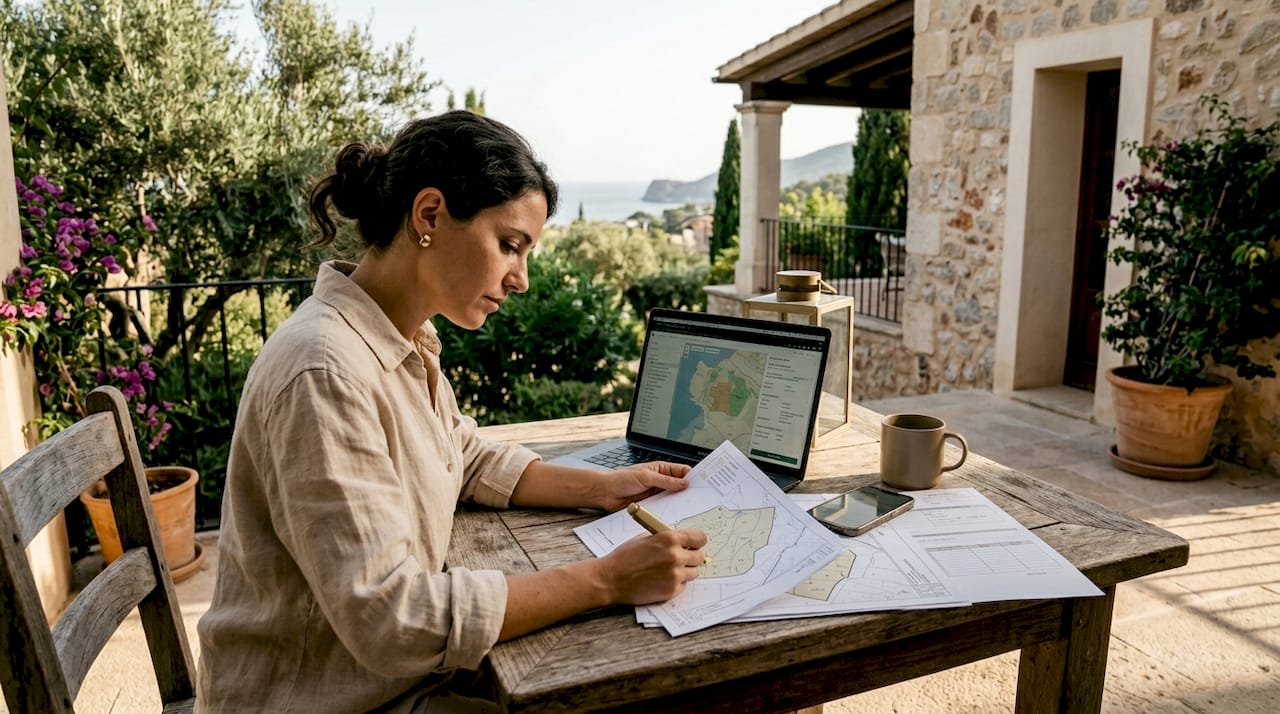
The three primary classifications most investors encounter are suelo urbano (classified urban land), suelo urbanizable (land that can be developed subject to a planning approval process), and suelo rústico (rural land, much of which carries strict protection). The Balearic Islands additionally protect significant areas of natural and agricultural land under their own regional legislation, which limits construction activity far more tightly than urban zones.
Early zoning compliance checks are not optional. They are the first step in any rational project planning process. Investors who skip this stage and commission full architectural projects before confirming land classification risk spending substantial fees on designs that will never receive a permit.
The key risks of ignoring zoning requirements include the following.
- Projects on protected rural land can be denied outright with no recourse for the applicant
- Municipal councils can issue immediate work stoppages for any construction that begins without proper zoning clearance
- Environmental impact assessments may be required for projects near protected coastlines or nature reserves
- Commercial projects in residential zones face additional obstacles that architectural design alone cannot solve
Pro Tip: Request the cédula urbanística (urban planning certificate) from the relevant municipality before commissioning any architectural project. This document confirms land classification, buildable area, permitted use, and applicable height restrictions. It costs little and can save a great deal.
For projects near Mallorca’s coastline, coastal planning regulations add another layer of restrictions governed by Spain’s Ley de Costas, which can significantly limit what is buildable within designated coastal protection zones.
Recent reforms accelerating permit approvals
Mallorca’s building permit process has historically been slow by international standards. Ordinary processing timelines for major works permits in Palma varied between 9 and 12 months for standard applications. That is changing, and the change has real implications for investor timelines.
Two mechanisms are now available that can significantly shorten the process.
The ECU model
Urbanistic Collaboration Entities (Entidades de Colaboración Urbanística, or ECUs) are private accredited bodies authorized to handle the technical review of permit applications on behalf of the municipality. Rather than waiting for an overstretched municipal planning department to process your file, an ECU conducts the technical assessment and issues a certificate. Palma introduced this system in early 2026 and granted its first license through the ECU pathway in approximately one month.
One critical detail: the municipal council still retains final authority. ECU certificates are assumed by the council, and council approval remains obligatory. The ECU does not replace the municipality. It accelerates the review stage and reduces the administrative queue.
The declaration responsible pathway
The declaration responsible (declaración responsable) is a separate mechanism for execution projects that are a precise match to a previously approved basic project. Under this reform, processing time reduces from months to days because the administration no longer needs to re-verify what it has already approved.
The conditions are strict. The execution project must match the basic project exactly. Any deviation disqualifies the application from this pathway. Investors timing projects around permit delays need to understand this distinction clearly before building it into a financial model.
| Pathway | Typical timeline | Key condition |
|---|---|---|
| Standard ordinary process | 9 to 12 months | Full municipal review |
| ECU-assisted process | 1 to 3 months | Accredited entity technical review |
| Declaration responsible | Days | Execution project must exactly match approved basic project |
Pro Tip: The ECU and declaration responsible pathways represent real efficiency gains, but they require your documentation to be flawless from day one. Any technical inconsistency in the submitted project adds delays that negate the accelerated benefit entirely.
Multi-owner buildings and shared element works
Apartment owners and condo investors face an additional layer of approval that surprises many international buyers. When planned works affect a façade, exterior balcony, shared structural element, or common area, the building permit process intersects with the rules of the homeowners’ association (comunidad de propietarios).
Here is the sequence that applies in most cases.
- Confirm that the planned modification qualifies as a façade or common element alteration under Spanish condominium law
- Present the proposed works to the homeowners’ association and obtain a qualified majority vote of at least 3/5 of owners
- Submit the major works permit application to the municipal council with the community approval document attached
- Obtain the permit before any physical work begins
Even enclosing a private penthouse terrace may require this entire sequence, because the terrace’s exterior walls are typically considered part of the building’s common façade. Many investors who own exclusive-use terraces mistakenly assume that exclusive possession grants construction rights. It does not.
Failure to secure community approval can invalidate permits and lead to enforcement action. For listed or heritage-protected buildings, an additional layer of approval from Spain’s cultural heritage authorities may apply.
Pro Tip: Before purchasing a property in a multi-owner building with renovation plans, review the building’s community statutes and check for any existing community resolutions that restrict exterior modifications. This due diligence step costs nothing and can prevent a project from becoming permanently blocked.
Compliance pitfalls and enforcement realities
Enforcement in Mallorca is active and serious. Authorities proactively halt unauthorized construction and the penalties are not administrative formalities. They include monetary fines, mandatory work reversal, required demolition at the owner’s expense, and in some cases criminal liability.
The compliance steps every investor should follow are outlined below.
- Confirm land zoning and buildable parameters before purchasing or commissioning any design work
- Classify planned works correctly as obra mayor or obra menor with input from a licensed architect
- Submit a complete, accurate permit application and wait for formal authorization before any work begins
- Retain all permit documentation throughout the construction process and after completion
- Obtain a final works certificate (certificado final de obra) and the corresponding municipal occupancy license (licencia de primera ocupación) upon completion
One risk that catches buyers off guard: liabilities for unlicensed works can transfer to new owners at the point of purchase. If you buy a property where the previous owner built a terrace extension without a permit, you may inherit the legal and financial obligation to legalize or demolish it. Pre-purchase due diligence must include a review of building permits and any open enforcement proceedings.
Pro Tip: Before signing any property purchase contract in Mallorca, request a full history of building permits from the seller and verify their status with the municipal planning department. Your notary or lawyer can facilitate this check, but confirm it is on their due diligence list explicitly.
My perspective on permitting realities for foreign investors
I have worked with international buyers across Mallorca for years, and the building permit process is consistently the area where experienced investors make their most avoidable mistakes. Not because they are careless. Because the process looks more manageable from the outside than it actually is.
The zoning issue in particular gets underestimated. I have seen buyers commission full architectural projects worth tens of thousands of euros before anyone confirmed whether the land classification actually permitted their intended use. That is a painful and entirely avoidable loss.
The ECU system and the declaration responsible reforms are genuinely useful, but they require what I would call perfect paperwork discipline. Investors who try to use these accelerated pathways with applications that have inconsistencies will wait longer than they would have through the standard route. The system rewards preparation and penalizes shortcuts.
My strongest recommendation is to engage a local architect and a Spanish property lawyer simultaneously, before you purchase. Not after. The cost of that professional team at the due diligence stage is a fraction of the cost of managing enforcement proceedings or inheriting unlicensed modifications.
— Uli
How Uli-lisa supports investors through this process
Navigating Mallorca’s building permit system is not something to figure out after you have committed to a purchase. At Uli-lisa, we work exclusively on behalf of buyers, which means every piece of advice we provide is aligned with your interests rather than a seller’s timeline.
Our approach includes permit and legal compliance checks as part of the property search and due diligence process. We work alongside licensed architects and property lawyers to identify permit risks before contracts are signed. For investors with development ambitions, we can map the full permit pathway and connect you with the right professionals from the first site visit.
If you want to invest in Mallorca property with genuine legal security and full market access, explore safe property investment in Mallorca and contact us directly for a personalized consultation.
FAQ
What is a building permit in Mallorca?
A building permit (licencia de obras) is a mandatory legal authorization from the municipal council that must be obtained before any construction or significant renovation work begins. It confirms the proposed works comply with local building regulations and zoning rules.
What is the difference between obra mayor and obra menor?
Obra mayor covers structural or significant works like new builds and extensions, requiring a full architect-signed technical project. Obra menor covers minor works like painting or flooring, with a simpler process and approval in as little as one to three weeks.
How long does a building permit take in Mallorca?
Standard major works permits in Palma have historically taken 9 to 12 months, but new ECU-assisted processes can reduce this to one to three months, and the declaration responsible pathway can bring approval down to days for qualifying projects.
What documents are needed for a building permit in Mallorca?
For major works, you need an architect-signed technical project including architectural drawings, a structural report, a health and safety plan, and a waste management plan. Minor works typically require a simpler technical description and payment of municipal fees.
Can you buy a property with unlicensed works in Mallorca?
Yes, but the legal and financial liability for those unlicensed modifications may transfer to you as the new owner. Always verify the full building permit history with the municipal planning department before signing any purchase agreement.
Recommended
- Mallorca Rental Laws Explained: Secure Legal ROI for Investors - ULI & LISA Mallorca Property Blog
- Mallorca Rental License Guide: Secure Your Investment - ULI & LISA Mallorca Property Blog
- Mallorca Investment Tips: Maximize ROI and Navigate Rental Laws - ULI & LISA Mallorca Property Blog
- Mallorca Investment Property Checklist: Legal Essentials - ULI & LISA Mallorca Property Blog