
Buying a luxury home in Mallorca can feel exhilarating until you realize that the rules for Spanish real estate are nothing like those in the United States. The process goes beyond finding Mediterranean views—it means unraveling a maze of ownership rights, permits, and hidden financial obligations. By prioritizing property due diligence, you protect yourself from costly surprises and transform your Mallorca retreat into a sound, stress-free investment.
Key Takeaways
| Point | Details |
|---|---|
| Property Due Diligence is Essential | American buyers must conduct thorough investigations into titles, encumbrances, and compliance with local regulations before purchasing in Mallorca. |
| Legal Differences with U.S. System | Spanish property law offers less protection than U.S. law, highlighting the importance of understanding legal responsibilities and potential liabilities. |
| Engage Professionals Early | Hiring a Spanish lawyer, technical engineer, and tax advisor before making an offer is crucial for identifying potential issues early in the process. |
| Verify All Financial Aspects | Conduct detailed checks on taxes, utilities, and any outstanding debts to avoid inheriting burdensome financial liabilities after purchase. |
Defining Property Due Diligence in Mallorca
Property due diligence in Mallorca is the systematic investigation you conduct before committing to a real estate purchase. Think of it as your financial and legal insurance policy. When you’re considering a property on this Mediterranean island, you’re not just evaluating the physical structure and location—you’re investigating the entire legal foundation of ownership. Due diligence involves careful investigation to gather information about costs, benefits, and potential risks before entering into a contract. For American buyers, this is particularly critical because Spanish property law operates differently than U.S. law, and the consequences of overlooking legal issues can be significant and costly to reverse.
At its core, property due diligence in Mallorca examines four fundamental areas. First, you need to understand what real property entails—land and anything permanently attached to it, including buildings, structures, and natural resources on the parcel. Second, you investigate the legal title and ownership history, verifying that the seller actually owns what they’re selling and that no other parties have claims against the property. Third, you examine any encumbrances or restrictions that could affect your use of the property, such as easements, mortgages, liens, or local building restrictions. Fourth, you assess compliance with Spanish and Balearic regulations, including planning permissions, zoning requirements, rental licensing for investment properties, and environmental considerations. This multifaceted approach ensures you understand exactly what you’re purchasing and what legal obligations come with it.
Why does this matter so much for American buyers? The answer lies in the structural differences between Spanish and U.S. real estate systems. In the United States, title insurance provides a safety net if ownership disputes emerge. Spain doesn’t offer this protection. Additionally, Spanish property law has specific requirements around disclosure, environmental liability, and tax obligations that differ substantially from American standards. For instance, rental licenses (known as ETVs in Mallorca) are mandatory for short-term vacation rentals, but many properties lack proper licensing—a discovery that could cost you tens of thousands in fines or lost investment income. Property due diligence is your shield against these surprises. It transforms what could be a financial disaster into informed decision-making. You’ll know exactly what you own, what you can do with it, and what obligations you’re assuming before you sign the deed.
Here’s a quick comparison of real estate due diligence in Mallorca versus the United States:
| Aspect | Mallorca | United States |
|---|---|---|
| Title Insurance | Not available | Typically included |
| Seller Disclosures | Limited, buyer responsibility | Strong legal protections |
| Regulatory Complexity | Spanish laws and local rules | More standardized processes |
| Rental License Requirement | Mandatory for vacation rentals (ETV) | Often optional, varies by state |
| Environmental Liability | Buyer assumes risk | Title insurance may cover environmental risks |
Pro tip: Start your due diligence at the property search stage, not after making an offer—verify that any investment property you’re considering has the proper ETV rental license and request documentation from the seller’s agent before proceeding with further investigation.
Key Legal Elements for U.S. Buyers
When you’re buying property in Mallorca, certain legal elements demand your immediate attention because they operate differently than what you’re accustomed to in the United States. The most critical difference is understanding that due diligence requires reasonable care in reviewing legal and financial documents such as titles, contracts, and disclosures—but in Spain, the responsibility falls far more heavily on you than it would back home. American buyers often expect seller disclosures and protections that simply don’t exist in the Spanish system. You won’t have title insurance. You won’t have the same legal remedies if something goes wrong after closing. This means your investigation phase isn’t optional—it’s your only real protection against costly surprises.
The legal framework you need to understand includes five essential elements. First, property title and ownership history must be verified through the Property Registry (Registro de la Propiedad), where you’ll confirm the seller actually owns the property and identify any mortgages, liens, or claims against it. Second, tax compliance and property records require checking with both local and national tax authorities to ensure there are no outstanding tax debts or penalties attached to the property. Third, planning and zoning compliance verifies that the building was legally constructed and that your intended use aligns with local regulations—this is where many vacation rental properties run into trouble if they lack proper licensing. Fourth, environmental assessments identify potential contamination or environmental liabilities that could affect property value or impose cleanup obligations on you. Fifth, rental licensing status (ETV permits) is critical if you plan to operate the property as a short-term vacation rental, as unlicensed operations trigger substantial fines. Beyond these five pillars, you should also examine any homeowner association restrictions, pending litigation affecting the property, and compliance with water rights or agricultural regulations if applicable.
The due diligence period in real estate allows you to conduct thorough investigations before purchase, typically spanning weeks to months depending on your needs. During this window, you’ll uncover title issues, liens, zoning compliance problems, and other critical legal elements. For American buyers in Mallorca, I recommend extending this period beyond typical timelines because navigating Spanish bureaucracy takes longer than U.S. processes. You’ll need time to work with a Spanish lawyer, obtain certified documents from multiple authorities, conduct property inspections, verify utility connections, and review any outstanding debts or obligations. Don’t rush this stage. The cost of hiring professionals during due diligence is minimal compared to the expense of discovering problems after you’ve already transferred ownership and funds.
One essential element American buyers frequently overlook involves understanding Spanish inheritance and succession laws. If you’re purchasing with a spouse, the property’s treatment under Spanish law differs from U.S. community property or common law provisions. Similarly, Spanish tax law treats foreign property owners differently regarding capital gains taxes and annual wealth taxes. You’ll need professional guidance on how to structure your purchase—whether to buy individually, through a Spanish company, or through another entity—based on your specific circumstances and tax situation. These aren’t minor details. They affect your actual cost of ownership and your ability to pass the property to heirs efficiently.
Pro tip: Hire your Spanish legal advisor before making an offer, not after—they can review the property listing documents and perform preliminary checks that might reveal deal-breaking issues before you invest time and money in formal due diligence.
Technical and Urban Planning Verifications
Before you commit your capital to a Mallorca property, you need boots-on-the-ground verification that the building meets current construction standards and that your intended use aligns with local regulations. This is where technical and urban planning verifications separate savvy investors from those who discover expensive problems after closing. Technical due diligence involves systematic assessment of a property’s physical condition, structure, compliance with building codes, and maintenance needs. For Mallorca properties, this extends beyond typical home inspections to include verifying construction quality, identifying structural defects, and determining what remediation costs you’ll inherit. Many older properties on the island were built decades ago under different building codes, and what was acceptable then may create liability or safety concerns today. You need an engineer or qualified technical specialist to evaluate the property’s actual condition and project future maintenance expenses. This isn’t cosmetic assessment—it’s about identifying whether the foundation is sound, whether electrical systems meet current safety standards, whether plumbing infrastructure is adequate, and whether the roof, windows, and exterior will require expensive replacement within your ownership timeline.
Urban planning verification ensures your property and its use comply with Mallorca’s local zoning and development regulations. Urban and territorial planning frameworks provide standards to ensure properties conform to zoning laws, sustainable development principles, land use policies, and infrastructure access requirements that directly impact property value and usability. In practical terms, this means verifying several critical documents and permits. First, you need the building permission certificate (Licencia de Obras) confirming that the structure was legally constructed and approved by municipal authorities. Second, you must obtain the occupation certificate (Cédula de Habitabilidad) proving the property meets minimum habitability standards. Third, for any property with commercial use, vacation rental operations, or mixed use, you need the activity license (Licencia de Actividad) from the municipality. Fourth, if the property has been modified or expanded since original construction, you need documentation showing those changes received proper permits. Many American buyers discover too late that previous owners made unauthorized renovations or conversions without proper permissions, creating title complications and forcing expensive remediation.
Specific to Mallorca’s vacation rental market, the ETV registration (Licencia Turistica) is non-negotiable if you plan short-term rental operations. Without this license, you face substantial fines from local authorities and potential forced cessation of rental income. The verification process requires checking with the municipal government and the Balearic Islands’ tourism department to confirm whether the property holds valid ETV status and whether the property’s zoning permits this use. Some neighborhoods explicitly prohibit short-term rentals regardless of whether individual buildings have licenses. Others require that owners occupy the property for minimum periods during the year. Your technical team must also verify utilities infrastructure: water supply systems, wastewater treatment compliance, electrical capacity for your intended use, and whether the property connects to municipal systems or relies on private installations. Properties with private septic systems or wells require additional environmental verification and maintenance obligations that differ substantially from municipally serviced homes.
Consider also whether the property sits within protected zones, agricultural reserves, or areas subject to environmental restrictions. Coastal properties in Mallorca face particular scrutiny under environmental protection laws. Some properties may have limitations on modification, expansion, or even maintenance activities due to environmental designations. Your verification should include checking with the regional environmental authority to understand what restrictions apply to your specific parcel. Additionally, verify any easements or public access rights that might affect your property’s privacy or use—some Mallorca properties have beach access routes or utility corridors that give the public rights across portions of the land. These technical and planning verifications require professional expertise and typically take 3 to 4 weeks to complete thoroughly, but they transform what could be a financial catastrophe into informed confidence about your purchase.
Pro tip: Hire a local technical engineer and urban planning specialist simultaneously with your lawyer—they can cross-reference each other’s findings and identify conflicts between what the seller claims and what municipal records actually show, potentially uncovering deal-breaking issues before you commit funds.
Financial Risks, Liabilities, and Title Checks
The financial foundation of your Mallorca property purchase rests on understanding what money and obligations you’re actually assuming. This isn’t just about the purchase price. Hidden financial liabilities can turn what appears to be a bargain into a financial trap. Financial due diligence involves verifying title deeds authenticity and uncovering encumbrances like liens or unpaid taxes that create financial claims against the property. When you buy a property in Mallorca, you inherit whatever financial obligations were previously attached to it. If the previous owner failed to pay property taxes, water bills, electricity arrears, or homeowner association fees, those debts can transfer to you as the new owner. Spanish law permits creditors to pursue collection against the property itself, meaning you could be forced to pay debts you knew nothing about. Additionally, if the property served as collateral for loans or business obligations, those mortgages or liens remain attached to the title until explicitly cleared. Your title check must be exhaustive because once you sign the deed, you own whatever liabilities came with it.
The title verification process in Mallorca centers on the Property Registry (Registro de la Propiedad), which is the authoritative source for ownership records and encumbrances. Your lawyer must obtain a complete certificate from the registry showing the full chain of ownership, any mortgages or liens, and any restrictions or easements affecting the property. This isn’t a quick document review. It requires comparing multiple sources. First, verify the seller’s ownership by confirming their name matches the registry records and that they hold clear title. Second, identify all mortgages or loans secured by the property, confirming that the seller has the financial capacity to clear these liens at closing. Third, check for any judgment liens, tax liens, or creditor claims filed against the property. Fourth, examine any easements or rights granted to third parties that might affect your use. For example, some Mallorca properties have utility easements allowing power companies or water authorities to access portions of your land. Some have agricultural rights benefiting neighboring properties. Some have beach access easements that grant public passage through your property. These aren’t legal defects, but they profoundly affect what you can actually do with the land.
Beyond title records, financial liability verification must include unpaid debts attached to the property. Request from the seller documentation showing the final balance of any existing mortgages, proof that all property taxes have been paid through the current year, and evidence of payment for water, electricity, and sewage services. Spanish municipalities can pursue collection of unpaid taxes against property owners. If the previous owner had unpaid income tax, wealth tax, or capital gains tax related to the property, those obligations don’t disappear when the property transfers. Similarly, if the property belongs to a homeowner association (Comunidad de Propietarios), unpaid community fees create a lien against the property that you must clear before closing. Request the association’s certificate showing all fees paid to date and verify there are no pending special assessments for building repairs. Some Mallorca properties are in associations that assess members for structural repairs, facade renovations, or system replacements, and these special assessments can reach tens of thousands of euros. You need written confirmation from the association regarding all outstanding obligations.
Environmental and regulatory liabilities also require financial investigation. Check whether the property has any environmental cleanup obligations or restrictions. Contaminated land, even if remediation is pending, creates financial liability. Request documentation showing whether the property has been subject to any environmental assessments or cleanup orders. Additionally, verify whether the property carries any pending fines or penalties from municipal authorities. Some properties have violations from zoning authorities, building code inspectors, or environmental regulators that create financial obligations beyond the purchase price. In Mallorca’s vacation rental context, unlicensed rental operations can generate substantial accumulated fines that become your responsibility if not resolved before closing. While title insurance protections are uncommon in Spain compared to the United States, you should discuss with your lawyer whether any alternative protections are available through specialized policies that American buyers can purchase to safeguard against title defects discovered after closing.
Pro tip: Request the seller’s utility bills for the past two years and verify they’re current—unpaid utility arrears often aren’t discovered until after closing when the utility company contacts the new owner with demands for payment.
Avoiding Common Pitfalls When Purchasing
American buyers entering the Mallorca real estate market face predictable pitfalls that could have been avoided with proper planning. The difference between a smooth transaction and a financial disaster often comes down to anticipating these common mistakes before they happen. Common purchasing pitfalls include failing to verify title and overlooking liens or environmental issues that become your responsibility after closing. Many American buyers rush through due diligence because they’re eager to secure a property or because they underestimate how long Spanish bureaucracy takes. They assume that Spanish property sales work like U.S. transactions with standardized processes, inspections, and protections. They don’t. Spain has no mandatory home inspections, no buyer protection periods built into contracts, and no automatic title insurance. Once you’ve signed the deed and transferred funds, you own whatever problems come with the property. The most successful international buyers slow down deliberately. They allocate 8 to 12 weeks minimum for comprehensive due diligence, even if the seller pressures them to close faster. They understand that the cost of hiring professionals upfront is trivial compared to discovering problems after ownership transfers.
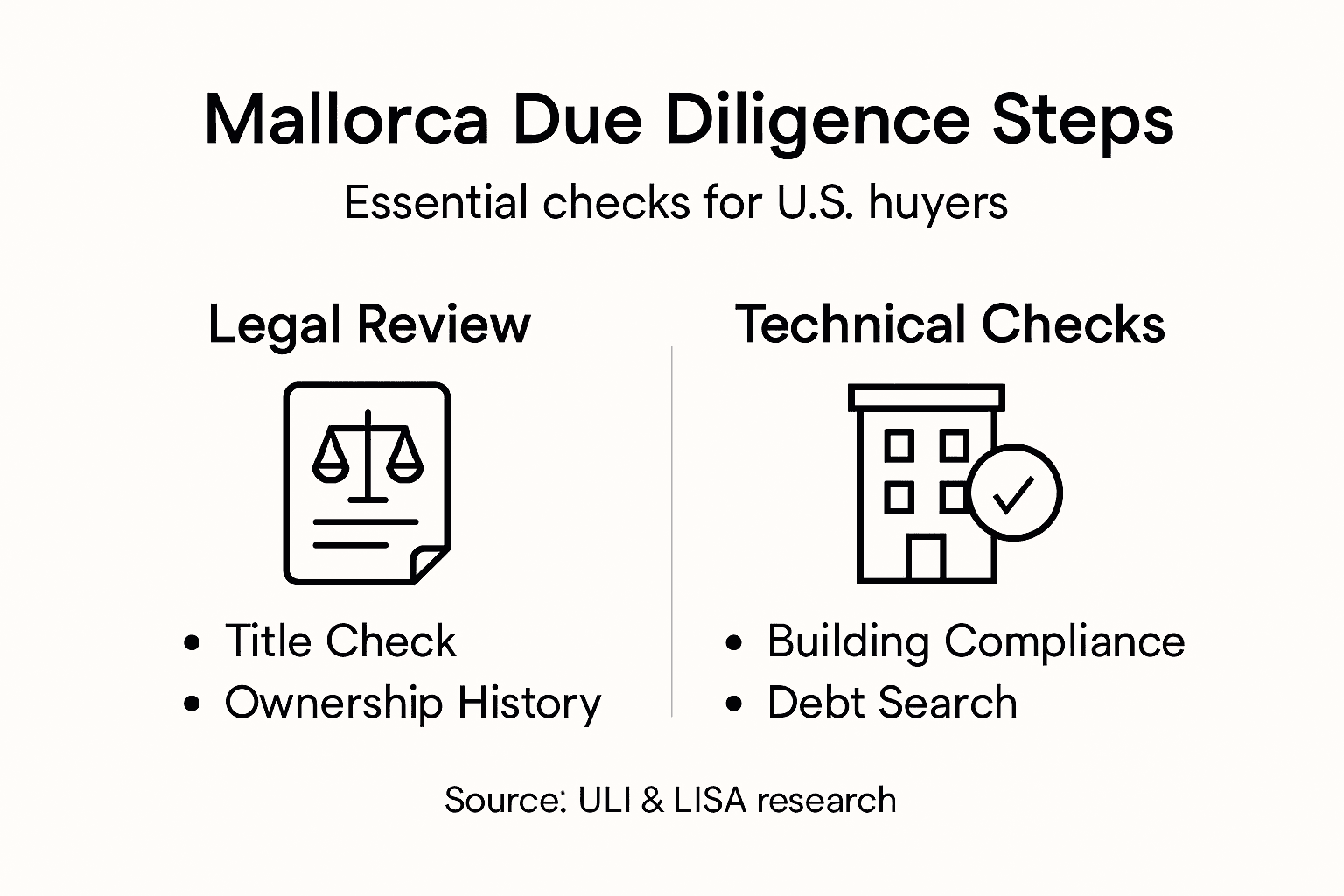
One pervasive pitfall involves incomplete title verification. American buyers accustomed to title insurance assume that if a property sold recently to someone else, the title must be clear. Not necessarily. Previous sales don’t guarantee title clarity. A property could change hands multiple times while carrying liens, easements, or encumbrances that never clear. You must obtain a complete title certificate from the Property Registry and have your lawyer review not just the current status but the entire ownership history. Look specifically for gaps in ownership chains, properties that changed hands multiple times in short periods (suggesting financial distress), or mortgages that weren’t properly discharged. Additionally, verify property boundaries through official cadastral records. Some Mallorca properties lack clear boundary demarcation, creating disputes with neighbors or limiting your ability to develop or modify the land. Request a certified boundary survey showing exactly what land you’re purchasing. Another critical mistake involves accepting the seller’s word on property permits and licenses. If you’re buying an investment property, verify the ETV rental license independently by contacting the Balearic Islands tourism authority, not by relying on documents the seller provides. Properties that were operating as unregistered rentals for years generate accumulated fines that could exceed tens of thousands of euros. These fines become your responsibility unless explicitly resolved before closing with written confirmation from municipal authorities.
Financial pitfalls often stem from incomplete debt verification. Some American buyers pay attention to the mortgage balance but miss other financial obligations. They don’t request proof that property taxes are current, they don’t verify utility arrears, and they don’t obtain a certificate from the homeowner association confirming all fees are paid. Then after closing, they receive bills for years of unpaid debts or special assessments. Similarly, failing to understand Spanish tax implications creates expensive surprises. If you’re a U.S. citizen or resident purchasing Spanish property, you have foreign asset reporting requirements and potential Spanish wealth tax obligations that vary based on your residency status. American buyers who don’t address tax planning during purchase often discover later that they structured the transaction inefficiently, creating unnecessary tax liability. Work with both a Spanish tax advisor and your U.S. tax professional before closing to ensure the purchase structure minimizes your overall tax burden. Another mistake involves underestimating renovation costs. Many American buyers are attracted to fixer-upper properties with lower purchase prices, underestimating what Spanish renovation actually costs. Spanish contractors, while skilled, operate at different wage and material cost levels than American markets. Additionally, renovations on older properties often uncover hidden structural or systems issues that multiply costs. Obtain detailed contractor estimates before purchase and add a 30 percent contingency buffer. Don’t assume you can undertake renovation work yourself or hire cheap labor. Spanish building codes require permitted work, inspections, and licensed contractors in many situations. Comprehensive due diligence covering legal, financial, technical, and regulatory aspects protects against these overlapping risks and ensures you understand exactly what you’re purchasing and what financial obligations you’re assuming.
The most damaging pitfall is proceeding without professional guidance to save money. Hiring a Spanish lawyer, engineer, and potentially a tax advisor costs between 4,000 and 8,000 euros for thorough due diligence. This sounds expensive until you compare it to the consequences of missing a 50,000 euro environmental liability, undiscovered liens, or accumulated fines. The professionals pay for themselves by preventing even a single major problem. Additionally, avoid the temptation to use online translation services for legal documents or to negotiate directly with sellers without professional intermediaries. Spanish real estate transactions involve specific legal language and formalities that amateur interpretation can botch. Use professionals. Budget for their fees as part of your purchase cost. Finally, don’t rely solely on online property listings or agent descriptions. Visit the property multiple times at different times of day and seasons if possible. Talk to current neighbors about the neighborhood’s trajectory, noise levels, and any issues they’re aware of. Properties that look beautiful in professional photos can reveal problems when you spend time in and around them. Due diligence isn’t paranoia. It’s prudent investment protection.
Pro tip: Create a written due diligence checklist with your Spanish lawyer before you even make an offer, so you know exactly what documents to request and what verifications to complete—this prevents you from discovering gaps in your investigation after you’ve already committed to the purchase.
To help guide your due diligence, here’s a summary of essential Mallorca property checks:
| Checkpoint | Purpose | Potential Consequence if Missed |
|---|---|---|
| Property Registry Review | Confirm legal ownership | Risk of disputed ownership |
| Tax Debt Clearance | Ensure all taxes are paid | Inherited tax liabilities |
| Zoning and Usage Verification | Confirm permitted property uses | Fines, forced cessation of rentals |
| Technical Inspection | Assess building integrity | Expensive repairs after purchase |
| Utility Bill Audit | Confirm no arrears | Unexpected utility debts |
Secure Your Mallorca Property Investment with Confidence
Navigating Mallorca’s complex property due diligence process can feel overwhelming, especially for American buyers facing unfamiliar legal, technical, and financial challenges. The risks of hidden liens, missing rental licenses like the ETV, and structural issues mean you need expert guidance to avoid costly surprises. Protect your investment by understanding every detail of property title, zoning compliance, and financial liabilities before you commit.
ULI & LISA specialize in assisting U.S. buyers like you with tailored, AI-powered property searches and deep local expertise. We help you uncover critical information early in the buying process, coordinate thorough legal and technical verifications, and ensure compliance with Mallorca’s regulations. Don’t let hidden risks threaten your dream purchase. Discover how our independent agents can simplify your due diligence and put you on the path to owning a luxury or investment property with confidence.
Start your journey today by visiting ULI & LISA and learn more about how we support international buyers with comprehensive property searches and reliable local knowledge. Protect your investment now with trusted partners who prioritize your peace of mind every step of the way.
Frequently Asked Questions
What is property due diligence?
Property due diligence is the systematic investigation conducted before committing to a real estate purchase. It involves assessing various legal, financial, and regulatory aspects to ensure you fully understand what you’re buying and the obligations that come with it.
Why is due diligence particularly important for U.S. buyers in Mallorca?
U.S. buyers must conduct thorough due diligence in Mallorca because Spanish property laws differ significantly from U.S. laws. There is no title insurance in Spain, and the responsibility for uncovering legal issues falls largely on the buyer.
What key areas should I focus on during the due diligence process?
During the due diligence process, focus on verifying the property title, examining any encumbrances or liens, ensuring compliance with local zoning regulations, assessing environmental conditions, and confirming the status of any rental licenses required for investment properties.
How long should I allocate for the due diligence process?
It’s advisable to allocate a minimum of 8 to 12 weeks for comprehensive due diligence in Mallorca. This allows sufficient time to navigate Spanish bureaucracy, conduct thorough investigations, and consult with legal and technical experts.
Recommended
- Property Inspections Mallorca: Protecting U.S. Buyers - ULI & LISA Mallorca Property Blog
- Understanding Property Due Diligence Mallorca - ULI & LISA Mallorca Property Blog
- Buying Property in Mallorca: Key Steps for Americans - ULI & LISA Mallorca Property Blog
- Property Types in Mallorca – What U.S. Buyers Should Know - ULI & LISA Mallorca Property Blog