
Property due diligence might sound like just another box to check before you buy real estate in Mallorca. But wait. Ignoring this step can multiply your risks by up to seventy percent and leave you exposed to hidden legal or financial problems. The truth is most buyers think a simple inspection is enough, yet the real difference comes from digging deeper into local laws, ownership issues, and even licensing quirks that can make or break your investment.
Table of Contents
- What Is Property Due Diligence And Why Does It Matter?
- Key Concepts In Property Due Diligence For Mallorca
- How Property Due Diligence Protects Buyers In Mallorca
- The Role Of Local Laws In Property Due Diligence
- Understanding Market Trends In Mallorca Real Estate
Quick Summary
| Takeaway | Explanation |
|---|---|
| Conduct thorough legal title checks. | Verify legal ownership, property history, and existing encumbrances to ensure a secure investment. |
| Understand local zoning and compliance rules. | Familiarize yourself with regulations affecting property use, especially for tourist rentals and modifications. |
| Identify potential financial liabilities. | Check for outstanding taxes, mortgages, or hidden costs to avoid unexpected financial burdens. |
| Assess market trends and valuation drivers. | Recognize factors like location, demand, and seasonal fluctuations that impact property values in Mallorca. |
| Consult local experts for guidance. | Engage legal and real estate professionals to navigate Mallorca’s unique regulations and reduce risks. |
What is Property Due Diligence and Why Does It Matter?
Property due diligence represents a comprehensive investigative process that protects real estate investors by thoroughly examining all critical aspects of a potential property acquisition. In the context of Mallorca real estate, this process goes beyond simple property inspection to ensure investors understand every legal, financial, and structural nuance before completing a transaction.
Understanding the Core Components
Property due diligence in Mallorca involves a systematic review of multiple property dimensions. Buyers must meticulously assess several key areas to mitigate potential risks and make informed investment decisions.
To help clarify the major focus areas, the table below summarizes the core components of property due diligence in Mallorca and their purpose for buyers.
| Component | Purpose/Explanation |
|---|---|
| Legal title verification | Ensures the seller has the right to transfer ownership and checks for any existing encumbrances |
| Structural integrity and building condition | Assesses the property’s physical state to identify defects, safety issues, or necessary repairs |
| Zoning and land use regulations | Confirms the intended use is permitted and checks for restrictions or requirements on modifications |
| Outstanding financial obligations or liens | Identifies unpaid taxes, mortgages, or liens that could become the buyer’s responsibility |
| Environmental compliance | Checks for contamination risks or legal issues related to the environment |
The core components typically include:
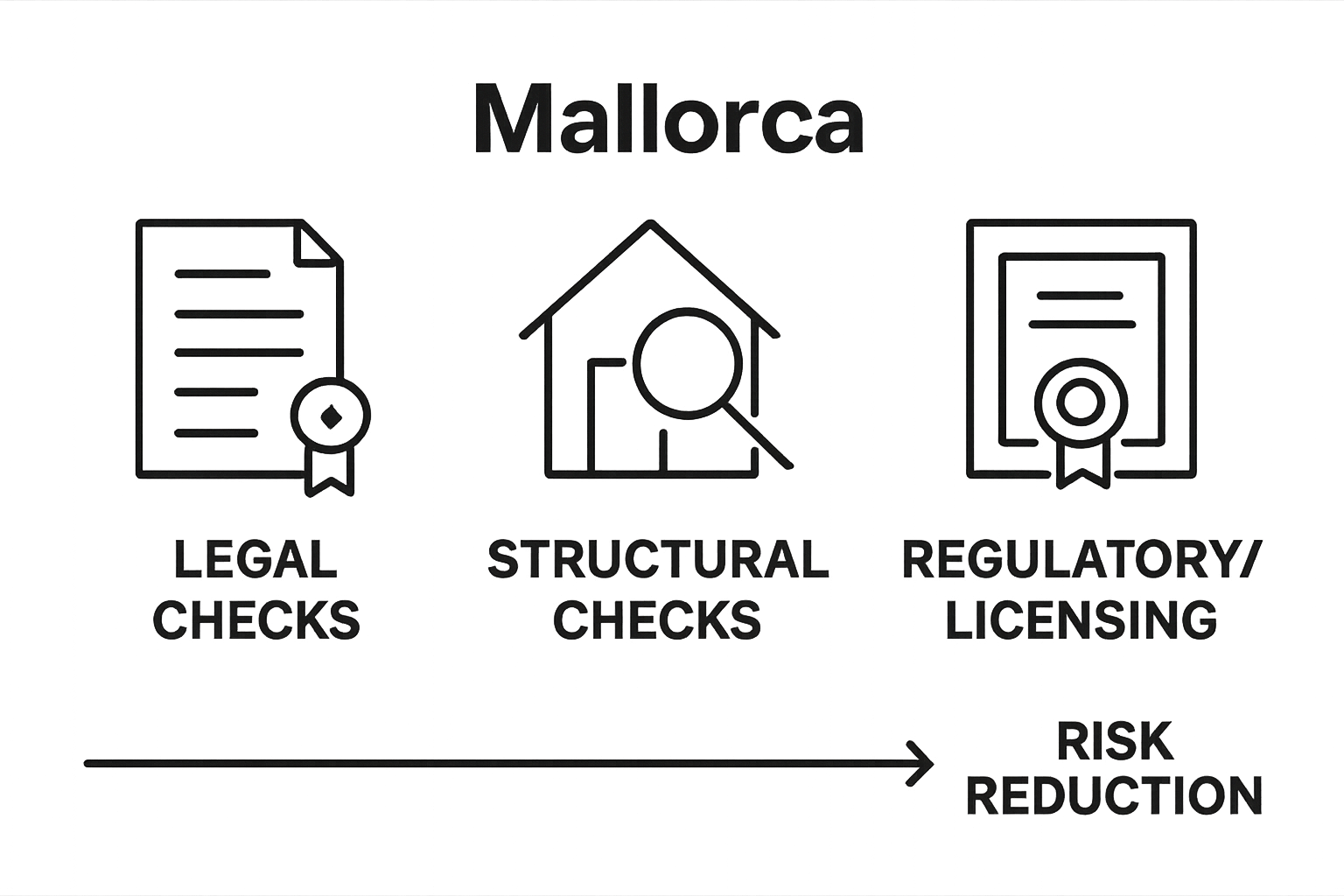
- Legal title verification and ownership history
- Structural integrity and building condition assessments
- Zoning regulations and potential land use restrictions
- Outstanding financial obligations or property liens
- Environmental compliance and potential contamination risks
Importance for International Investors
For American buyers investing in Mallorca, property due diligence becomes even more critical. The Spanish real estate market has unique legal frameworks, taxation rules, and regulatory requirements that differ significantly from US standards. Investors must navigate complex local regulations, understand inheritance laws, and verify rental licensing conditions specific to the Balearic Islands.
Key considerations for international buyers include:
- Confirming full legal transferability of property ownership
- Understanding potential tax implications for foreign investors
- Verifying compliance with local ETV (Tourist Rental) licensing requirements
- Assessing potential renovation or modification restrictions
- Evaluating long term investment potential and market appreciation
Successful property due diligence transforms a potentially risky investment into a strategic, well-informed decision. By systematically examining every aspect of a property, investors protect their financial interests and position themselves for sustainable real estate success in Mallorca’s dynamic market.
Key Concepts in Property Due Diligence for Mallorca
Property due diligence in Mallorca involves navigating a complex landscape of legal, financial, and regulatory considerations unique to the Spanish real estate market. Understanding these key concepts helps international investors make informed decisions and mitigate potential risks associated with property acquisition.
Legal and Ownership Verification
One of the most critical aspects of property due diligence is establishing clear legal ownership and title history. In Mallorca, this process requires a comprehensive review of property registries and historical documentation. Registrar’s Office of Spain provides essential resources for verifying property titles and uncovering potential legal encumbrances that could impact ownership transfer.
Crucial legal verification steps include:
- Confirming the property’s registration status
- Checking for any existing mortgages or liens
- Verifying the seller’s legal right to transfer ownership
- Examining potential inheritance or shared ownership complications
- Investigating any outstanding legal disputes related to the property
Regulatory Compliance and Licensing
Mallorca presents unique regulatory challenges for property investors, particularly those interested in rental properties. The Balearic Islands have specific regulations governing tourist rentals (Estancias Turísticas de Vacaciones or ETV licenses) that directly impact property usage and potential investment returns.
Key regulatory considerations for investors include:
- Understanding ETV licensing requirements
- Assessing zoning restrictions for residential and tourist properties
- Verifying compliance with local building codes and modifications
- Evaluating potential restrictions on property alterations
- Investigating municipal and regional planning regulations
Successful property due diligence in Mallorca requires a holistic approach that combines thorough research, expert consultation, and a deep understanding of local real estate dynamics.
The following table provides a concise overview of the key regulatory and legal concepts involved in property due diligence for Mallorca, allowing buyers to quickly compare their significance and impact.
| Key Concept | Description | Importance for Buyers |
|---|---|---|
| Property registration | Officially records property ownership and rights | Confirms legal ownership and identifies issues |
| ETV rental licensing | Required authorization for tourist rentals | Permits legal rental income and affects returns |
| Zoning restrictions | Regulations on property use and modifications | Impacts usability and renovation possibilities |
| Building code compliance | Local standards for property safety and modifications | Ensures property meets safety/legal standards |
| Inheritance/shared ownership | Laws governing passing of property and shared rights | Avoids future disputes or complications |
| Municipal and regional planning | Specific rules for land development and usage | Ensures compliance and avoids legal challenges |
How Property Due Diligence Protects Buyers in Mallorca
Property due diligence serves as a critical protective mechanism for international investors navigating the complex Mallorcan real estate market. By implementing a comprehensive investigative approach, buyers can safeguard their financial interests and mitigate potential risks associated with property acquisition.
Financial Risk Mitigation
Financial protection represents a primary objective of thorough property due diligence. International investors face unique challenges when purchasing property in Mallorca, including potential hidden financial obligations and complex tax implications. Spanish Tax Agency highlights the importance of comprehensive financial verification to prevent unexpected fiscal burdens.
Key financial protection strategies include:
- Identifying potential outstanding property taxes
- Verifying existing mortgage obligations
- Assessing potential hidden renovation costs
- Evaluating potential tax liabilities for foreign investors
- Confirming the property’s true market value
Legal and Structural Protection
Beyond financial considerations, due diligence provides crucial legal and structural protection for property buyers. The Mallorcan real estate market presents unique challenges, including complex inheritance laws, potential zoning restrictions, and specific regional regulations that can significantly impact property ownership.
Essential legal and structural protection measures involve:
- Confirming full legal transferability of property ownership
- Identifying potential structural defects or maintenance issues
- Verifying compliance with local building codes
- Assessing potential legal restrictions on property modifications
- Investigating any existing legal disputes or encumbrances
Ultimately, property due diligence transforms a potentially risky investment into a strategic, well-informed decision. By systematically examining every aspect of a property, international investors can confidently navigate Mallorca’s real estate market, protecting their financial interests and ensuring a secure, valuable investment that aligns with their long-term objectives.

The Role of Local Laws in Property Due Diligence
Local laws in Mallorca create a complex legal framework that significantly impacts property transactions, making comprehensive understanding essential for international investors. These regulations extend far beyond standard property transfer protocols, introducing nuanced requirements that can dramatically influence investment strategies and potential returns.
Regional Regulatory Complexity
The Balearic Islands possess a unique legal landscape that differs substantially from mainland Spanish regulations. According to Balearic Islands Official Legal Registry, regional legislation introduces specific provisions that directly affect property ownership, usage, and potential rental capabilities. International investors must navigate these intricate legal frameworks to ensure full compliance and protect their investment interests.
Key regional regulatory considerations include:
- Specific inheritance transmission rules
- Unique zoning restrictions in protected coastal areas
- Limitations on property modifications in historical zones
- Special regulations for tourist rental properties
- Environmental protection laws affecting property development
Compliance and Investor Protection
Comprehensive legal due diligence requires a meticulous approach to understanding local regulatory requirements. Investors must recognize that Mallorca’s legal framework is designed to protect both local interests and property market stability. This means international buyers need to go beyond standard property investigations and develop a deep understanding of regional legal nuances.
Critical compliance elements for international investors involve:
- Verifying full legal transferability of property titles
- Understanding foreign ownership restrictions
- Assessing potential tax implications for non resident investors
- Confirming compliance with ETV rental licensing requirements
- Investigating potential legal restrictions on property usage
Successful property investment in Mallorca demands more than financial resources. It requires a sophisticated understanding of local legal frameworks, strategic planning, and expert guidance to navigate the complex regulatory environment effectively. By prioritizing comprehensive legal due diligence, international investors can transform potential legal challenges into opportunities for secure and profitable real estate investments.
Understanding Market Trends in Mallorca Real Estate
The Mallorca real estate market represents a dynamic and complex ecosystem shaped by unique geographical, economic, and lifestyle factors that attract international investors. Understanding these nuanced market trends is crucial for making informed investment decisions in this premium Mediterranean property landscape.
Drivers of Market Valuation
Mallorca’s real estate market is characterized by several distinctive factors that influence property valuations and investment potential. According to Statista, the island’s property market has experienced consistent appreciation driven by multiple interconnected elements.
Key market valuation drivers include:
- Limited geographical availability of premium properties
- Strong international demand from high net worth investors
- Increasing popularity of luxury tourism and vacation rentals
- Strategic location and exceptional Mediterranean lifestyle
- Robust infrastructure and connectivity
Regional and Seasonal Market Dynamics
The Mallorca real estate market demonstrates significant variations across different regions and seasonal periods. Coastal areas like Port Andratx, Pollensa, and Palma consistently attract higher investment interest, while seasonal fluctuations impact property availability and pricing strategies.
Critical market trend considerations include:
- Price variations between coastal and inland properties
- Seasonal demand cycles affecting rental and sales markets
- Impact of international economic conditions
- Emerging preferences for sustainable and eco friendly properties
- Shifts in remote work trends influencing property selection
Successful navigation of Mallorca’s real estate market requires a sophisticated understanding of these complex dynamics. Investors must move beyond traditional market analysis and develop a holistic perspective that integrates economic indicators, lifestyle trends, and regional specifics to identify genuine investment opportunities in this unique and competitive property landscape.
Secure Your Mallorca Property Investment with Expert Due Diligence
The journey to buying property in Mallorca often feels overwhelming, especially when you face questions about hidden legal issues, unclear property titles, or unfamiliar local regulations. As highlighted in the article, international buyers—particularly those from the USA—struggle to navigate the complex due diligence needed to protect their investment. Making an informed decision requires much more than a casual inspection: you deserve clear answers and unbiased advice every step of the way.
At ULI & LISA, we combine local knowledge with cutting-edge AI-powered search tools to help you confidently address every aspect of property due diligence. Our independent approach ensures you receive personalized support for title verification, compliance checks, and legal guidance throughout Mallorca. Ready for a smooth and secure purchase experience? Explore how our process gives you an advantage and take the first step toward a worry-free investment today.
Frequently Asked Questions
What is property due diligence?
Property due diligence is a comprehensive investigative process that real estate investors undertake to thoroughly examine all critical aspects of a potential property acquisition, including legal, financial, and structural factors.
Why is property due diligence important for investors?
Property due diligence is essential for investors as it helps mitigate risks, uncover potential hidden costs, and ensures compliance with local regulations, thereby protecting their financial interests in a real estate transaction.
What are the core components of property due diligence?
The core components typically include legal title verification, structural integrity assessments, zoning regulations, outstanding financial obligations, and environmental compliance.
How does local law impact property due diligence?
Local laws create a complex legal framework that influences property transactions; understanding these regulations is crucial for compliance, ensuring that investors protect their interests and navigate potential legal challenges.