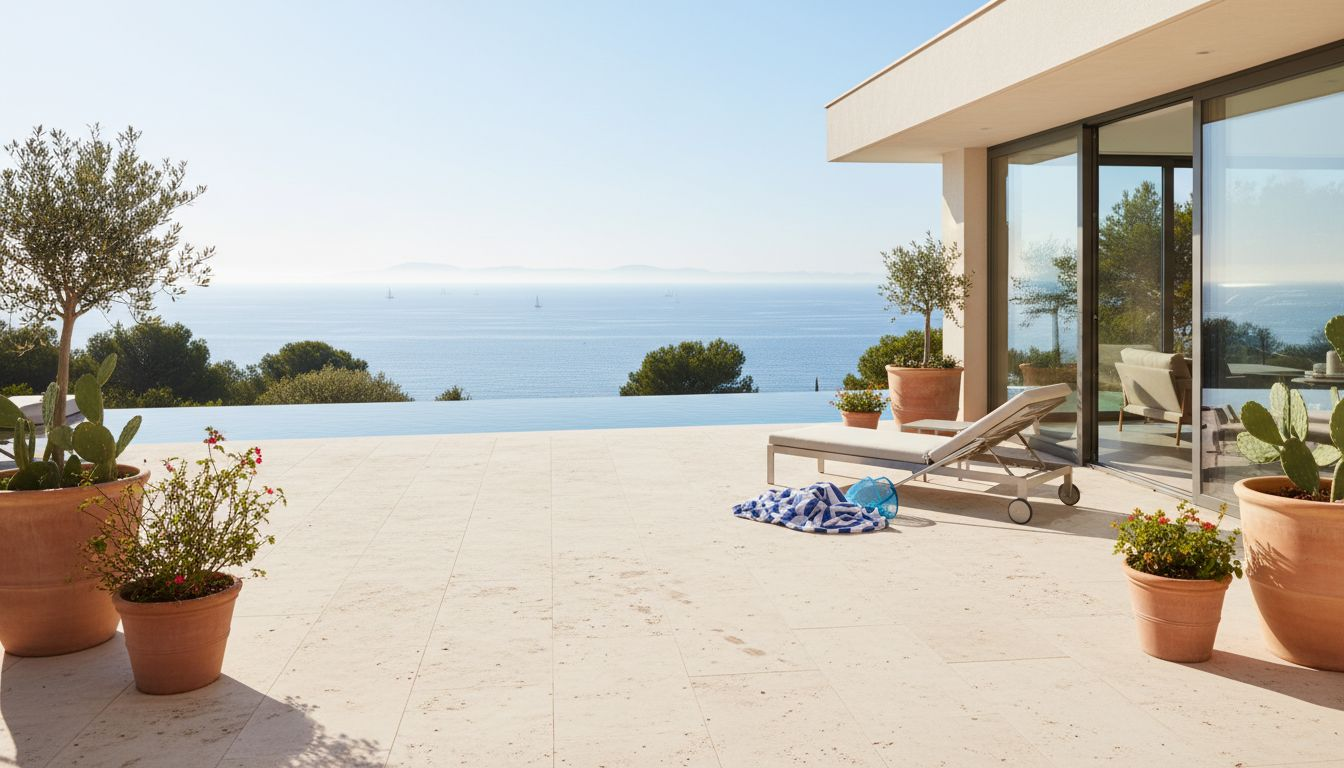
Most luxury villas in Mallorca attract discerning American buyers with their stunning Mediterranean views and high-end amenities, yet navigating property choices goes far beyond beautiful spaces. Retiring in Spain involves strict legal compliance and layered tax rules that can impact every investment decision. This guide reveals the distinct features of Mallorca’s finest properties and highlights key legal and financial considerations that shape smart purchases for American professionals.
Key Takeaways
| Point | Details |
|---|---|
| Diverse Property Options | Mallorca offers various property types, including fincas, villas, apartments, and townhouses, to cater to different buyer preferences and investment strategies. |
| Legal Considerations for Foreign Buyers | American buyers must navigate specific legal requirements, including obtaining a tax identification number and engaging a licensed Spanish lawyer for property transactions. |
| Ongoing Tax and Maintenance Obligations | Property ownership incurs several costs, including municipal property taxes, maintenance fees, and compliance with US tax reporting requirements. |
| Due Diligence is Essential | Conduct thorough inspections and obtain legal advice to avoid risks associated with zoning issues, regulatory compliance, and financial pitfalls in the Mallorca market. |
Mallorca Property Types and Their Distinct Features
Mallorca offers a diverse range of property types that cater to different preferences and investment strategies for American buyers. From historic stone fincas in the countryside to modern seafront villas, the island presents an array of residential options with unique architectural characteristics and lifestyle opportunities. Understanding the nuanced differences between property types can help potential investors make informed decisions.
The primary property categories in Mallorca include traditional fincas, contemporary villas, rustic country houses, urban apartments, and luxury townhouses. Fincas represent traditional Mallorcan farmhouses often situated in rural settings, featuring stone walls, wooden beams, and expansive land plots. These properties typically range from 200 to 500 square meters and can include significant acreage suitable for agricultural pursuits or private landscaping. Urban apartments, concentrated in cities like Palma, offer more compact living spaces with proximity to cultural amenities and typically range from 75 to 150 square meters.
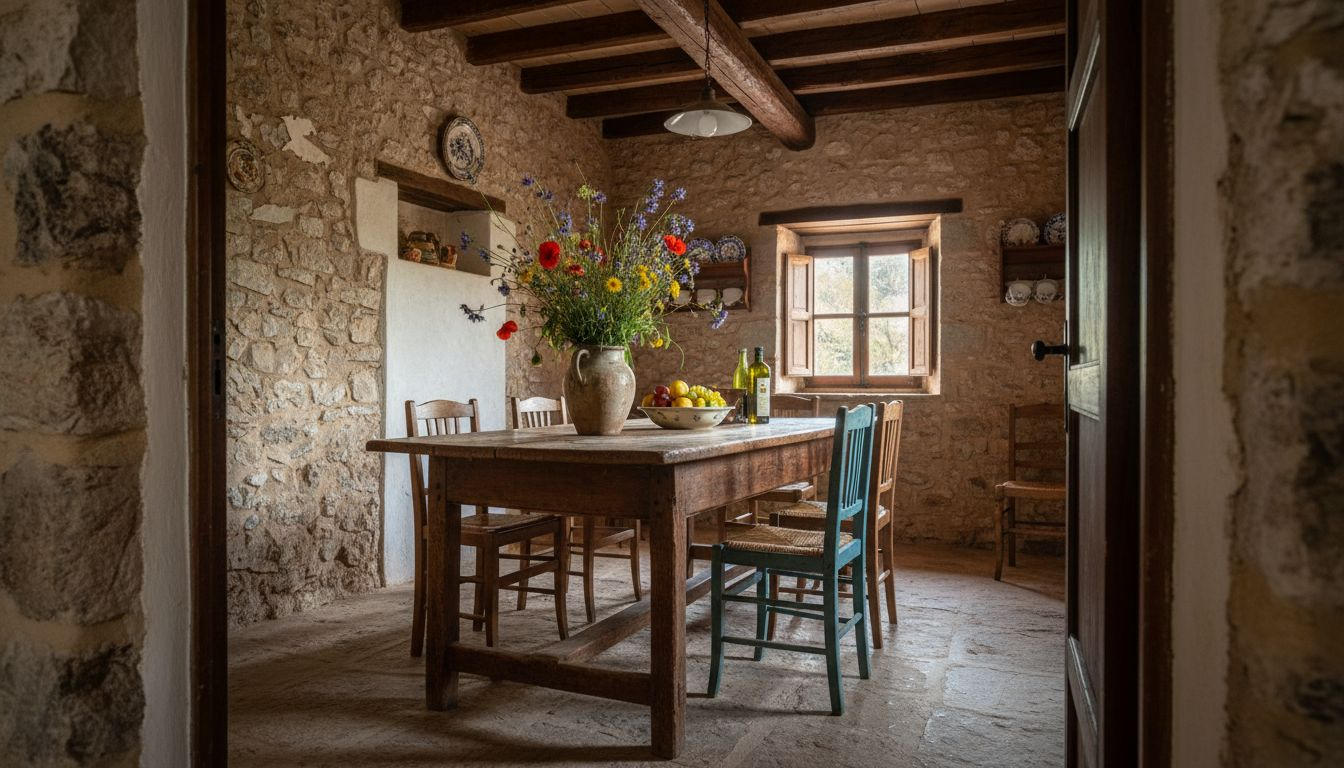
Villas represent the pinnacle of luxury real estate in Mallorca, offering panoramic views, private pools, and high-end architectural designs. These properties often command premium prices in coastal regions like Port d’Andratx, Son Vida, and Deya, with sizes ranging from 300 to 800 square meters. Many feature modern amenities like smart home technologies, expansive terraces, and sustainable design elements that appeal to discerning American buyers seeking both comfort and investment potential.
Pro tip: When exploring Mallorca property types, always conduct comprehensive on-site inspections and engage local experts who understand the nuanced legal and architectural variations between different property categories.
Here’s a concise comparison of Mallorca’s primary property categories and their lifestyle appeal for American buyers:
| Property Type | Typical Size Range | Key Features | Ideal Buyer Profile |
|---|---|---|---|
| Finca | 200-500 sq meters | Stone walls, rural, historic charm | Nature lovers, heritage investors |
| Villa | 300-800 sq meters | Panoramic views, luxury amenities | High-net-worth, privacy seekers |
| Apartment | 75-150 sq meters | Urban location, cultural access | City professionals, short-term stays |
| Townhouse | 120-250 sq meters | Central, often luxury upgrades | Families, long-term residents |
| Country House | 150-350 sq meters | Rustic, landscaping possibilities | Garden enthusiasts, renovators |
Luxury Villas, Fincas, and Penthouses Compared
Mallorca’s luxury real estate market offers sophisticated American buyers three distinct property types, each presenting unique investment opportunities and lifestyle experiences. Exploring the intricate details of these property categories reveals nuanced advantages that can significantly impact investment strategies and personal living preferences.
Luxury villas represent the pinnacle of Mallorcan real estate, characterized by expansive footprints ranging from 400 to 800 square meters, typically situated in premium coastal locations like Son Vida and Port d’Andratx. These properties often feature cutting-edge architectural designs, private infinity pools, panoramic Mediterranean views, and state-of-the-art technological integrations. Villas appeal to high-net-worth Americans seeking turnkey luxury with maximum privacy and stunning architectural statements.
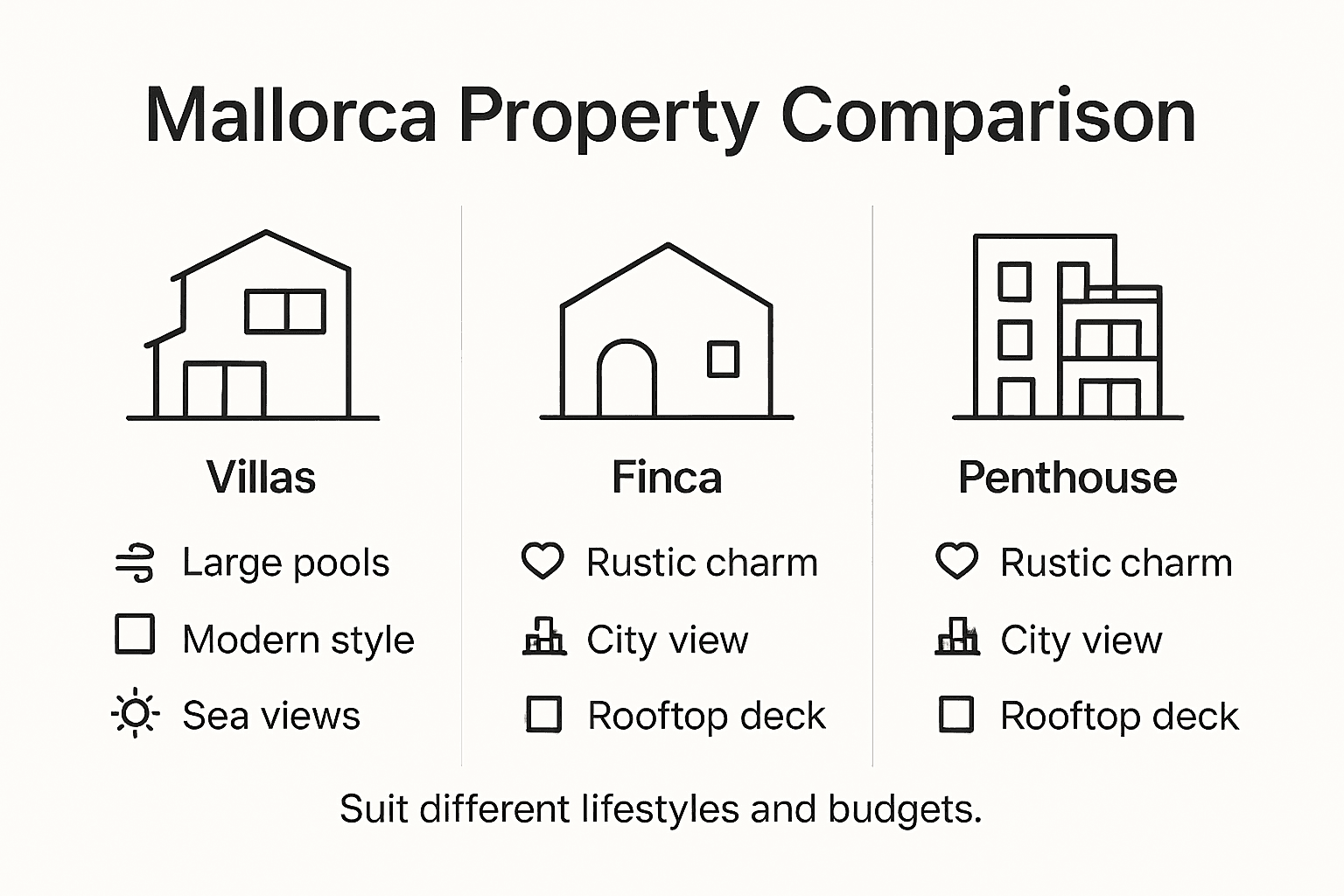
Fincas, by contrast, offer a more rustic and traditional real estate experience. These historic agricultural properties are predominantly located in Mallorca’s interior regions, featuring stone construction, wooden beam ceilings, and substantial land parcels often spanning 5 to 20 hectares. Fincas provide a unique opportunity for buyers interested in preserving authentic Mallorcan architectural heritage while enjoying substantial privacy and potential for agricultural or restoration projects. Unlike contemporary villas, fincas require more strategic renovation and maintenance considerations.
Penthouses present a third compelling option, particularly for urban-oriented investors. Concentrated in Palma and select coastal towns, these properties offer sophisticated city living with exceptional views, typically occupying the top floors of modern residential complexes. Ranging from 150 to 350 square meters, penthouses combine luxury amenities with proximity to cultural attractions, making them attractive for buyers seeking a more cosmopolitan Mallorcan experience.
Pro tip: Conduct comprehensive due diligence on each property type, including local zoning regulations, potential rental licensing requirements, and long-term maintenance costs before making your investment decision.
Legal Obligations for Foreign Property Buyers
American investors considering property purchases in Mallorca must navigate a complex legal landscape with specific requirements for foreign buyers. Understanding the comprehensive legal transfer process is crucial for ensuring a smooth and compliant property acquisition.
Foreign buyers, including US nationals, are required to complete several mandatory administrative steps before finalizing a property purchase. The first critical requirement is obtaining a Número de Identificación de Extranjero (NIE), a unique tax identification number essential for all financial transactions in Spain. This involves applying through the Spanish police department or Spanish consulate, which requires presenting valid passport documentation, proof of intended property purchase, and financial standing.
The legal purchasing process demands thorough due diligence and professional representation. American buyers must engage a licensed Spanish lawyer specializing in real estate transactions to conduct comprehensive property searches, verify clear property titles, check for potential legal encumbrances, and ensure all municipal and regional regulations are satisfied. This includes examining urban planning documents, confirming building licenses, verifying property boundaries, and assessing any potential historical or environmental restrictions that might impact property ownership or future development plans.
Additionally, foreign property buyers must be prepared for substantial tax obligations. Non-resident property owners are subject to annual property taxes, including the Impuesto sobre Bienes Inmuebles (IBI), which varies depending on property location, size, and assessed value. US citizens must also comply with international tax reporting requirements, including Foreign Bank Account Report (FBAR) and Foreign Account Tax Compliance Act (FATCA) declarations, which mandate reporting foreign asset holdings to the Internal Revenue Service.
Pro tip: Work exclusively with certified bilingual legal professionals who specialize in international property transactions and maintain comprehensive documentation throughout your purchasing journey.
Taxation and Annual Costs for U.S. Owners
Mallorca property ownership involves complex financial considerations for American investors, with multiple layers of tax obligations and recurring expenses that require strategic financial planning. Understanding the intricate US tax requirements for international property owners is crucial for maintaining compliance and optimizing financial outcomes.
Annual property taxation in Spain represents a significant ongoing cost for US owners. Non-resident property owners are subject to the Impuesto sobre Bienes Inmuebles (IBI), an annual municipal property tax calculated based on the property’s cadastral value. This tax typically ranges from 0.4% to 1.1% of the property’s assessed value, with rates varying depending on location and property type. Additionally, non-resident property owners must pay a Spanish income tax on potential rental income or imputed rental value, even if the property is not actively generating revenue.
US citizens face additional complex reporting requirements that extend beyond Spanish tax obligations. The Internal Revenue Service mandates comprehensive reporting of foreign asset holdings through forms like the Foreign Bank Account Report (FBAR) and Foreign Account Tax Compliance Act (FATCA) declarations. These regulations require detailed disclosure of property values, rental income, and any associated financial accounts, with potential penalties for non-compliance ranging from $10,000 to significant percentages of undeclared assets. American owners must also navigate potential double taxation issues, though tax treaties between the US and Spain provide some mechanisms for avoiding duplicate tax payments.
Beyond direct taxation, US property owners in Mallorca should budget for substantial annual maintenance costs. These typically include property management fees (2-5% of property value), insurance premiums, utility expenses, and potential renovation or restoration expenses for traditional properties like fincas. Luxury properties often incur higher maintenance costs, with annual expenses potentially reaching 3-7% of the property’s total value.
Pro tip: Consult with a bilingual tax professional specializing in international property taxation to develop a comprehensive financial strategy that addresses both Spanish and US reporting requirements.
For American buyers, understanding key annual property ownership costs is essential. Here is a summary guide:
| Cost Type | Typical Range | What It Covers | Strategic Consideration |
|---|---|---|---|
| Property Tax (IBI) | 0.4%-1.1% of value | Municipal property taxes | Varies by location and property |
| Maintenance | 2-7% of property value | Repairs, management, upkeep | Higher for luxury and historic homes |
| Insurance | $500-$3,000 annually | General and liability coverage | Essential for risk mitigation |
| US Tax Reporting | Penalties up to $10,000 | FBAR/FATCA forms, asset disclosure | Prevents legal and tax issues |
Risks, Restrictions, and Mistakes to Avoid
Mallorca’s property market presents unique challenges for American buyers, requiring meticulous due diligence to navigate potential legal and financial pitfalls. Understanding the critical legal considerations for foreign property acquisitions is essential for mitigating investment risks.
One of the most significant risks involves zoning irregularities and municipal compliance issues. Many properties in Mallorca, particularly in rural areas, may have undeclared extensions, unregulated constructions, or incomplete documentation that can create substantial legal complications. US buyers must be particularly cautious about properties with unclear land use permissions, potential environmental restrictions, or structures that do not conform to local urban planning regulations. These discrepancies can result in significant financial penalties, mandatory demolition, or complete prohibition of property modifications.
Tourism-related restrictions represent another critical consideration for American investors. Since 2022, Mallorca has implemented strict regulations limiting new tourist rental licenses, effectively constraining potential income generation for non-resident property owners. This legislative change dramatically impacts the investment potential of properties previously marketed as viable vacation rental assets. US buyers must thoroughly investigate existing rental permissions, understand current regulatory frameworks, and recognize that future rental income may be significantly more restricted than previously anticipated.
Financial risks extend beyond legal and regulatory challenges, encompassing potential market volatility and hidden transactional expenses. American investors frequently encounter pitfalls such as overpaying due to incomplete market understanding, encountering undisclosed property debts, or falling victim to misrepresentations by local agents and developers. Comprehensive due diligence requires engaging independent legal advisors, conducting thorough property inspections, and verifying all documentation, including title deeds, occupancy permits, and potential outstanding municipal or tax obligations.
Pro tip: Invest in comprehensive professional due diligence, including legal review, property inspection, and regulatory compliance verification, before finalizing any property transaction in Mallorca.
Discover Your Perfect Mallorca Property with Expert Guidance
Navigating the diverse property types in Mallorca can feel overwhelming for U.S. buyers. Whether you are drawn to rustic fincas with historic charm or luxurious villas boasting panoramic views, understanding zoning, taxation, and legal obligations is essential. At ULI & LISA, we recognize the challenges American investors face such as navigating complex regulations, managing tax responsibilities, and identifying genuine investment opportunities without falling into costly mistakes.
Our independent agents specialize in guiding international buyers through Mallorca’s property landscape using advanced AI-powered tools that deliver unbiased searches tailored to your unique needs. With personalized support on legal and financial matters, you gain confidence during every step of your purchase. Don’t let uncertainty hold you back from owning your dream Mallorca home or investment property.
Ready to take the next step in securing your ideal Mallorca property? Explore how our committed team can simplify your journey at ULI & LISA. Experience expert advice paired with innovative property search technology — your key to smooth success starts here.
Frequently Asked Questions
What are the different types of properties available in Mallorca for U.S. buyers?
Mallorca offers various property types, including traditional fincas, luxury villas, rustic country houses, urban apartments, and townhouses, each catering to different lifestyle preferences and investment strategies.
What are the key features of a finca in Mallorca?
Fincas are traditional Mallorcan farmhouses often located in rural areas. They typically feature stone walls, wooden beams, and substantial land plots suitable for agricultural use or private landscaping, ranging from 200 to 500 square meters.
How does owning a luxury villa differ from owning a penthouse in Mallorca?
Luxury villas offer expansive spaces with high-end amenities and panoramic views, typically situated in coastal areas. Penthouses, on the other hand, provide upscale urban living with exceptional views, occupying the top floors of modern buildings, and focus on cultural access and city lifestyle.
What legal obligations should U.S. buyers be aware of when purchasing property in Mallorca?
U.S. buyers must obtain a Número de Identificación de Extranjero (NIE) for tax purposes, engage a licensed Spanish lawyer for due diligence, and comply with various tax obligations such as the Impuesto sobre Bienes Inmuebles (IBI) and international reporting requirements.
Recommended
- Buying Property in Mallorca: Key Steps for Americans - ULI & LISA Mallorca Property Blog
- Mallorca Property Search Guide: Expert Insights - ULI & LISA Mallorca Property Blog
- Mallorca Property Buying Guide: Everything Explained - ULI & LISA Mallorca Property Blog
- Advantages of Buying in Mallorca: Complete Guide - ULI & LISA Mallorca Property Blog
- Checkliste für Instandhaltung im Mehrparteienhaus -