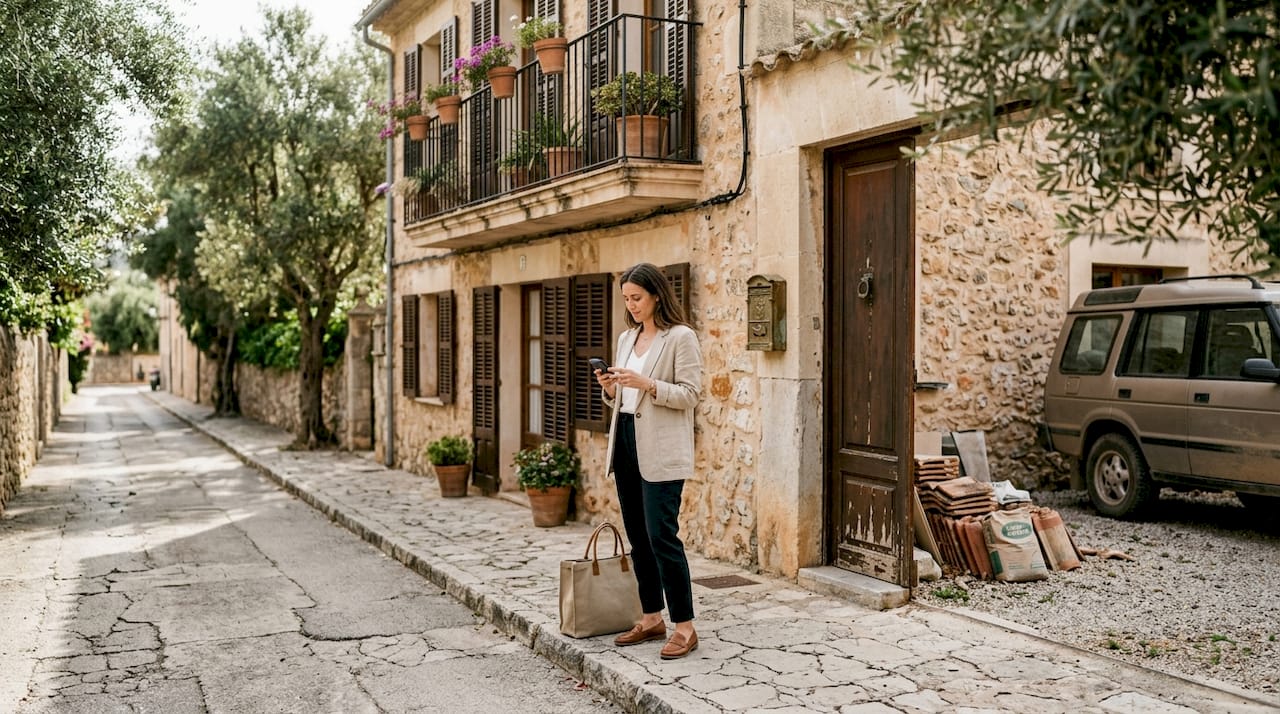
Most American buyers arrive in Mallorca expecting luxury to look the way it does back home: a sprawling new-build with a three-car garage and a zip code that says it all. Mallorca rewrites that script entirely. Here, a 300-year-old stone finca with an infinity pool overlooking the Serra de Tramuntana can command more than a sleek modern villa in a gated community, and both can sit comfortably in the $1.5M to $3M bracket. Price alone does not tell you whether a property is a smart buy or a costly mistake. Features, location, legal classification, and hidden costs all shape the real value. This guide gives you a clear, actionable roadmap for buying luxury property in Mallorca with confidence.
Key Takeaways
| Point | Details |
|---|---|
| Mallorca’s luxury is unique | Luxury properties blend historic fincas and modern villas, with location and features as key drivers of value. |
| Legal clarity is essential | Non-resident buyers must follow strict legal steps and use independent advice to avoid hidden pitfalls. |
| Expect significant extra costs | Total costs typically add 10-13% to purchase price, so budget accordingly. |
| Eco-features and privacy matter | Sustainability upgrades and exclusive amenities command the highest premiums in Mallorca’s luxury market. |
| Prime listings are often off-market | 70% of the best €3M+ properties are sold privately, so expert local connections are vital. |
What qualifies as luxury property in Mallorca?
Mallorca’s luxury market does not follow a single template. Luxury properties in Mallorca are typically villas, fincas, and estates in exclusive areas with sea or mountain views, modern amenities, and high-end finishes. That definition covers a wide range of styles, from centuries-old stone farmhouses to architect-designed contemporary homes with floor-to-ceiling glass.
Location is the first filter. Son Vida, just outside Palma, is the island’s most prestigious address, known for golf, security, and proximity to the city. Port d’Andratx in the southwest draws buyers who want marina views and a cosmopolitan atmosphere. Pollensa and the north offer a quieter, more rural character, with large plots and historic charm. Each zone has its own price ceiling and buyer profile.
Beyond location, the features that define luxury on the island include:
- Panoramic sea or mountain views from living areas and terraces
- Historic stonework or certified eco-modern construction
- Infinity or heated pools with landscaped gardens
- Guest suites or separate staff quarters
- Smart home systems, underfloor heating, and solar energy
- Sustainability certifications that add measurable resale value
For buyers in the $1.5M to $3M range, the Mallorca luxury property types available include restored fincas in the north and smaller modern villas in the southwest. Prime ultra-luxury, think Son Vida estates or Port d’Andratx seafront, starts above €3M. Roughly 23% of the market falls in the €1M to €5M range, making your target bracket genuinely competitive.
“Eco-features and sustainability certifications now add a significant premium to Mallorca luxury properties, particularly among buyers under 50.” — Mallorca luxury property guide
Location, architecture, and amenities: What to look for
Having explored what qualifies as luxury, let’s focus on exactly where to look and which features drive long-term value.
The north and central zones, particularly Pollensa, Alcudia, and the Raiguer foothills, are where you find the classic Mallorcan finca. These properties sit on large rural plots, often 5,000m² to 15,000m²+, with thick stone walls, vaulted ceilings, and mature olive groves. Fincas in Pollensa average €1.5M, while Son Vida averages €5M, with plot sizes reaching well beyond 10,000m².
The southwest corridor, from Palma to Andratx, is where modern architecture dominates. Villas here tend to be newer, with open-plan layouts, rooftop terraces, and direct sea views. Security is tighter, and the lifestyle is more urban. For buyers who want a best Mallorca neighborhoods breakdown by lifestyle and investment profile, the differences between zones are significant.
| Region | Avg. price range | Typical size | Style |
|---|---|---|---|
| Son Vida | €3M to €8M+ | 400 to 800m² built | Modern villa, gated |
| Port d’Andratx | €2M to €6M | 300 to 600m² built | Contemporary, sea views |
| Pollensa / North | €1.5M to €3.5M | 250 to 500m² built | Restored finca, rural |
| Central Mallorca | €1.2M to €2.5M | 300 to 600m² built | Finca, large plots |
Amenities that consistently add value in this market include private pools, gym spaces, wine cellars, electric vehicle charging, and guest independence through separate entrances. Buyers focused on rental income should also prioritize tourist license eligibility, which is tied to property classification and location.
Pro Tip: 70% of €3M+ sales are completed off-market. Without a well-connected local agent, you simply will not see the best inventory.
Legal steps and transaction essentials for U.S. buyers
With features and value in mind, the next vital step is navigating Mallorca’s legal process as an overseas buyer.
The process is sequential and non-negotiable. Every step must happen in order, and skipping due diligence at any stage can mean inheriting the seller’s debts or buying a property with illegal extensions. Here is the standard path, as outlined in the buying property in Mallorca guide:
- Obtain your NIE (Número de Identificación de Extranjero), the Spanish tax ID required for all non-resident buyers
- Open a Spanish bank account to handle all transaction payments
- Hire an independent lawyer who is not affiliated with the selling agent
- Request the Nota Simple, the official property registry document that confirms ownership, debts, and classification
- Sign the reservation contract and pay a holding deposit (typically €10,000 to €30,000)
- Sign the arras contract (private purchase agreement) and pay 10% of the purchase price
- Complete due diligence: verify licenses, debts, urban or rustic classification, and building permits
- Sign the escritura (notarized deed) and pay the balance
- Register the deed at the Land Registry and pay property transfer tax
The Mallorca closing process typically takes three to four months from reservation to keys. Always verify property documents before signing the arras, because once that 10% is paid, walking away means losing it.
“Always check the urban or rustic classification in the Nota Simple before committing. Rustic classification limits what you can build, expand, or even legally rent out.” — Property law specialist, Mallorca
Pro Tip: Use the Mallorca international buyer checklist to track every document and deadline. Missing one step can delay closing by weeks.
Financial considerations and annual costs for investors
Having navigated the legal process, it’s crucial to get a grip on financial obligations and the true cost of ownership in Mallorca.

Buyers in the $1.5M to $3M range should budget 10 to 13% above the purchase price for one-off transaction costs. Non-residents typically receive 60 to 70% LTV mortgages from Spanish banks, with rates currently around 3 to 4% for fixed-rate products. Wealth tax applies above €3M per person, which means a couple buying jointly can hold up to €6M before the threshold kicks in.
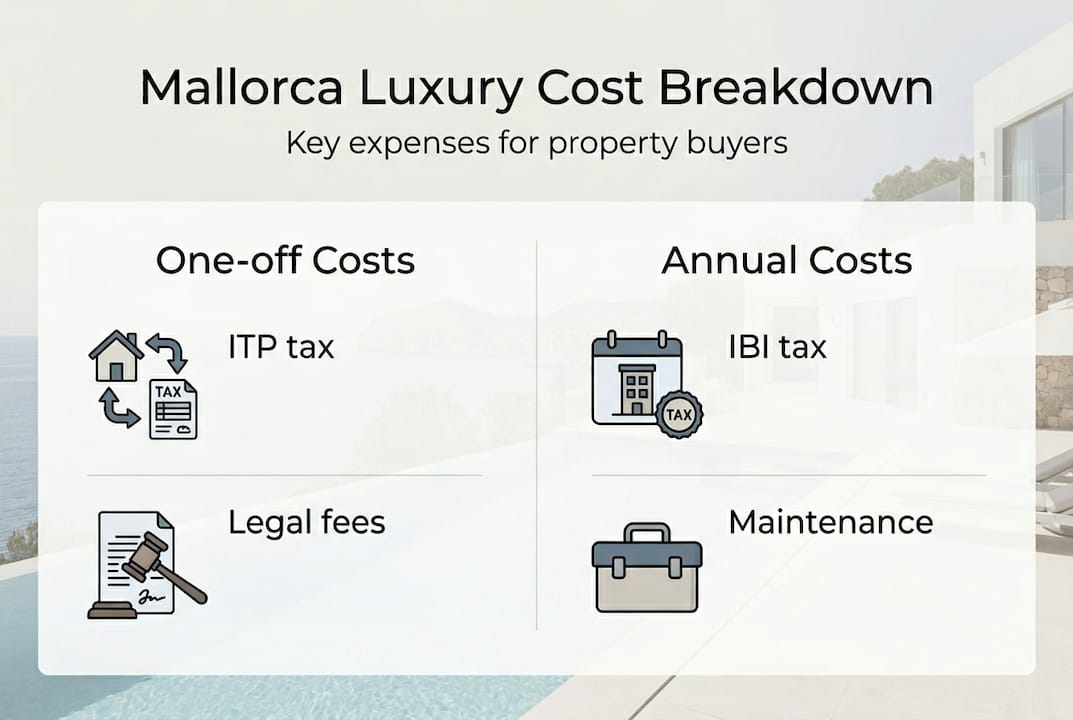
| Cost item | Amount |
|---|---|
| ITP transfer tax (€1M to €2M) | 8% |
| ITP transfer tax (€2M to €3M) | 9 to 10% |
| Notary and registry fees | 1 to 2% |
| Legal fees | 1 to 1.5% |
| Annual IBI (property tax) | 0.4 to 1.1% of cadastral value |
| Non-resident imputed income tax | 1.1 to 2% of cadastral value annually |
One-off costs include the ITP, notary, legal, and any mortgage arrangement fees. Recurring annual costs include IBI (the local property tax, similar to U.S. property tax), non-resident income tax on imputed rental value, community fees if applicable, and maintenance.
The investment upside is real. Select areas of Mallorca have seen 8 to 12% annual appreciation in recent years, driven by limited supply and sustained international demand. For buyers navigating the Mallorca real estate market, understanding these numbers upfront separates a confident offer from a costly guess.
Nuances, regulations, and pitfalls: What most buyers miss
Even seasoned investors can face surprises; here are the less obvious rules and pitfalls you need to know before closing.
The biggest regulatory trap for finca buyers is rustic land classification. Rustic properties face strict limits, and the double-tax treaty between the U.S. and Spain applies to Americans, meaning you need to plan your tax exposure on both sides of the Atlantic. Building a large new home on rural land is prohibited. Expanding an existing finca beyond its registered footprint requires specific licenses that are not always granted.
Common buyer surprises include:
- Hidden seller debts attached to the property, not the person
- Illegal extensions built without permits that must be demolished or legalized
- Tourist license restrictions that prevent short-term rental income
- Community of owners fees that are higher than disclosed
- Off-market deals that require local relationships to access
“The €3M wealth tax exemption per person is one of the most underused advantages for American couples buying in Mallorca. Structuring ownership correctly from day one can save six figures.” — Tax advisor, Palma
Always review the typical Mallorca properties and their classification before making an offer. And remember: rural finca renovation rules have tightened significantly in recent years, so what was permitted five years ago may not be permitted today.
Pro Tip: Experienced agents and lawyers with strong local networks can often access 70% of the best €3M+ properties before they ever appear online. Ask your agent directly how many off-market listings they can show you.
Expert support for discerning Mallorca buyers
Ready to put your Mallorca luxury property journey on a secure, rewarding path? At ULI & LISA, we work exclusively as independent buyer agents, which means our loyalty is entirely to you, not to any seller or developer. We use AI-powered search tools to scan the full Mallorca market, including private and off-market listings that never appear on public portals. Every search is paired with lawyer-led due diligence, cost forecasting tailored to U.S. buyers, and honest guidance on which properties represent genuine value. If safe property investment in Mallorca matters to you, we make sure every legal, financial, and structural detail is verified before you commit.
Frequently asked questions
What is the minimum price for a luxury property in Mallorca?
Entry-level luxury in Mallorca starts at around $1.5 million, which buys a restored finca in the north or a smaller modern villa in a quality southwest location.
Do U.S. citizens face any restrictions when buying property in Mallorca?
Americans face no special ownership restrictions, but must obtain a Spanish NIE tax ID and work with an independent lawyer to avoid inheriting debts or undisclosed legal issues.
What are the main extra costs beyond the purchase price?
Total extra costs run 10 to 13% of the purchase price, covering transfer tax, notary and registry fees, and legal fees, plus ongoing annual taxes.
How is luxury property different in Mallorca versus the U.S.?
Mallorcan luxury is defined by historic character, plot size, and views rather than just square footage. Villas, fincas, and estates in areas like Son Vida and Pollensa offer a combination of privacy, architecture, and setting that is rare in U.S. markets.
Are there limits to renovating rustic fincas in Mallorca?
Yes. Rustic fincas face strict building limits, new large rural homes are prohibited, and any renovation requires proper licensing. Always confirm the property’s classification in the Nota Simple before purchase.
Recommended
- How to Navigate Mallorca Real Estate Market: Luxury Buyer’s Guide - ULI & LISA Mallorca Property Blog
- Mallorca Property Buying Guide: Everything Explained - ULI & LISA Mallorca Property Blog
- Steps to Buy Property Mallorca: Your Luxury Guide - ULI & LISA Mallorca Property Blog
- Mallorca Luxury Property Guide: Everything You Need to Know - ULI & LISA Mallorca Property Blog
- Why Malta for Yacht Registration: Legal, Tax, and Prestige