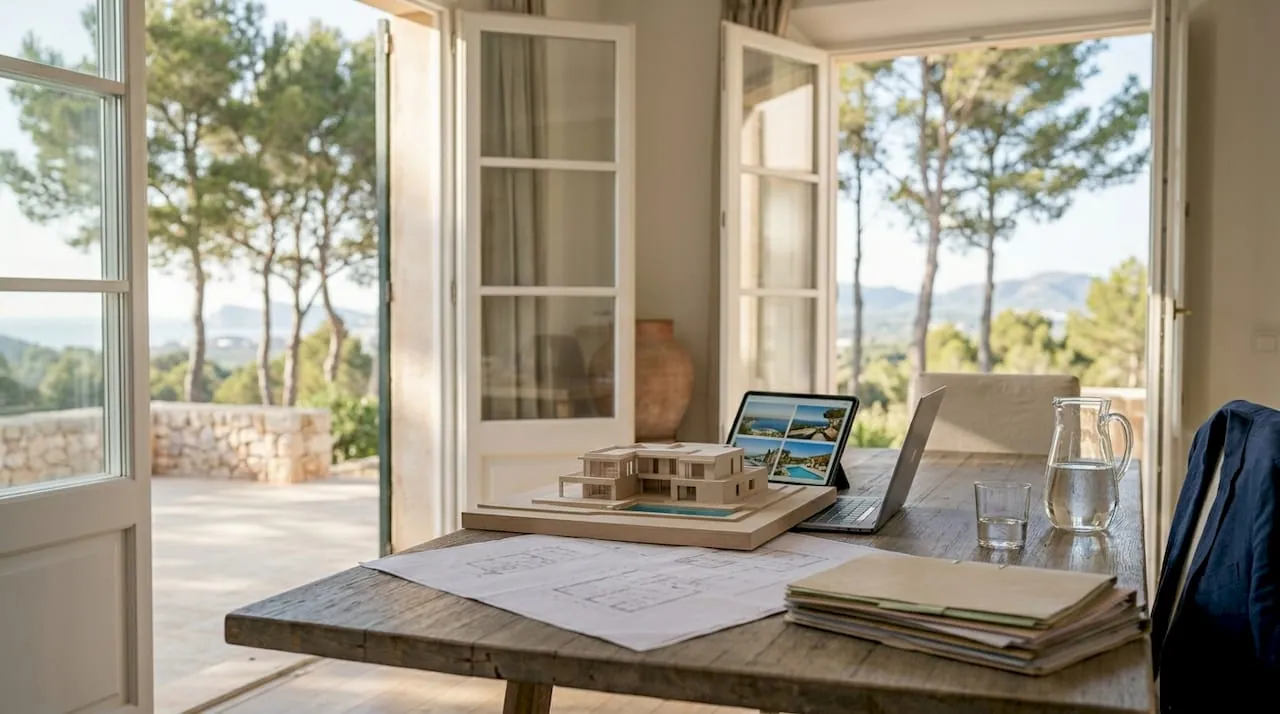
What should I check before buying land in Mallorca?
Before buying land in Mallorca, confirm its classification (urban, rustic or protected) with an urban planning certificate from the town hall, check the title and charges in the land registry, and verify the permit history of any existing structures. On rustic land, new homes need large minimum plot sizes, often 14,000 m² or more, and are banned in protected areas.
TL;DR:
- Mallorca attracts wealthy American buyers due to its unique Mediterranean lifestyle and promising investment potential.
- Careful land evaluation, including legal standing, location quality, and building rights, is crucial to avoid costly regulatory issues.
- Expert guidance and thorough due diligence help investors secure valuable parcels, especially in coastal and urban zones.
Mallorca attracts strong interest from American high-net-worth buyers, and for good reason. The island combines a Mediterranean lifestyle with steady international demand and limited new supply. But selecting the right land parcel is far more complex than it looks from the outside. One misstep around zoning, construction rights, or protected land classifications, and what looked like a premium investment can quickly become an expensive legal problem. Illegal or unlicensed land-related activities can trigger regulatory action and fines reaching hundreds of thousands of euros. This guide gives you the expert roadmap to evaluate, compare, and select the right parcel confidently.
Key Takeaways
| Point | Details |
|---|---|
| Regulatory compliance is crucial | Ignoring Mallorca’s land zoning and permit rules can lead to costly enforcement actions. |
| Land type shapes investment outcome | Choose the parcel type that aligns with your plans and risk tolerance. |
| Local experts add massive value | Leverage specialist agents and legal advisers to protect and maximize your investment. |
| Top investors prioritize legal clarity | Serious buyers focus on parcels with clear title and upfront regulatory transparency. |
How to evaluate luxury land for sale in Mallorca
Now that you understand why expert guidance is essential, let’s break down exactly how to evaluate luxury land options in Mallorca.
The first thing seasoned investors assess is location quality, and in Mallorca, location means far more than a postcode. Coastal parcels in areas like the Southwest or the Tramuntana foothills command premium prices because of views, lifestyle appeal, and short-term rental demand. Inland parcels, particularly in regions like Binissalem or the Pla de Mallorca, offer strong agritourism potential at a lower entry cost. The question isn’t just “is this beautiful?” but “does this location support my investment goals over a 10 to 15-year horizon?”
Legal standing is where most foreign buyers underestimate the complexity. Mallorca’s land is classified under several designations, broadly split between urban land (suitable for residential construction) and rustic land (subject to strict build limitations). Within rustic land, there are further protected categories tied to environmental conservation. Before you get excited about a parcel, you need to know its official designation and exactly what construction rights are attached. A piece of land in a stunning coastal position may carry almost zero build rights due to coastal preservation rules. Understanding Mallorca coastal zoning laws before you make any offer is non-negotiable.
Zoning and permitting enforcement is not theoretical. Authorities have made it very clear in recent years that they are actively pursuing violations. One €400,000 fine for illegal land use is enough to wipe out the perceived savings from a “bargain” parcel.
Here are the core evaluation criteria every buyer should work through before making an offer:
- Zoning classification: Urban, rustic, or specially protected?
- Construction rights: Is there an approved or approvable building license?
- Land registry status: Is the title clean, with no liens or disputes?
- Permit history: Any prior violations or unauthorized structures on the land?
- Infrastructure access: Water, electricity, and road access to the boundary?
- Views and privacy: Do neighboring parcels or planned developments affect long-term desirability?
- Market appeal: Is the area in demand among rental guests or future buyers?
Pro Tip: Never rely on the seller’s verbal assurances about what you can build. Always obtain written confirmation from the local council (Ajuntament) and cross-check with a licensed Mallorcan architect before committing.
Top 5 sought-after land types for investors
With a clear evaluation system in hand, you’re ready to explore the high-potential land options in Mallorca. Here’s what most successful investors focus on.
Mallorca’s land market segments into five main categories, each with a distinct investment profile. Understanding these categories helps you match your capital allocation with realistic returns and legal exposure.
-
Urban plots (build-ready): These parcels already carry approved or approvable construction licenses in designated residential zones. They offer the fastest path to a finished luxury villa or vacation home. Entry costs are higher, often starting at €1.5 million in desirable areas like Santa Ponsa or Portals Nous, but regulatory risk is comparatively low. You know exactly what you can build and at what scale before you sign.
-
Rustic or vineyard parcels: These are the romantic option and a legitimate investment when approached correctly. Large fincas or estates with vineyard potential attract buyers looking for agritourism income or private retreat living. Zoning limits apply strictly. Minimum plot sizes for new construction can be 14,000 square meters or more depending on the municipality. The lifestyle appeal is enormous, but you need an architect and legal advisor involved from day one.
-
Coastal land: Arguably the most coveted and the most legally complex. Regulatory infractions such as unauthorized expansion on rustic-protected coastal land can lead to severe fines and demolition orders. That said, a legally clean coastal parcel with existing build rights is among the most valuable assets in the European luxury market.
-
Mountain or countryside retreats: Areas like the Serra de Tramuntana (a UNESCO World Heritage site) and the interior countryside offer extraordinary views and privacy. Infrastructure, including road access, water supply, and broadband, can be limited, which adds development cost. Values in these areas have appreciated steadily as buyer demand for privacy-first properties has grown since 2020.
-
Old houses or challenging renovation sites: Some of the most compelling opportunities in Mallorca come wrapped in difficulty. A historic stone farmhouse in need of full renovation, or a small plot with a semi-derelict structure, can offer access to areas and aesthetics that no new build can replicate. These require thorough permitting review. Explore the range of prime Mallorca investment types to understand which profile fits your capital and timeline.
Stat highlight: Recent enforcement actions in 2026 have targeted illegal builds and unlicensed changes across the island, with authorities levying penalties well into six figures. The regulatory environment is tightening, not loosening.
Side-by-side comparison: Investment potential and risks of each land type
Sorting through the land types, you need a clear visual summary to weigh your options. See how the possibilities compare side by side.
| Land type | Typical price range | Zoning risk | Rental income | Regulatory complexity | Buyer suitability |
|---|---|---|---|---|---|
| Urban plot (build-ready) | €1.5M to €5M+ | Low | Only once built; depends on use and license | Low to medium | First-time land buyers |
| Rustic/vineyard parcel | €800K to €4M | Medium to high | Only once built; depends on use and license | High | Experienced buyers with local support |
| Coastal land | €2M to €10M+ | High | Only once built; depends on use and license | Very high | Buyers with specialist legal team |
| Mountain/countryside | €600K to €3M | Medium | Only once built; depends on use and license | Medium | Privacy-focused long-term investors |
| Renovation/old house | €400K to €2.5M | Medium to high | Only once built; depends on use and license | High | Renovation-experienced buyers |
The table above tells an important story. Fines up to €400,000 have been levied for significant planning and urbanism infractions, which means that the appeal of a cheaper coastal parcel can evaporate instantly if the regulatory standing is not airtight. Coastal land offers the highest rental yield potential, but it also carries the highest regulatory complexity. For buyers who are new to the Mallorcan market, urban plots deliver the best risk-adjusted entry point.
Demand for coastal and urban plots continues to drive premium prices. The Mallorca market forecast points to sustained international demand, particularly from North American buyers, which supports long-term value growth across all categories but especially in premium coastal zones.
Pro Tip: Focus on total cost of ownership, not just purchase price. Legal fees, architect costs, construction contingencies, and potential permit delays can add substantially on top of the land price. Model this into your investment case from the beginning.
Making your selection: Critical checks before committing
Once you have a favorite parcel, performing a series of final checks is essential. Here’s how to ensure a secure investment.
This is the stage where deals either get locked in with confidence or fall apart when hidden problems surface. Every parcel you’re seriously considering should pass through the following checklist before you authorize any payment or sign any reservation agreement:
- Title search: Confirm clean ownership at the Spanish land registry (Registro de la Propiedad), with no liens, mortgages, or inheritance disputes
- Zoning verification: Obtain written confirmation of the land’s official classification and any applicable build restrictions from the local council
- Permit history review: Check whether any prior construction, renovation, or land use on the parcel was properly licensed
- Future development rights: Confirm whether existing rights can be transferred to a new owner and understand any time limits on permits
- Infrastructure confirmation: Verify legal access to water supply, electricity connection, and road access to the plot boundary
- Environmental protection check: Confirm the parcel is not partially or fully within a protected natural zone that prohibits development
Common infractions buyers can inherit when they skip due diligence include unlicensed construction, unauthorized extensions on rustic land, building in the coastal protection zone and unapproved changes of use. Under Balearic planning law, fines can reach six figures, as recent cases in Mallorca show, and authorities can also order restoration or demolition at the owner’s expense.
“Unlicensed land-related activities trigger enforcement and heavy penalties” per 2026 regulatory actions in Mallorca. Authorities are actively auditing and pursuing violations with increasing frequency.
Understanding the Mallorca land registry process is a critical part of completing this checklist properly. It’s not a formality. It’s your primary protection as a foreign buyer. A qualified local lawyer and an experienced buyer’s agent working together on your behalf gives you the best possible coverage across every one of these verification steps. Never rely on a single party, and never sign a reservation agreement without this review complete.
What expert investors know that others don’t
Before closing, consider what separates successful international investors in Mallorca from those who end up with costly mistakes.
Here’s the uncomfortable truth: most buyers who run into serious problems in Mallorca did not get unlucky. They prioritized price or aesthetics over regulatory standing. They saw a number that looked attractive and moved quickly without completing the legal groundwork. The market has little patience for that approach.
Experienced international investors treat regulatory standing as the primary filter, not price. A parcel with perfect zoning, clean title, and an existing build license is worth a premium. That premium is not just fair; it’s smart. You’re paying for certainty in a market where uncertainty costs far more. This is a counter-intuitive insight for buyers trained in U.S. real estate, where title insurance and standardized disclosures reduce a lot of the friction. Spain doesn’t work the same way, and Mallorca’s legal framework has layers that require genuine local knowledge to navigate.
The second thing top investors do differently is build relationships early. The best parcels, particularly those with confirmed coastal build rights or large rustic estates with proper permits, rarely reach public listing platforms at all. They move through trusted agent networks. That means your access to the real top tier of this market is directly tied to the quality of your local relationships.
Smart investors also use regulatory complexity as a negotiation lever. A parcel with a minor pending permit issue is not necessarily a dealbreaker. It can be a tool for price negotiation or a reason to structure the purchase agreement with appropriate protections. But you only recognize and use that leverage if you understand the regulatory landscape in the first place. Tracking Mallorca real estate trends helps you understand where the market is moving and which parcel categories are gaining or losing favor with sophisticated buyers.
Secure your Mallorca land investment with expert help
If you’re ready to gain the advantages that local expertise provides, here is your best next step.
Navigating Mallorca’s land market as an American buyer is genuinely complex, but it doesn’t have to be stressful. ULI & LISA is an independent buyer’s agent that works only for buyers, including buyers from the U.S. We search 35,000+ listings from 800+ agencies and portals for plots, estates and investment homes in Mallorca, and work alongside your independent lawyer and architect, who verify title, zoning and permits. The seller pays the agent commission in Spain, so there is no fee for buyers. Contact us to explore how to secure Mallorca land investment with full expert support behind you.
Recommended
- How to Navigate Mallorca Real Estate Market: Luxury Buyer’s Guide - ULI & LISA Mallorca Property Blog
- How to Navigate Mallorca Real Estate Market: Luxury Buyer’s Guide - ULI & LISA Mallorca Property Blog
- Mallorca Luxury Property Guide: Everything You Need to Know - ULI & LISA Mallorca Property Blog
- Mallorca Luxury Property Guide: Everything You Need to Know - ULI & LISA Mallorca Property Blog
Frequently asked questions
Can foreigners buy land in Mallorca?
Yes. U.S., Canadian and other foreign buyers can buy land in Mallorca on the same terms as Spanish citizens; they only need an NIE number. In a few areas of military or strategic interest, non-EU buyers may need a military authorization, which your lawyer will check. The real limits on land are planning rules, not nationality.
What is the minimum plot size to build a house on rustic land in Mallorca?
It depends on the land category and municipality, but under Mallorca's island planning rules a new single-family home on rustic land typically needs a plot of 14,000 m² or more, and building is not allowed at all on protected rustic land. Additional conditions on access, footprint and design apply. Ask an architect to confirm the rules for the specific plot.
What happens if I buy land with illegal structures in Mallorca?
Planning liabilities generally pass to the new owner. That can mean fines, an order to restore the land or demolition at your expense, and problems getting utilities or a habitability certificate. Ask your lawyer to check the permit history and any open proceedings, and do not rely on a seller's claim that a structure can be legalized later.