TL;DR:
- Mallorca offers a year-round mild climate, rich cultural heritage, and outdoor activities that enhance residents’ well-being. Studies show that adopting the local Mediterranean lifestyle reduces disease risk and improves metabolic health naturally. The island’s strong infrastructure, protected landscapes, and active expat community make it an ideal long-term home for Americans and Europeans.
Mallorca’s lifestyle benefits are defined by a year-round mild climate, a UNESCO-recognized cultural landscape, a Mediterranean diet proven to cut chronic disease risk, and outdoor recreation that spans hiking, sailing, and cycling across 550 kilometers of coastline. Living in Mallorca places Americans and Europeans inside one of Europe’s most complete residential environments, where health science, cultural heritage, and modern infrastructure converge. The island is not a vacation destination that happens to have housing. It is a fully functioning, internationally connected community where the quality of life is backed by research, not just reputation.
What are the real health benefits of mallorca’s lifestyle?
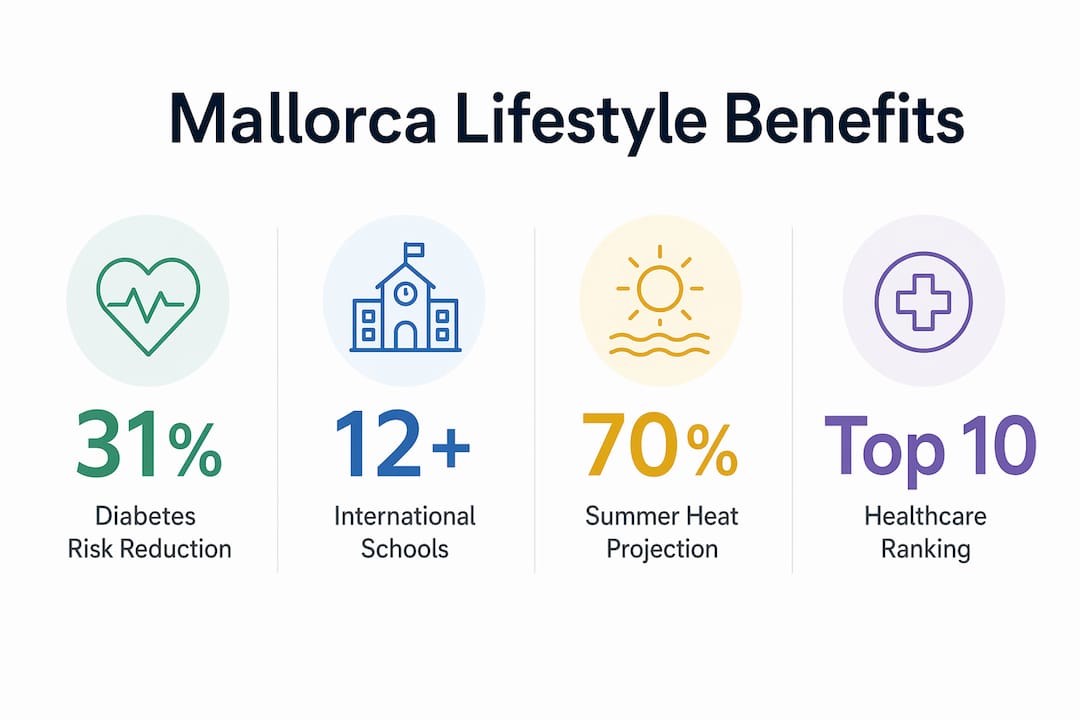
The Mediterranean lifestyle practiced in Mallorca is one of the most studied wellness models in the world. The PREDIMED-Plus study, a landmark clinical trial, found that a Mediterranean lifestyle program combining diet, structured exercise, and behavioral coaching reduces type 2 diabetes risk by 31% over six years among adults at elevated metabolic risk. That figure represents one of the strongest diet-and-lifestyle interventions ever recorded in a randomized trial.
The same study documented that participants following the full program lost an average of 3.3 kg versus 0.6 kg in the comparison group, and reduced waist circumference by 3.6 cm versus 0.3 cm. Waist circumference is a direct marker of visceral fat, which drives cardiovascular and metabolic disease. Those numbers confirm that the benefit comes from the full lifestyle package, not diet alone.
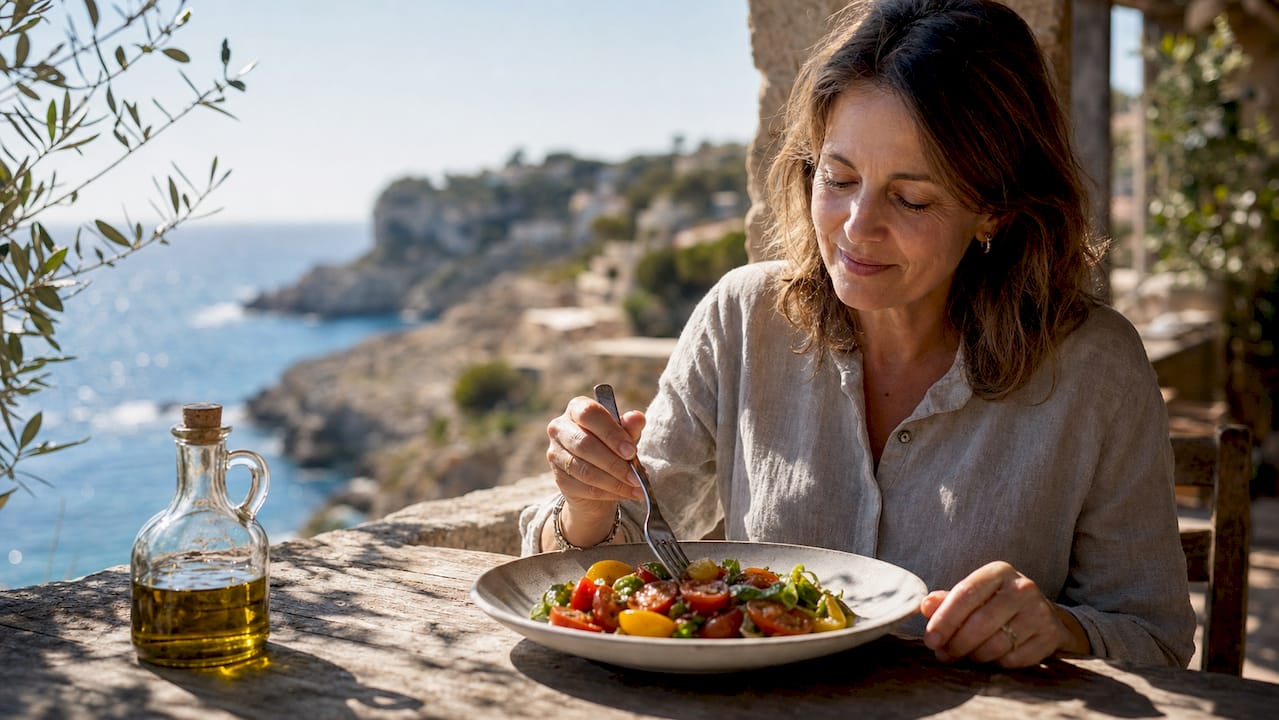
Mallorca’s daily food culture reflects this model closely. Local markets in Palma, Soller, and Inca stock fresh produce, locally pressed olive oil, and Mediterranean seafood year-round. Residents eat in patterns that align naturally with the PREDIMED-Plus protocol, without needing to construct an artificial diet plan.
A separate randomized trial published in ScienceDirect confirmed that Mediterranean diet interventions produce measurable reversal of metabolic syndrome within six months, including reductions in triglycerides, fasting glucose, and waist circumference compared to a low-fat diet group. Metabolic syndrome affects roughly one in three American adults. Living in Mallorca puts you inside a food and activity culture that addresses it structurally, not just occasionally.
- Diet: Fresh vegetables, legumes, olive oil, fish, and moderate wine are daily staples, not special-occasion choices.
- Movement: Residents walk, cycle, and swim as part of normal daily life, not as scheduled gym sessions.
- Social eating: Shared meals and slower eating pace reduce stress hormones linked to metabolic dysfunction.
- Coaching access: Private wellness clinics in Palma offer structured Mediterranean lifestyle programs for expats.
Pro Tip: If you are relocating from the United States, the shift to Mediterranean eating is most effective when you shop local markets rather than international supermarkets. Palma’s Mercat de l’Olivar and Soller’s weekly market give you direct access to the same ingredients used in PREDIMED-Plus trial protocols.
How do mallorca’s culture and recreation improve daily life?
The Serra de Tramuntana, Mallorca’s mountain range running approximately 90 kilometers along the island’s northwest coast, holds UNESCO World Heritage Cultural Landscape status. That designation is not honorary. It recognizes a living system of agricultural terraces, traditional water channels, cobblestone paths, and historic villages that have shaped human life on the island for centuries. For residents, this translates into a recreational and cultural environment with no equivalent on any other Mediterranean island.
The UNESCO designation means the Serra de Tramuntana is actively preserved and managed. Trails are maintained, villages are protected from overdevelopment, and the cultural fabric of places like Valldemossa, Deia, and Fornalutx remains intact. Residents gain access to a living cultural landscape that rewards exploration across seasons, not just summer.
Outdoor recreation in Mallorca covers a wider range than most European destinations can offer in a single location:
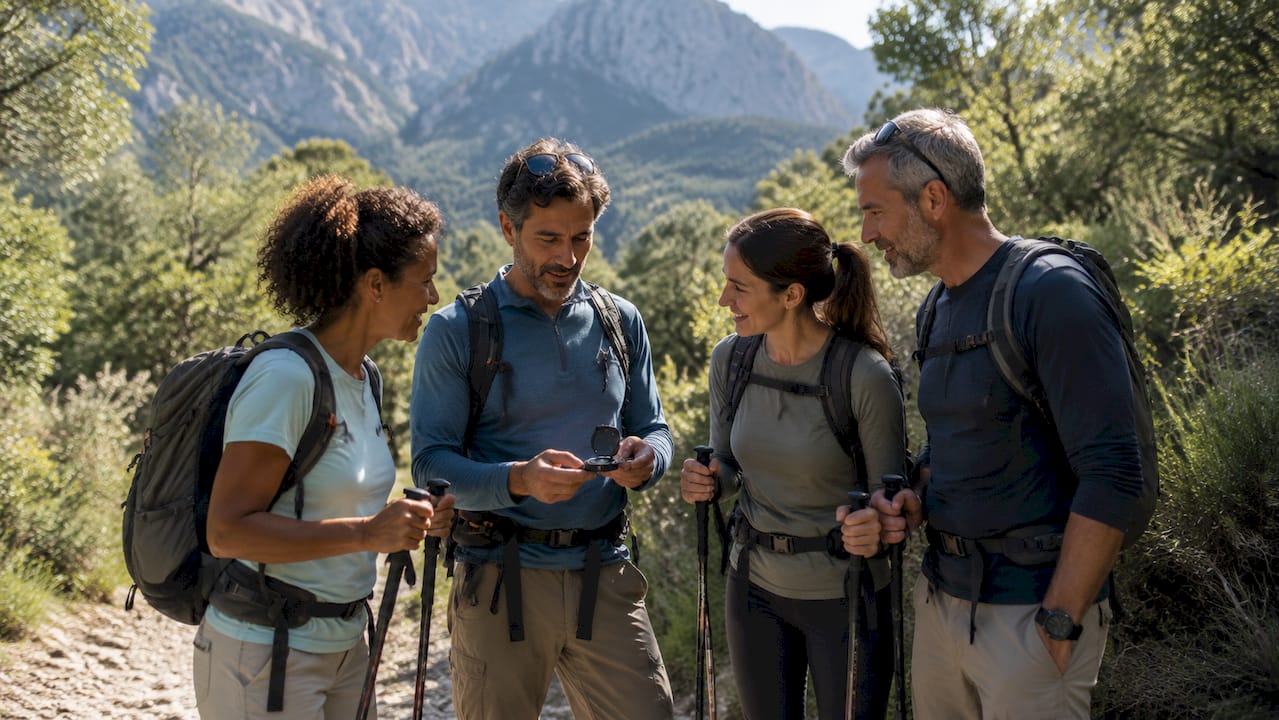
- Hiking: Over 1,400 kilometers of marked trails, from coastal paths to mountain ascents above 1,400 meters.
- Cycling: Mallorca hosts professional cycling teams for winter training, with road and mountain routes suited to all levels.
- Sailing: Port de Pollenca, Port Adriano, and Palma Bay offer year-round sailing with world-class marina infrastructure.
- Tennis and padel: Private clubs and residential communities throughout the island provide court access.
- Beach lifestyle: 262 beaches ranging from sheltered coves to wide sandy bays, accessible from october through may without summer crowds.
Cultural festivals in villages like Sineu, Pollenca, and Felanitx connect residents to Mallorcan traditions that predate mass tourism. These events are not staged for visitors. They are community rituals that expats who commit to island life participate in alongside local families.
Pro Tip: The best hiking in the Serra de Tramuntana runs from october through april, when temperatures stay between 12°C and 20°C and trails are uncrowded. Plan your first year of outdoor activity around this window to build a sustainable routine before summer heat arrives.
What should americans and europeans know before moving to mallorca?
Living in Mallorca requires honest planning around climate, schooling, healthcare, and cost. The island rewards residents who prepare, and it frustrates those who arrive with only a vacation mindset.
Climate reality: Mallorca’s summer is genuinely hot. Spanish meteorological agency AEMET projects a 70% probability of above-average temperatures between june and september 2026, with temperature anomalies of +0.5°C to +1°C above the seasonal norm and a high likelihood of tropical nights and extended heatwaves lasting approximately 93 days. That is not a reason to avoid Mallorca. It is a reason to adapt your schedule by exercising in the early morning or after 7 p.m., using air conditioning during midday, and staying well hydrated.
Education: Palma de Mallorca hosts over 12 international schools offering English, German, French, and Scandinavian curricula. American families can enroll children in English-language programs without disrupting academic continuity. German and Scandinavian families have dedicated school options that maintain home-country curriculum standards.
Healthcare: Spain’s healthcare system ranks among the top ten globally. Palma operates a public university hospital alongside a network of private clinics including Clinica Juaneda and Clinica Rotger, both of which serve the international community with English-speaking staff. Private health insurance for a family of four typically costs less in Spain than equivalent U.S. coverage.
Cost of living: Mallorca is not cheap by Spanish standards, but it is significantly less expensive than London, Paris, or Zurich for comparable quality of life. Groceries, dining, and utilities run lower than most northern European capitals.
Community: Palma’s expat community is large, diverse, and well-organized. British, German, American, and Scandinavian residents have established social networks, professional associations, and community events that ease the transition for new arrivals.
How does mallorca compare to other mediterranean destinations?
Mallorca holds specific advantages over other popular Mediterranean relocation targets. The comparison below covers the factors that matter most to Americans and Europeans making a long-term decision.
| Factor | Mallorca | Other Mediterranean Islands |
|---|---|---|
| International airport | Yes, 30+ direct European routes | Limited or seasonal service |
| International schools | 12+ with multiple curricula | Rare outside major cities |
| UNESCO cultural landscape | Serra de Tramuntana | Varies; fewer designated sites |
| Healthcare infrastructure | University hospital plus private clinics | Often limited to basic facilities |
| Property market stability | Strong, EU-regulated, transparent | Variable; some markets lack legal clarity |
| Year-round outdoor activity | Hiking, cycling, sailing, tennis | Often seasonal or limited in variety |
| Expat community size | Large, established, multilingual | Smaller, less organized |
The property market distinction matters beyond investment. Buying in Mallorca under Spanish law gives owners clear title, EU legal protections, and a stable regulatory environment. That security is a lifestyle asset. It means your home is a foundation, not a risk. Uli-lisa’s guide to Mallorca real estate advantages covers this legal and market context in detail for buyers evaluating the full picture.
Mallorca also avoids the isolation problem that affects smaller Mediterranean islands. Palma’s airport connects directly to over 30 European cities, and flights to New York, Miami, and other transatlantic hubs operate via Madrid or Barcelona with under three hours of total travel time from the island.
Key takeaways
Mallorca’s lifestyle benefits are most fully realized when residents combine the Mediterranean diet, structured outdoor activity, and cultural engagement with practical planning around climate and infrastructure.
| Point | Details |
|---|---|
| Health outcomes are measurable | PREDIMED-Plus confirms a 31% diabetes risk reduction from the full Mediterranean lifestyle program. |
| Cultural access is UNESCO-protected | The Serra de Tramuntana’s 90-kilometer range offers preserved trails, villages, and heritage year-round. |
| Infrastructure supports families | Palma offers 12+ international schools, a university hospital, and 30+ direct European flight routes. |
| Summer heat requires adaptation | AEMET projects a 70% chance of above-average temperatures; schedule outdoor activity before 10 a.m. or after 7 p.m. |
| Property stability amplifies lifestyle security | Spanish EU-regulated ownership law gives international buyers a legally sound residential foundation. |
What i’ve learned after years of helping buyers settle in mallorca
Most articles about the advantages of living in Mallorca focus on the postcard version: sunshine, beaches, and olive oil. That version is real, but it misses the structural reason why people who move here tend to stay.
What I have observed working with international buyers is that Mallorca works as a long-term home because it integrates things that are usually in conflict. You get urban infrastructure and genuine nature access within 20 minutes of each other. You get a serious healthcare system and a relaxed daily pace. You get cultural depth and modern connectivity.
The buyers who thrive here are the ones who treat the lifestyle as something to build, not something to consume. They find a local market they use every week. They join a cycling club or a sailing school. They learn enough Spanish or Catalan to participate in village life rather than observe it from a distance. That integration is what converts the health research into actual outcomes.
The one thing I consistently tell clients that surprises them: summer is the least important season for evaluating whether Mallorca suits you. Visit in february or november. Walk the Serra de Tramuntana in the rain. Eat at a restaurant in Soller on a Tuesday evening when there are no tourists. That version of the island is what you are actually buying into.
The property decision and the lifestyle decision are the same decision. Where you live on the island, what kind of home you choose, and what your daily radius looks like all determine whether you access these benefits or just live near them.
— Uli
Find your mallorca property with Uli-lisa
The lifestyle advantages described in this article are not equally accessible from every property on the island. A villa in the Serra de Tramuntana foothills gives you trail access from your front door. A home in Palma’s Santa Catalina neighborhood puts you inside a walkable urban food culture. A property near Port de Pollenca connects you to sailing and a quieter expat community. Uli-lisa represents buyers exclusively, with full access to every property across all Mallorca agencies, and no seller-side conflicts. If you are ready to match a specific lifestyle vision to the right location and property type, consult Uli-lisa’s independent buyer agent service for a structured, unbiased search. For buyers focused on security and long-term value, the safe property in Mallorca guide is the right starting point.
FAQ
What are the main health benefits of living in mallorca?
The Mediterranean lifestyle in Mallorca, combining diet, outdoor activity, and social eating, is linked to a 31% reduction in type 2 diabetes risk and measurable reversal of metabolic syndrome within six months, according to the PREDIMED-Plus study and related clinical research.
Is mallorca a good place to live for american families?
Yes. Palma de Mallorca offers over 12 international schools with English-language curricula, a university hospital, high safety ratings, and a large established expat community, making it one of the most practical Mediterranean relocation destinations for American families.
How does mallorca’s climate affect daily lifestyle?
Mallorca offers mild winters and warm springs ideal for outdoor activity, but summers run hot. AEMET projects a 70% probability of above-average temperatures between june and september, so residents adapt by exercising early in the morning or in the evening and using air conditioning during peak heat hours.
Why is the serra de tramuntana important for mallorca’s lifestyle?
The Serra de Tramuntana is a UNESCO World Heritage Cultural Landscape stretching approximately 90 kilometers, offering preserved hiking trails, historic villages, and traditional agricultural terraces that give residents year-round access to outdoor recreation and cultural heritage unavailable on most other Mediterranean islands.
How does mallorca compare to other mediterranean islands for expats?
Mallorca outperforms most Mediterranean alternatives on infrastructure, with 30+ direct European flight routes, 12+ international schools, and EU-regulated property law. Smaller islands typically lack this combination of connectivity, education options, and legal clarity for international buyers.
Recommended
- ULI & LISA | Independent Luxury Real Estate Agent Mallorca
- Advantages of living in Mallorca for luxury buyers 2026 - ULI & LISA Mallorca Property Blog
- Mallorca luxury vacation homes: investment advantages in 2026 - ULI & LISA Mallorca Property Blog
- Mallorca Luxury Homes: Investment and Lifestyle Perks - ULI & LISA Mallorca Property Blog