TL;DR:
- Choosing the right school depends on location, curriculum, culture, and practicalities for the family.
- Top international schools include Baleares International College, Agora Portals, and Green Valley, each with unique strengths.
- Applying early, visiting schools in person, and engaging with expat communities help ensure a successful transition.
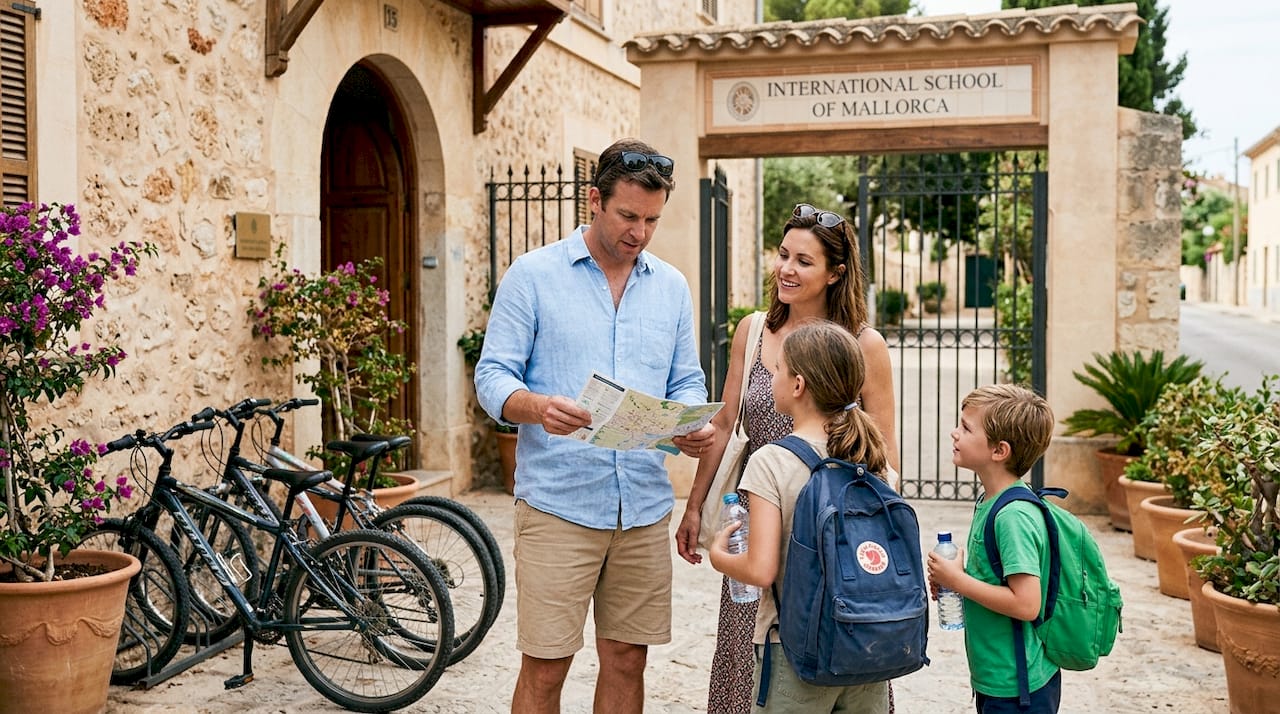
Choosing the right school for your child is the single biggest decision most American families make when relocating to Mallorca. Get it right, and your kids settle in fast, make friends, and thrive. Get it wrong, and the whole move feels harder than it should. Mallorca has a surprisingly rich range of international schools, from British curriculum institutions to International Baccalaureate programs, but navigating the options takes more than reading a top-ten list. This guide walks you through what actually matters: the criteria, the schools, the costs, and the practical steps to give your child the best possible start on the island.
Key Takeaways
| Point | Details |
|---|---|
| Start early | Begin researching and applying to schools months in advance to avoid waiting lists. |
| Consider curriculum fit | Choose a school based on the teaching style and curriculum that aligns with your child’s needs. |
| Location matters | Live near the school for convenience and better community integration. |
| Check enrollment requirements | Prepare all official documents and be ready for interviews or assessments. |
| Parent networks help | Connect with other expat families for school insights and smoother transitions. |
Key criteria for choosing an international school in Mallorca
Before you fall in love with a school’s website photos, you need a clear framework for what your family actually needs. American families often arrive in Mallorca focused on academic rankings, but the most satisfied expat parents will tell you that logistics and culture matter just as much.
Here are the core factors to evaluate:
- Location and commute: Mallorca’s roads can be slow, especially around Palma during school hours. A school that looks close on a map might mean a 40-minute daily drive. Check whether the school runs a bus service and whether it covers your intended neighborhood.
- Curriculum and language of instruction: Most international schools offer British, Spanish, or International Baccalaureate (IB) programs. There is no fully accredited American curriculum school on the island as of 2026, so families used to the U.S. system will need to adapt. IB programs are widely respected and transfer well to U.S. universities.
- Academic reputation and extracurriculars: Strong academics matter, but so does what happens after the bell rings. Sports, arts, and student clubs are where friendships form and children truly feel at home.
- School culture: Is it competitive or collaborative? How does the school handle bullying or social conflict? These questions reveal more than any league table.
- Enrollment process: Enrollment typically requires contacting the school for an information pack, completing an assessment or interview, and submitting documents including your child’s passport, birth certificate, previous school reports, and vaccination records. Entry tests are common, and year-round enrollment is sometimes possible, but popular schools often have waiting lists.
Pro Tip: Don’t just attend open days. Visit schools during a normal session and ask to speak with parents picking up their kids. That 10-minute conversation in the parking lot will tell you more than any formal tour.
Where you live also shapes your school options significantly. Families settling in family-friendly areas in Mallorca like the southwest coast will have the most international school choices within a reasonable drive.
Top international schools in Mallorca: Highlights for expat families
With criteria in mind, let’s explore which schools stand out for expat families and what sets each apart.
Baleares International College (BIC) is one of the most established international schools on the island. It follows the British curriculum from early years through to A-Levels, and its academic track record is strong. Teachers are frequently praised for their dedication and subject knowledge. That said, parent reviews for BIC show a mixed picture: high marks for academics and teaching quality, but some concerns around how management handles social issues like bullying. It’s worth having direct conversations with current parents before committing.
Agora Portals International School consistently earns high marks from expat families. Its multilingual approach, combining English, Spanish, and Catalan instruction, is a genuine asset for children who will build their lives in Spain. The school is particularly noted for its student support systems and pastoral care, meaning kids who struggle with the transition get real help.
Green Valley International School takes a more modern, student-centered philosophy. Its focus on well-being alongside academics appeals to families who want their children to be happy, not just high-achieving. The campus environment and smaller class sizes create a more personal feel.
Here’s a quick snapshot of what each school brings:
- BIC: Strong academics, British curriculum, A-Level pathway, established reputation
- Agora Portals: Multilingual, excellent pastoral care, well-rounded student experience
- Green Valley: Modern philosophy, student well-being focus, smaller community feel
“The best school for your child isn’t necessarily the one with the highest ranking. It’s the one where your child feels seen, supported, and genuinely excited to go in the morning.”
It’s also worth considering Spanish private schools, especially if your family plans to stay long-term. Full immersion in Spanish and Catalan builds language skills that open doors for your children throughout Europe. Local public schools are free but require strong Spanish language ability from day one.
Proximity to these schools is a real factor when choosing where to live. The best neighborhoods for expats in Mallorca often cluster around the southwest, putting families within reach of the island’s strongest international school options.
Mallorca’s expat schools compared: Fees, curriculum, and entry requirements
To help choose between your top contenders, here’s how Mallorca’s main expat schools stack up on the factors that matter most.
| School | Curriculum | Languages | Annual Tuition (approx.) | Notable Feature |
|---|---|---|---|---|
| Baleares International College | British (GCSE, A-Level) | English | €8,000 to €14,000 | Strong academic track record |
| Agora Portals | British/IB | English, Spanish, Catalan | €10,000 to €16,000 | Multilingual and pastoral focus |
| Green Valley International | IB/Spanish | English, Spanish | €9,000 to €15,000 | Well-being centered approach |
Tuition figures are approximate and vary by year group. Always request a current fee schedule directly from each school.
The enrollment process generally follows these steps:
- Contact the school and request an information pack
- Submit an initial application form with basic family details
- Provide required documents: passport, birth certificate, previous school reports, vaccination records
- Attend an assessment or interview (common for older students)
- Receive an offer or be placed on a waiting list
- Pay the enrollment deposit to secure the place
Waiting lists are common at the most popular schools, particularly in the southwest of the island. Families who apply 12 to 18 months ahead are in a much stronger position.
Pro Tip: Apply to two or three schools simultaneously. This is standard practice and keeps your options open while waiting lists resolve.
Your home search and school search should happen in parallel. Families who lock in a rental or purchase before confirming a school place sometimes find themselves with a long commute that erodes daily quality of life. Exploring real estate near top schools early in the process helps you make smarter decisions on both fronts.
Deciding what’s best for your family: Personal fit and relocation tips
Once you’ve compared your options, here’s a practical roadmap for making the move and ensuring your child’s best start in Mallorca.
- Visit shortlisted schools in person. Photos and virtual tours don’t capture atmosphere. Walk the hallways, watch how teachers interact with students, and notice whether kids seem engaged or stressed.
- Talk directly with teachers and administrators. Ask specific questions: How do you support children transitioning from a different education system? What does a typical school day look like? How do you handle conflict between students?
- Connect with expat parent communities. Facebook groups and local expat forums are full of candid, real-world opinions that no school brochure will give you.
- Plan for language transition support. Even in English-medium schools, Spanish and Catalan are part of daily life in Mallorca. Ask whether the school offers additional language support for new arrivals.
- Align your home search with your school choice. Once you have a preferred school, focus your property search within a practical commute zone.
“Where a child goes to school shapes not just their education but their entire social world in a new country. It’s the foundation everything else is built on.”
Popular schools fill fast, especially in Southwest Mallorca, so treat the application timeline as seriously as your visa paperwork. Families who connect with other expats before moving often arrive with school places already secured and a ready-made social network for their kids.
Choosing the right area to live also matters more than most families initially realize. The best neighborhoods for families in Mallorca offer not just proximity to schools but access to parks, sports facilities, and the kind of community where expat children quickly find their footing.
Perspective: What most guides miss about picking an expat school in Mallorca
Most school guides stop at rankings and tuition tables. But after working with dozens of American families relocating to Mallorca, we’ve seen something that data doesn’t capture: the families who thrive are rarely the ones who picked the highest-ranked school. They’re the ones who picked the right community.
Academics matter, obviously. But for an eight-year-old landing in a new country, what matters most on day two is whether anyone invited them to sit at lunch. Peer culture and the warmth of the parent community shape a child’s happiness far more than curriculum rigor in those first critical months.
We’ve seen families choose a slightly lower-profile school because the parent WhatsApp group was welcoming before their child even started. That kind of soft infrastructure is invisible in rankings but enormously powerful in real life.
Our honest advice: go beyond open days. Ask uncomfortable questions. Find out how the school handled its last bullying incident. Talk to parents whose kids had a rough start and ask how the school responded. Those conversations reveal character.
For families thinking about investing in Mallorca for lifestyle as well as education, the school choice and the neighborhood choice are deeply connected. Get both right, and Mallorca stops feeling like a relocation and starts feeling like home.
Get expert help relocating your family to Mallorca
As you finalize your plans, moving with expert local guidance can make a real difference. At ULI & LISA, we work specifically with American families making the move to Mallorca, and we understand that finding the right home means finding the right school zone first. Our Mallorca property buyer agents combine AI-powered market search tools with genuine local knowledge to match you with properties near the schools that fit your family. From understanding the enrollment paperwork to navigating the local property market, our relocation and property services are built around making your family’s transition smooth, informed, and as stress-free as possible. Reach out and let’s start with what matters most: your children’s future.
Frequently asked questions
What documents are needed to enroll my child in an international school in Mallorca?
You’ll typically need your child’s passport, birth certificate, previous school reports, and vaccination records. Some schools also require an entry assessment or interview depending on the year group.
When should I apply to ensure a spot at a top expat school in Mallorca?
Apply as early as possible, since popular schools in Southwest Mallorca often have long waiting lists. Starting 12 to 18 months ahead of your intended move date is strongly recommended.
Are there American curriculum schools in Mallorca?
Most international schools in Mallorca offer British, Spanish, or International Baccalaureate programs, with very few directly following a U.S. curriculum. IB programs are widely accepted by American universities and make a solid alternative.
How can I support my child’s adaptation to a new school in Mallorca?
Visit schools with your child before the first day, join expat parent groups online and locally, and encourage participation in extracurricular activities to build friendships outside the classroom.
Is it common for expat children to attend local public schools in Mallorca?
Some expat families do choose local public schools, particularly those planning long-term stays, but the language transition into Spanish and Catalan and the curriculum differences require careful preparation and support.
Recommended
- American Expat Communities in Mallorca: Where US Citizens Live in 2025 - ULI & LISA Mallorca Property Blog
- Moving from USA to Mallorca: Complete Relocation Guide for Americans - ULI & LISA Mallorca Property Blog
- Buying Property in Mallorca: Key Steps for Americans - ULI & LISA Mallorca Property Blog
- 7 Essential Family Home Buying Tips for Mallorca - ULI & LISA Mallorca Property Blog