TL;DR:
- Many high-net-worth Americans moving inland in Mallorca seek privacy and space over coastal luxury.
- Understanding local areas, legal procedures, lifestyle integration, and pitfalls ensures a successful property purchase and settlement.
Most Americans who start looking at Mallorca picture themselves in a clifftop villa with ocean views and a yacht moored below. That image isn’t wrong, but it’s increasingly incomplete. A trend is emerging where high-net-worth expats are moving away from purely coastal areas, prioritizing privacy and space inland instead. If you’re a high-net-worth professional or investor thinking about settling here, what you need isn’t just a beautiful property. You need a roadmap that covers location strategy, legal structure, lifestyle integration, and the hidden pitfalls that catch even experienced buyers off guard. This guide gives you exactly that.
Key Takeaways
| Point | Details |
|---|---|
| Area choice matters | Inland regions now rival the coast for luxury and privacy among expats. |
| Know local processes | Understanding Mallorca’s legal and cultural frameworks is vital for a seamless purchase. |
| Lifestyle integration | Prioritize authentic community connections and local customs when settling in. |
| Avoid common mistakes | Personal visits, expert local advice, and trial periods can prevent expensive missteps. |
| Expert help is essential | Independent agents and buyer advocates simplify property search and lifestyle integration. |
Choosing the right area: Coastal prestige vs. privacy inland
With the context of evolving international tastes, let’s get into what area best supports your vision for life in Mallorca.
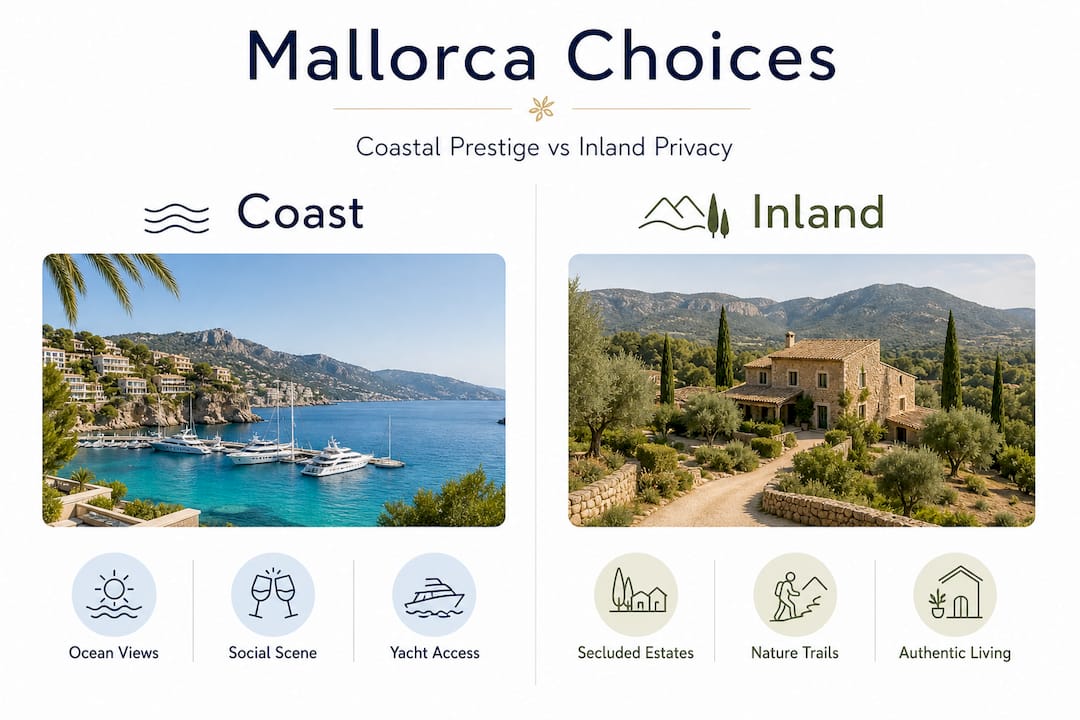
Mallorca is not a single market. It’s a collection of distinct micro-markets, each with a completely different feel, price dynamic, and buyer profile. The southwest coast, particularly areas like Puerto Portals, Sol de Mallorca, and the stretch toward Andratx, has long been the default destination for international luxury buyers. Prices here reflect that status, with prime villas regularly exceeding €10 million. The infrastructure is polished, the marina culture is vibrant, and the social scene is well-established.
But the conversation is shifting. Expats are gravitating toward places that offer more tranquility, privacy, and close proximity to the countryside instead of high-traffic coastal areas. Villages like Alaró, Bunyola, and Santa Maria del Camí in the Tramuntana foothills are seeing growing interest from buyers who want dramatic landscapes, authentic Mallorcan architecture, and genuine quiet. The Pla region in the island’s center offers flat farmland estates at far lower price points than the coast, though with correspondingly less of the social infrastructure.
For American buyers specifically, a few areas consistently stand out. Palma’s Old Town and the upscale Santa Catalina neighborhood attract those who want urban amenities, cultural programming, and walkability. Son Vida, the hilltop enclave just outside Palma, offers gated community security with panoramic city and sea views. For families, the southwest remains dominant because of school proximity and established expat networks.
| Location | Character | Price range | Best for |
|---|---|---|---|
| Southwest coast | High-prestige, social | €3M to €20M+ | Networking, yachting, visibility |
| Palma Old Town | Urban, cultural | €800K to €5M | Walkability, arts, dining |
| Son Vida | Gated, panoramic | €2M to €12M | Families, security, prestige |
| Tramuntana villages | Quiet, authentic | €600K to €4M | Privacy, nature, heritage |
| Central Pla region | Rural, spacious | €400K to €2M | Value, land, total seclusion |
“The buyers we work with who find the deepest satisfaction are often the ones who resisted the default choice and actually spent time exploring areas that don’t appear on the first page of property listings.”
Understanding the best areas to buy property in Mallorca requires honest self-assessment about what you actually want from daily life. The Mallorca market trends show continued price growth island-wide, but inland areas are seeing particularly strong appreciation as more buyers recognize the value of space and authenticity.
Understanding the property buying process in Mallorca
Once you’ve defined your preferred setting, it’s time to grasp how the local property market actually operates.
Buying property in Mallorca as an American involves navigating Spanish law, European banking requirements, and local Mallorcan customs simultaneously. The process is entirely manageable, but it has specific stages you cannot skip or reorder without creating serious legal exposure. Expats must understand the full buying process, including legal frameworks and local market practices, to invest securely.
Here is the core sequence you’ll follow:
- Obtain your NIE number. The Número de Identidad de Extranjero is a Spanish tax identification number. Without it, you cannot legally complete any property transaction. Apply through a Spanish consulate in the U.S. or in person at a Foreigner’s Office (Oficina de Extranjeros) in Mallorca.
- Open a Spanish bank account. You’ll need this for the purchase transaction, ongoing bills, and tax payments. Most buyers use a large Spanish bank with English-language services.
- Engage an independent lawyer. Your lawyer should work exclusively for you, not for the seller or the agency. They will conduct due diligence on the property title, confirm no outstanding debts or encumbrances are attached, and verify that any existing construction has proper planning permits.
- Sign the reservation contract and pay the deposit. Typically 1% to 2% of the purchase price, this takes the property off the market while due diligence proceeds.
- Sign the Contrato de Arras. This is a private purchase contract where both parties commit. The buyer pays roughly 10% of the price. If the buyer withdraws, they lose the deposit. If the seller pulls out, they owe double.
- Complete at the Notary. The escritura pública (public deed) is signed before a notary, funds are transferred, and ownership formally changes hands.
- Register the property. Your lawyer files with the Land Registry (Registro de la Propiedad) to record your ownership officially.
The total transaction costs typically add 10% to 13% on top of the purchase price. This covers transfer tax (ITP), notary fees, Land Registry fees, and legal fees. Budget for this from the start.
Pro Tip: Never rely solely on the seller’s agent for due diligence. An independent buyer’s agent, one whose fee comes from your side of the transaction, has no financial incentive to overlook problems. This single decision has saved many of our clients from buying properties with illegal extensions, undisclosed liens, or zoning complications.
The full real estate closing process in Mallorca has specific legal timelines. Reviewing the Mallorca property law guide for U.S. buyers will clarify the tax treaty considerations and residency implications that are unique to American purchasers.
Lifestyle integration: Building your ideal Majorcan life
Successfully acquiring property is only the start. Cultivating your ideal lifestyle is the next priority.
Lifestyle integration for newcomers often means prioritizing privacy, access to nature, and authentic local experiences over tourist-oriented options. The distinction matters enormously. Mallorca has two parallel social worlds: the seasonal tourist circuit and the permanent resident community. You want to land firmly in the second.
Building meaningful connections starts before you arrive. LinkedIn is surprisingly active among Mallorca’s professional expat community. Several private clubs, including the Real Club de Golf de Bendinat and the Club de Mar marina, function as genuine social hubs for long-term residents. The American and British expat communities are organized and welcoming, particularly in Palma and the southwest.
Here’s what the most satisfied affluent expats consistently prioritize after moving in:
- International schooling: The German School, Agora Portals International School, and the British College of Mallorca all serve families well, with waiting lists for the most sought-after programs.
- Private healthcare: Clinica Juaneda and Hospital Quirónsalud Palmaplanas both offer private, English-language specialist care at a fraction of U.S. costs.
- Local food culture: Participating in the weekly market circuit (Sineu on Wednesdays, Inca on Thursdays, Pollença on Sundays) builds genuine local relationships fast.
- Outdoor lifestyle infrastructure: Mallorca has over 1,400 kilometers of cycling routes, world-class golf, and sailing events that serve as excellent social anchors for active residents.
- Spanish language basics: You don’t need fluency, but even basic Spanish earns significant goodwill and opens doors that stay closed to those who rely entirely on English.
A practical data point worth noting: Mallorca receives around 14 million tourists annually but has a permanent population of just over 900,000. The contrast means that outside peak summer months, the island genuinely quiets down into something closer to a Mediterranean village on a grand scale.
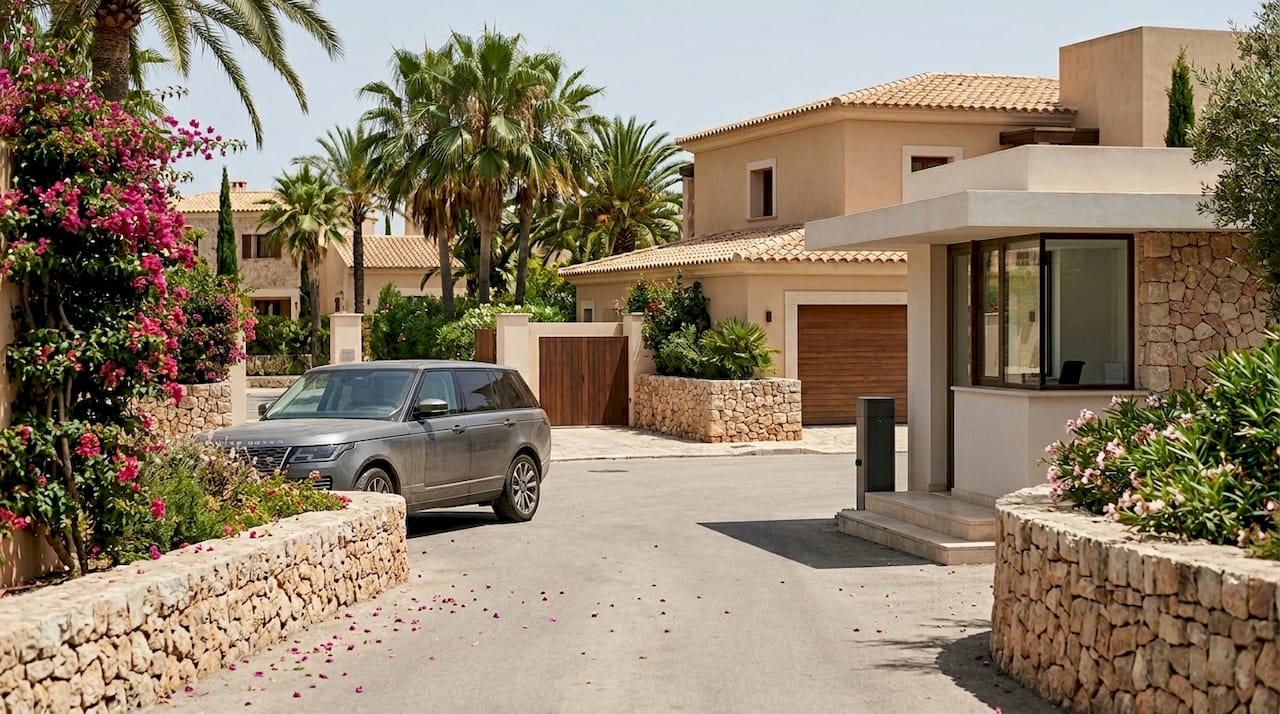
Security and privacy are real priorities for high-net-worth residents. Gated communities like Son Vida and Son Gual Residencial offer dedicated security infrastructure. Inland estates offer natural privacy through distance and topography rather than walls and guards. Understanding the reasons expats invest in Mallorca goes well beyond property appreciation. Quality of life metrics, particularly healthcare access, safety statistics, and climate, are consistently cited as primary drivers. The real estate tips for newcomers we recommend always include a deliberate trial period before finalizing any major lifestyle decisions.
Common pitfalls and expert tips for a smooth transition
After understanding lifestyle priorities, it’s critical to sidestep avoidable issues that can derail a rewarding Majorcan experience.
Buyers who prioritize privacy and authenticity rarely regret investing in Mallorca’s inland and village estates as opposed to tourist-heavy hotspots. But the path to that satisfaction involves navigating several predictable obstacles.
| Common mistake | Expert solution |
|---|---|
| Buying in a rush during a vacation visit | Spend at least two weeks in the area across different seasons before committing |
| Using a single agent representing both buyer and seller | Always hire your own independent buyer’s agent |
| Underestimating transaction costs | Budget 12% to 13% on top of purchase price from day one |
| Ignoring rental license regulations | Verify current ETV (tourist license) status before purchasing any property you plan to rent |
| Overlooking property condition reports | Commission an independent technical inspection before signing any contract |
| Missing the residency timeline | Understand the 183-day rule and its tax implications before establishing primary residence |
| Underestimating ongoing costs | Factor in community fees, IBI property tax, wealth tax, and annual maintenance |
Pro Tip: If you’re not ready to buy immediately, rent in your target area for three to six months first. This is not a delay tactic. It’s due diligence in the most useful form possible. You’ll discover things about daily life, neighbor dynamics, seasonal noise levels, and commute realities that no property listing can tell you.
One area that catches American buyers off guard consistently is the tourist rental license system. Mallorca has strict regulations governing which properties can be legally rented to tourists. The current moratorium on new tourist rental licenses in many municipalities means that buying an unlicensed property with the plan to rent it out can be a costly mistake. Always verify license status through your lawyer, not through the seller’s representations.
Understanding the advantages of investing in Mallorca is important context, but so is learning from the common pitfalls in Mallorca real estate that experienced advisors have documented across hundreds of transactions.
Our perspective: What most guides miss about settling in Mallorca
Most articles about Mallorca real estate are essentially coastal property catalogs dressed up as lifestyle advice. They reinforce the same handful of prestige locations, show the same sunset photography, and implicitly suggest that buying an expensive sea-view villa equals a successful life transition. Experience shows this is genuinely incomplete.
The buyers who arrive with the clearest picture of coastal glamour are sometimes the least prepared for what actual daily life in Mallorca requires. Prestige addresses come with seasonal traffic, summer crowds, and a social scene that can feel more performative than genuinely connecting. Several clients we’ve worked with paid premium prices for high-visibility coastal properties, then quietly relocated inland within three years because the lived experience didn’t match the aspirational image.
Expats who prioritize authenticity and privacy over status often report higher satisfaction after settling in Mallorca. This tracks with what we observe directly. The buyers who take time to define what their ideal Tuesday afternoon looks like, not just their Saturday night, consistently make better location decisions.
The other gap in most guides is the role of truly independent advocacy. Most property agents in Mallorca, however professionally they present themselves, earn their fees from the seller. This is a structural conflict of interest that shapes advice in subtle ways. An independent buyer’s agent, working exclusively on your behalf, thinks differently about property selection, price negotiation, and due diligence. The fee structure aligns incentives completely differently.
Understanding why real estate in Mallorca works as a long-term investment requires looking past the headline price growth numbers toward factors like infrastructure investment, regulatory stability, and the island’s fundamental constraint of limited developable land. Those structural factors are far more durable than any seasonal market trend.
Next steps: Expert help for your Mallorca move
Ready to go beyond research? Turning your Mallorca vision into reality takes more than reading guides. It takes the right partners on the ground. The ULI & LISA team works as independent buyer agents exclusively, which means our advice is never shaped by a seller’s commission. We use AI-powered search tools to give you complete market visibility, not just the listings that agents want to promote. Whether you’re at the early exploration stage or ready to start viewing properties, our luxury real estate services are built around your specific priorities. For peace of mind through the entire transaction, explore how we structure safe property investment processes for international buyers.
Frequently asked questions
Is it better to buy a property on Mallorca’s coast or inland?
Inland areas now attract buyers shifting toward privacy and authenticity, while the coast remains popular for prestige, marina access, and established expat networks. The best choice depends entirely on your daily lifestyle priorities rather than on a general prestige ranking.
What are the common legal pitfalls for American buyers in Mallorca?
U.S. buyers must secure their NIE, conduct rigorous title due diligence, and fully understand Spanish property law, including local legal frameworks, to avoid delays, unexpected taxes, and costs tied to undisclosed property issues.
How do high-net-worth expats integrate into Mallorca’s lifestyle?
Most successful transitions prioritize authentic experiences and local connections, with lifestyle integration focusing on privacy, nature access, and family-oriented communities rather than tourist attractions or seasonal social circuits.
Should buyers rent before purchasing in Mallorca?
Yes, spending three to six months renting in your target area before buying is one of the highest-value steps you can take, revealing seasonal realities, neighborhood dynamics, and daily life specifics that no listing can capture.
Are inland properties in Mallorca a good long-term investment?
Inland estates are gaining significant traction and value as global buyers increasingly prioritize privacy and spacious living, and limited supply in desirable inland villages means long-term appreciation fundamentals are strong.
Recommended
- Mallorca Luxury Property Guide: Everything You Need to Know - ULI & LISA Mallorca Property Blog
- Mallorca Luxury Property Guide: Everything You Need to Know - ULI & LISA Mallorca Property Blog
- Why Expats Invest in Mallorca: Wealth and Lifestyle - ULI & LISA Mallorca Property Blog
- How to Navigate Mallorca Real Estate Market: Luxury Buyer’s Guide - ULI & LISA Mallorca Property Blog