TL;DR:
- Fincas in Mallorca are historic rural estates with unique architecture and substantial land, distinct from villas or apartments.
- Owning a finca offers privacy, space, and potential income, making it a valuable lifestyle and investment choice.
- U.S. buyers need careful legal, tax, and due diligence processes to safely purchase and manage Mallorca fincas.
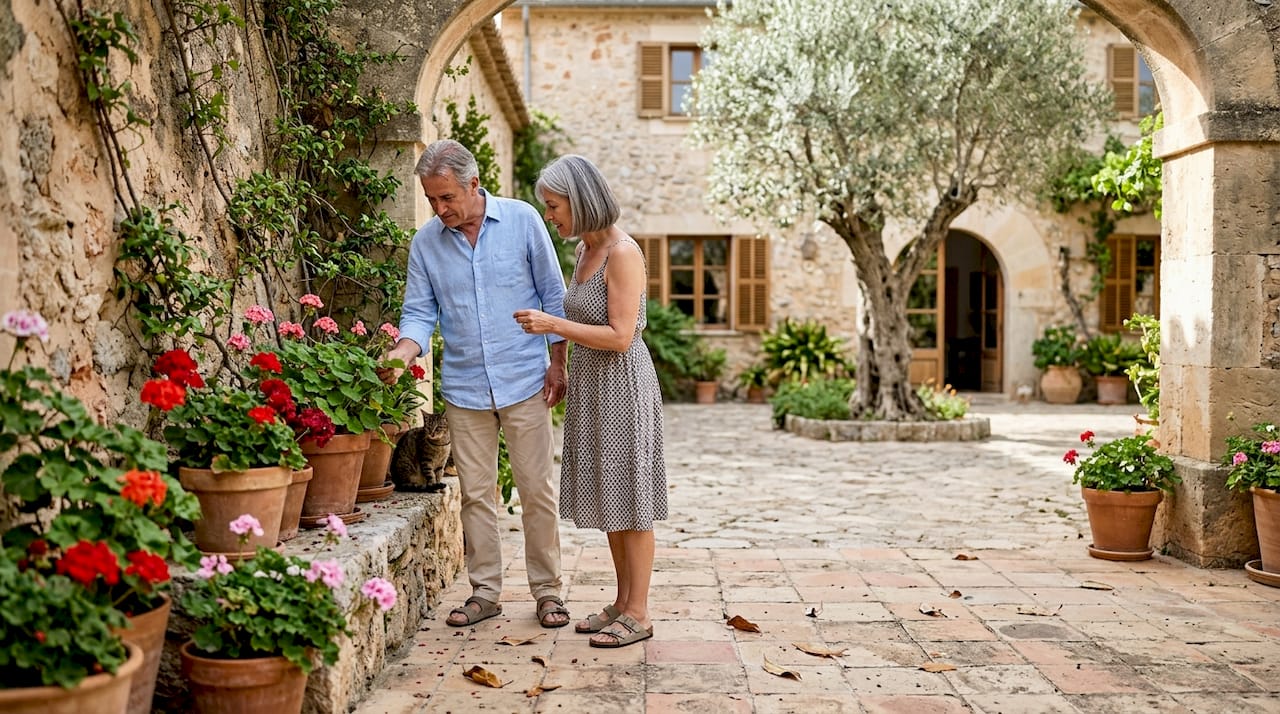
Many Americans searching for property in Mallorca assume a finca is just another word for a house. It isn’t. A finca is a distinct category of rural estate with centuries of history, a signature architectural identity, and a lifestyle that no villa or apartment can replicate. Buyers who understand this distinction gain a real edge, whether they’re purchasing for personal enjoyment, family legacy, or long-term investment. In this guide, we break down exactly what a finca is, what living in one feels like, what legal and financial steps U.S. buyers must navigate, and how to move from interest to ownership without costly mistakes.
Key Takeaways
| Point | Details |
|---|---|
| Authentic rural luxury | Mallorca fincas combine traditional architecture with exclusive modern living. |
| Unique lifestyle benefits | Owning a finca offers privacy, space, and opportunities for family retreats or remote work. |
| Know the legal landscape | Navigating property laws, taxes, and documentation is crucial for U.S. buyers. |
| Expert help pays off | A trusted local agent and legal guidance streamline the purchase process and minimize risk. |
Defining a finca: History, features, and modern appeal
The word finca comes from Spanish and refers broadly to a rural estate or agricultural property. In Mallorca specifically, fincas trace their origins to the island’s farming economy, when landowners built stone farmhouses surrounded by olive groves, almond orchards, and vineyards. These weren’t modest cottages. Many were the primary residences of wealthy Mallorcan families, built to last centuries using local sandstone called marès.
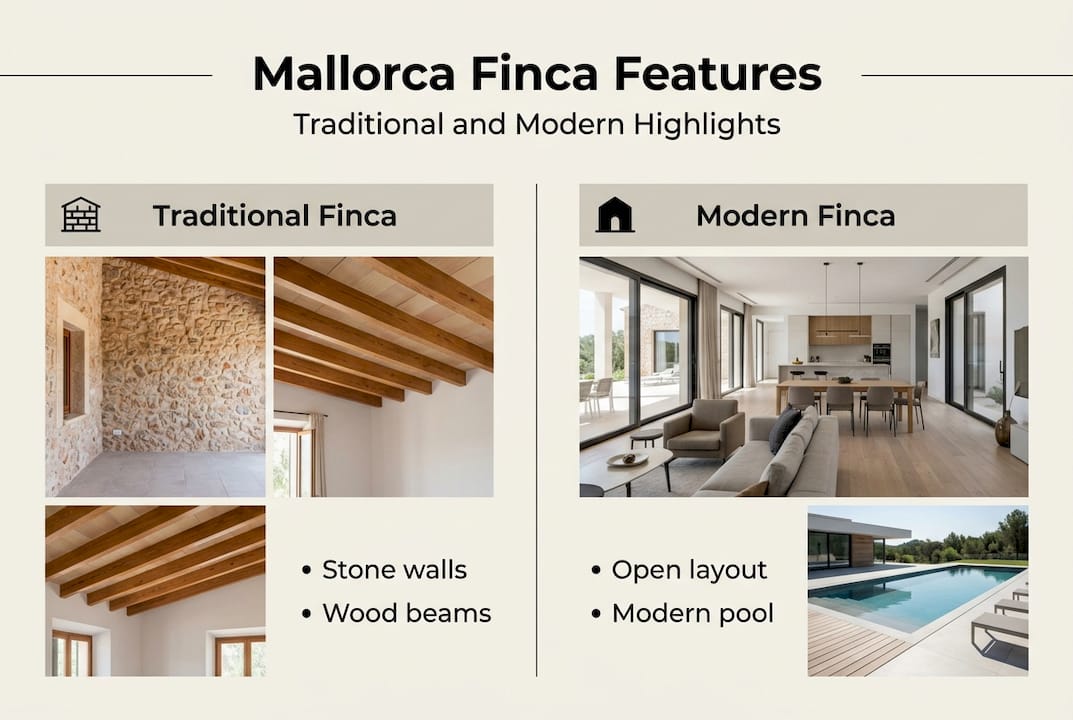
Today, Mallorca’s historic rural fincas are prime luxury assets, attracting international buyers who want something more grounded and private than a beachfront villa. The architecture is unmistakable: thick stone walls that stay cool in summer, arched doorways, terracotta roof tiles, and interior courtyards. Many original fincas sit on plots ranging from one to several hundred acres.
Signature features of a traditional Mallorca finca:
- Handcut stone exterior walls, often centuries old
- Large land plots with mature trees, gardens, or agricultural use
- Separate guest houses or converted outbuildings (casitas)
- Private wells and cisterns
- Panoramic countryside or mountain views
- Thick-walled interiors that maintain natural temperature regulation
Modern buyers rarely leave these properties untouched. The most sought-after fincas today blend original architecture with contemporary upgrades: infinity pools, solar panel arrays, smart home systems, geothermal heating, and high-speed fiber internet. The result is a property that feels rooted in history but functions at a premium modern standard.
“A well-restored finca offers something no new-build can manufacture: authenticity. The stone remembers the land it came from.”
| Feature | Traditional finca | Modern converted finca |
|---|---|---|
| Construction material | Local marès sandstone | Original stone, updated interiors |
| Energy system | Natural ventilation | Solar, geothermal, smart systems |
| Land use | Agriculture, orchards | Gardens, pools, guest accommodations |
| Privacy level | High | Very high |
| Typical price range | Varies widely | €1M to €10M+ |
The advantages of buying in Mallorca become especially clear when you consider that fincas are finite. The island has strict rural land protections, meaning no new fincas can be built on protected land. That scarcity is a core part of their value.
Mallorca finca lifestyle: Space, serenity, and exclusivity
Owning a finca is not just a real estate decision. It’s a lifestyle choice that shapes how you spend your time, who you share space with, and how deeply you disconnect from the noise of professional life.
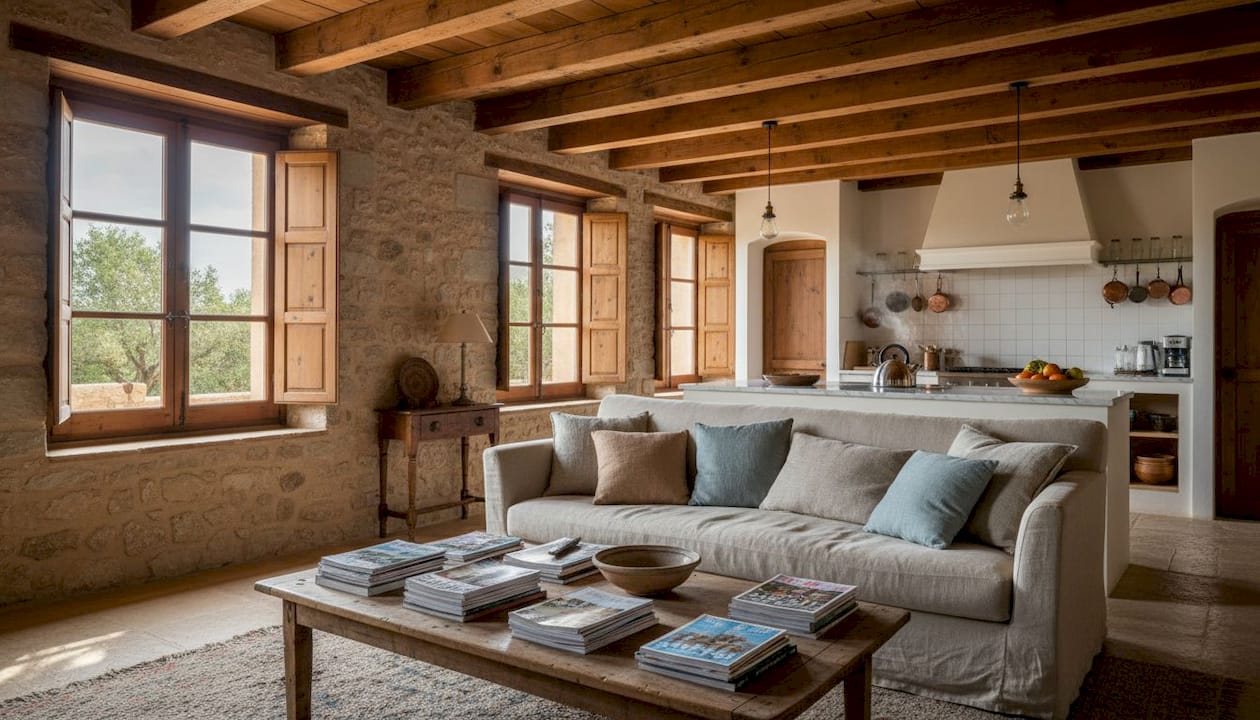
Fincas offer unmatched privacy and lifestyle advantages that foreign buyers consistently rank as the top reason for their purchase. Unlike a villa in a resort community, a finca sits on its own land, often screened by mature trees or positioned on a hillside with no neighbors in sight. For American families used to suburban proximity, this level of seclusion is genuinely transformative.
What finca living looks like in practice:
- Hosting extended family across multiple guest suites or casitas
- Running a private wellness or yoga retreat
- Setting up a dedicated remote work studio with stable internet and zero distraction
- Cultivating your own olive oil or wine from existing orchards
- Entertaining guests with outdoor dining areas, private pools, and landscaped gardens
The Mallorca finca lifestyle also appeals to buyers thinking about income generation. Short-term vacation rentals on finca properties command premium rates, particularly in peak summer months. A well-positioned finca with a pool, multiple bedrooms, and countryside views can generate significant rental income when the owners aren’t using it.
| Ownership type | Privacy | Space | Rental potential | Resale value |
|---|---|---|---|---|
| Finca | Very high | Very large | High | Strong, appreciating |
| Luxury villa | Moderate | Large | Moderate to high | Stable |
| Apartment | Low | Limited | Moderate | Market-dependent |
Pro Tip: If vacation rental income is part of your plan, confirm that the finca holds a valid Estancia Turística (tourist license) before you make an offer. Obtaining a new license is increasingly difficult due to local regulations, and an existing one adds measurable value to the property.
For American professionals exploring the unique benefits for U.S. buyers, the finca format also supports multi-generational use. Parents, adult children, and extended family can share a property without sharing walls, which is a dynamic that standard vacation homes simply can’t accommodate.
Key legal and financial considerations for U.S. buyers
Buying a finca in Mallorca as an American involves navigating two legal systems simultaneously. Spain has its own property law framework, and the U.S. requires its citizens to report foreign assets and income regardless of where they live. Getting both right from the start protects your investment and avoids expensive corrections later.
Navigating legal and tax intricacies is essential for any foreign finca buyer. Here’s what the process requires:
- Obtain a NIE number. The Número de Identificación de Extranjero is Spain’s tax identification number for foreigners. You cannot sign a purchase contract or open a Spanish bank account without it.
- Open a Spanish bank account. Most sellers and notaries require payment through a local account.
- Conduct full title due diligence. Verify that the seller holds clear title, that there are no encumbrances, and that the property boundaries match the registry.
- Check rural land classification. Fincas sit on suelo rústico (rural land), which carries specific building restrictions. Any unauthorized structures must be identified before purchase.
- Review water and utility rights. Private wells and cisterns must be legally registered.
- Hire an independent Spanish lawyer. Not the seller’s lawyer. Your own.
Mallorca’s property market remains attractive to international investors, but the legal layer is where deals go wrong. Unauthorized extensions, missing building permits, and unclear rural classifications are the most common problems buyers discover too late.
On the U.S. side, owning foreign real estate triggers reporting obligations. If you hold the property through a foreign entity, you may need to file an FBAR (FinCEN 114) and IRS Form 8938. Rental income must be declared on your U.S. tax return. Work with a CPA who specializes in international real estate from day one.
Pro Tip: Structuring the purchase through a Spanish Sociedad Limitada (SL, similar to an LLC) can offer tax efficiency and estate planning benefits, but it also adds administrative costs. Ask your lawyer and accountant to model both personal and corporate ownership before you decide.
Statistic callout: In 2026, Mallorca property prices in prime rural areas continue to rise, with luxury finca values outperforming the broader Spanish market.
Navigating the buying process: Step-by-step guide
Once you understand the legal landscape, the actual purchase process becomes much more manageable. Here’s a practical sequence that experienced buyers follow.
- Define your criteria clearly. Location, acreage, number of bedrooms, pool, rental license, budget. The more specific you are, the faster a good agent can narrow the field.
- Select an independent buyer’s agent. An agent who works exclusively for buyers, not sellers, has no conflict of interest. Expert agents guide foreign buyers through the acquisition process in ways that protect your interests at every stage.
- Visit shortlisted properties in person. Photos and virtual tours don’t reveal water pressure, road noise, or the true condition of stone walls. Visit before you commit.
- Commission a technical survey. A licensed architect or surveyor should inspect the structure, identify any illegal additions, and assess restoration costs.
- Make a formal offer and negotiate. Your agent handles this. Finca prices often have room for negotiation, especially if the property has been on the market for several months.
- Sign the Contrato de Arras. This is the preliminary purchase contract, typically accompanied by a 10% deposit. If the seller backs out, they owe you double the deposit.
- Complete due diligence and sign before a notary. The final deed (Escritura Pública) is signed in front of a Spanish notary, and ownership transfers officially.
Common pitfalls to avoid:
- Skipping independent legal advice and relying on the seller’s lawyer
- Failing to verify the rural land classification of all structures
- Ignoring undeclared construction that could require demolition
- Underestimating renovation costs for older stone structures
Pro Tip: Review the Mallorca finca purchase tips and check the Mallorca property forecasts before you set your budget. Knowing where the market is heading helps you negotiate from a position of knowledge, not hope.
Our take: Why discerning American buyers value Mallorca fincas
After working with U.S. buyers across many finca transactions, we’ve noticed a pattern. The buyers who are happiest with their purchase weren’t just looking for a vacation home. They were looking for a place that feels like it belongs to them in a deeper sense.
A finca delivers that. The thick stone walls, the old olive trees, the view that hasn’t changed in a hundred years. It’s not just real estate. It’s a stake in something permanent. That’s a feeling no new-build development can manufacture, regardless of price.
What most American buyers overlook initially is the finca investment perspective on long-term value. Because rural land in Mallorca is protected and supply is genuinely constrained, quality fincas don’t depreciate the way urban condos can. The buyers who struggle are usually those who skip thorough legal checks to move faster, or who underestimate the cost of maintaining a large rural property. The buyers who thrive treat the purchase like the serious cross-border transaction it is: with professional support, patience, and clear financial planning.
Start your finca journey with expert local guidance
Buying a luxury finca in Mallorca is one of the most rewarding investments an American family or professional can make, but it requires the right team on the ground. At ULI & LISA, we specialize in safe property investment in Mallorca for international buyers, combining AI-powered property searches with hands-on, personalized guidance. We handle the search, the due diligence coordination, the negotiation, and the step-by-step support so you can focus on the vision, not the paperwork. If you’re ready to explore Mallorca fincas with a team that puts your interests first, reach out to us today.
Frequently asked questions
What exactly is considered a finca in Mallorca?
A finca is a traditional rural estate in Mallorca, typically featuring historic stone architecture, substantial land, and a countryside setting, often converted into a luxury residence.
Can U.S. citizens buy finca properties in Mallorca?
Yes, U.S. citizens can purchase Mallorca fincas, but they must meet Spanish legal and tax requirements and also comply with U.S. foreign asset reporting rules.
What are the main legal risks when buying a finca in Mallorca?
The biggest risks are unclear land titles, unauthorized structures, and rural zoning issues. Foreign buyers face specific legal checks that an independent Spanish lawyer can help you navigate safely.
How much does it cost to maintain a finca in Mallorca?
Maintenance costs depend on property size and features, but ongoing ownership costs typically include land upkeep, utilities, local taxes, and periodic structural or system upgrades.
Are Mallorca fincas a good investment for American buyers?
Yes, particularly in the luxury segment. Mallorca maintains its appeal for international investors, and quality fincas benefit from constrained rural land supply and strong long-term appreciation.
Recommended
- Mallorca Fincas: Unique Benefits for U.S. Buyers - ULI & LISA Mallorca Property Blog
- How to Finance Mallorca Property: Your Guide to Luxury Living - ULI & LISA Mallorca Property Blog
- How to Finance Mallorca Property: Your Guide to Luxury Living - ULI & LISA Mallorca Property Blog
- Mallorca Luxury Property Guide: Everything You Need to Know - ULI & LISA Mallorca Property Blog