
Currency exchange fluctuations can shift your final property price by up to 5%, making expert due diligence essential for American buyers purchasing luxury real estate in Mallorca. Navigating Spain’s unique legal framework, tax obligations, and cross-border complexities requires specialized knowledge to protect your investment. This guide walks you through the critical legal, tax, and financial checks that safeguard high-net-worth buyers during Mallorca property transactions.
Key Takeaways
| Point | Details |
|---|---|
| Legal Verification | Nota Simple from Land Registry confirms ownership and reveals encumbrances before purchase. |
| Tax Complexity | U.S.-Spain tax treaty and Spanish Wealth Tax require expert cross-border planning for compliance. |
| Currency Impact | Exchange rate timing can alter final costs by up to 5%, requiring strategic payment scheduling. |
| Local Expertise | Engaging Mallorca specialists reduces due diligence errors by over 40% and accelerates closing. |
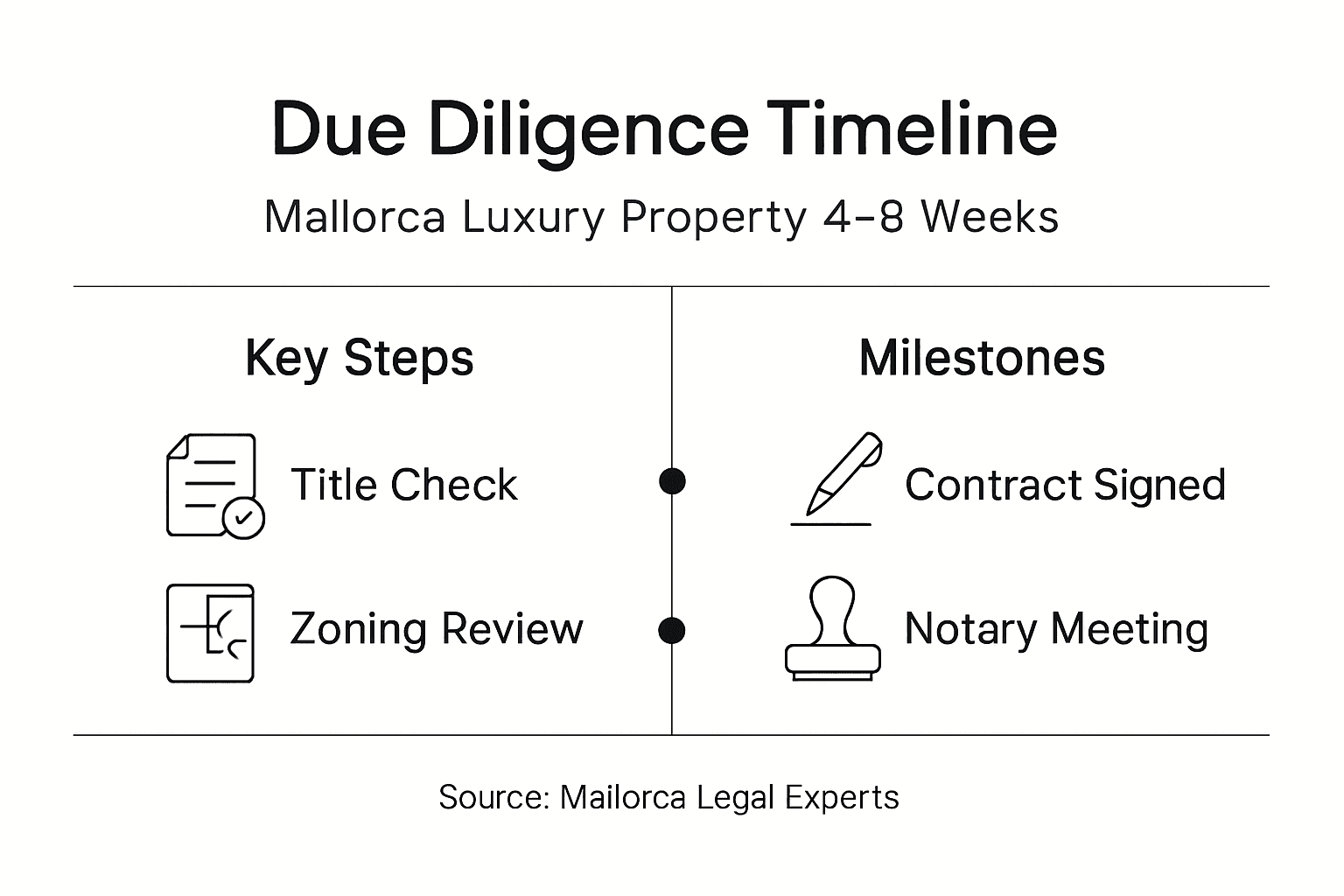
| Timeline Range | Complete due diligence typically spans 4 to 8 weeks from contract signing to notary closing. |
Legal Due Diligence: Confirming Title and Zoning Compliance
Verifying legal title stands as your first defense against ownership disputes and future restrictions. The Nota Simple document from the Land Registry provides a comprehensive snapshot of property ownership history, current title holder, and any registered encumbrances. Obtaining and analyzing the Nota Simple ensures no hidden legal risks threaten your investment.
Encumbrances such as unpaid mortgages, liens, or legal claims can transfer to you as the new owner if left unchecked. Your lawyer should conduct thorough searches to identify these issues before you commit funds. Outstanding debts or legal disputes attached to the property can delay closing or force you into expensive litigation.
Zoning compliance verification protects your intended property use and future development plans. Mallorca enforces strict urban planning regulations that classify properties for residential, commercial, or mixed use. Purchasing a property zoned for residential use when you plan commercial operations creates immediate legal conflicts. Your due diligence must confirm current zoning status matches your investment strategy.
Neglecting zoning checks leads to costly surprises like blocked renovation permits or prohibited rental activities. Local municipalities maintain detailed urban plans that dictate building heights, density limits, and permitted modifications. Review these documents carefully to ensure your luxury property aligns with local regulations.
Essential legal documents and checks include:
- Nota Simple from Land Registry showing clear title
- Municipal zoning certificates confirming permitted property use
- Building permits for any existing structures or modifications
- Community of owners documentation if purchasing in a development
- Energy performance certificate meeting Spanish efficiency standards
Pro Tip: Engage a Mallorca property lawyer who specializes in legal due diligence in Mallorca and communicates fluently in English. Spanish legal terminology differs significantly from U.S. real estate law, and expert translation prevents misunderstandings that could jeopardize your transaction.
Tax Compliance and Obligations for U.S. Buyers
Spanish Wealth Tax applies to luxury property owners when total Spanish assets exceed specific thresholds, typically around €700,000 depending on regional rules in the Balearic Islands. This annual tax ranges from 0.2% to 3.5% of net asset value and catches many American buyers unprepared. Spanish Wealth Tax thresholds and income tax rules are critical to understand for luxury property ownership.
The U.S.-Spain double taxation treaty prevents you from paying income tax twice on the same earnings, but proper filing remains essential. You must report your Mallorca property to the IRS on Form 8938 if it exceeds reporting thresholds, and rental income faces taxation in both countries with foreign tax credits available. Understanding treaty provisions helps you optimize tax positions legally.
Tax residency rules determine your obligations in Spain. Spending more than 183 days per year in Spain triggers tax residency status, subjecting your worldwide income to Spanish taxation. Even without residency, property ownership creates tax obligations including annual wealth declarations and potential income tax on rental earnings or capital gains upon sale.
Key tax filing and payment requirements:
- Annual Modelo 720 declaration for assets exceeding €50,000 outside Spain
- Quarterly income tax payments on rental income via Modelo 210
- Wealth Tax filing (Modelo 714) if assets exceed regional thresholds
- Capital gains tax at sale, typically 19% to 23% on profit
- U.S. tax returns including foreign property and income disclosures
Pro Tip: Consult cross-border tax advisors specializing in tax compliance for U.S. buyers in Mallorca at least six months before purchase. Early planning structures ownership optimally, whether through personal name, LLC, or trust arrangements, potentially saving significant tax liabilities over your investment horizon.
Cross-Border Financial and Payment Considerations
Currency fluctuations between USD and EUR create substantial price uncertainty during your transaction timeline. A 5% exchange rate shift during the four to eight week due diligence period translates to €50,000 on a €1 million property. Currency exchange fluctuations can impact the final property price by up to 5% during the due diligence.

Timing payments strategically protects you from adverse rate movements and contract penalties. Mallorca property purchases typically involve three payment stages: initial deposit at preliminary contract, balance at notary closing, and additional taxes and fees post-completion. Aligning currency conversion with these milestones requires coordination with your bank or foreign exchange provider.
Securing international fund transfers demands attention to fraud prevention and regulatory compliance. Spanish banks require documentation proving funds originate from legitimate sources, and large transfers trigger anti-money laundering reviews. Delays in fund clearance can breach contract deadlines, forfeiting your deposit.
Methods for secure international fund transfers:
- Specialized foreign exchange brokers offering better rates than retail banks
- Forward contracts locking exchange rates three to twelve months ahead
- Wire transfers directly from U.S. bank to Spanish lawyer’s client account
- SWIFT transfers with full sender and recipient details for compliance
- Proof of funds documentation prepared in advance of payment deadlines
Exchange Rate Impact: A 5% currency fluctuation during due diligence can alter your final property cost by tens of thousands of euros, making rate protection strategies essential for budget certainty.
Pro Tip: Lock favorable exchange rates when signing your preliminary contract by using forward contracts through managing cross-border payments specialists. This eliminates currency risk and provides exact euro amounts for budgeting, giving you confidence throughout the transaction. Consider currency exchange risks in Mallorca property purchases carefully before committing funds.
Engagement of Local Experts: Lawyers, Tax Advisors, and Notaries
Mallorca property lawyers handle legal verification, contract negotiation, and transaction coordination from preliminary agreement through notary closing. They conduct title searches, review purchase contracts, verify zoning compliance, and ensure all legal requirements meet Spanish standards. Lawyers also coordinate with sellers’ representatives and flag potential issues requiring resolution before you commit significant funds.
Tax advisors familiar with U.S.-Spain cross-border matters structure your purchase to minimize tax liabilities while ensuring compliance in both jurisdictions. They calculate Wealth Tax exposure, advise on residency implications, prepare required Spanish tax filings, and coordinate with your U.S. accountant on foreign reporting obligations. Their expertise prevents costly mistakes that could trigger penalties or audits years after purchase.
Notaries serve as impartial public officials who authenticate property transactions and ensure all parties understand their obligations. Unlike U.S. notaries, Spanish notaries hold legal authority to verify document validity, confirm identity, and register the sale officially. They read the deed aloud during closing, answer questions, and file documents with the Land Registry to complete ownership transfer.
Benefits of engaging local experts:
- Risk reduction through thorough legal and tax verification before commitment
- Legal compliance with Spanish regulations and U.S. foreign asset reporting
- Timeline management ensuring milestones meet contractual deadlines
- Communication clarity with English-speaking professionals who understand American buyer needs
- Problem resolution when unexpected issues arise during due diligence
Engaging local specialists reduces due diligence errors by over 40%. Select providers with proven experience serving American clients purchasing Mallorca luxury properties. Ask for references from other U.S. buyers and confirm they maintain professional liability insurance. These professionals become your essential support team, protecting your interests throughout the complex acquisition process. Working with local experts for Mallorca due diligence ensures smooth transactions.
Common Misconceptions About Due Diligence in Mallorca Property Buying
Many American buyers mistakenly believe an accepted offer creates a binding agreement. In Mallorca, you remain free to withdraw until signing the Contrato de Arras, the preliminary contract following initial due diligence. This deposit contract, typically involving 10% of purchase price, establishes binding obligations and withdrawal penalties. Understanding this timeline prevents premature commitment before completing thorough checks.
Tax residency misconceptions lead buyers to underestimate their Spanish obligations. Some assume owning property without residing in Spain eliminates tax liability, but property ownership alone triggers annual Wealth Tax and income reporting requirements regardless of residency status. Others believe the double taxation treaty eliminates all Spanish taxes, when it actually prevents duplicate taxation rather than removing obligations entirely.
Zoning law enforcement strictness surprises buyers familiar with more flexible jurisdictions. Mallorca authorities actively monitor and penalize zoning violations, including unauthorized property use changes or unpermitted renovations. Assumptions that regulations allow negotiation or overlooking minor infractions prove costly when authorities issue fines or demolition orders.
Common pitfalls and correct approaches:
- Assuming verbal agreements hold legal weight; always require written contracts reviewed by your lawyer
- Believing seller disclosures cover all property issues; conduct independent inspections and verifications
- Expecting U.S. legal concepts like title insurance apply in Spain; rely on Nota Simple and lawyer verification instead
- Thinking closing costs match U.S. percentages; budget 10% to 13% of purchase price for Spanish taxes and fees
- Presuming English translations suffice; have Spanish documents officially translated and explained by qualified professionals
Spanish legal customs differ fundamentally from American practices, requiring you to adapt expectations and processes. Notary closings involve reading the entire deed aloud in Spanish, even when you don’t speak the language, with sworn translation provided. This formality ensures legal clarity and prevents future disputes. Respecting these due diligence misconceptions helps you navigate Mallorca purchases successfully.
Comparative Framework: Mallorca vs Other Mediterranean Luxury Property Markets
Mallorca enforces more rigorous zoning regulations than competing Mediterranean markets like Cyprus and Greece. Spanish urban planning laws require detailed compliance verification for existing structures and future modifications, while Cyprus offers more flexible interpretations and Greece allows certain retrospective permits for minor violations. This strictness protects property values but demands thorough due diligence upfront.
Tax complexity in Mallorca exceeds simpler structures found elsewhere in the Mediterranean. Spanish Wealth Tax creates annual obligations absent in Cyprus, which abolished its equivalent in 2000. Greece imposes property taxes but lacks Spain’s comprehensive cross-border reporting requirements. The U.S.-Spain tax treaty adds layers of compliance unfamiliar to buyers purchasing in markets with less developed treaty frameworks.
Legal verification processes in Mallorca involve more documentation and expert review than Greece or Cyprus. Spanish Land Registry records provide comprehensive property histories, but accessing and interpreting them requires specialized legal knowledge. Title transfer procedures demand notary involvement and multiple official registrations, creating additional steps compared to simpler Greek or Cypriot processes.
| Aspect | Mallorca | Cyprus | Greece |
|---|---|---|---|
| Zoning Enforcement | Strict, proactive monitoring | Moderate, flexible interpretation | Variable, some retrospective permits |
| Wealth Tax | Annual, progressive rates | None | None |
| Due Diligence Timeline | 4-8 weeks typical | 3-6 weeks typical | 4-6 weeks typical |
| Legal Documentation | Extensive, requires specialist review | Moderate, simpler structure | Moderate, improving systems |
| Notary Role | Mandatory, significant legal authority | Limited, mainly authentication | Required, less comprehensive |
| Cross-Border Tax Complexity | High, detailed U.S. treaty | Moderate, EU member benefits | Moderate, EU member benefits |
These differences impact your timeline, costs, and risk exposure significantly. Mallorca’s thorough approach increases upfront due diligence expenses by 15% to 25% compared to Cyprus or Greece, but this investment provides stronger legal protection and clearer ownership rights. For American buyers prioritizing security and regulatory transparency, Mallorca’s rigorous standards offer valuable peace of mind despite additional complexity. Understanding this Mallorca vs Mediterranean markets comparison helps set realistic expectations.
Timeline and Practical Milestones of the Due Diligence Process
Understanding the sequence of due diligence steps helps you coordinate activities and meet contractual deadlines efficiently. Due diligence for luxury property in Mallorca typically takes between 4 and 8 weeks, varying based on property complexity and expert availability. Following this timeline prevents rushed decisions and contract breaches.
Step-by-step due diligence timeline:
- Week 1: Sign preliminary reservation agreement and pay small holding deposit (€3,000 to €10,000) to secure property while conducting checks; engage lawyer and tax advisor immediately.
- Weeks 1-2: Lawyer obtains Nota Simple from Land Registry, verifies title, checks for encumbrances, and reviews municipal zoning certificates and building permits.
- Weeks 2-3: Tax advisor analyzes your Spanish tax exposure, structures ownership optimally, and coordinates with your U.S. accountant on reporting requirements.
- Weeks 2-4: Arrange property survey and technical inspections if purchasing older properties; coordinate currency exchange strategy and lock favorable rates if desired.
- Week 4: Review all due diligence findings with your legal and tax team; address any issues discovered and negotiate resolutions with seller.
- Weeks 4-5: Sign Contrato de Arras (preliminary contract) after satisfactory due diligence; pay 10% deposit and agree on closing date, typically 4-6 weeks ahead.
- Weeks 5-8: Prepare final payment, arrange fund transfers, obtain NIE number if not already secured, and coordinate with notary for closing appointment.
- Week 8: Attend notary closing, sign deed, transfer remaining funds, receive keys, and register ownership transfer with Land Registry.
Critical milestones require strict adherence to avoid financial penalties or contract termination. Missing the Contrato de Arras signing date can result in forfeiting your reservation deposit. Failing to transfer funds by the notary closing date may breach contract terms, allowing sellers to retain your 10% deposit and resell the property.
Early expert engagement accelerates this timeline by ensuring smooth coordination between multiple parties. Lawyers need time to conduct thorough searches, tax advisors require detailed financial information to provide accurate planning, and notaries must schedule appointments weeks in advance during busy seasons. Proactive communication keeps your due diligence timeline on track and reduces stress.
Property complexity extends timelines when dealing with rural estates, properties requiring permit verifications, or transactions involving multiple owners. Budget extra weeks for these situations and build contingency time into your planning. Understanding typical Mallorca due diligence duration helps you set realistic closing expectations with sellers and coordinate your travel plans appropriately.
Explore Mallorca Luxury Properties with Expert Guidance
Navigating Mallorca’s due diligence requirements becomes manageable with experienced guidance tailored to American buyers. Our comprehensive Mallorca luxury property guide provides detailed insights into market dynamics, legal requirements, and investment strategies for high-net-worth buyers. Access our property buying checklist for Americans to ensure you complete every critical step. We specialize in connecting U.S. buyers with trusted local experts who understand cross-border complexities and provide clear, reliable support throughout your purchase. Our Mallorca property due diligence expertise ensures you make informed decisions backed by thorough verification and professional guidance.
FAQ
How long does the due diligence process take for luxury properties in Mallorca?
Due diligence generally lasts 4 to 8 weeks depending on property complexity and expert coordination. Typical due diligence timelines for luxury property in Mallorca range from 4 to 8 weeks. Proactive management and early expert engagement help complete the process efficiently. Complex properties with multiple owners or rural locations may require additional time for thorough verification.
What taxes must U.S. buyers be aware of when purchasing in Mallorca?
U.S. buyers face Spanish Wealth Tax on assets exceeding regional thresholds, typically around €700,000, plus income tax on rental earnings and capital gains upon sale. The U.S.-Spain double taxation treaty prevents paying twice on the same income but requires proper filing in both countries. Consult cross-border tax advisors for personalized planning tailored to your financial situation and investment timeline.
Can I back out of the purchase during the due diligence period in Mallorca?
Buyers typically have flexibility to withdraw before signing the Contrato de Arras, which occurs after initial due diligence and involves paying a 10% deposit. This preliminary contract establishes binding obligations and withdrawal penalties. The reservation period before this contract, usually 10 to 15 days, allows inspection and verification with minimal financial commitment, protecting buyers from premature legal binding.
Why is engaging local experts important for U.S. buyers in Mallorca?
Local lawyers, tax advisors, and notaries understand Mallorca regulations, Spanish legal procedures, and U.S.-Spain cross-border complexities that differ fundamentally from American practices. Engaging local specialists reduces due diligence errors by over 40%. They facilitate paperwork, ensure legal and tax compliance, prevent costly mistakes, and expedite closing processes. English-speaking professionals who regularly serve American clients provide invaluable guidance throughout your transaction.
What happens if I discover issues during due diligence in Mallorca?
Discovering title defects, zoning violations, or undisclosed encumbrances allows you to negotiate resolutions with the seller before signing the binding Contrato de Arras. You can request price reductions, require sellers to remedy problems, or withdraw from the transaction entirely during the reservation period. Your lawyer manages these negotiations and advises whether issues present acceptable risks or deal-breaking obstacles requiring you to walk away.
How do currency fluctuations affect my Mallorca property purchase?
Exchange rate movements between USD and EUR during your 4 to 8 week due diligence period can alter final costs by up to 5%, representing significant amounts on luxury properties. Forward contracts with foreign exchange specialists lock rates at preliminary contract signing, eliminating this uncertainty and providing exact euro amounts for budgeting. Timing currency conversion strategically protects you from adverse movements and ensures sufficient funds reach your Spanish lawyer’s account by closing deadlines.
Recommended
- Steps to Buy Property Mallorca: Your Luxury Guide - ULI & LISA Mallorca Property Blog
- How to Navigate Mallorca Real Estate Market: Luxury Buyer’s Guide - ULI & LISA Mallorca Property Blog
- Property Viewing Process Mallorca: A Luxury Buyer’s Guide - ULI & LISA Mallorca Property Blog
- How to Finance Mallorca Property: Your Guide to Luxury Living - ULI & LISA Mallorca Property Blog