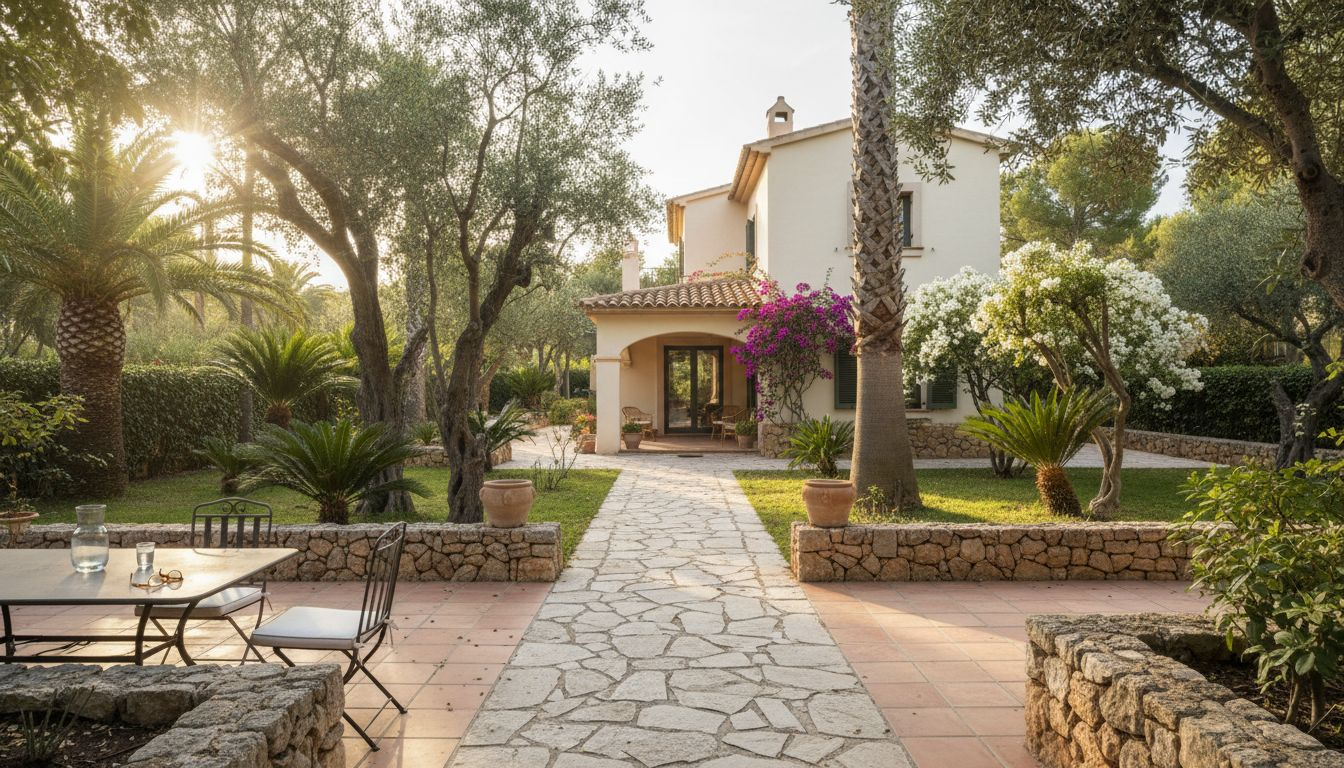
Finding the perfect retirement villa in Mallorca calls for more than a dream of sun-soaked afternoons. For many American professionals, the allure of Spain’s Mediterranean lifestyle is balanced by real questions about local property laws, tax rules, and the need for clear communication through every step. By focusing on expert legal and bilingual support, you lay a secure foundation for an investment that meets your goals while avoiding the costly missteps common in cross-border transactions.
Quick Summary
| Key Point | Explanation |
|---|---|
| 1. Define lifestyle and investment goals | Clearly outline what you want from your property—be it retirement, investment, or both—to guide your search effectively. |
| 2. Research suitable neighborhoods | Explore different Mallorca neighborhoods to find ones that align with your lifestyle preferences and financial capabilities. |
| 3. Understand legal and tax obligations | Familiarize yourself with Spain’s property laws and tax implications to avoid unexpected costs and complications. |
| 4. Verify property suitability through expert review | Engage a Spanish lawyer to check for encumbrances and ensure your desired property complies with local regulations. |
| 5. Consult professionals early in the process | Hire your lawyer and tax consultant before making an offer for better preparation and informed decision-making. |
Step 1: Assess Your Lifestyle and Investment Goals
Before you start house hunting in Mallorca, get clear on what you actually want from the experience. Are you buying a retirement home to escape winters, an investment property for rental income, or a blend of both? Your answer shapes everything that follows.
Start by defining your lifestyle priorities:
- Climate and outdoor activities: Do you want year-round beach access, golf communities, or hiking nearby?
- Urban convenience vs. rural peace: Are you happiest in Palma’s vibrant energy or a quiet village setting?
- Community: Do you seek other American expats, international residents, or locals?
- Healthcare and services: What proximity to quality hospitals and English-speaking professionals matters to you?
Your investment timeline matters just as much. If you’re planning to hold for 10+ years, appreciation and rental potential drive decisions differently than a five-year timeline. Think about whether you need immediate rental income or can wait for long-term value growth.
Clarifying these goals now prevents costly changes later and helps you evaluate neighborhoods with confidence.
Next, assess your financial reality honestly. What’s your total budget including closing costs, renovations, and annual ownership expenses? Mallorca’s luxury market demands precision here. Many American buyers underestimate property taxes, community fees, and maintenance costs when comparing to US pricing.
When you invest in Mallorca real estate, matching neighborhoods to these goals prevents regret. A beachfront villa in Palma offers different returns and lifestyle than a countryside retreat near Soller. Understanding what you prioritize financially and personally narrows your search dramatically.
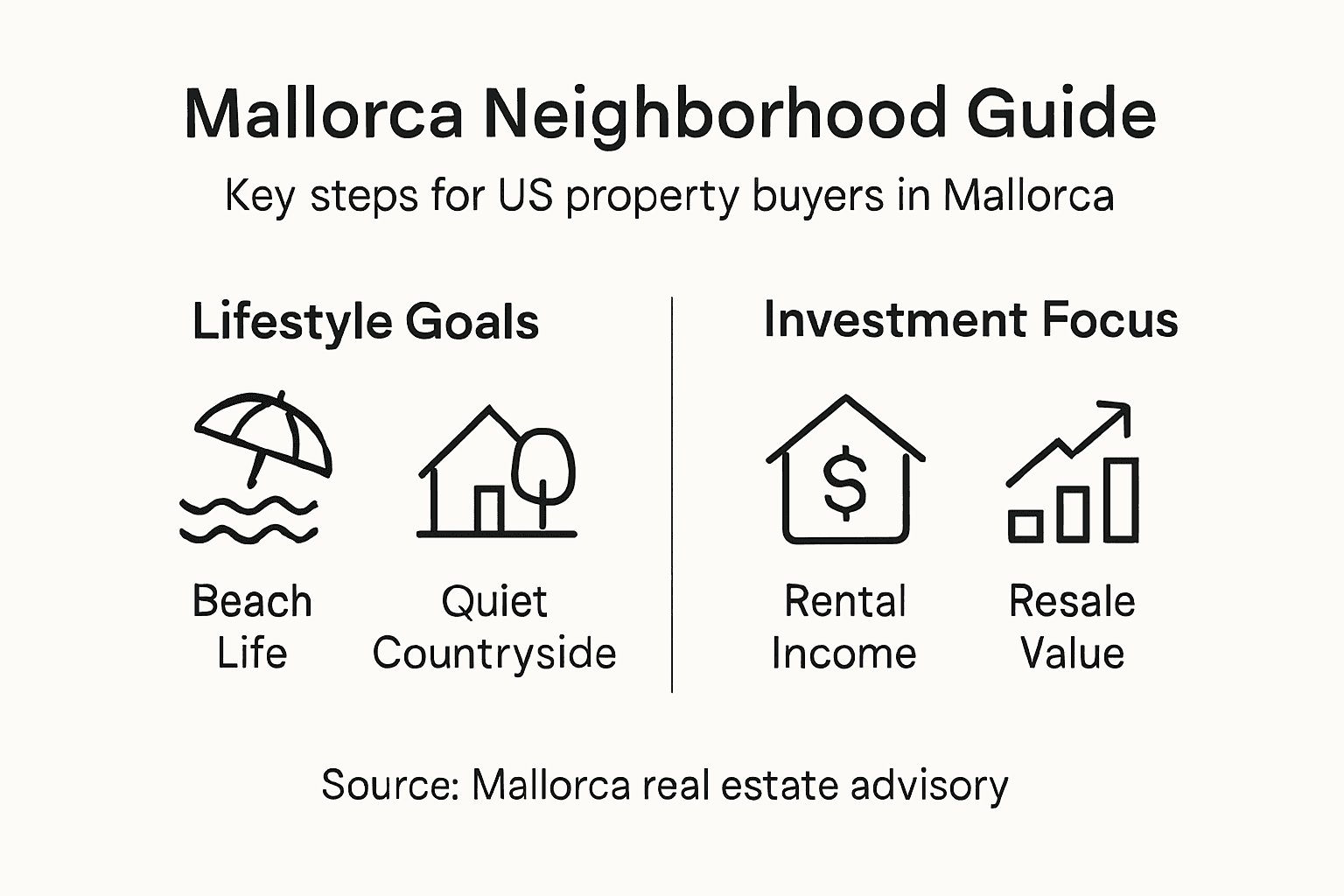
Consider also your residency plans. Will you spend six months yearly or use the property intermittently? Tax implications, rental licensing (ETV), and management logistics change based on your actual use patterns. Be realistic about how much time you’ll spend there.
Pro tip: Write down three specific, measurable goals for your Mallorca property—one lifestyle goal, one financial goal, and one timeline goal. Bring this list to your first consultation; it accelerates finding the right neighborhoods for your situation.
Step 2: Research Mallorca’s Top Luxury Neighborhoods
Now that you understand your goals, it’s time to explore where your money goes furthest and fits your lifestyle. Mallorca offers distinct neighborhoods with dramatically different characters, price points, and investment potential. Your research phase determines whether you end up in a thriving community or isolated property.

Start by identifying neighborhoods that match your priorities. Palma’s Old Town appeals to urban professionals wanting walkable culture and restaurants. Beachfront areas like Illetas and Portals Nous attract those prioritizing Mediterranean access. Golf communities near Puntiró suit retirees seeking active social scenes. Top Mallorca neighborhoods each serve different buyer profiles, so your initial goals guide this exploration.
Research beyond the obvious names:
- Price trends: What’s actually selling at different price points in each area?
- Rental demand: Which neighborhoods attract summer tourists or long-term renters?
- Infrastructure: Schools, hospitals, supermarkets, and services matter long-term.
- Community composition: Who lives there now and what’s the atmosphere?
- Future development: Are new amenities planned that could boost or harm value?
Visit neighborhoods at different times. Weekend tourism masks a community’s real character. Drive through early morning and evening to see actual resident life, not just vacation vibes.
Your research reveals which neighborhoods align with both your lifestyle vision and financial timeline.
Talk to locals and expat groups online. Facebook groups for American residents in specific areas provide honest feedback about utilities, services, and daily life. Ask directly about property taxes, community fees, and unexpected ownership costs. These details shape long-term satisfaction.
Check rental market data if income matters to you. Some neighborhoods sustain 50% annual occupancy; others struggle below 30%. Winter rental rates differ dramatically from summer rates. Understanding realistic income projections prevents disappointment.
Don’t skip the less famous areas. While Andratx and Son Vida dominate headlines, emerging neighborhoods like Calvia offer better value with similar amenities. Your agent can show you data on appreciation patterns and buyer demographics.
Pro tip: Spend at least one full day in each neighborhood you’re seriously considering, visiting at different hours and talking to property owners about their actual experience and any regrets they have.
Here’s a summary of how different Mallorca neighborhoods may align with various buyer profiles:
| Buyer Profile | Best-Fit Neighborhoods | Key Attraction |
|---|---|---|
| Urban professional | Palma’s Old Town | Walkable city amenities |
| Beach and water enthusiast | Illetas, Portals Nous | Mediterranean sea access |
| Golf and active retiree | Puntiró golf communities | Golf and social clubs |
| Value-focused investor | Calvia (emerging areas) | Strong long-term potential |
Step 3: Evaluate Legal, Tax, and Language Requirements
Spain’s property laws differ significantly from American real estate transactions. Understanding these differences before you commit prevents costly mistakes and surprises. This step requires honest assessment of your comfort level with legal complexity and your willingness to invest in professional support.
Start with the critical legal foundations. You’ll need a NIE number (Número de Identidad de Extranjero), Spain’s tax identification number for non-residents. This isn’t optional. Without it, you cannot legally purchase property, open bank accounts, or pay taxes. Your Spanish lawyer handles this, but expect it to take 2-4 weeks. You’ll also need clear title verification through the property registry and comprehensive due diligence on administrative compliance.
Tax obligations catch many American buyers off guard:
- Non-resident tax implications: Spain taxes non-residents on Spanish property income at flat rates
- US tax reporting: You still owe American taxes on worldwide income, including Spanish rental income
- Wealth reporting: FBAR and FATCA requirements apply to foreign accounts and assets
- Property transfer taxes: Expect 6-8% in taxes and fees during purchase
- Annual wealth tax: Spain imposes a small annual wealth tax on properties over €600,000
Language barriers are real but manageable. Spanish property law uses technical terminology. Most documentation requires translation. Hire a bilingual Spanish lawyer specializing in international purchases, not a general attorney. This costs extra but prevents misunderstandings that cost thousands later.
Professional legal and tax guidance transforms Spanish property law from overwhelming to straightforward.
Schedule consultations with both a Spanish real estate lawyer and a US tax professional familiar with Spanish property ownership. They coordinate on your behalf to address overlapping tax obligations. Your lawyer verifies property status across six critical legal dimensions, ensuring clean title and regulatory compliance.
Don’t rush this phase. Spanish real estate involves more legal steps than US purchases. Most transactions take 4-6 months from offer to closing. Understand what happens at each stage before moving forward.
Pro tip: Hire your Spanish lawyer before making an offer, not after. They review contracts, clarify legal terms in English, and identify issues early when renegotiation is possible.
Below is a comparison of major tax and legal considerations when buying property in Mallorca as an American:
| Requirement | Spain | United States |
|---|---|---|
| Property purchase ID | NIE required for non-residents | Passport/SSN for citizens |
| Income tax | Flat tax on local rental income | Tax on global rental income |
| Wealth reporting | Annual wealth tax over €600,000 | FBAR and FATCA for foreign assets |
| Purchase taxes | 6-8% transfer and legal fees | Typically 1-3% closing costs |
Step 4: Verify Area Suitability with Expert Guidance
You’ve narrowed neighborhoods and understand the legal landscape. Now comes verification that your chosen area actually supports your intended use. This step separates informed buyers from those who discover problems after closing.
Request a comprehensive property and land registry review from your Spanish lawyer. This examination goes beyond basic title verification. Your lawyer checks for encumbrances that restrict renovations, impose financial obligations, or limit rental use. Some properties carry restrictions from previous owners that cost thousands to remove. Others sit in protected zones where modifications require special permits.
Understand what encumbrances mean for your plans:
- Renovation restrictions: Can you modernize the kitchen, add bathrooms, or expand the footprint?
- Rental limitations: Do local regulations allow short-term tourist rentals or only long-term leases?
- Easement obligations: Are neighbors entitled to cross your property or use water rights?
- Financial charges: Are there community fees, maintenance obligations, or shared wall responsibilities?
- Zoning compliance: Does the property match actual permitted use under urban planning regulations?
Land registry encumbrances significantly affect property value, usability, and investment returns. A stunning villa loses appeal if you cannot renovate or rent it as planned. Your lawyer identifies these issues in advance when negotiation or withdrawal remains possible.
Verify urban planning compliance separately from title review. Mallorca’s planning regulations change by municipality. What’s permitted in Palma may be forbidden in a smaller village. Your lawyer checks whether the property meets current zoning, whether it has proper building permits, and whether any structures violate local codes.
Expert due diligence on land registry entries and urban planning prevents expensive surprises after purchase.
Request written documentation of all findings. Don’t accept verbal assurances that “it will be fine.” Get specific legal opinions on whether your intended use is permitted. If restrictions exist, understand exactly what they mean in practical terms and their cost to remove.
This phase typically takes 2-3 weeks. Budget for it in your timeline. A thorough review now saves months of frustration and thousands in unexpected expenses later.
Pro tip: Ask your lawyer to provide a written summary of all encumbrances and restrictions in plain English, not just legal Spanish terminology, so you understand exactly what you’re buying and its limitations.
Find Your Perfect Mallorca Neighborhood with Expert Support
Choosing the right area in Mallorca can feel overwhelming when faced with complex legal rules, diverse neighborhoods, and investment uncertainties. This guide highlights key challenges like understanding local tax implications, verifying property restrictions, and matching lifestyle goals with market realities. If you want to avoid costly surprises and ensure your luxury or investment property fits your vision and timeline, expert help is essential.
At ULI & LISA, we specialize in guiding American buyers through Mallorca’s unique market using advanced AI-powered tools coupled with personalized advice. We simplify the complexities of legal due diligence, neighborhood analysis, and investment planning so you can confidently navigate every step. Don’t wait until after purchase to discover limitations or tax pitfalls.
Start your property journey confidently today. Explore how we tailor searches to your lifestyle and financial goals with unbiased insight at ULI & LISA Real Estate. Take your first step toward stress-free buying by contacting us now for a consultation designed around your needs.
Frequently Asked Questions
What factors should I consider when choosing an area in Mallorca?
To choose the right area in Mallorca, assess your lifestyle priorities such as climate preferences, urban versus rural living, community demographics, and access to healthcare. Break down these factors by making a list to help you visualize what fits your ideal living situation.
How do I determine my budget for purchasing property in Mallorca?
To determine your budget, calculate not just the purchase price but also closing costs, renovations, and annual expenses like property taxes and community fees. Aim to have a total budget that reflects all these costs to avoid any surprises after your purchase.
Why is it important to understand the local laws when buying property in Mallorca?
Understanding local laws is crucial because they differ from U.S. real estate laws and can affect your property rights, rental opportunities, and tax obligations. Familiarize yourself with essential terms and conditions before making an offer to avoid costly mistakes.
How can I verify if a neighborhood in Mallorca meets my investment goals?
To verify a neighborhood’s suitability, conduct thorough research on price trends, rental demand, community composition, and future developments. Visit your target area at different times and speak to local residents to get a feel for daily life and property performance.
What are the implications of buying an investment property in Mallorca?
When buying an investment property, consider the annual occupancy rates, potential rental income variations by season, and tax implications for non-resident owners. Collect detailed market data to create accurate financial projections before committing to a purchase.
How long does the property buying process usually take in Mallorca?
The property buying process in Mallorca typically takes about 4-6 months, from making an offer to closing. Factor this timeline into your planning to ensure you’re mentally prepared for the steps involved.
Recommended
- Buying Property in Mallorca: Key Steps for Americans - ULI & LISA Mallorca Property Blog
- How to Work With Real Estate Agents Mallorca for US Buyers - ULI & LISA Mallorca Property Blog
- Mallorca Property Search Guide: Expert Insights - ULI & LISA Mallorca Property Blog
- Mallorca Property Buying Checklist for Americans Simplified - ULI & LISA Mallorca Property Blog
- Ventajas de Comprar en Cambrils: Lujo y Rentabilidad - Inmobiliaria Costa Cambrils