TL;DR:
- Mallorca is the leading Mediterranean destination for Americans and Europeans seeking a complete lifestyle shift, legal residency options, and a resilient property market. The island offers over 300 days of sunshine annually, rich cultural amenities, and a large expatriate community, making it ideal for families, retirees, and remote workers. Its stable luxury real estate market and full-market access via independent buyer agents provide a secure investment environment for international buyers.
Mallorca is the top Mediterranean relocation destination for Americans and Europeans seeking a combination of exceptional climate, legal residency pathways, and a property market built for high-net-worth international buyers. The island offers more than a second home. It offers a complete lifestyle shift backed by Spanish legal protections, accessible visa routes, and a real estate market that has held steady through global uncertainty. Whether you are considering the Non-Lucrative Visa, Spain’s Digital Nomad Visa, or a luxury villa purchase in the €1M+ range, the reasons to choose relocation to Mallorca are specific, measurable, and worth your time to understand.
Why choose relocation to Mallorca over other Mediterranean destinations?
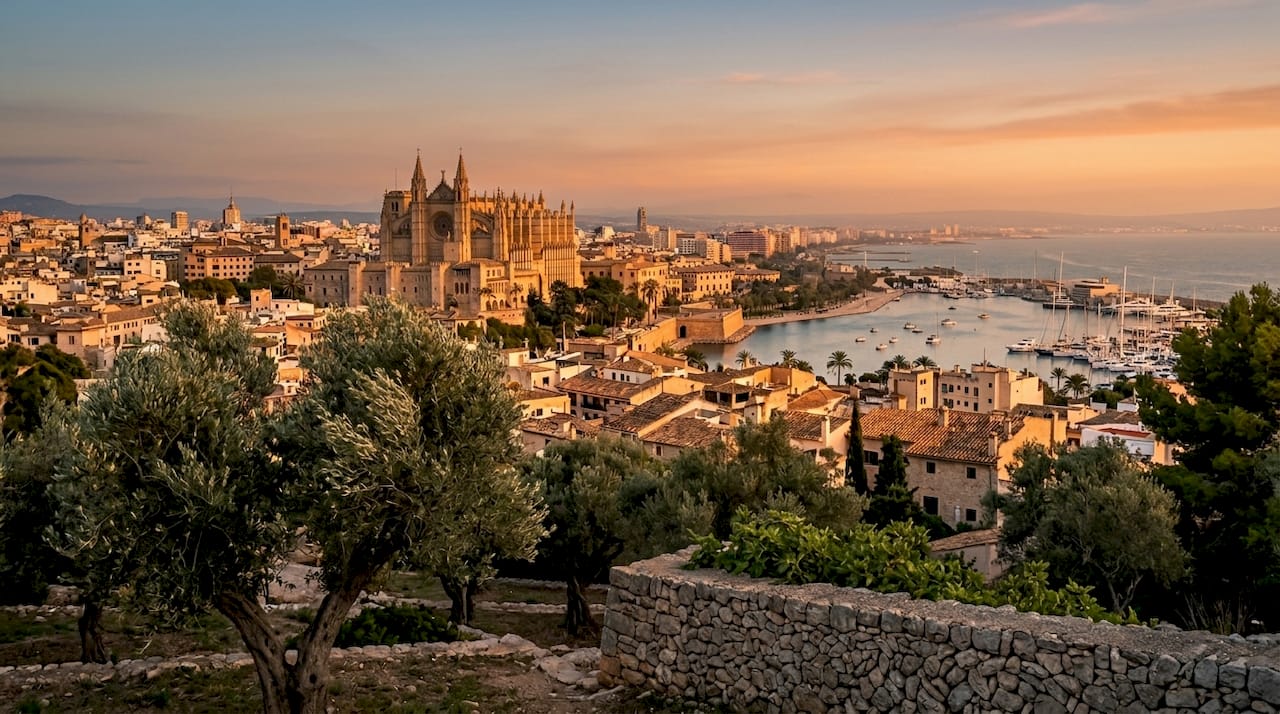
Mallorca stands apart from comparable destinations like the Costa del Sol or the Algarve because it combines island privacy with urban infrastructure. The island delivers over 300 days of sunshine annually, a figure that places it among Europe’s most reliably temperate climates. That consistency matters for families planning school calendars, retirees managing health conditions, and remote workers who want outdoor productivity year-round.
The cultural offer is equally specific. Palma de Mallorca hosts a UNESCO-listed Gothic cathedral, a thriving restaurant scene recognized by Michelin, and an international art community centered around the Fundació Pilar i Joan Miró. Beyond the capital, the island’s interior offers hiking in the Serra de Tramuntana mountain range, a UNESCO World Heritage Site, alongside cycling routes used by professional teams including Team Ineos.
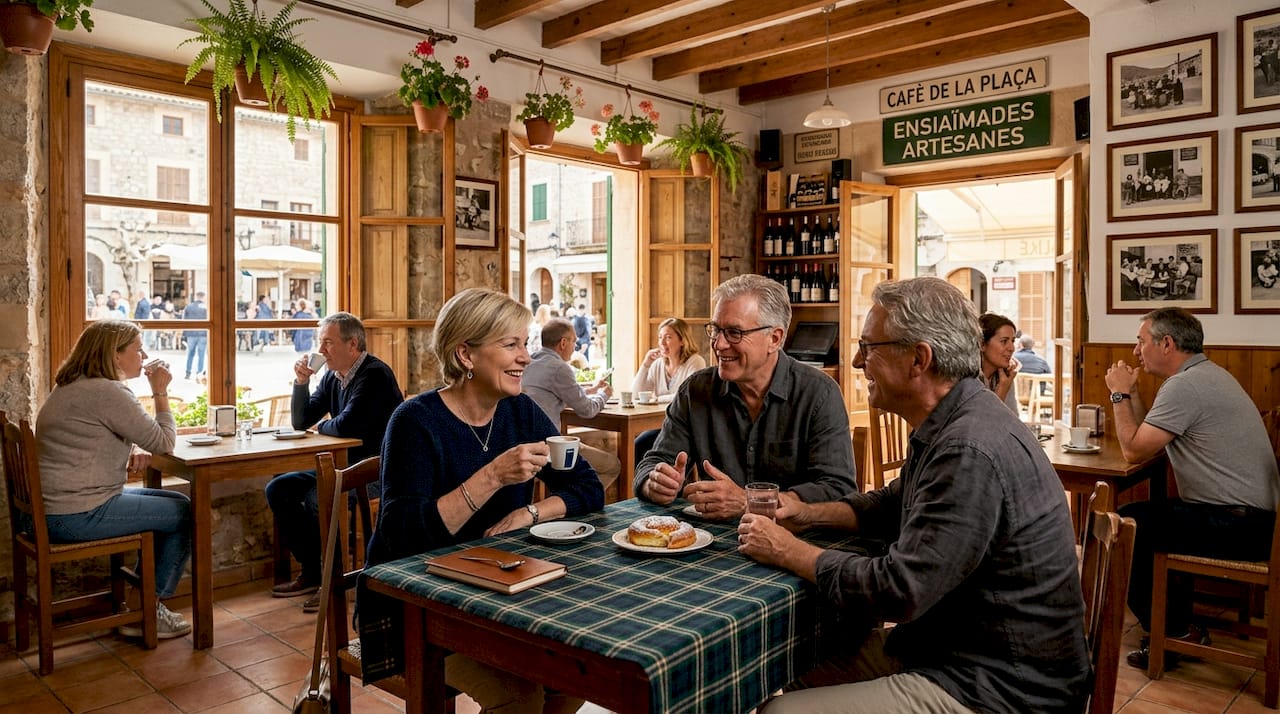
The expatriate community is large and organized. German, British, American, and Scandinavian residents have built schools, social clubs, and professional networks across the island. This infrastructure matters practically. It means you can find English-speaking doctors, international schools like Agora Portals and Baleares International College, and legal advisors fluent in your language before you arrive.
Pro Tip: Match your relocation priorities before you choose a neighborhood. Retirees typically prioritize Andratx or Deiá for quiet luxury, while families with school-age children cluster around Palma’s southwest corridor near international schools.
What legal residency options are available for relocating to Mallorca?
Spain offers two primary residency routes for non-EU citizens relocating to Mallorca: the Non-Lucrative Visa (NLV) and the Digital Nomad Visa. EU citizens face a simpler registration process but still need to complete formal steps to access public services.
Non-Lucrative Visa requirements for 2026
The NLV is designed for retirees and financially independent individuals who do not plan to work in Spain. For 2026, NLV applicants must prove minimum passive income of €28,800 per year for the main applicant, plus €7,200 per year for each dependent. The income threshold is calculated at 400% of Spain’s IPREM, which stands at €600 per month in 2026. You must also hold private health insurance with no co-payments from a Spanish-approved provider.
Documentation requirements include a clean criminal background check, a medical certificate, and proof of accommodation in Mallorca. The visa grants one year of residency, renewable for two-year periods. Proper timing of your application matters significantly. Financial advisors recommend completing personal tax assessments before submitting, since becoming a Spanish tax resident can affect capital gains treatment and pension income from your home country.
Digital Nomad Visa for remote workers
Spain’s Digital Nomad Visa allows non-EU citizens to live in Mallorca while working remotely for foreign companies or freelance clients. It requires private health insurance, proof of employment contracts or freelance agreements, and evidence that the majority of your income originates outside Spain. The visa provides three years of residency with full Schengen travel rights. Spain consistently ranks as the top destination for remote workers globally due to its cost advantage relative to Western European capitals, its healthcare system, and the EU residency pathway the visa provides.
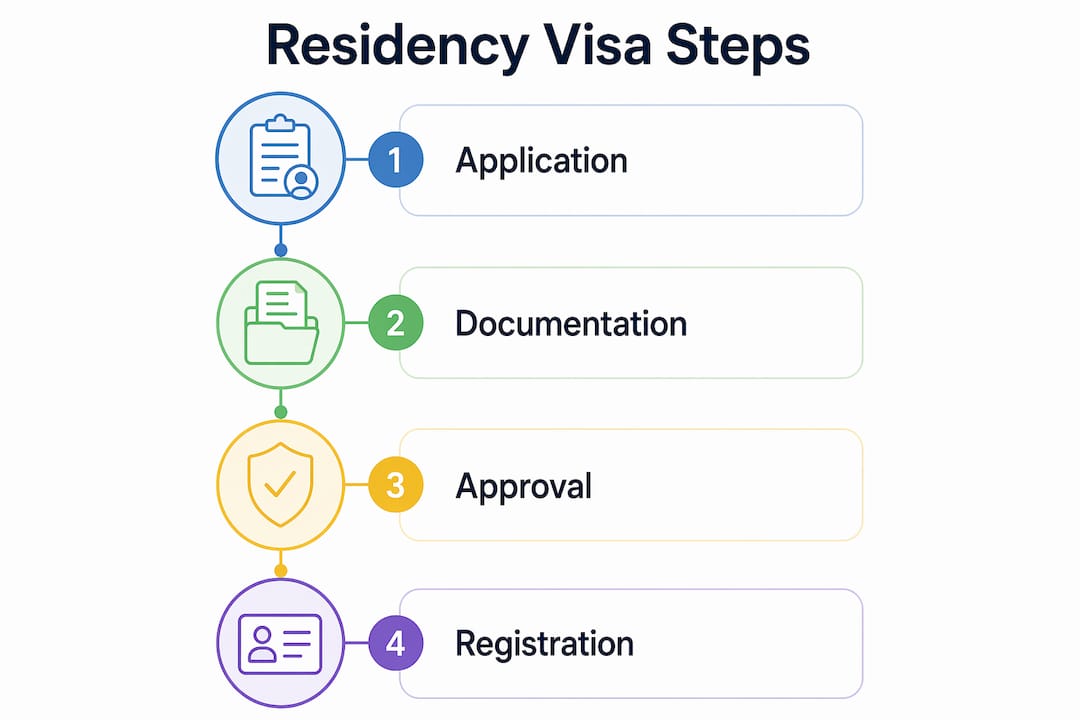
The procedural steps for both visas follow this sequence:
- Gather income documentation, health insurance policy, and criminal background check in your home country.
- Have all documents apostilled and officially translated into Spanish.
- Submit your application at the Spanish consulate in your home country before arriving.
- Upon arrival, register at your local town hall to obtain your padrón certificate.
- Apply for your TIE (Tarjeta de Identidad de Extranjero) at the nearest Oficina de Extranjería.
- Use your padrón and TIE to access public healthcare, enroll children in school, and open Spanish bank accounts.
Registering on the padrón is mandatory upon arrival and required to access healthcare, enroll children in school, and obtain official residency documents. Authorities require a padrón certificate issued within the last three months for most official processes. Skipping this step is the most common mistake new arrivals make, and it delays every subsequent registration.
Pro Tip: Book your padrón appointment at the Palma town hall (Ajuntament de Palma) online before you arrive. Appointment slots fill weeks in advance, and you cannot access public healthcare or apply for your TIE without it.
How does Mallorca’s property market serve American and European buyers?
Mallorca’s real estate market in 2025 and 2026 shows steady demand from international buyers, particularly in the luxury villa and second-home segments above €1M. Supply in prime areas including Puerto Andratx, Son Vida, and the southwest coast remains constrained, which has supported prices through periods of broader European market softness. This supply-demand dynamic makes Mallorca a more predictable investment than comparable coastal markets in Italy or Greece.
The property types available to international buyers span a wide range:
- Luxury villas in the €1.5M to €5M range, typically featuring private pools, sea views, and proximity to Palma or the marina at Puerto Portals.
- Townhouses and fincas in the island’s interior, popular with buyers seeking privacy and agricultural land.
- New-build apartments in Palma’s Santa Catalina and Son Armadans districts, attractive to younger buyers and digital nomads.
- Historic properties in Palma’s Old Town, which combine cultural prestige with strong short-term rental yields.
| Property type | Typical price range | Primary buyer profile |
|---|---|---|
| Luxury villa, southwest coast | €1.5M to €5M+ | American and Northern European families |
| Interior finca | €600K to €2M | Retirees, privacy-focused buyers |
| Palma new-build apartment | €400K to €900K | Digital nomads, younger buyers |
| Palma Old Town historic property | €500K to €2M | Investment-focused buyers |
Independent buyer representation gives international buyers access to the full Mallorca market inventory, not just listings held by a single agency. This matters because many premium properties in Mallorca are listed exclusively with local agencies and never appear on international portals. A buyer agent working across all agencies removes that blind spot and eliminates the conflict of interest that arises when one agent represents both buyer and seller.
Pro Tip: Review the Mallorca property types guide before your first property viewing. Understanding the legal distinctions between urban and rustic land classifications prevents costly surprises during due diligence.
What is the practical workflow for moving to Mallorca?
Relocation success depends on matching your property search to your primary personal driver, whether that is retirement, remote work, or family life. Each driver shapes expected costs, service access, and the neighborhood that fits your life. A retiree prioritizing healthcare proximity needs a different location than a family prioritizing school catchment areas.
The practical workflow for moving to Mallorca breaks into four phases:
-
Pre-move planning (six to twelve months before arrival). Determine your visa category, gather income documentation, secure Spanish-approved health insurance, and consult a cross-border tax advisor. If purchasing property, arrange financing or confirm liquidity, since Spanish mortgage processes for non-residents take longer than buyers expect.
-
Property search and purchase (three to six months before arrival). Engage an independent buyer agent with full market access. Commission a legal review of the property’s title, permits, and any outstanding debts through a Spanish notary. Sign a reservation contract (contrato de arras) to secure the property while due diligence completes.
-
Visa application (three to four months before arrival). Submit your NLV or Digital Nomad Visa application at your home country’s Spanish consulate. Processing times vary by consulate, with U.S. consulates in cities like Miami and New York typically processing within eight to twelve weeks.
-
Post-arrival registration (first two weeks in Mallorca). Register at the padrón, apply for your TIE, open a Spanish bank account, and register with a local GP (médico de cabecera) through the Balearic Islands health service (IB-Salut). Enroll children in school using your padrón certificate as proof of address.
Pro Tip: Open a Spanish bank account before your visa appointment if possible. Banks like CaixaBank and Sabadell have English-speaking international desks in Palma and can process non-resident accounts with your passport and NIE number.
Key takeaways
Mallorca offers Americans and Europeans a legally accessible, climatically superior, and property-secure relocation destination that no other Mediterranean island matches at the same scale of infrastructure and international community.
| Point | Details |
|---|---|
| Residency visa options | The NLV requires €28,800/year income; the Digital Nomad Visa suits remote workers with foreign clients. |
| Padrón registration is mandatory | Register within days of arrival to unlock healthcare, schooling, and TIE application. |
| Property market stability | Luxury villa supply constraints in prime areas support prices for international buyers. |
| Independent buyer agents | Full market access through agents like Uli-lisa removes agency conflicts and inventory gaps. |
| Plan finances before applying | Cross-border tax advice before your visa application protects pension and capital gains treatment. |
What I have learned after years of helping buyers relocate to Mallorca
Most buyers arrive with one question: “Where should I buy?” The better question is: “What life am I building, and which part of Mallorca supports it?” I have seen buyers purchase beautiful villas in Andratx only to realize they wanted the energy of Palma. I have seen families choose Palma apartments and then spend two years looking for a garden. The property is the vehicle. The life is the destination.
What surprises most American buyers is how legally secure the Spanish property system actually is. Title insurance is not standard practice here because the notarial system and land registry (Registro de la Propiedad) provide protections that are, in many respects, more rigorous than U.S. title processes. That said, the system has its own complexity, particularly around rustic land classifications and tourist license regulations. This is exactly where independent buyer representation earns its value. An agent who works only for you, with no listing to protect, will tell you the truth about a property’s limitations before you sign anything.
The buyers who relocate most successfully are the ones who plan eighteen months out, not six. They sort their tax residency implications, they visit Mallorca in November (not July), and they talk to expatriates who have lived there for five years, not five months. Mallorca rewards preparation. The island has been attracting discerning international residents for decades, and the infrastructure for a smooth transition exists. You just need to use it correctly.
— Uli
How Uli-lisa helps international buyers relocate to Mallorca
Uli-lisa operates as an independent buyer agent in Mallorca, representing only buyers with no agency conflicts and full access to the island’s entire property market. For Americans and Europeans planning a relocation, that means a single point of contact who covers luxury villas, investment properties, and second homes across every agency and private listing on the island. Uli-lisa combines AI-powered property search tools with on-the-ground expertise in legal due diligence, neighborhood selection, and the practical logistics of the Mallorca buying process. If you are serious about buying property safely in Mallorca, start with an independent search that covers the full market.
FAQ
What income do I need for Spain’s Non-Lucrative Visa in 2026?
The Non-Lucrative Visa requires minimum passive income of €28,800 per year for the main applicant, plus €7,200 per year for each dependent. You must also hold private health insurance with no co-payments from a Spanish-approved provider.
Can Americans work remotely from Mallorca legally?
Yes. Spain’s Digital Nomad Visa allows non-EU citizens, including Americans, to live in Mallorca while working remotely for foreign employers or freelance clients. The visa provides three years of residency and full Schengen travel rights.
What is the padrón and why does it matter for relocation?
The padrón is the municipal residents’ register, and registering on it is mandatory upon arrival in Spain. It unlocks access to public healthcare, school enrollment, and the TIE residency card application.
How do independent buyer agents differ from standard real estate agents in Mallorca?
Independent buyer agents like Uli-lisa represent only the buyer, with no listings to protect and no seller commissions influencing recommendations. This gives buyers access to the full Mallorca market, including properties listed exclusively with local agencies.
What is the typical price range for luxury properties in Mallorca?
Luxury villas on Mallorca’s southwest coast typically range from €1.5M to €5M and above. Interior fincas and Palma Old Town historic properties generally fall between €500K and €2M, depending on size, condition, and location.
Recommended
- ULI & LISA | Independent Luxury Real Estate Agent Mallorca
- Moving from Canada to Mallorca: The Complete Relocation Guide - ULI & LISA Mallorca Property Blog
- Advantages of Buying in Mallorca: Complete Guide - ULI & LISA Mallorca Property Blog
- Advantages of Buying in Mallorca: Complete Guide - ULI & LISA Mallorca Property Blog