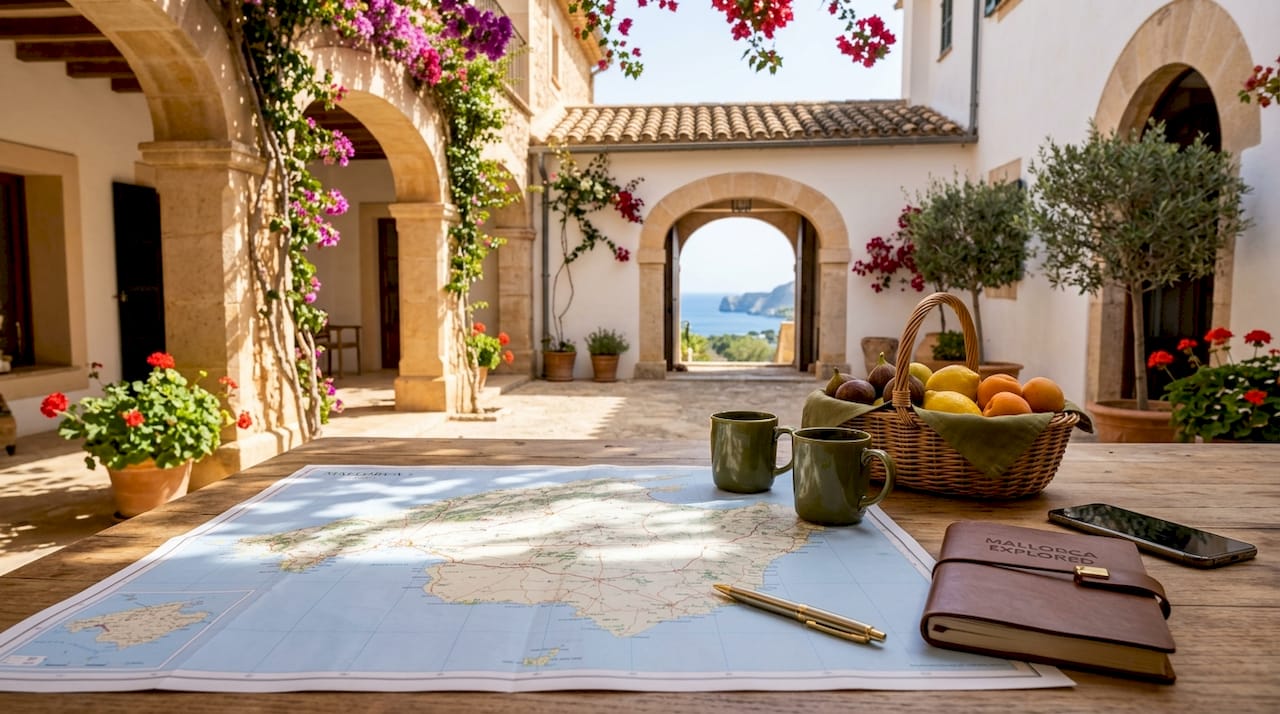
TL;DR:
- Mallorca offers travelers rich cultural experiences, scenic villages, and underground caves beyond its beaches. Visitors should plan visits carefully, considering seasonality and arriving early at popular sites. The island’s diverse attractions appeal to those seeking depth and authenticity rather than just resort relaxation.
Mallorca rewards the curious traveler far more than the beach-seeker who never leaves the resort. When you start mapping out your Mallorca itinerary ideas, the sheer volume of options can feel paralyzing. The island’s top 10 Mallorca experiences span Gothic cathedrals, underground lake systems, mountain villages, and coastal vineyards that most visitors never find. This guide cuts through the noise and delivers the ten experiences that genuinely define what makes Mallorca worth the trip, along with the practical details that separate a great visit from a forgettable one.
Key takeaways
| Point | Details |
|---|---|
| Go beyond the beach | Mallorca’s best places to visit include cathedrals, art foundations, caves, and wine regions most visitors skip. |
| Arrive early at popular sites | Hidden coves and beaches fill fast; arriving before 9 AM protects your experience at peak-season spots. |
| Match attractions to your interests | Cultural travelers, hikers, foodies, and luxury seekers each have a distinct set of top Mallorca sites worth prioritizing. |
| Seasonal timing matters | Late spring and early autumn offer warm conditions with far fewer crowds at top attractions in Mallorca. |
| Property context is real | Knowing which Mallorca neighborhoods anchor the island’s best experiences directly informs smarter real estate decisions. |
How to choose the right top 10 Mallorca experiences for your trip
Not every traveler comes to Mallorca for the same reasons, and the best places to visit in Mallorca shift depending on what you actually value. Before building your itinerary, consider four filtering criteria: cultural significance, natural beauty, accessibility, and the kind of experience you simply cannot replicate elsewhere.
Seasonality shapes everything. The Mallorca Tourism Foundation actively encourages visitors to explore beyond the main resorts and to follow routes that respect both the natural environment and local heritage. That recommendation is practical advice, not just good PR. Summer concentrates the crowds at all the famous spots simultaneously.
Here is a quick framework for planning smart visits:
- Peak season (July and August): Prioritize early morning arrivals at beaches and coves. Book cathedral roof tours and museum tickets weeks in advance.
- Shoulder season (May, June, September, October): The best window for hiking, wine touring, and village exploration. Water is warm, prices are lower, and parking is not a crisis.
- Off-season (November through April): Ideal for Palma city culture, architecture, and the island’s unique “Cathedral of Light” events.
Pro Tip: If your trip covers only 5 to 7 days, pick no more than three geographic zones and go deep rather than racing across the island. Mallorca rewards slowness.
1. Palma Cathedral (La Seu)
Palma Cathedral is the single most architecturally significant building on the island, and it justifies that status. The largest Gothic rose window worldwide contains 1,236 individual stained glass pieces and functions as a mathematically precise solar instrument. On February 2 and November 11 each year, the “Cathedral of Light” alignment projects the rose window’s reflection directly onto the opposite wall in a rare illumination event that attracts architecture enthusiasts from across Europe.
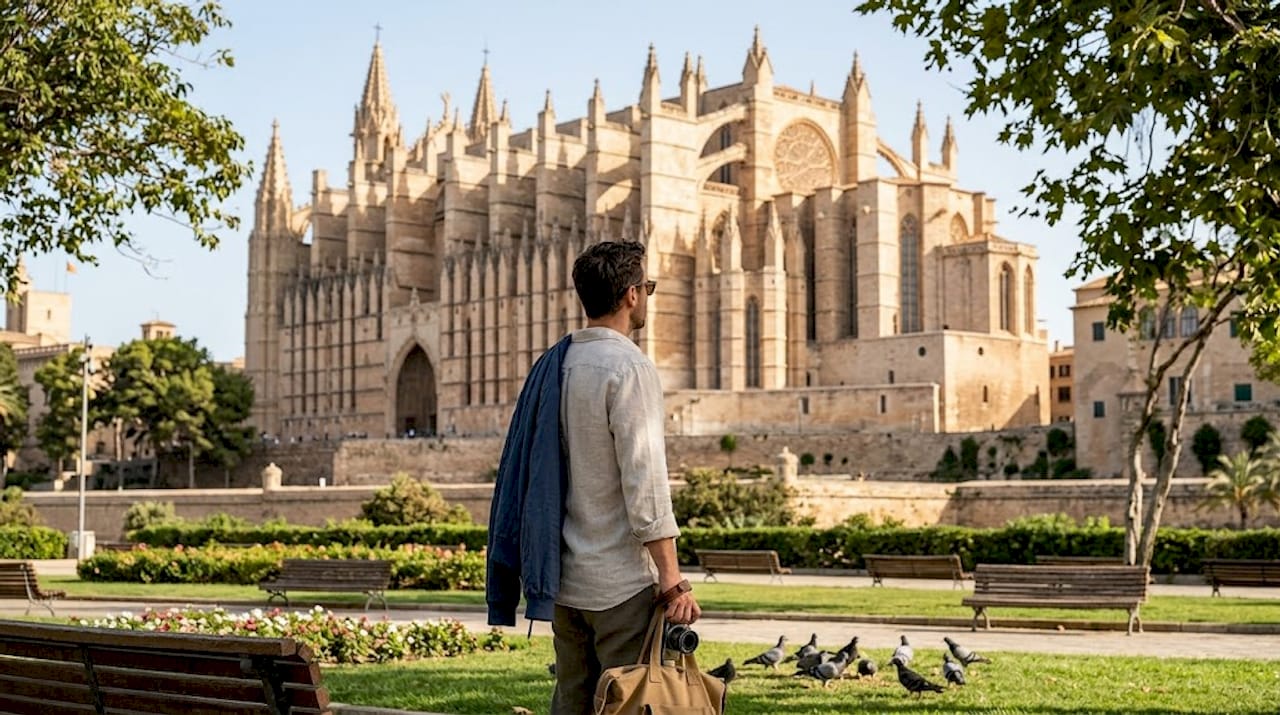
Roof terrace tours require advance booking and sell out quickly. Visit the interior early morning to catch the window light at its most dramatic, well before tour groups arrive.
2. Es Trenc beach
Es Trenc is the island’s most celebrated natural beach, and its reputation as an unspoiled secret is largely outdated. What remains true is that the water temperatures exceed 26°C in August, the sand is fine and white, and the water holds a Caribbean-blue clarity rare in the Mediterranean.
What most visitors underestimate is the parking problem. The main parking lot holds only 400 spaces and fills by mid-morning on summer weekends. Alternatives at Ses Covetes and Sa Ràpita add walking distance. Arrive by 8 AM or visit during late spring and early autumn when warm water without crowds is actually achievable.
3. Vintage train from Palma to Sóller
The narrow-gauge wooden train that runs from Palma to Sóller has operated since 1912 and remains one of the most scenic rail journeys in Spain. The route climbs through the Tramuntana mountain range, crosses thirteen tunnels, and delivers views of terraced olive groves and stone villages that no road trip fully replicates.
Mallorca has nearly 300 beaches and over 100 wineries, but the Sóller train is a different category of experience entirely. Book a morning departure from Palma and connect with the historic tram that continues into Port de Sóller for lunch by the harbor.
4. Miró Mallorca Foundation
Joan Miró spent the last 27 years of his life in Mallorca, and the foundation he built here holds the most personal and experimental work of his career. The studio is preserved exactly as he left it, brushes and all. For anyone serious about modern art, this is not a sightseeing checkbox. It is a genuinely moving space.
The foundation is open Tuesday through Saturday, 10 AM to 6 PM, and Sundays until 3 PM. Tickets run approximately €10 to €12, with last entry 45 minutes before closing. Visit on a Tuesday morning to beat school groups.
5. Alcúdia Old Town
Alcúdia is the best-preserved medieval walled town in Mallorca and a sharp contrast to the resort strip that shares its bay. The 14th-century walls are largely intact, and the interior streets hold Roman ruins, a Gothic church, and an artisan market that runs on Tuesdays and Sundays.
What to do in Mallorca when you want history without the Palma crowds. Alcúdia answers that question directly. It pairs well with a morning visit to the nearby Albufera Natural Park for birdwatching.
6. Cap de Formentor
The Formentor Peninsula stretches into the sea at Mallorca’s northern tip and delivers the island’s most dramatic coastal scenery. The lighthouse at the end of a 20-kilometer winding road sits at 384 meters above sea level, with sheer cliffs dropping directly into deep blue water on both sides.
Go early. The road to Cap de Formentor is restricted to private vehicles from June through September between 10 AM and 7 PM. A shuttle bus operates from Port de Pollença during those hours. Missing this detail will cost you the best viewpoint on the island.
7. Deià village
Deià has attracted artists, writers, and musicians since Robert Graves settled here in 1929. The stone village climbs a hillside in the Tramuntana range with the sea visible below and olive groves framing every photograph. It is genuinely beautiful, and the residents know it. Prices at the restaurants reflect the clientele.
For travelers researching Mallorca property hotspots, Deià represents one of the island’s most consistently valued micro-markets. Properties here hold price through market cycles in ways that purely resort-focused areas do not.
8. Caves of Drach (Coves del Drac)
The Drach Caves near Porto Cristo contain one of the largest underground lakes in the world. Lake Martel stretches 177 meters in length and sits 12 meters below the cave floor. The guided tour concludes with a live classical music concert performed on boats floating across the lake, which sounds gimmicky and turns out to be genuinely extraordinary.
Tours run several times daily, and booking in advance is strongly recommended in summer. The caves maintain a constant 21°C, making them a good option on a hot midday when outdoor sites become uncomfortable.
9. Pollença and the Calvari steps
Pollença is a working Mallorcan town rather than a tourist set-piece, and that distinction matters. The famous Calvari staircase climbs 365 steps to a small chapel with panoramic views over the surrounding plain and mountains. The weekly Sunday market is among the most authentic on the island, drawing locals rather than predominantly tourists.
Hikers should note that Pollença serves as a gateway to the Tramuntana routes, including the Ruta de Pedra en Sec long-distance trail. The best areas to buy property near Pollença command premiums for exactly these lifestyle qualities: mountain access, village character, and year-round liveability.
10. Binissalem and Mallorca’s wine country
Binissalem holds Mallorca’s primary wine appellation and produces some of Spain’s most distinctive bottles, built around the indigenous Manto Negro and Premsal Blanc grape varieties. The town is 30 minutes from Palma by train and offers a very different afternoon than anything on the coast.
Several wineries near Binissalem open for tastings and cellar tours by appointment, including Bodegues José L. Ferrer, one of the most established producers on the island. Places to eat in Mallorca’s interior, particularly around Binissalem and the neighboring town of Consell, tend to serve more authentic local cuisine at better prices than Palma’s tourist-facing restaurants.
Comparison table: practical snapshot of the top 10
| Attraction | Type | Best season | Crowd risk | Advance booking needed |
|---|---|---|---|---|
| Palma Cathedral | Architecture / culture | Year-round | Moderate | Yes (roof tour) |
| Es Trenc beach | Beach / nature | May, June, Sept, Oct | Very high in summer | No |
| Sóller train | Scenic transport | Year-round | High in summer | Yes |
| Miró Foundation | Art / museum | Year-round | Low to moderate | Recommended |
| Alcúdia Old Town | History | Spring, autumn | Low | No |
| Cap de Formentor | Scenic / nature | Spring, autumn | High in summer | No (shuttle required) |
| Deià village | Culture / scenery | Year-round | Moderate | No |
| Caves of Drach | Nature / underground | Year-round | High | Yes |
| Pollença | Town / hiking | Spring, autumn | Low | No |
| Binissalem wines | Food and drink | Year-round | Very low | Yes (wineries) |
Beyond the top 10: lesser-known experiences worth adding
Once you have covered the primary list, Mallorca offers a second layer of experiences that most visitors never reach. These are particularly valuable if you plan a trip of ten days or more.
- Cala Figuera: A working fishing village on the south coast with boats moored directly below whitewashed houses. Authentic in a way that larger resorts have largely lost.
- Salt flats near Es Trenc: The Salines d’en Roig preserve a landscape that looks genuinely otherworldly, particularly at golden hour when flamingos feed in the shallows.
- Santa Catalina neighborhood, Palma: The city’s best food market and the highest concentration of independent restaurants per block. This is where Palma’s residents actually eat.
- Luxury beach clubs: Puro Beach and similar venues near Palma offer a polished, design-conscious beach day that suits travelers who want comfort alongside scenery.
- La Ruta de Pedra en Sec: A 150-kilometer waymarked trail through the Tramuntana range, available in stages for day hikers or as a multi-day expedition for serious walkers.
Pro Tip: Hidden coves like Caló des Moro become overcrowded after 9:30 AM in summer. Set your alarm and arrive at first light. The water is glassy, the light is perfect, and you may have it to yourself for an hour.
My honest take on experiencing Mallorca properly
I’ve watched a lot of travelers come to Mallorca with a list of ten beaches and leave feeling like they missed something. They did. The island’s cultural depth, its village life, its food, and its architecture are what make it worth returning to year after year.
In my experience, the visitors who get the most out of Mallorca treat it the way the Mallorca Tourism Foundation recommends: they move slowly, they choose one or two regions per day, and they accept that the famous spots require a strategy rather than a spontaneous approach.
The other thing I’ve noticed is that the people most likely to fall in love with Mallorca deeply enough to consider owning something here are rarely motivated purely by beach access. They respond to the combination of European cultural seriousness and Mediterranean ease. A morning at the Miró Foundation followed by lunch in a Tramuntana village and an evening in Palma’s old quarter. That sequence tells you more about the island’s investment appeal than any market report.
Timing visits to avoid crowds is not just good travel advice. It reflects an understanding of how Mallorca actually functions across the calendar year, which is exactly the kind of knowledge that matters when you are evaluating a property purchase for long-term use.
— Uli
Discover Mallorca’s best properties through Uli-lisa
Understanding what makes Mallorca worth visiting is the first step toward understanding what makes it worth owning. The same neighborhoods that anchor the top attractions in Mallorca, Palma’s historic center, the Tramuntana villages, the south coast near Es Trenc, also represent the island’s most stable and sought-after real estate markets.
Uli-lisa are independent buyer agents who represent only you, with full access to every property across Mallorca’s market. For international buyers, particularly those from the United States, that means no agency conflict, no filtered listings, and no pressure to favor one developer over another. Our AI-powered property search covers the entire island and pairs with personalized guidance built around your lifestyle priorities.
If you’ve read this far, you already know which parts of Mallorca resonate with you. The next step is finding out whether a property in those locations makes sense for your situation. Start that conversation at uli-lisa.com.
FAQ
What are the top attractions in Mallorca?
Palma Cathedral, Es Trenc beach, the vintage Sóller train, the Miró Mallorca Foundation, and the Caves of Drach consistently rank among the best places to visit in Mallorca for first-time and repeat visitors.
When is the best time to visit Mallorca’s most popular sites?
Late spring (May and June) and early autumn (September and October) offer warm conditions, manageable crowds, and good prices. Summer visits require early arrivals and advance bookings at most top sites.
How do I avoid crowds at Es Trenc beach?
Arrive by 8 AM or visit outside July and August. The main parking lot fills by mid-morning in peak season, so early arrival or parking in nearby towns like Ses Covetes is strongly advised.
Is Mallorca worth visiting beyond the beach resorts?
Absolutely. Mallorca has nearly 300 beaches and over 100 wineries, plus a medieval capital, mountain villages, world-class art, and underground cave systems that most resort visitors never reach.
How long do you need to see the top 10 Mallorca sites?
A well-planned 10-day trip covers all ten sites comfortably with time for meals and exploration. A 5-day trip requires prioritizing by geographic zone and interest type.
Recommended
- 7 Best Areas to Buy Property in Mallorca (2025 Edition) - ULI & LISA Mallorca Property Blog
- 7 Must-Have Mallorca Neighborhoods for Luxury Living - ULI & LISA Mallorca Property Blog
- 7 Must-Have Mallorca Neighborhoods for Luxury Living - ULI & LISA Mallorca Property Blog
- 8 Top Amenities for Families in Mallorca You Need to Know - ULI & LISA Mallorca Property Blog