
Searching for a luxury villa in Mallorca is a dream for many American retirees, but few anticipate the intricate tax rules and legal steps involved. Cross-border property ownership brings unique challenges, especially since the United States taxes worldwide income, including any earnings from Spanish real estate. Understanding Spanish property taxation and legal compliance is the key to protecting your investment, minimizing surprises, and ensuring seamless ownership in one of Europe’s most desirable destinations.
Key Takeaways
| Point | Details |
|---|---|
| Understanding Tax Types | Spain has various property taxes including IBI, transfer tax, stamp duty, and capital gains tax, differing from American expectations. |
| Impact of Residency Status | Your tax obligations change significantly based on whether you are a resident or non-resident, with potential savings for residents. |
| Hidden Ownership Costs | Anticipate additional annual expenses such as community fees and legal costs, which can significantly increase overall ownership costs. |
| Compliance with Legal Requirements | Proper legal due diligence, including registration and translation of documents, is crucial to prevent future liabilities and ensure valid property ownership. |
Mallorca Real Estate Taxation Explained
Property taxation in Spain operates differently than what most American buyers expect. Understanding these differences is critical before purchasing your Mallorca villa.
Spain levies taxes on immovable property like land and buildings through a system that varies by region and municipality. These property taxes in Spain contribute significantly to local government revenues and fund community services throughout the Balearic Islands.
How Spanish Property Taxes Work
Unlike the United States, Spain’s property tax system includes multiple layers:
- IBI (Impuesto sobre Bienes Inmuebles) – Annual property tax paid to your municipality, typically 0.4–1.1% of cadastral value
- Transfer Tax – Paid when you purchase property, ranging from 6–8% depending on the region
- Stamp Duty – Additional tax on the property deed, approximately 1.5% of the purchase price
- Capital Gains Tax – Applied when you sell the property if it’s not your primary residence
The cadastral value (official assessed value) determines your IBI payment, not the actual purchase price. This means your annual tax bill may differ significantly from what you paid for the property.
Spanish property taxes fund essential community services and municipal maintenance—understanding your obligations helps you budget accurately for ownership costs.
Key Differences from American Property Taxation
American homeowners are accustomed to property tax deductions on federal tax returns. Spain operates under a different framework.
Spain doesn’t offer federal tax deductions for property taxes as the United States does. Your IBI payments are not deductible on your American taxes, though you may claim certain foreign real estate expenses depending on your visa status and residency classification.
Rental income from your Mallorca property is taxable in both Spain and the United States. You’ll need to report this income to both tax authorities and understand how Spain’s non-resident property owner taxation works.
Non-Resident vs. Resident Taxation
Your tax obligations shift dramatically based on residency status. Non-residents pay a 19% tax on rental income plus an 18% wealth tax on property value above €600,000 (approximately $650,000 USD). Residents benefit from lower rates and different deduction structures.
Because property taxation principles vary across jurisdictions, your individual situation determines which rates apply. Many American investors establish residency specifically to reduce their annual tax burden.
Obtaining a permanent residency visa or becoming a fiscal resident in Spain can reduce your effective tax rate by 40–60%. This strategy requires professional guidance to ensure compliance with both Spanish and American tax law.
Here’s how the main Spanish property taxes compare for non-residents and fiscal residents:
| Tax Type | Non-Resident Rate | Fiscal Resident Rate | Tax Base Used |
|---|---|---|---|
| IBI (Annual Tax) | 0.4–1.1% of cadastral value | 0.4–1.1% of cadastral value | Cadastral value |
| Rental Income Tax | 19% flat | 19–47% progressive | Net taxable rental income |
| Wealth Tax | 18% over €600,000 | Lower, higher exemption | Property value |
| Capital Gains Tax | 19–24% | 19–23% | Gain on sale |
This summary helps clarify how tax liabilities differ based on your residency status.
Hidden Costs American Buyers Miss
Most Americans underestimate the true cost of property ownership in Mallorca. Beyond annual IBI payments, you’ll encounter:
- Community fees (for apartments or properties in gated communities)
- Water and sewage taxes
- Trash collection fees
- Annual professional valuations
- Legal and accounting fees for tax compliance
These costs can add an additional €2,000–€6,000 annually to your ownership expenses, depending on the property type and location.
Pro tip: Request a complete tax breakdown from a Spanish accountant before finalizing your purchase—this reveals the true annual cost of ownership and helps you make an informed investment decision.
Spanish Property Tax Types and Rates
Spain’s property tax structure is more complex than a single flat rate. You’re dealing with multiple taxes applied at different stages of ownership, each with its own calculation method and timeline.
The Main Property Taxes You’ll Pay
When you own real estate in Spain, recurrent property taxes on ownership represent your largest annual obligation. Beyond that, transfer taxes kick in at purchase, and capital gains taxes apply when you sell.
Here’s the breakdown of what you’ll encounter:
- IBI (Annual Property Tax) – 0.4–1.1% of cadastral value, paid yearly to your municipality
- Transfer Tax (Transmisiones Patrimoniales) – 6–8% at purchase, varies by region
- Stamp Duty (Actos Jurídicos Documentados) – 1.5% on property deed documentation
- Capital Gains Tax – 19–45% depending on your residency status and holding period
- Wealth Tax (Impuesto sobre el Patrimonio) – 18% on non-resident properties above €600,000
The cadastral value is what matters most for annual IBI calculations. This official assessment determines your recurring tax liability, not the price you actually paid.
Understanding Cadastral Values vs. Market Prices
This is where many Americans get surprised. Your property might be worth €2 million on the open market, but the cadastral value could be significantly lower.
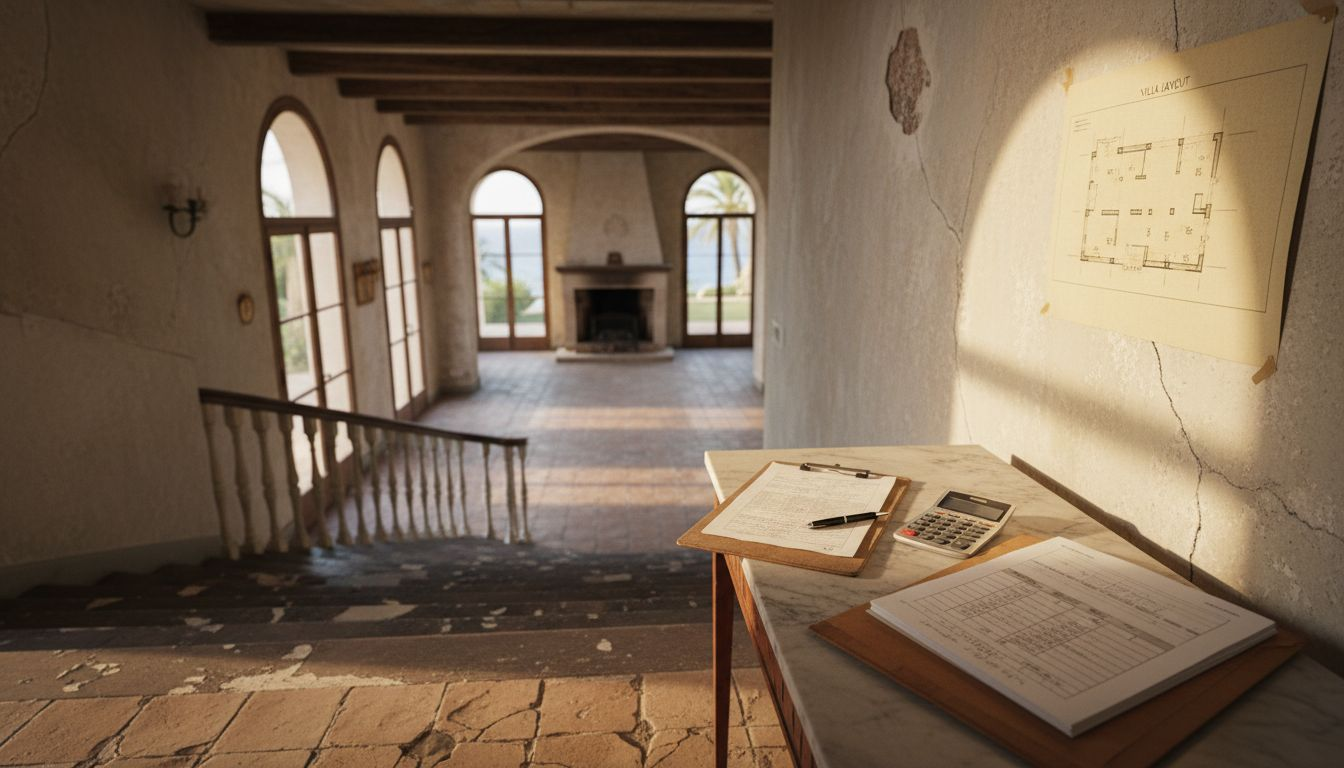
Spanish municipalities assess cadastral values using formulas based on location, size, and property condition. These assessments update periodically, sometimes lagging behind market reality by years.
Your annual IBI tax is calculated on this officially registered value. If the cadastral value sits at €1.2 million while your villa is actually worth €2 million, you’re only paying IBI on the lower figure.
Understanding cadastral values saves you thousands in annual taxes—they’re frequently lower than market prices, which works in your favor as a property owner.
Regional Variations in Tax Rates
Not all Spanish regions charge identical rates. The Balearic Islands has its own tax structure separate from mainland Spain.
Property tax systems across Spain reflect regional and municipal variations that significantly impact your total tax bill. A property in one area might cost you 0.4% annually in IBI while another location charges 1.1%.
Transfer taxes also vary:
- Catalonia: 11% (highest in Spain)
- Balearic Islands: 6–7%
- Andalusia: 7%
- Valencia: 7%
- Madrid: 6%
These percentages apply to your purchase price, not the cadastral value. In Mallorca specifically, expect 6–7% transfer tax plus additional stamp duties.
Regional transfer taxes at purchase can impact your total costs significantly:
| Spanish Region | Transfer Tax Rate (%) | Typical Buyer Impact |
|---|---|---|
| Catalonia | 11 | Highest cost, increases cash needed |
| Balearic Islands | 6–7 | Moderate, applies in Mallorca |
| Andalusia | 7 | Mid-range, similar to Valencia |
| Valencia | 7 | Matches Andalusia |
| Madrid | 6 | Lowest among major regions |
Check your property’s region to estimate up-front taxes when budgeting.
Timeline of Tax Obligations
You don’t pay everything at once. Taxes arrive on different schedules throughout ownership:
- At purchase – Transfer tax and stamp duty (6–8% total)
- First January after purchase – IBI registration begins
- Annually – IBI payment due (varies by municipality but typically in spring)
- Upon sale – Capital gains tax assessment
Many Americans miss that some taxes apply retroactively. If you purchase in October, you might receive an IBI bill the following January for the entire year, prorated from your purchase date.
Non-Resident Wealth Tax Considerations
Non-residents face an additional burden. Spain’s wealth tax applies to non-residents owning property worth more than €600,000, regardless of annual income.
This 18% wealth tax is charged on the property value itself, not rental income or gains. It’s separate from capital gains tax and IBI, making it a significant ongoing cost for non-resident investors.
Becoming a fiscal resident eliminates this wealth tax, which explains why many American investors pursue residency status specifically for tax optimization.
Pro tip: Request a detailed tax projection from a Spanish accountant showing all four tax types (IBI, transfer tax, stamp duty, and wealth tax) for your specific property and region before committing to purchase—this reveals true ownership costs.
Cross-Border Tax Implications for Americans
Owning property in Mallorca as an American creates a complex tax situation that most people underestimate. The United States taxes its citizens on worldwide income, which means your Spanish rental income and property gains are fully taxable back home.
The Worldwide Income Tax Rule
U.S. citizens and resident aliens abroad must report all income earned globally, regardless of where you live or where the income originates. This applies to rental income from your Mallorca villa, capital gains when you sell, and even imputed income from personal use properties.
You can’t escape U.S. taxation by living abroad or becoming a Spanish resident. The IRS considers you a U.S. taxpayer for life unless you formally renounce your citizenship, which is rare and expensive.
This creates potential double taxation: Spain taxes your income, and the United States taxes it again. Without proper planning, you could pay 45%+ in combined taxes on your rental profits.
Foreign Tax Credits and Deductions
The IRS offers some relief through foreign tax credits. If you paid Spanish income tax on rental revenue, you can generally credit that amount against your U.S. tax liability dollar-for-dollar.
Here’s what actually works:
- Foreign Tax Credit – Dollar-for-dollar credit for Spanish taxes paid on foreign-source income
- Foreign Earned Income Exclusion – Excludes up to $120,000 of foreign earned income (doesn’t apply to rental income)
- Standard Deduction – Available whether you’re in America or abroad
- Rental Property Deductions – Mortgage interest, repairs, insurance, property management fees
The foreign tax credit is your primary tool. If Spain takes 19% and the U.S. would take 37%, you pay Spain’s 19% and claim a credit reducing your U.S. bill accordingly.
Foreign tax credits prevent double taxation but require careful recordkeeping—you must document all Spanish taxes paid to claim credits with the IRS.
FBAR and FATCA Reporting Requirements
Beyond income taxes, you face reporting requirements that carry substantial penalties for non-compliance. These are separate from your regular tax return.
FBAR (Foreign Bank Account Report) requires you to report foreign financial accounts exceeding $10,000. Your Spanish bank accounts, investment accounts, and even some property-related escrow accounts qualify.
FATCA (Foreign Account Tax Compliance Act) requires reporting of foreign financial assets exceeding $100,000 (lower thresholds if married filing separately). These penalties are severe: up to $10,000 per unreported account, or 50% of the account balance.
Missing these filings is a common mistake among American expats. The IRS actively pursues these cases because they’re easy to detect through international banking cooperation.
Rental Income Reporting Complexity
Spain requires you to report rental income to Spanish tax authorities. The United States requires you to report the same income to the IRS. Your property management company will issue tax documents in Spain; you’ll need to convert everything to U.S. dollars for American filing.
Currency exchange fluctuations add another layer. If you received €50,000 in rental income but the euro weakened against the dollar, your reportable U.S. income might be lower than the euro amount received.
You must file Spanish tax returns (Modelo 210 for rental income) and U.S. Schedule E forms. Both require consistent property valuations, depreciation calculations, and expense documentation.
The Residency Factor
Your residency status dramatically shifts your tax burden. Non-resident property owners face Spain’s 19% withholding tax on rental income plus additional wealth taxes. Spanish residents enjoy lower rates and different deduction structures.
Becoming a fiscal resident in Spain can reduce your overall tax rate by 30-40% because Spanish residents access more deductions and lower tax brackets than non-residents.
Pro tip: Hire a cross-border tax specialist experienced with Americans owning Spanish property before your first rental season—they’ll structure your ownership to minimize taxes on both sides of the Atlantic and ensure FBAR/FATCA compliance.
Complying With Spanish Legal Requirements
Spain operates under a civil law system that differs fundamentally from American common law. This means property transactions follow strict legal procedures, and skipping steps can invalidate your purchase or create liability issues later.
Property Registration and Ownership Verification
Before signing anything, you must verify the property’s legal status in Spain’s official registry. Obtaining property information extracts from the land registry reveals ownership history, mortgages, liens, and any encumbrances that might affect your purchase.
This registry search is non-negotiable. It protects you from buying property with hidden debts or disputed ownership. Spanish sellers sometimes have tax debts or family claims against their properties—the registry exposes these issues before you commit funds.
Your lawyer obtains these extracts through the official registry system. You’ll receive a complete property history showing previous owners, any mortgages, and outstanding legal claims. This document is your proof of clean title before closing.
The Role of Spanish Notaries
Spain requires a notary public (notario) to authenticate every property transaction. This is not optional—it’s a legal requirement that protects both buyer and seller.
Spanish notaries certify documents, identities, and contracts as official legal representatives of the state. They verify that you understand what you’re signing, confirm your identity, and ensure the transaction complies with Spanish law.
The notary is neutral—they don’t represent you or the seller. Their job is ensuring the transaction is legally valid. They review all documents, confirm funding is available, verify the seller’s ownership, and register your purchase with the government.
Notaries charge fixed fees based on property price, typically 0.5–1% of the purchase price. This is non-negotiable and standard across Spain.
Spanish notaries are government-appointed legal officials—their certification makes your property ownership legally recognized and protects you from future disputes.
Document Translation Requirements
As a non-resident foreigner, you’ll encounter Spanish-language documents that must be officially translated. Spain accepts certified translations from accredited translators.
You need translations for:
- Your passport or identification documents
- Your home country’s property deed (if transferring ownership from another country)
- Power of attorney documents
- Any personal identification documents required by Spanish authorities
Don’t use Google Translate or casual translation services. Spanish authorities require certified translations from officially accredited translators. These cost €50–€150 per document but are legally required.
Tax Identification and Reporting
Spain requires you to obtain an N.I.E. (Número de Identidad de Extranjero), which is a tax identification number for foreigners. You’ll need this to open bank accounts, sign contracts, and file taxes.
You must report your property to Spanish tax authorities and register for property taxes. This includes:
- Registering with Spanish tax authorities (Hacienda)
- Obtaining your N.I.E. number
- Opening a Spanish bank account for tax payments
- Filing annual property tax returns
Your lawyer typically handles these registrations, but you’re ultimately responsible for compliance. Failure to register creates tax liability and potential penalties.
Legal Due Diligence Checklist
Before signing purchase documents, verify these critical items:
- Property has clear title with no liens or mortgages
- No outstanding municipal debts or property taxes owed by seller
- Building permits are valid for any renovations or additions
- Property complies with local zoning regulations
- Utilities are legal and properly connected
- No environmental restrictions or heritage designation issues
Missing any of these creates problems that cost thousands to resolve after purchase. Your lawyer must complete this verification before you’re legally obligated.
Pro tip: Hire a Spanish lawyer at least three weeks before your intended closing date to complete legal due diligence, property registry searches, and document preparation—rushing this process creates costly mistakes that are difficult to undo.
Common Pitfalls and Costly Tax Mistakes
Most American property owners in Mallorca make at least one tax mistake that costs thousands in penalties and back taxes. These aren’t innocent errors—the IRS and Spanish authorities take them seriously.
Failing to Report Foreign Financial Accounts
This is the most common and most expensive mistake. Americans with Spanish bank accounts exceeding $10,000 must file FBAR (Foreign Bank Account Report) annually. Many property owners skip this because they think it only applies to investment accounts.
Your Spanish bank account qualifies. Your escrow account during closing qualifies. Your property management company’s account holding your rental deposits qualifies. Missing even one triggers automatic $10,000 penalties per unreported account, regardless of whether you owed taxes.
The IRS discovers these violations through automatic reporting agreements with Spanish banks. You cannot hide foreign accounts anymore—banks report them directly to the IRS.
Foreign account reporting is non-negotiable—the IRS actively pursues these cases because they’re easy to detect and produce revenue through penalties.
Claiming Housing Deductions Incorrectly
Foreign housing exclusions and deductions create confusion because most Americans misunderstand the limits and eligibility rules. You cannot claim unlimited housing expenses.
The foreign housing exclusion limits your deductible housing expenses to a maximum amount set annually by the IRS (approximately $17,000 in 2024). Many Americans think they can deduct all property expenses—mortgage, property tax, insurance, repairs—and are shocked when the IRS denies the excess.
You also cannot claim both a foreign housing exclusion and a foreign tax credit for the same income. Claiming both triggers an automatic audit.
Rental property expenses work differently than owner-occupied housing. Your Mallorca villa generates rental income, not excluded earned income, making housing deductions unavailable. You can deduct mortgage interest and property taxes on Schedule E, but the foreign housing limits don’t apply.
Not Filing Spanish Tax Returns
Spain requires property owners to file annual income tax returns reporting rental income, even if you claim non-resident status. Americans frequently skip this, thinking their U.S. filing satisfies both countries.
Spain and the United States share tax information. Spanish authorities know exactly who owns property and expects rental income. Filing false returns or no returns creates penalties that exceed your actual tax liability.
Non-residents must file Modelo 210 forms reporting rental income. Failure to file results in penalties equal to 50% of the unpaid tax. A €10,000 underpayment becomes a €5,000 penalty on top of the €10,000 owed.
Missing Currency Conversion Requirements
You received rental income in euros. The IRS requires you to report it in U.S. dollars using the exchange rate on the date you received payment. Many Americans use the year-end rate or average annual rate, which creates discrepancies.
Using the wrong conversion rate causes your reported income to differ from what Spanish authorities reported. This triggers IRS inquiries and potential penalties for underreporting income.
You must maintain conversion documentation showing the exchange rate you used. Professional currency conversion tools like OANDA or your bank’s rate are acceptable, but you need proof.
Underestimating True Ownership Costs
Americans often buy properties thinking only about property price and mortgage, then get shocked by annual costs:
- IBI property tax (0.4–1.1% of cadastral value)
- Community fees (€200–€1,000 monthly for apartments)
- Capital gains tax (19–45% on profit when selling)
- Wealth tax (18% annual on non-resident properties above €600,000)
- Professional accounting fees (€1,000–€3,000 annually)
These costs are cumulative and often exceed annual rental income on luxury properties. A €2 million villa might generate €60,000 in annual rental income but cost €40,000+ in taxes and fees.
Failing to account for these expenses causes buyers to lose money on properties they expected to profit from.
Not Establishing Residency Status
Many Americans own property as non-residents without understanding the tax cost. Non-resident status triggers wealth tax plus higher income tax rates on rental earnings.
Becoming a fiscal resident in Spain can reduce your total tax burden by 30–60% annually. Yet most Americans never pursue residency because they don’t understand the financial benefit.
Pro tip: Have a cross-border tax specialist review your property structure before your first rental season—they’ll identify which mistakes you’re making and restructure your ownership to recover thousands in prior-year taxes through amended filings.
Navigate Mallorca Real Estate Taxes with Confidence and Ease
Buying property in Mallorca involves navigating complex taxes such as IBI, transfer tax, wealth tax, and the challenges of residency status that can affect your overall costs. Many American buyers face the frustration of unexpected expenses, intricate reporting requirements, and the risk of costly mistakes when handling cross-border taxation and property ownership details. Understanding terms like cadastral value, foreign tax credits, and FBAR can feel overwhelming without expert guidance.
At ULI & LISA, we specialize in assisting American clients to find and purchase luxury properties while simplifying these tax complexities. Our comprehensive property search combines cutting-edge AI-powered tools with personalized support from local experts who understand Spanish property laws and cross-border tax implications. Don’t risk your investment by going it alone. Discover tailored strategies that align with your financial goals and receive trustworthy advice to minimize taxes and avoid pitfalls.
Take control of your Mallorca real estate journey today by exploring how we can support your purchase and ongoing ownership needs at ULI & LISA. Ready to invest smartly while protecting your assets? Contact us now to ensure your property experience is seamless and secure.
Frequently Asked Questions
What are the main property taxes I need to consider when buying real estate in Mallorca?
The main property taxes include the IBI (annual property tax), transfer tax (6-8% at purchase), stamp duty (approximately 1.5%), and capital gains tax upon selling the property. Additionally, non-residents may be subject to a wealth tax on properties valued over €600,000.
How does residency status affect my tax obligations when owning a property in Mallorca?
Your residency status significantly impacts your tax obligations. Non-residents face a 19% tax on rental income and an 18% wealth tax, while residents benefit from lower rates and deductions, potentially reducing their overall tax burden by 30-60%.
Are property taxes in Mallorca deductible on my U.S. tax return?
No, property taxes paid in Mallorca are not deductible on your U.S. federal tax return. However, you may claim certain foreign real estate expenses based on your residency classification and visa status.
What hidden costs should American buyers be aware of when purchasing property in Mallorca?
In addition to property taxes, American buyers should consider community fees, water and sewage taxes, trash collection fees, and legal and accounting fees for tax compliance. These additional costs can total €2,000-€6,000 annually, depending on the property type and location.
Recommended
- Mallorca Real Estate Taxes – What U.S. Buyers Need to Know - ULI & LISA Mallorca Property Blog
- Mallorca Real Estate Taxes – What U.S. Buyers Need to Know - ULI & LISA Mallorca Property Blog
- Mallorca Real Estate Taxes – What U.S. Buyers Need to Know - ULI & LISA Mallorca Property Blog
- Mallorca Real Estate Taxes – What U.S. Buyers Need to Know - ULI & LISA Mallorca Property Blog
- Real Estate Exit Strategies: Maximize Your Returns | Bold Street AI