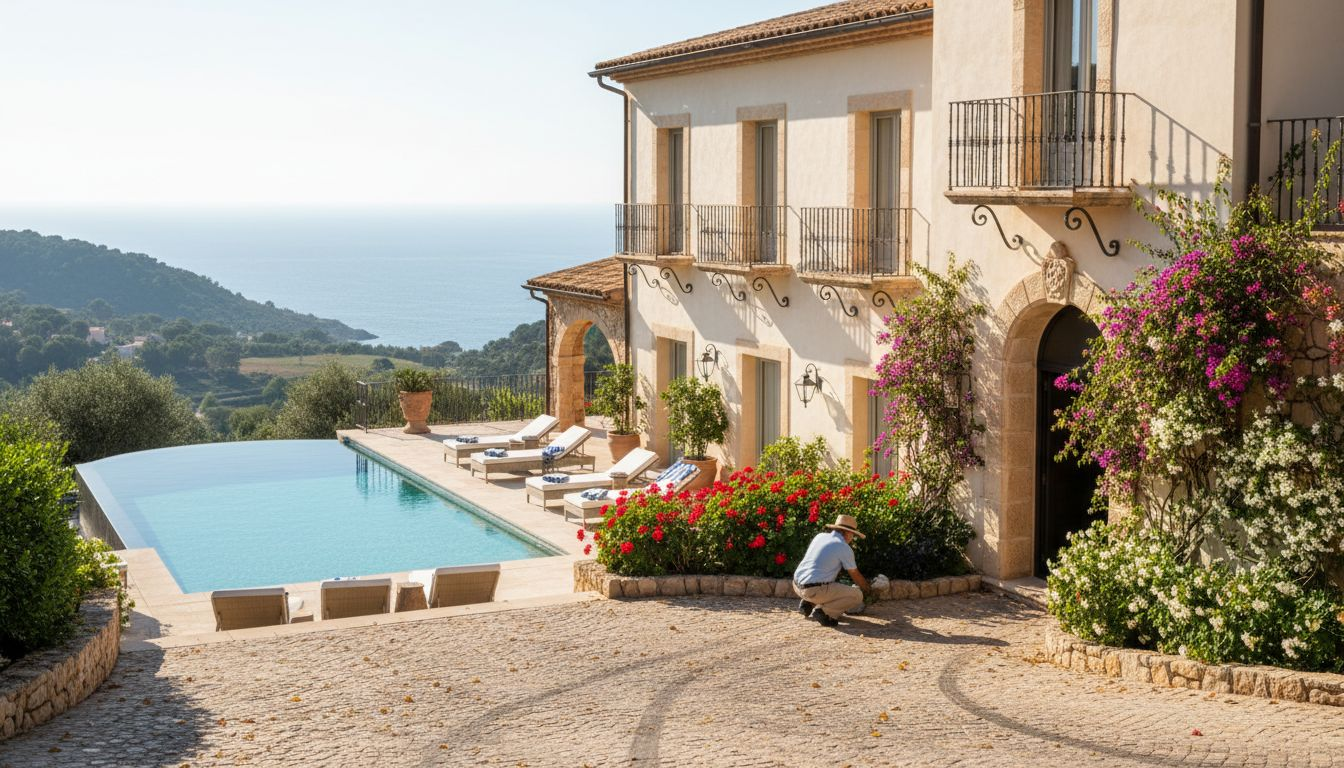
Investing in luxury hotels in Mallorca presents high-net-worth Americans with exceptional opportunities, yet navigating Spanish property laws, evaluating ROI potential, and selecting the right property can be complex. Success demands understanding financial metrics, location advantages, and regulatory compliance. This guide walks you through evaluation frameworks, detailed hotel listings, and expert strategies to identify top luxury hotel investments in Mallorca that deliver strong returns while meeting legal requirements.
Key takeaways
| Point | Details |
|---|---|
| Evaluation criteria drive success | ROI metrics, location analysis, and Spanish legal compliance are essential for profitable hotel investments. |
| Diverse luxury hotel options | Mallorca offers beachfront resorts, boutique mountain properties, and historic downtown hotels targeting different clientele. |
| Comparison simplifies decisions | Side-by-side analysis of financial returns, management needs, and legal factors helps identify optimal investments. |
| Expert guidance accelerates acquisition | Professional support streamlines property searches, regulatory navigation, and management setup for foreign investors. |
How to evaluate luxury hotels for sale in Mallorca
Successful hotel investments start with rigorous evaluation criteria tailored to your financial goals and operational capacity. Understanding these frameworks helps you identify properties that align with your investment strategy while avoiding costly missteps.
Financial metrics form the foundation of any investment decision. Cap rates between 6% and 9% typically indicate healthy returns in Mallorca’s luxury hotel market, though exceptional properties in prime locations may justify lower rates. Occupancy rates above 70% during peak season demonstrate strong market demand, while year-round occupancy patterns reveal seasonal vulnerability. Calculate net operating income by subtracting operational expenses from gross revenue, then factor in mortgage costs to determine actual cash flow. Review historical financial statements for at least three years to identify trends and verify seller claims.
Location determines both property value and revenue potential. Coastal areas like Palma Bay and Port d’Andratx command premium prices but attract consistent high-spending tourists seeking beachfront luxury. Mountain locations such as Deià and Valldemossa offer exclusivity and privacy that appeal to celebrities and ultra-high-net-worth individuals willing to pay premium rates. Understanding Spanish property buying regulations is crucial for investors navigating these diverse markets. Urban properties in Palma’s historic center capture business travelers and culture enthusiasts, providing more stable year-round occupancy. Proximity to airports, marinas, and golf courses significantly impacts guest appeal and pricing power.
Property features directly influence operational costs and competitive positioning. Amenities like infinity pools, spa facilities, Michelin-starred restaurants, and private beach access justify higher nightly rates but require substantial maintenance budgets. Building size affects staffing needs, with properties under 20 rooms offering intimacy but limited revenue scaling, while 50+ room hotels provide economies of scale at the cost of higher management complexity. Property condition determines immediate capital requirements, as historic buildings may need extensive renovations to meet modern luxury standards and Spanish building codes.
Legal compliance shapes profitability through taxes, permits, and ownership structures. Foreign investors must obtain an NIE (foreigner identification number) before purchasing property. Tourist rental licenses have become increasingly restricted, so verify the property holds valid permits for hotel operations. Property transfer taxes range from 8% to 11.5% of purchase price, while annual property taxes and tourist taxes add ongoing costs. Consider establishing a Spanish limited company for ownership to optimize tax treatment and liability protection.
Pro Tip: Engage a Spanish property lawyer specializing in commercial real estate before making offers. They’ll conduct due diligence on permits, liens, and zoning restrictions that could derail your investment.
- Verify all permits are current and transferable to new ownership
- Request detailed financial statements covering at least three operating years
- Inspect property thoroughly with licensed engineers to identify hidden maintenance issues
- Analyze competitor hotels in the area to understand market positioning and pricing
- Calculate total acquisition costs including taxes, legal fees, and immediate renovations
Top luxury hotels for sale in Mallorca: detailed listings
Mallorca’s diverse geography creates distinct hotel investment opportunities across coastal, mountain, and urban locations. Each property type attracts different clientele and offers unique ROI profiles based on location advantages and operational characteristics.
Beachfront resort hotels dominate Mallorca’s luxury market, particularly along the southwest coast. A 35-room boutique resort in Port d’Andratx currently lists at €12 million, featuring direct Mediterranean access, infinity pools, and a Michelin-starred restaurant. The property generated €2.8 million in annual revenue with 78% average occupancy during the past three years. Investment highlights include established brand reputation, repeat clientele from Northern Europe and the United States, and expansion potential with adjacent land parcels. Target guests are affluent couples and families seeking premium beachfront experiences with personalized service. Management requires experienced hospitality staff, seasonal hiring for peak summer months, and ongoing facility maintenance due to saltwater exposure.
Mountain boutique hotels offer exclusivity and privacy that command premium rates despite lower room counts. A 12-suite property in Deià lists at €8.5 million, nestled in the Tramuntana mountains with panoramic valley views. This intimate resort features a spa, yoga pavilion, organic gardens, and artist studios that attract creative professionals and wellness-focused travelers. Annual revenue reaches €1.4 million with 68% occupancy, heavily weighted toward spring and fall when hiking and cultural activities peak. Investment advantages include celebrity clientele willing to pay €800+ per night, lower competition in the mountain luxury segment, and strong Instagram appeal driving organic marketing. Operational considerations include limited accessibility during winter storms, higher per-guest service costs, and need for specialized wellness staff.
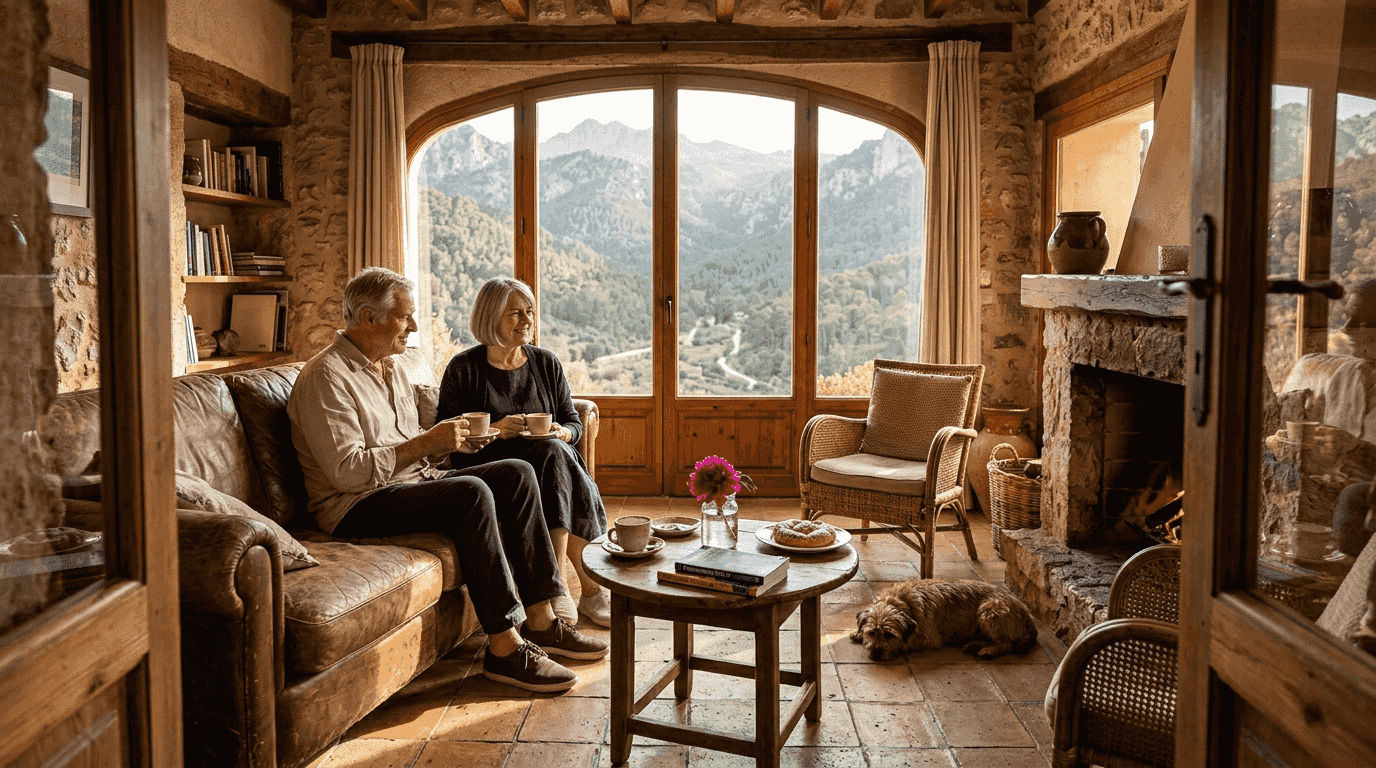
Historic urban hotels capture business and cultural travelers seeking central Palma locations. A 28-room restored palace in Palma’s Old Town lists at €9.2 million, offering rooftop terraces, contemporary art galleries, and proximity to cathedral landmarks. The property maintains 72% year-round occupancy with €2.1 million annual revenue, benefiting from corporate events, destination weddings, and extended-stay guests. Key investment factors include stable demand across all seasons, lower weather-related risks, and potential for conference and event revenue streams. Management needs encompass navigating historic building restrictions for renovations, addressing parking limitations, and maintaining soundproofing in dense urban environments.
Each hotel category presents distinct trade-offs between revenue potential, operational complexity, and capital requirements. Mallorca offers diverse luxury hotel properties across key areas appealing to affluent buyers seeking different investment profiles. Beachfront properties deliver highest gross revenues but face seasonal volatility and maintenance costs. Mountain boutiques achieve premium per-room rates with lower total revenue due to limited capacity. Urban hotels provide stability and year-round income with moderate per-room rates.
- Beachfront resorts: Highest revenue potential, seasonal peaks, extensive amenities
- Mountain boutiques: Premium rates, intimate scale, wellness-focused clientele
- Urban historic hotels: Year-round stability, event revenue, central accessibility
- Each category requires different management expertise and capital reserves
- Consider visiting properties during both peak and off-seasons to assess operations
Exploring types of Mallorca luxury properties helps investors understand how hotels fit within the broader luxury real estate landscape and identify complementary investment opportunities.
Head-to-head comparison of Mallorca luxury hotels for sale
Objective comparison across financial, operational, and legal dimensions clarifies which properties align with your investment criteria. This analysis synthesizes key data points to facilitate evidence-based decision-making.
| Feature | Port d’Andratx Beachfront | Deià Mountain Boutique | Palma Historic Urban |
|---|---|---|---|
| Location | Southwest coast, marina access | Tramuntana mountains, UNESCO site | Palma Old Town, cathedral district |
| Rooms/Suites | 35 rooms | 12 suites | 28 rooms |
| Purchase Price | €12.0M | €8.5M | €9.2M |
| Annual Revenue | €2.8M | €1.4M | €2.1M |
| Average Occupancy | 78% | 68% | 72% |
| Estimated Cap Rate | 7.2% | 6.8% | 7.5% |
| Peak Season | June-September | April-June, Sept-Oct | Year-round |
| Target Clientele | Affluent families, couples | Wellness seekers, creatives | Business, cultural travelers |
| Key Amenities | Beach access, Michelin dining | Spa, yoga, organic gardens | Rooftop terraces, art galleries |
| Management Complexity | High (seasonal staffing) | Medium (specialized services) | Medium (historic restrictions) |
| Renovation Needs | Moderate (ongoing saltwater) | Low (recent updates) | Moderate (building code compliance) |
| Legal Permits | Full tourist license, restaurant | Tourist license, wellness permits | Tourist license, event permits |
| Expansion Potential | High (adjacent land) | Low (protected area) | None (historic district) |
The comparison reveals distinct investment profiles suited to different investor priorities. Port d’Andratx delivers highest absolute returns with greatest operational demands and seasonal concentration. Deià offers premium positioning and lower competition but limited scaling potential and narrower target market. Palma provides balanced performance with year-round stability and multiple revenue streams.
Legal considerations vary significantly across properties. Beachfront hotels require coastal zone permits and environmental compliance for beach access. Mountain properties face UNESCO World Heritage site restrictions limiting renovations and expansions. Urban historic hotels must navigate stringent building preservation codes that increase renovation costs and timelines. All properties need valid tourist licenses, which have become increasingly difficult to obtain in Mallorca as authorities limit new permits to control tourism growth.
Financial analysis should extend beyond cap rates to examine cash-on-cash returns, debt service coverage ratios, and exit strategies. Properties with expansion potential or underutilized event spaces offer value-add opportunities to boost returns through strategic improvements. A side-by-side comparison streamlines investment decision-making by highlighting trade-offs between immediate returns and long-term appreciation potential.
Pro Tip: Calculate your break-even occupancy rate by dividing fixed costs by contribution margin per room. This reveals how much buffer you have during low seasons and helps assess risk tolerance across different property types.
Choosing the right luxury hotel investment in Mallorca
Selecting the optimal hotel investment requires matching property characteristics with your financial objectives, operational capacity, and risk tolerance. Strategic alignment between investor profile and property type maximizes success probability and satisfaction.
For investors prioritizing steady cash flow with minimal hands-on involvement, established beachfront or urban hotels in proven tourist areas offer the most predictable returns. These properties benefit from strong brand recognition, established guest bases, and professional management teams already in place. You can maintain passive ownership while management companies handle daily operations for 15% to 25% of gross revenues. This approach suits investors with limited hospitality experience or those managing portfolios across multiple properties or countries. Urban hotels particularly excel for passive investors due to year-round demand reducing seasonal cash flow volatility.
Active investors seeking higher potential yields should consider boutique properties or underperforming hotels with value-add opportunities. Mountain boutiques targeting wellness and experiential travel command premium rates but require hands-on curation of guest experiences, partnerships with local artisans and wellness practitioners, and active marketing through social media and influencer collaborations. Properties with renovation needs or outdated positioning offer opportunities to create differentiated luxury products capturing underserved market segments. This strategy demands hospitality expertise, significant time commitment, and capital reserves for improvements, but can generate returns 2% to 4% above market averages.
Risk tolerance shapes location and property type decisions significantly. Coastal properties face climate change risks from rising sea levels and increased storm intensity, requiring higher insurance costs and potential future adaptation expenses. Mountain locations experience access challenges during severe weather and depend heavily on hiking and outdoor activity seasons. Urban properties face regulatory risks from changing tourist accommodation laws and potential restrictions on short-term rentals. Diversifying across property types or partnering with experienced local operators helps mitigate location-specific risks.
Management structure critically impacts operational success and investor satisfaction. Self-management maximizes profit margins but requires relocating to Mallorca or frequent extended visits to oversee operations, hiring and training staff, and obtaining deep knowledge of Spanish labor laws and hospitality regulations. Professional management companies provide turnkey solutions but vary widely in quality and cost structures. Interview multiple firms, request references from other foreign property owners, and negotiate performance-based compensation tied to occupancy and guest satisfaction scores. Some investors establish hybrid models with on-site managers handling daily operations while they maintain strategic oversight and financial control.
Legal and fiscal structuring requires expert guidance to optimize tax treatment and asset protection. Decision factors include budget, desired ROI timelines, and involvement in management when evaluating ownership structures. Spanish limited companies (SL) offer liability protection and potential tax advantages for commercial properties but require annual filings and administrative overhead. Direct personal ownership simplifies structure but exposes personal assets to business liabilities. US investors must also consider IRS reporting requirements for foreign business interests and plan for estate tax implications of international real estate holdings.
- Match property type to your available time and hospitality expertise
- Evaluate management options before purchasing to ensure operational feasibility
- Build capital reserves covering six months of operating expenses for seasonal properties
- Engage Spanish tax advisors familiar with US-Spain tax treaties to optimize structure
- Visit Mallorca during both peak and off-seasons to understand operational realities
- Network with other American hotel investors in Mallorca to learn from their experiences
Explore Mallorca luxury hotel investments with ULI & LISA
Navigating Mallorca’s luxury hotel market requires local expertise, market intelligence, and regulatory knowledge that most international investors lack. ULI & LISA specialize in guiding American buyers through every stage of luxury property acquisition in Mallorca, from initial market analysis through closing and operational setup. Our AI-powered property search tools scan the entire Mallorca market to identify opportunities matching your specific investment criteria, while our personalized consulting ensures you understand legal requirements, financial implications, and management options. We provide comprehensive support including due diligence coordination, attorney and inspector referrals, negotiation strategy, and post-purchase property management recommendations. Whether you’re seeking a turnkey beachfront resort or a boutique mountain property with value-add potential, our team delivers the insights and connections you need to invest with confidence. Explore ULI & LISA luxury property services to start your Mallorca hotel investment journey with expert local guidance.
Hotels for sale in Mallorca: frequently asked questions
What are the main legal steps to buy a hotel in Mallorca?
First, obtain an NIE (foreigner identification number) from Spanish authorities, which typically takes two to four weeks. Next, engage a Spanish property lawyer to conduct due diligence on permits, liens, ownership history, and zoning compliance. Verify the property holds valid tourist accommodation licenses and all necessary operational permits. Finally, complete the purchase through a Spanish notary who registers the deed and ensures proper tax payments. The Mallorca property buying guide provides detailed information on each step of the acquisition process.
How can I evaluate the ROI potential of a luxury hotel investment here?
Calculate cap rate by dividing net operating income by purchase price, targeting 6% to 9% for Mallorca luxury hotels. Analyze three years of financial statements to verify revenue trends and identify seasonal patterns. Factor in Spanish property transfer taxes (8% to 11.5%), annual property taxes, tourist taxes, and ongoing maintenance costs when projecting cash flow. Compare occupancy rates and average daily rates to competitor properties in the same area to assess market positioning.
What property management options are available for foreign owners?
Full-service management companies handle all operations for 15% to 25% of gross revenues, ideal for passive investors. Hybrid models combine on-site managers for daily operations with owner oversight of strategy and finances, reducing costs while maintaining control. Self-management maximizes profits but requires relocating to Mallorca or frequent extended visits plus deep knowledge of Spanish labor and hospitality regulations. Many American investors start with professional management then transition to hybrid models as they gain market knowledge.
Are there tax benefits for investing in Mallorca luxury hotels?
Spanish tax law allows depreciation deductions on buildings and equipment, reducing taxable income during early ownership years. Operating expenses including staff salaries, utilities, maintenance, and marketing are fully deductible against rental income. Establishing a Spanish limited company can provide liability protection and potential tax optimization, though it requires annual filings and administrative costs. US investors must report foreign business interests to the IRS and should consult tax advisors familiar with US-Spain tax treaties to avoid double taxation and optimize overall tax treatment.
How does current tourism demand affect hotel profitability in Mallorca?
Mallorca welcomed over 17 million visitors in 2025, with Americans representing the fastest-growing segment seeking luxury accommodations and authentic experiences. Strong demand supports premium pricing for well-positioned properties, particularly those offering unique amenities or locations. However, local authorities have implemented stricter tourist accommodation regulations to manage overtourism, making existing hotel licenses more valuable but limiting new competition. Properties in established luxury markets like southwest coastal areas and Palma maintain consistent demand, while emerging areas offer higher growth potential with increased risk.
Recommended
- Why Invest in Mallorca Holiday Rentals for ROI - ULI & LISA Mallorca Property Blog
- Mallorca Luxury Homes: Investment and Lifestyle Perks - ULI & LISA Mallorca Property Blog
- Mallorca Real Estate Market Forecast 2025 - ULI & LISA Mallorca Property Blog
- 7 Prime Examples of Mallorca Investments Explained - ULI & LISA Mallorca Property Blog
- Luxury Market Trends 2025: Power Moves for Brokers
- How to Buy a Luxury Home | Mogavero Group