
Buying luxury real estate in Mallorca is more than choosing a beautiful villa or apartment—it is a financial decision requiring careful attention to legal details and tax rules. For American investors, understanding what makes a property an actual “investment property” is crucial, since income generation and capital appreciation hinge on Spanish regulations and compliance. This article covers key concepts and local rental licensing requirements, helping you align your purchase with both profit goals and cross-border legal obligations.
Key Takeaways
| Point | Details |
|---|---|
| Understanding Investment Properties | Investment properties in Mallorca are primarily purchased for income generation and capital appreciation, differing from primary residences in tax and regulatory treatment. |
| Rental Licensing Importance | Complying with ETV permit requirements is crucial for legal rental operations; failure to do so can lead to penalties and loss of rental income. |
| Balancing Returns | Successful property investing requires balancing rental income and capital appreciation for optimized financial returns over time. |
| Awareness of Costs and Risks | Investors must be mindful of hidden costs and market risks, ensuring thorough due diligence and realistic cost assessments before purchasing. |
Defining Investment Properties and Core Concepts
An investment property is real estate purchased primarily to generate income or appreciation rather than serve as your primary residence. In Mallorca, this means buying apartments, villas, or commercial spaces specifically for rental income, capital gains, or both.
The distinction matters legally and financially. Your primary home receives different tax treatment than investment real estate. When you buy investment property in Spain, you’re entering a formal investment framework with specific regulations and reporting requirements.
What Makes a Property “Investment” Property?
Three core characteristics define investment properties in Mallorca:
- Income generation: The property produces rental revenue through short-term vacation rentals or long-term tenant agreements
- Capital appreciation: The property value increases over time, creating equity buildup
- Tax classification: Spanish tax authorities categorize it as a rental asset, not a personal residence
The definition of investment in legal and economic contexts emphasizes that investments require committed capital with the expectation of financial returns. Real estate follows this principle—you commit substantial capital upfront anticipating future income streams.
Key Concepts for American Buyers
Understanding rental licensing regulations (ETV permits) is critical. Mallorca requires legal authorization to operate vacation rentals. Without proper licensing, your rental income faces penalties and potential property seizure.
Capital appreciation occurs through two mechanisms. Market appreciation happens as Mallorca’s luxury property values rise. Improvement appreciation results from renovations and upgrades that increase property value.
The concept of return on investment (ROI) measures your profit relative to what you paid. If you buy a €1.2 million villa that generates €120,000 annually in rental income, that’s a 10% gross return before expenses.
Investment properties succeed when cash flow exceeds operating expenses, creating positive cash flow that builds wealth over time.
Investment Property vs. Primary Residence
These distinctions affect your finances and legal obligations:
- Tax treatment: Investment properties are taxed as business income in Spain, not personal property
- Financing: Investment mortgages typically require 20-30% down payment versus 10-15% for primary residences
- Expenses: You deduct operating costs (maintenance, property management, insurance) from rental income
- Appreciation: Capital gains from investment property sales are taxed differently than primary residence sales
American investors must also consider US tax implications. Income from Spanish rental properties is reportable to the IRS, and you may qualify for foreign earned income exclusions or tax credits.
Core investment concepts like investment evaluation and capital budgeting fundamentals demonstrate that successful property investing requires understanding both static returns (immediate income) and dynamic returns (long-term appreciation and equity buildup).
Why Mallorca Attracts Investors
The island offers several advantages for investment property buyers:
- Consistent tourist demand supporting vacation rental income
- Appreciation potential in established luxury markets
- European location attracting international visitors year-round
- Favorable climate maintaining property appeal
- Established infrastructure supporting short-term rental operations
Pro tip: Before purchasing any investment property in Mallorca, verify the ETV rental license status for that specific location. Some neighborhoods restrict vacation rentals, making long-term tenant leasing the only viable income strategy.
Types of Luxury Investment Properties in Mallorca
Mallorca’s luxury real estate market offers distinct property categories, each with different income potential, appreciation drivers, and operational requirements. Understanding these types helps you align your investment strategy with your financial goals and lifestyle preferences.
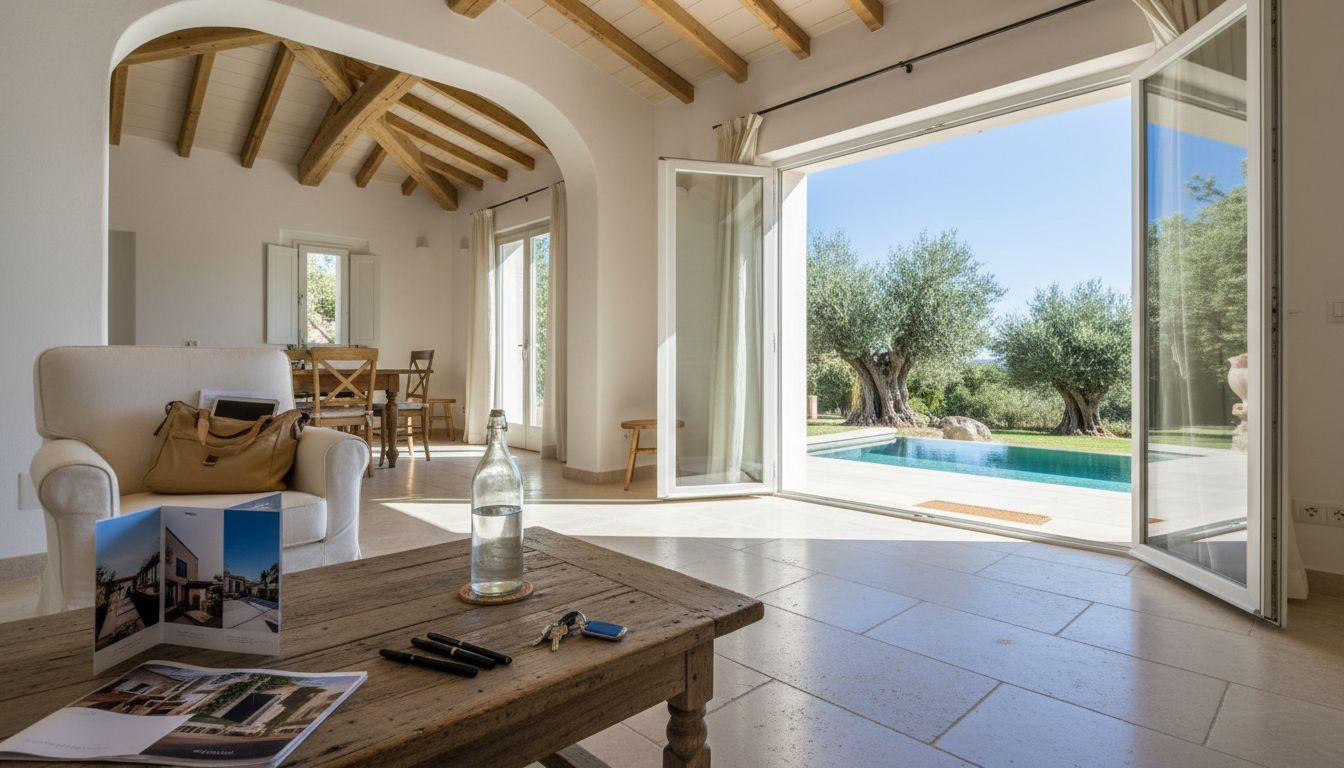
The island splits into two primary investment categories: urban luxury properties and rural estate properties. Each serves different investor profiles and generates income through different mechanisms.
Urban Luxury Properties
Urban properties concentrate in established neighborhoods like Palma’s Old Town, Paseo Maritimo, and beachfront areas. These properties emphasize modern design, contemporary amenities, and walkable locations with cultural attractions.
Urban luxury investments offer specific advantages:
- High tourist demand for short-term vacation rentals
- Proximity to restaurants, shopping, and entertainment venues
- Easier property management with professional services nearby
- Strong year-round rental income potential
- Lower maintenance costs compared to sprawling estates
These properties typically command premium nightly rates during summer season. A €1.5 million urban penthouse can generate €150,000-€200,000 annually from vacation rentals. However, regulatory restrictions on tourist licenses vary by neighborhood, making location research critical before purchase.
Rural Estate Properties
Rural properties occupy larger plots in the island’s interior and coastal periphery. These estates emphasize privacy, traditional Mallorcan architecture, and expansive grounds. Urban and rural luxury property categories offer distinct architectural restrictions and development regulations based on their zones.
Rural estates attract investors seeking:
- Complete privacy and exclusivity
- Larger acreage for expansion or recreational use
- Traditional Mediterranean or contemporary villa designs
- Long-term appreciation in established enclaves
- Flexibility for personal use between rental seasons
Rural properties typically command lower nightly rental rates but appeal to families and groups seeking privacy. A €2 million rural estate might generate €80,000-€120,000 annually, yet offers significant capital appreciation potential.
Rural estates appreciate steadily as Mallorca’s limited available land becomes scarcer, making long-term ownership particularly rewarding for patient investors.
Apartment Buildings and Multi-Unit Properties
Multi-unit properties offer portfolio diversification through multiple income streams. A converted palace or property divided into luxury apartments creates numerous rental units generating concurrent revenue.
These investments require:
- Professional property management expertise
- Compliance with tenant protection laws
- Building maintenance coordination across units
- Insurance coverage for complex structures
Boutique Hotels and Small Hospitality Properties
Some investors purchase small hotels, guesthouses, or bed-and-breakfasts. These commercial properties generate consistent income but require hospitality experience or professional management.
Key considerations include:
- Staff hiring and payroll management
- Higher operational complexity
- Commercial property regulations
- Year-round staffing needs
Pro tip: Match property type to your capacity: urban rentals require active management for guest turnover, while rural estates suit hands-off investors who prefer annual deep-cleaning maintenance between guests.
Here’s a comparison of Mallorca luxury investment property types and their typical investor profiles:
| Property Type | Ideal Investor | Income Potential | Management Level |
|---|---|---|---|
| Urban Luxury Apartments | Active income seekers | High short-term rental | Frequent attention needed |
| Rural Estate Properties | Long-term wealth builders | Steady appreciation, lower rentals | Occasional involvement |
| Multi-Unit Buildings | Portfolio diversifiers | Multiple rental streams | Complex, requires oversight |
| Boutique Hotels | Experienced operators | Consistent, hospitality-driven | Intensive, staff management |
How Rental Returns and Appreciation Work
Investment property returns come from two distinct sources: rental income and property appreciation. Understanding how each component works separately helps you evaluate whether a property meets your financial objectives.
These two income streams work independently. You can earn strong rental yields from properties that appreciate slowly, or purchase properties that appreciate rapidly while generating modest rental income. The best investments often balance both.
Rental Income and Cash Flow
Gross rental income is the total revenue collected from tenants before any expenses. In Mallorca, vacation rental properties generate significant gross income during peak seasons.
Calculate your actual return by subtracting operating expenses:
- Property management fees (typically 20-30% of rental income)
- Maintenance and repairs
- Property insurance
- Utilities and services
- Cleaning and turnover costs
- Licensing and regulatory compliance
Net rental yield represents what remains after expenses. A €1.5 million property generating €180,000 gross income annually might have €60,000 in expenses, leaving €120,000 net income. That’s an 8% net yield on your investment.
Consistent cash flow from rental income provides immediate returns while you wait for property appreciation to compound your wealth.
Capital Appreciation
Property appreciation occurs when your property’s market value increases over time. Research on real estate returns shows capital gains significantly impact overall profitability, often matching or exceeding rental income contributions.
Mallorca’s luxury market has appreciated approximately 3-5% annually over the past decade. A €1.5 million villa appreciating at 4% annually gains €60,000 in value each year without generating a single rental payment.
Appreciation factors include:
- Location desirability and limited land availability
- Infrastructure improvements and development
- Economic growth in the region
- Supply and demand dynamics
- Property condition and renovations
Total Return Calculation
Your complete return combines both income sources. Total rental property returns stem equally from net yields and appreciation, according to long-term real estate research.
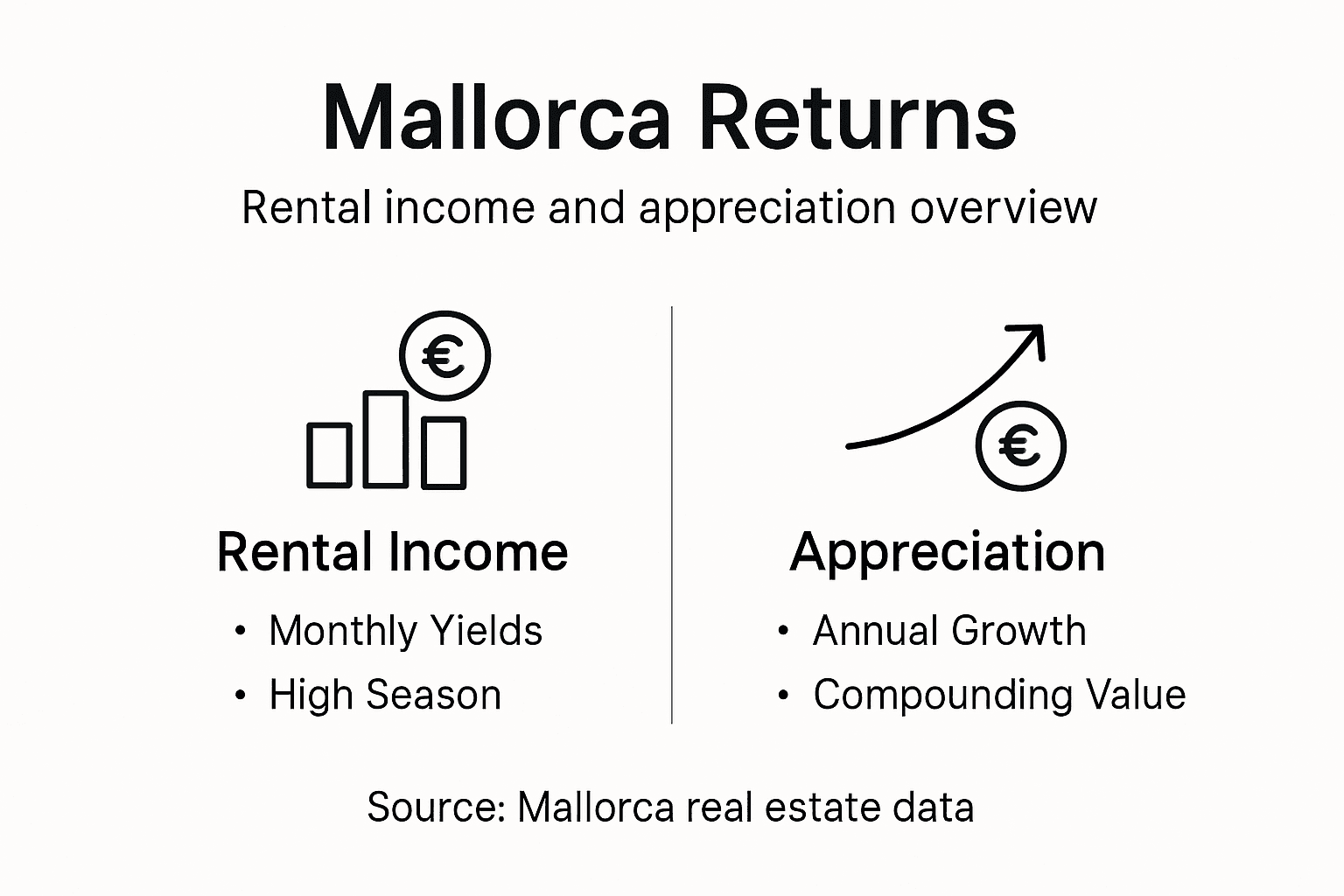
Example: Your €1.5 million property generates €120,000 net income (8% yield) and appreciates €60,000 in value (4% appreciation). Your total annual return is €180,000, or 12% on your investment.
Over time, appreciation compounds dramatically. After 10 years with consistent 4% appreciation, your €1.5 million property becomes worth approximately €2.2 million—a €700,000 gain from appreciation alone.
Why Both Factors Matter
Relying solely on rental income leaves appreciation unrealized. Focusing exclusively on appreciation ignores immediate cash flow benefits that offset carrying costs.
The optimal strategy balances both:
- Cash flow from rentals covers your mortgage, taxes, and expenses
- Appreciation builds long-term equity and inflation protection
- Combined returns accelerate wealth accumulation
Pro tip: Calculate your break-even point: at what monthly rental rate does your property’s cash flow cover all expenses? If you achieve that rental rate, appreciation becomes pure profit.
Mallorca’s Legal Compliance and Taxation Requirements
Investing in Mallorca real estate requires navigating Spanish tax law, local regulations, and rental licensing requirements. Compliance failures can result in substantial penalties, property seizures, or forced sales. Understanding these obligations protects your investment and ensures profitability.
Spain treats property investment differently than the United States. As an American buyer, you must satisfy both Spanish regulations and IRS reporting requirements simultaneously.
Rental Licensing and ETV Permits
ETV permits (Establecimientos de Turismo en Vivienda) authorize vacation rental operations in Mallorca. Operating without proper licensing creates significant legal and financial exposure.
Key licensing requirements include:
- Registration with local tourism authorities
- Property compliance with safety and habitability standards
- Annual renewal and fee payments
- Restrictions in certain neighborhoods or building types
- Prohibition on rentals in illegally constructed properties
Recent legal and tax changes in Mallorca’s real estate sector include stricter enforcement of rental regulations and modifications affecting legalized properties. Always verify current ETV eligibility before purchasing.
Spanish Income Tax on Rental Income
Rental income from Spanish properties is taxable to Spain regardless of your residency status. The Spanish government requires non-resident property owners to report all rental revenue.
Tax obligations include:
- Filing annual tax returns (Declaración de la Renta) reporting rental income
- Paying income tax at rates between 19-45% depending on income level
- Deducting legitimate operating expenses (mortgage interest, maintenance, property management)
- Maintaining detailed records of all rental transactions
Spanish tax authorities require meticulous documentation of income and expenses, so retain every receipt, invoice, and payment record for minimum seven years.
Property Tax and Wealth Tax
Impuesto sobre Bienes Inmuebles (IBI) is Spain’s annual property tax based on cadastral value. Non-resident owners pay approximately 0.4-1.1% of assessed property value yearly.
Wealth tax applies to non-residents with Spanish real estate assets. If your Spanish properties exceed €600,000, you may owe additional wealth tax to Spain. This varies by region but typically ranges from 0.2-0.5% annually.
US Tax Reporting Requirements
American citizens must report worldwide income to the IRS, including Spanish rental profits. File Form 1040 with Schedule E reporting Spanish rental income and deductions.
Consider these US tax strategies:
- Foreign earned income exclusion (limited applicability to rental income)
- Foreign tax credits reducing US liability for taxes paid to Spain
- Entity structuring (consulting a tax advisor is critical)
- FATCA compliance reporting Spanish bank accounts over $10,000
Capital Gains Taxation
When you sell a rental property, Spain taxes the profit at 19-21% for non-residents. If you owned the property as a business entity, rates vary. The US also taxes your gain, though foreign tax credits may apply.
US holding periods differ from Spanish rules. Plan your exit strategy considering both jurisdictions’ tax consequences.
Pro tip: Engage a Spanish tax advisor and US CPA simultaneously before purchasing—they coordinate to minimize double taxation and identify legitimate deductions that reduce your total tax burden by thousands annually.
Key Risks, Costs, and Common Pitfalls
Mallorca real estate investment carries financial and operational risks that can erode profits or result in significant losses. Understanding these pitfalls before purchase protects your capital and prevents costly mistakes.
Successful investors manage risks proactively rather than discovering them after closing. The difference between profitable and struggling investments often comes down to thorough due diligence and realistic cost projections.
Hidden Acquisition and Operating Costs
Purchase price represents only part of your total investment. Additional costs accumulate before and after closing that many first-time investors underestimate.
Typical acquisition expenses include:
- Transfer tax (6-8% of purchase price)
- Property registration fees and notary costs
- Legal representation and Due diligence fees
- Property inspection and appraisal costs
- Mortgage origination fees (if financing)
Operating costs continue annually and can consume 30-40% of gross rental income. Property management, maintenance reserves, insurance, utilities, and licensing fees accumulate quickly. A €1.5 million property might require €60,000-€80,000 annually in operating expenses beyond your mortgage payment.
Underestimating operating costs turns seemingly profitable investments into cash flow drains that require ongoing capital injections.
Market Volatility and Timing Risk
Market timing risk occurs when property values decline after purchase. Mallorca’s luxury market fluctuates with European economic conditions, tourism trends, and currency movements.
Factors affecting market risk include:
- Economic recessions reducing tourist demand
- Rising interest rates dampening buyer demand
- Regulatory changes restricting rental licenses
- Currency fluctuations affecting international buyers
- Oversupply in specific neighborhoods
Research on financial leverage and market-driven investment risks emphasizes that real estate investors face external economic forces beyond their control. Property values can stagnate for years during market downturns, trapping capital that you expected to appreciate.
Liquidity Challenges
Real estate is illiquid—you cannot quickly convert it to cash like stocks or bonds. Selling takes 3-6 months minimum, during which you continue paying expenses.
Liquidity problems arise when:
- Unexpected expenses demand immediate capital
- Market conditions deteriorate, forcing distressed sales
- Tenant issues require property abandonment
- Personal circumstances change unexpectedly
Tenant and Management Risks
Vacation rental tenants differ from long-term residents. Constant guest turnover creates operational complexity and damage risks.
Common tenant-related issues include:
- Property damage from high-turnover guests
- Noise complaints from neighbors
- Non-compliance with house rules
- Difficult guest disputes requiring intervention
- Seasonal occupancy gaps reducing annual income
Poor property management compounds these problems. Inadequate cleaning, maintenance delays, or unresponsive guest communication damage your reputation and reduce future bookings.
Over-Leverage and Financing Risk
Using excessive leverage (borrowing too much) amplifies losses during market downturns. If property values decline 20%, a heavily mortgaged property becomes underwater (owing more than it’s worth).
If mortgage rates rise and rental income remains flat, your monthly debt payment increases while revenue stays constant, creating negative cash flow.
Regulatory and Compliance Risk
Spanish regulations change frequently. Recent modifications to rental licensing, tax requirements, and property legalization create compliance challenges.
Risk areas include:
- ETV license denial or revocation
- Unexpected tax assessments
- Changes to rental restrictions
- Building code violations discovered after purchase
- Illegal property construction preventing rental operation
Pro tip: Budget conservatively: assume 35% of gross rental income covers operating costs, not the 25% you optimistically project, and maintain a 12-month operating expense reserve in liquid funds.
This table summarizes major risk factors for Mallorca investment property buyers:
| Risk Factor | Impact on Investment | How to Mitigate |
|---|---|---|
| Underestimating Costs | Reduced cash flow, losses | Analyze all expenses up front |
| Regulatory Changes | Loss of rental privileges | Stay updated, consult legal experts |
| Market Volatility | Lower appreciation or value | Diversify, hold for long-term |
| Poor Management | Negative guest experience | Hire reputable local management firm |
| Liquidity Issues | Delayed access to capital | Maintain cash reserves |
Maximize Your Investment Property Benefits in Mallorca with Expert Guidance
Navigating the complex world of Mallorca investment properties can be challenging. From understanding rental licensing regulations like ETV permits to balancing rental income with capital appreciation, American buyers face critical decisions that impact their returns and compliance. At ULI & LISA, we recognize these pain points and goals—helping you find properties that deliver positive cash flow while adhering to Spanish tax and legal requirements. Our advanced AI-powered tools ensure you access a comprehensive, unbiased market search tailored to your investment strategy.
Don’t risk costly mistakes or missed opportunities. Discover how our personalized, trustworthy guidance can simplify your buying process and protect your wealth. Take control of your Mallorca investment journey today by visiting ULI & LISA for expert support and tailored property options. Start turning smart moves into lasting success before the market shifts again.
Frequently Asked Questions
What are the main benefits of investing in properties in Mallorca?
Investing in properties in Mallorca offers consistent tourist demand, capital appreciation potential, and favorable rental income opportunities due to its desirable climate and established infrastructure.
How does capital appreciation work for investment properties?
Capital appreciation refers to the increase in property value over time, influenced by factors such as location desirability, economic growth, and property condition, which can significantly impact your overall return on investment.
What is the difference between urban and rural investment properties?
Urban investment properties typically generate higher short-term rental income due to their proximity to cultural attractions, while rural properties offer privacy and long-term capital appreciation potential, appealing to families and larger groups.
What are the legal requirements for renting out investment properties?
To rent out properties legally, you must obtain an ETV permit, comply with safety standards, and fulfill local regulations regarding rental operations. Failing to meet these requirements can lead to penalties and loss of rental privileges.
Recommended
- Complete Guide to Investment Property Tips Mallorca - ULI & LISA Mallorca Property Blog
- Mallorca Investment Property: Smart Moves for 2026 Buyers - ULI & LISA Mallorca Property Blog
- Understanding the Benefits of Buying in Mallorca - ULI & LISA Mallorca Property Blog
- Property Investment Strategies Mallorca: Complete Guide - ULI & LISA Mallorca Property Blog
- Top Investment Areas in Dubai: Where to Buy Property for Maximum Returns