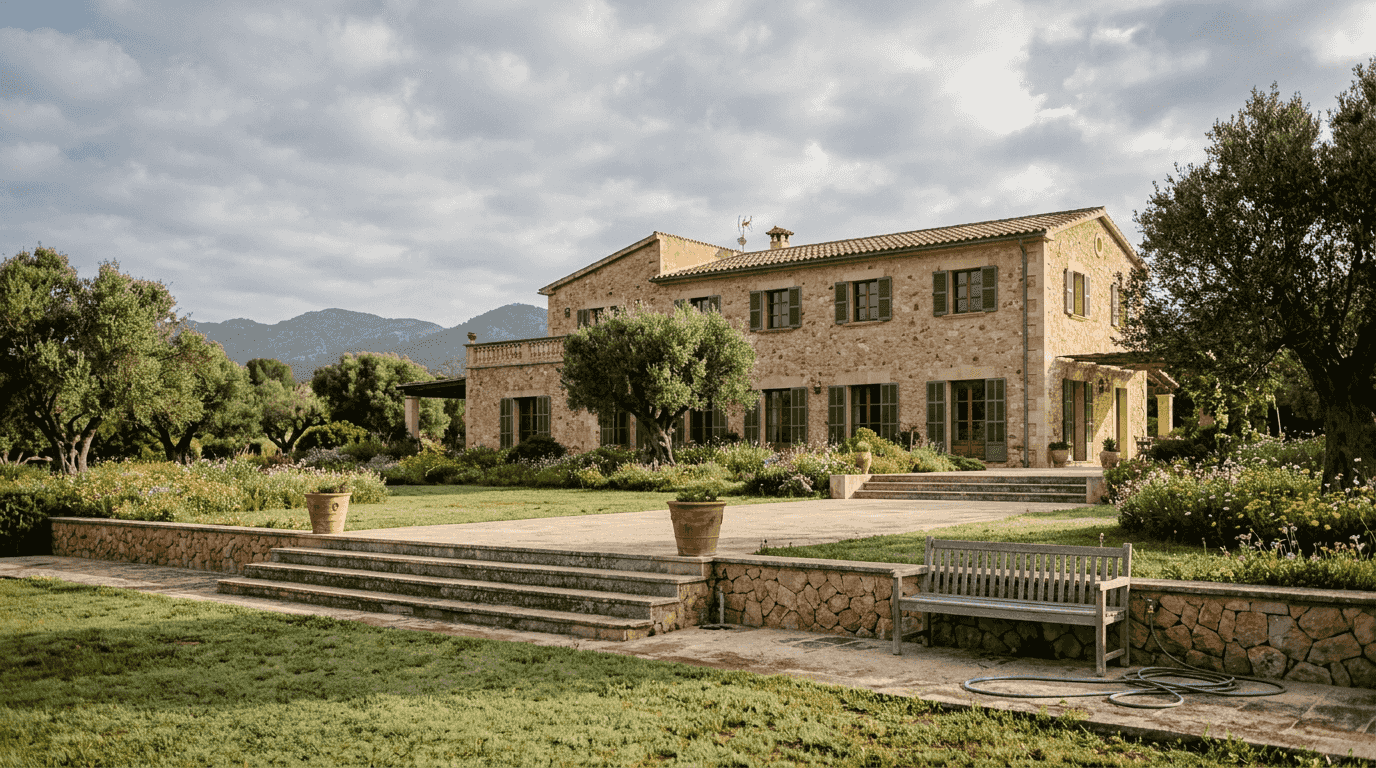
Buying a luxury finca in Mallorca offers high-net-worth American buyers a rare blend of Mediterranean lifestyle and investment potential, but navigating Spain’s property market from abroad brings unique challenges. Cross-border legal requirements, tax compliance, and understanding local market dynamics can feel overwhelming without expert guidance. This article walks you through the essential criteria for evaluating Mallorca’s finest fincas, presents five standout properties for 2026, compares them side by side, and explains the legal and tax steps US citizens must follow to secure their dream estate safely and profitably.
Key takeaways
| Point | Details |
|---|---|
| Legal requirements | Americans need a Spanish NIE number and proof of funds, with no residency requirement except for restricted military zones. |
| Market opportunity | Mallorca’s luxury finca market shows steady appreciation since 2017, offering competitive pricing versus comparable US markets. |
| Rental income potential | Fincas generate 3-9% annual yields through short-term or long-term rentals, appealing to investment-focused buyers. |
| Tax compliance | US buyers face dual tax obligations including FBAR reporting and capital gains in both countries, mitigated by foreign tax credits. |
| Expert guidance | Independent buyer agents streamline property search, legal compliance, and tax optimization for cross-border transactions. |
How to evaluate fincas Mallorca: key criteria for American buyers
Selecting the right luxury finca in Mallorca requires balancing lifestyle preferences with practical investment considerations. Location ranks as the primary factor, since Mallorca’s diverse regions offer distinct advantages. Southwestern areas like Andratx and Calvià deliver proximity to marinas and international schools, while the northeast Pollença and Artà regions provide quieter, more traditional settings with mountain and coastal views. Central locations near Palma offer the shortest commute to Palma de Mallorca Airport, which serves over 29 million passengers annually and connects directly to major US hubs through European gateways.
Connectivity matters significantly for American buyers who split time between continents. Estate size and property type shape both lifestyle and rental potential. Fincas range from compact 200-square-meter renovated farmhouses on two-hectare plots to sprawling 1,000-square-meter estates on 20-hectare parcels with vineyards or olive groves. Larger properties command premium prices but also attract high-value renters seeking privacy and authentic Mallorcan experiences. Architectural style varies from traditional stone construction with exposed beams to contemporary designs with infinity pools and smart home technology.
Legal requirements for Americans include obtaining a Número de Identidad de Extranjero (NIE), providing source-of-funds documentation, and navigating restrictions in designated military zones near coastal defense installations. Spain offers transparent legal frameworks protecting foreign property rights, giving US buyers nearly identical ownership privileges as Spanish citizens. Investment perspective drives many purchases, as Mallorca’s luxury market has demonstrated consistent growth with property values appreciating steadily and rental demand strengthening from both short-term vacation seekers and long-term international residents.
Pro Tip: Visit Mallorca during different seasons before committing to a purchase, since microclimates vary dramatically across the island and your preferred region’s summer appeal may differ significantly from its winter character.
“The key to successful finca ownership in Mallorca lies in matching property characteristics to your specific use case, whether that’s year-round living, seasonal escapes, or pure investment returns through strategic rental management.”
Top 5 luxury fincas in Mallorca for 2026: features and highlights
Mallorca’s current inventory includes exceptional properties that meet the demanding standards of American luxury buyers. The first standout finca sits in Sóller valley, spanning 450 square meters of living space on eight hectares with original 18th-century stone architecture fully modernized. This property features six bedroom suites, a 15-meter infinity pool overlooking orange groves, and a separate guest house generating consistent short-term rental income. Its location provides mountain seclusion while maintaining 25-minute access to Palma’s dining and cultural scene.

The second property occupies a hillside position in Deià with panoramic sea views, offering 380 square meters across two levels on three hectares of terraced Mediterranean gardens. Five bedrooms, artist studio space, and a wine cellar appeal to creative professionals seeking inspiration in this UNESCO World Heritage landscape. The property’s proximity to Deià village and its international artistic community creates unique networking opportunities while maintaining privacy.
A third exceptional finca in Pollença combines 520 square meters of contemporary architecture with traditional Mallorcan elements on 12 hectares including olive production facilities. Seven bedroom suites, commercial-grade kitchen, and a 20-meter lap pool position this estate for both family use and boutique hospitality ventures. The property market shows steady appreciation in this region, with values climbing consistently since 2017.
The fourth property near Artà offers 600 square meters of living space on 15 hectares with equestrian facilities including stables for eight horses and a regulation dressage arena. This estate targets buyers seeking active rural lifestyle with eight bedrooms, staff quarters, and agricultural land suitable for organic farming ventures. Its northeast location provides authentic Mallorca character with lower tourist density than southwestern regions.
The fifth featured finca sits in Santa Maria del Camí, delivering 420 square meters on five hectares with vineyard potential and existing wine production license. Six bedrooms, temperature-controlled wine storage, and a commercial kitchen create opportunities for agritourism ventures. Central island location offers balanced access to both coasts and Palma’s international airport, ideal for frequent travelers managing transatlantic schedules while exploring Mallorca’s diverse property hotspots.
Comparing Mallorca fincas: a detailed comparison table and analysis
Understanding how these properties stack up across key metrics helps you identify which finca aligns with your priorities. The following comparison examines price positioning, rental yield potential, and practical considerations for American buyers.
| Property | Price per sqm | Location | Plot size | Annual yield | Airport time |
|---|---|---|---|---|---|
| Sóller valley estate | €4,200 | West coast | 8 hectares | 6-8% | 25 minutes |
| Deià hillside villa | €5,800 | Northwest | 3 hectares | 5-7% | 35 minutes |
| Pollença olive farm | €3,900 | Northeast | 12 hectares | 4-6% | 45 minutes |
| Artà equestrian estate | €3,200 | Northeast | 15 hectares | 3-5% | 50 minutes |
| Santa Maria vineyard | €4,000 | Central | 5 hectares | 7-9% | 15 minutes |
Price per square meter varies significantly based on location prestige and property condition. Deià commands premium pricing due to its international reputation and UNESCO protection status, while northeastern properties offer better value for buyers prioritizing land size over coastal proximity. Spanish property prices remain competitive compared to equivalent luxury markets in California or Florida, typically delivering 20-30% more living space and land for comparable investment.
Rental yield potential correlates with accessibility and property versatility. The Santa Maria vineyard achieves highest yields through its central location and agritourism appeal, attracting both short-term vacation renters and corporate retreat bookings. Conversely, the Artà equestrian estate generates lower percentage returns but appeals to a specific high-value niche willing to pay premium rates for specialized facilities. Legal considerations remain consistent across properties, though agricultural operations require additional permits and compliance with EU organic certification standards if pursuing that market positioning.
Pro Tip: Factor in renovation timelines when comparing properties, since even turnkey fincas often require customization for American preferences like central air conditioning, upgraded electrical systems for 110V appliances, and enhanced internet infrastructure for remote work capabilities.
Exploring current Mallorca real estate trends reveals that properties combining traditional architecture with modern systems command 15-20% premiums over purely contemporary builds, as buyers increasingly value authentic Mallorcan character alongside functional conveniences.
Navigating cross-border purchase and tax compliance for American finca buyers
US citizens face a multi-step process when acquiring Mallorca property, beginning with obtaining your NIE number through Spanish consulates in the United States or directly in Spain. This identification number serves as your tax identifier for all Spanish financial transactions and typically takes two to four weeks to secure. You’ll need your passport, completed application forms, and appointment confirmation, with some consulates requiring proof of your intended property transaction.
Bank account establishment in Spain follows NIE acquisition, requiring in-person visits to Spanish banks with documentation proving fund sources. US anti-money laundering regulations combined with Spanish banking requirements mean you’ll provide tax returns, bank statements, and potentially letters from your US financial institutions explaining large transfers. Many American buyers find this documentation process more extensive than domestic real estate transactions, but foreign buyers enjoy nearly identical ownership rights as Spanish citizens once completed.
Tax obligations split between US and Spanish jurisdictions, creating complexity that demands professional guidance. US citizens face dual tax implications including potential capital gains taxes in both countries when eventually selling, though foreign tax credits typically prevent true double taxation. You must file FBAR (Foreign Bank Account Report) if your Spanish accounts exceed $10,000 at any point during the tax year, covering both purchase funds and rental income accounts. The property itself doesn’t trigger FATCA reporting since real estate falls outside foreign financial asset definitions, but rental income requires reporting on your US tax return regardless of amount.
Spanish property taxes include annual Impuesto sobre Bienes Inmuebles (IBI) ranging from 0.4% to 1.1% of cadastral value, typically significantly lower than comparable US property tax rates. If you rent your finca, Spain taxes that income at progressive rates from 19% to 26% for non-residents, while the US taxes your worldwide income at standard rates with foreign tax credits available. Capital gains face similar dual taxation upon sale, with Spain applying 19% to 26% rates and the US treating proceeds as either short-term or long-term gains depending on holding period.
“The intersection of US and Spanish tax law creates planning opportunities for strategic buyers, particularly around timing of purchases, structuring of ownership, and coordination of rental income reporting to optimize total tax burden across both jurisdictions.”
Residency status dramatically impacts your tax position, since spending more than 183 days per year in Spain triggers Spanish tax residency and worldwide income taxation by Spain. Many American buyers structure their time to remain US tax residents while enjoying extended Mallorca stays, requiring careful day counting and documentation. Self-directed IRA purchases of foreign real estate trigger prohibited transaction rules and potential tax penalties, making direct personal ownership or entity structures more practical for most buyers seeking to understand the Mallorca property market for US buyers.
Find your perfect finca with ULI & LISA’s expert buyer agents
Navigating Mallorca’s luxury finca market from the United States requires local expertise combined with understanding of American buyer needs and cross-border complexities. Our independent buyer agents specialize in representing US purchasers exclusively, with no conflicts from developer relationships or seller representations. We leverage AI-powered property search tools to scan Mallorca’s entire market, identifying fincas matching your specific criteria before they reach public listings.
Our service extends beyond property identification to comprehensive transaction support, coordinating with bilingual attorneys for contract review, connecting you with tax advisors experienced in US-Spanish compliance, and managing due diligence from structural surveys to title verification. We guide you through every step from initial NIE application to final deed signing, ensuring you understand each requirement and avoid common pitfalls that delay or derail purchases. Whether you’re seeking safe property investment in Mallorca or exploring specific areas through our detailed Mallorca regions guide, our personalized approach delivers confidence and clarity throughout your buying journey.
Pro Tip: Engage buyer agents before beginning your property search rather than after finding a listing, since early involvement allows strategic planning around tax optimization, ownership structuring, and negotiation positioning that becomes difficult to implement once you’ve emotionally committed to a specific property.
FAQ
What are the legal requirements for Americans buying fincas in Mallorca?
Americans need a Spanish NIE number serving as your tax identification for all property transactions, obtained through Spanish consulates or directly in Spain. No residency requirement exists for property ownership, and you enjoy the same ownership rights as Spanish citizens. The only restrictions apply to properties in designated military zones near coastal defense installations, which require special permits rarely granted to foreign buyers.
How do US taxes affect Americans buying property in Mallorca?
US buyers must report foreign bank accounts exceeding $10,000 through FBAR filings, covering accounts used for purchase funds and rental income. Capital gains taxes apply in both countries upon sale, though foreign tax credits prevent double taxation by allowing Spanish taxes paid to offset US obligations. Rental income faces taxation in both jurisdictions, with Spain applying 19-26% non-resident rates and the US taxing worldwide income at standard progressive rates.
Can Americans rent out their Mallorca fincas for income?
Fincas generate 3-9% annual yields through short-term vacation rentals or long-term residential leases, with higher returns in central locations and properties offering unique features like vineyards or equestrian facilities. You must comply with local rental regulations including tourist license requirements for short-term rentals and proper income reporting in both Spain and the United States. Professional property management services typically charge 15-25% of rental income but handle compliance, marketing, and guest services.
What steps should I take to ensure a secure property investment in Mallorca?
Engage independent buyer agents specializing in Mallorca luxury real estate who represent your interests exclusively without developer or seller conflicts. Consult bilingual attorneys experienced in Spanish property law to review contracts and verify clear title before signing. Work with tax advisors knowledgeable in both US and Spanish tax codes to structure ownership optimally and plan for ongoing compliance obligations including FBAR filings and dual-country income reporting.
Recommended
- Mallorca Fincas: Unique Benefits for U.S. Buyers - ULI & LISA Mallorca Property Blog
- Mallorca Real Estate Trends 2025 – What U.S. Buyers Need - ULI & LISA Mallorca Property Blog
- Mallorca Real Estate Market 2025 – Key Trends for U.S. Buyers - ULI & LISA Mallorca Property Blog
- Mallorca Property Market – Key Insights for U.S. Buyers - ULI & LISA Mallorca Property Blog