
Most American buyers are surprised to learn that over 1.5 million real estate professionals belong to the National Association of Realtors, each bound by strict ethical rules that do not always translate overseas. Investing in luxury property in sunny Mallorca may sound appealing, but understanding the crucial legal, tax, and market differences is essential for American retirees. This guide highlights the key contrasts between American and Spanish real estate practices, ensuring your next move protects your interests and wealth.
Key Takeaways
| Point | Details |
|---|---|
| Buyer Agents in the U.S. | Buyer agents in the U.S. represent only the buyer’s interests, ensuring dedicated support throughout the real estate transaction. They operate under strict fiduciary duties, providing transparency and protection. |
| Licensing Differences | U.S. real estate agents face rigorous state-specific licensing requirements, while Spanish agents encounter varied regional standards with less oversight. |
| Commission Structures | In the U.S., commissions typically follow a split model, while Spanish commissions are more negotiable and may vary by region and property type. |
| Buyer Protection | American buyers benefit from exclusive representation by agents, whereas Spanish agents adhere to less formalized standards, requiring buyers to exercise independent diligence. |
Defining Buyer Agents and U.S. Realtors
In the complex world of real estate transactions, the role of intermediaries varies significantly across different countries. In the United States, the concept of buyer brokerage emerged prominently during the early 1990s, representing a substantial shift in how property transactions are conducted. Historically, most real estate agents represented sellers, but this model transformed to provide dedicated representation for buyers seeking properties.
The National Association of Realtors (NAR) plays a crucial role in defining professional standards for real estate practitioners in the United States. With over 1.5 million members as of 2023, NAR serves as a self-regulatory organization that manages the professional designation of Realtor, which is a trademarked term specifically for members who adhere to the association’s strict ethical guidelines.
In the U.S., a buyer’s agent typically works exclusively for the buyer’s interests, helping them navigate property searches, negotiate prices, conduct due diligence, and manage the complex paperwork involved in real estate transactions. These professionals are compensated through commissions split with the seller’s agent, usually ranging between 2.5% to 3% of the property’s sale price. Unlike some international markets, U.S. buyer agents are legally obligated to represent their client’s best interests, providing a fiduciary duty that ensures transparency and protection throughout the purchasing process.
Pro Tip: Always verify a real estate professional’s credentials and membership with NAR before engaging their services, as this ensures you’re working with an agent who follows rigorous professional and ethical standards.
Legal Frameworks Governing Agents in Spain and U.S.
Real estate transactions in the United States operate under a highly structured regulatory environment. In each state, real estate agents and brokers must obtain professional licenses to conduct property transactions, which involves completing mandatory pre-licensing education and passing comprehensive state examinations. These stringent requirements ensure that professionals meet specific educational and ethical standards before representing clients in real estate deals.
The Spanish legal framework for real estate agents differs substantially from the American model. While licensing exists, the regulatory landscape is more decentralized, with autonomous regions implementing varying professional standards. Spanish agents typically must register with regional professional associations and obtain specific certifications, but the process is less standardized compared to the rigid state-by-state licensing system in the United States. Additionally, Spanish real estate professionals are governed by national real estate transaction laws that emphasize transparency and consumer protection.
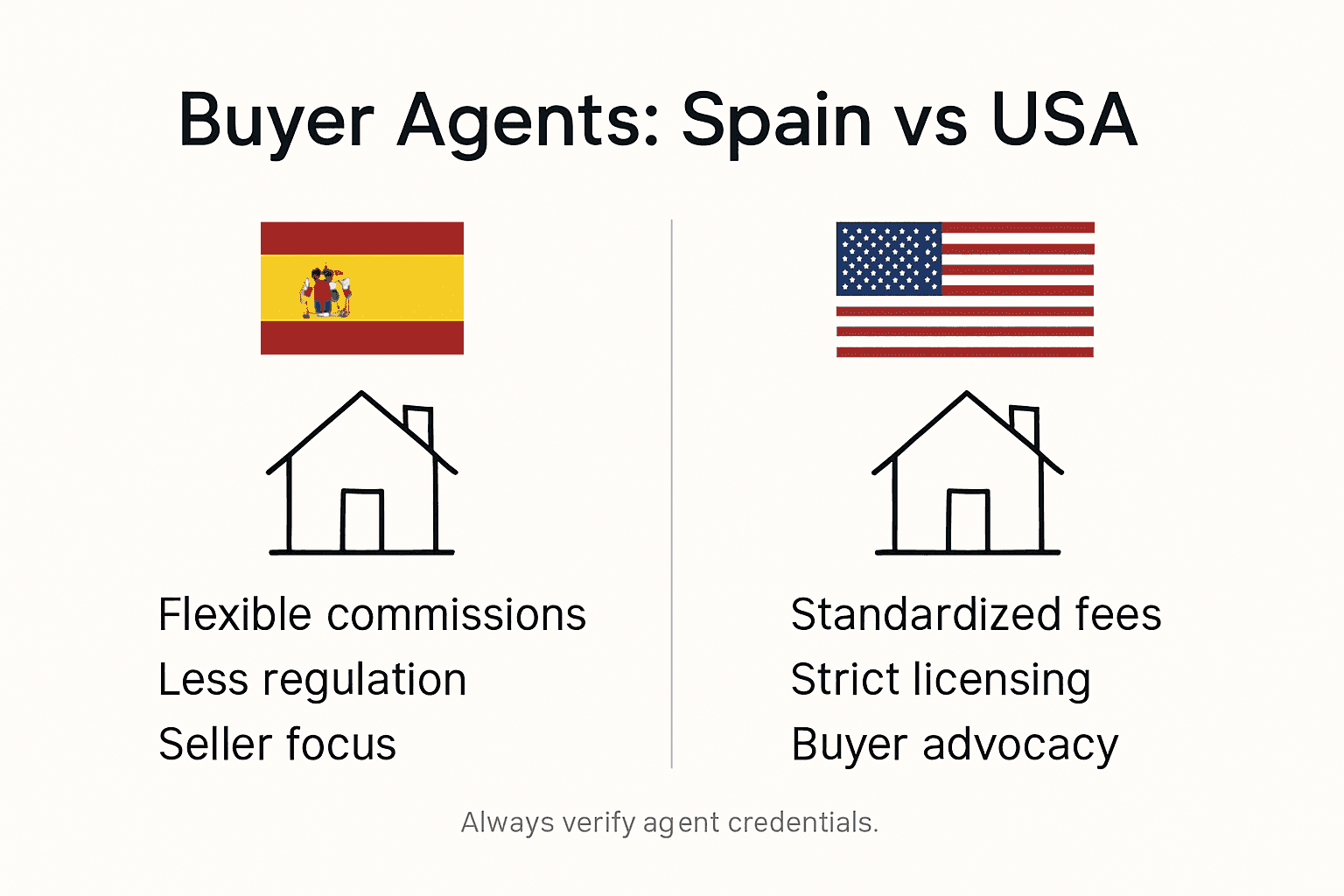
Key differences emerge in the legal obligations and professional responsibilities between U.S. and Spanish real estate agents. American agents operate under a strict fiduciary duty, legally mandated to prioritize their client’s interests, whereas Spanish agents traditionally have a more transactional approach. The National Association of Realtors in the U.S. provides additional ethical guidelines that go beyond basic legal requirements, creating a more comprehensive professional standard that many Spanish counterparts do not uniformly implement.
Pro Tip: When working with international real estate agents, always request documentation of their professional credentials and understand the specific legal frameworks governing their professional practice in their respective countries.
Here’s a concise comparison of key differences between U.S. and Spanish real estate agents:
| Aspect | United States Agents | Spanish Agents |
|---|---|---|
| Licensing | Strict, state-specific exams | Regional, less standardized |
| Fiduciary Duty | Legally mandated to buyers | Primarily commercial law standards |
| Fee Structure | Typical commission split | More negotiable, varies by region |
| Professional Association | NAR sets national standards | Local/regional associations |
| Buyer Representation | Exclusive, regulated options | Rare, not always exclusive |
Commission Structures and Compensation Models
Commission structures in real estate transactions represent a fundamental difference between the United States and Spanish markets. In the American system, buyer’s agents typically receive compensation through a commission split with the seller’s agent, usually ranging between 5% to 6% of the total property sale price. This commission is traditionally divided equally between both agents, meaning each receives approximately 2.5% to 3% of the transaction value.
The Spanish real estate market operates with a more variable and negotiable commission model. Unlike the standardized approach in the United States, Spanish agents often have more flexible fee structures that can vary significantly depending on the property type, location, and individual negotiation. Commissions in Spain generally range between 3% to 5%, with urban areas like Madrid and Barcelona potentially seeing higher rates. Importantly, these fees are typically paid by the seller, which differs from some international practices where buyers might bear additional agent costs.

Unique differences emerge in how these commissions are structured and negotiated. American real estate transactions typically have predetermined commission rates embedded in multiple listing service (MLS) agreements, creating a relatively uniform compensation model. In contrast, Spanish agents often negotiate their fees directly with clients, allowing for more personalized and adaptable pricing strategies. Understanding these nuanced compensation models is crucial for international buyers navigating property purchases in different real estate markets.
Pro Tip: Always clarify commission structures and payment responsibilities upfront before engaging a real estate agent to avoid unexpected financial surprises during your property transaction.
Buyer Protection and Fiduciary Duties Compared
In the United States, real estate buyer protection takes a highly structured approach. Exclusive buyer agents (EBAs) represent only buyers, deliberately avoiding any potential conflicts of interest that could arise from simultaneously representing sellers. This model ensures that the agent’s primary loyalty remains exclusively with the buyer throughout the entire transaction, providing a transparent and dedicated representation strategy.
The Spanish real estate market presents a markedly different landscape for buyer protection. Unlike the strict fiduciary model in the U.S., Spanish agents typically operate with more flexible representation standards. While legal frameworks exist to protect consumers, the agent’s obligations are less rigidly defined, and buyers must exercise more personal due diligence. The lack of a standardized exclusive buyer agent system means that agents may more frequently represent multiple interests in a single transaction.
Fiduciary duties in the American real estate context are legally binding and comprehensive. Real estate agents have a legal obligation to act in their client’s best interests, which includes providing full disclosure, maintaining confidentiality, and exercising reasonable care and diligence. In contrast, Spanish agents are primarily bound by general commercial law principles, which offer protection but do not mandate the same level of exclusive representation and comprehensive duty of care that American buyers have come to expect.
Pro Tip: When purchasing property internationally, always clarify the specific legal responsibilities and representation model of your real estate agent to understand the extent of protection and advocacy you can expect during your transaction.
Key Pitfalls for Americans Buying in Spain
American property buyers must navigate a significantly different real estate landscape in Spain, where fundamental market assumptions can lead to costly misunderstandings. Unlike the United States, Spain’s property market lacks strict regulatory oversight, meaning anyone can technically operate as a real estate agent, creating substantial risks for unsuspecting international buyers. The absence of standardized professional licensing can expose buyers to potential misinformation, incomplete property disclosures, and unprofessional representation.
Many Spanish agents primarily work on behalf of sellers, creating an inherent transparency challenge for foreign buyers who are accustomed to more buyer-centric representation. This fundamental difference means American buyers must be extraordinarily diligent, as they cannot assume the same level of fiduciary protection they would receive in the United States. Critical pitfalls include potential language barriers, complex legal documentation, varying regional property regulations, and limited access to comprehensive market information.
Additional challenges emerge in areas such as property valuation, legal compliance, and tax implications. American buyers often underestimate the complexity of Spanish property transactions, which involve intricate bureaucratic processes, different legal frameworks, and unique cultural negotiation practices. Potential risks include hidden property liens, incomplete ownership histories, unexpected renovation requirements, and complex inheritance laws that differ significantly from U.S. standards. Understanding these nuanced differences requires extensive research, local expertise, and potentially engaging specialized legal and real estate professionals who understand both American and Spanish property landscapes.
Pro Tip: Always work with a bilingual, certified real estate professional who has specific experience helping American buyers navigate the Spanish property market, and consider engaging an independent legal advisor to review all transaction documents before signing.
Below is a summary of top challenges American buyers may face when purchasing property in Spain:
| Challenge Area | Why It Matters | U.S. vs. Spain |
|---|---|---|
| Agent Regulation | Risk of unqualified agents | Strict in U.S., loose in Spain |
| Buyer Advocacy | Potential for biased advice | Standard in U.S., rare in Spain |
| Legal Procedures | Navigating complex paperwork | Familiar in U.S., different in Spain |
| Transparency | Risk of hidden problems | High in U.S., variable in Spain |
Navigate the Key Differences Between U.S. and Spanish Buyer Agents with Confidence
Buying property in Spain as an American can be challenging due to the major differences in agent regulations, fiduciary duties, and commission structures. The lack of strict licensing and exclusive buyer representation in Spain can leave you vulnerable to unclear advice and unexpected complications. You want trusted guidance that bridges these gaps and safeguards your interests throughout the process.
At ULI & LISA, we specialize in helping American buyers overcome these challenges. Using advanced AI-powered tools, we offer comprehensive and unbiased property searches across Mallorca while providing personalized, transparent support tailored to your unique needs. Don’t let unfamiliar Spanish regulations or agent practices put your investment at risk. Explore how we deliver trustworthy buyer advocacy unlike traditional Spanish agents at ULI & LISA. Get started today by visiting ULI & LISA and take control of your international real estate journey with confidence.
Frequently Asked Questions
What is the role of a buyer’s agent?
A buyer’s agent represents the buyer’s interests in real estate transactions, helping with property searches, price negotiations, and managing paperwork.
How do commission structures differ between buyer agents and realtors?
In the U.S., buyer agents typically receive 2.5% to 3% of the sale price as a commission, while in Spain, commissions are more negotiable and usually range from 3% to 5% of the sale price.
What are the legal obligations of real estate agents in the U.S. compared to other countries?
U.S. agents operate under strict fiduciary duties to prioritize their clients’ best interests, while agents in some other countries may not have the same level of obligation to buyers.
What challenges do American buyers face when purchasing property abroad?
American buyers often encounter unregulated agents, potential language barriers, complex legal processes, and varying transparency in property transactions compared to the U.S. market.
Recommended
- Why Choose Real Estate Agent: Complete Mallorca Guide - ULI & LISA Mallorca Property Blog
- Complete Guide to the Role of Buyer Agents - ULI & LISA Mallorca Property Blog
- Benefits of Using a Buyer Agent: Complete Guide - ULI & LISA Mallorca Property Blog
- What is a Buyer’s Agent? Understanding Their Role - ULI & LISA Mallorca Property Blog
- Yigal Realty