
TL;DR:
- Evaluating a Mallorca villa requires thorough legal, technical, and financial due diligence before signing any contract.
- Buyers are solely responsible for verifying property ownership, urbanistic compliance, and rental licenses under Spanish law.
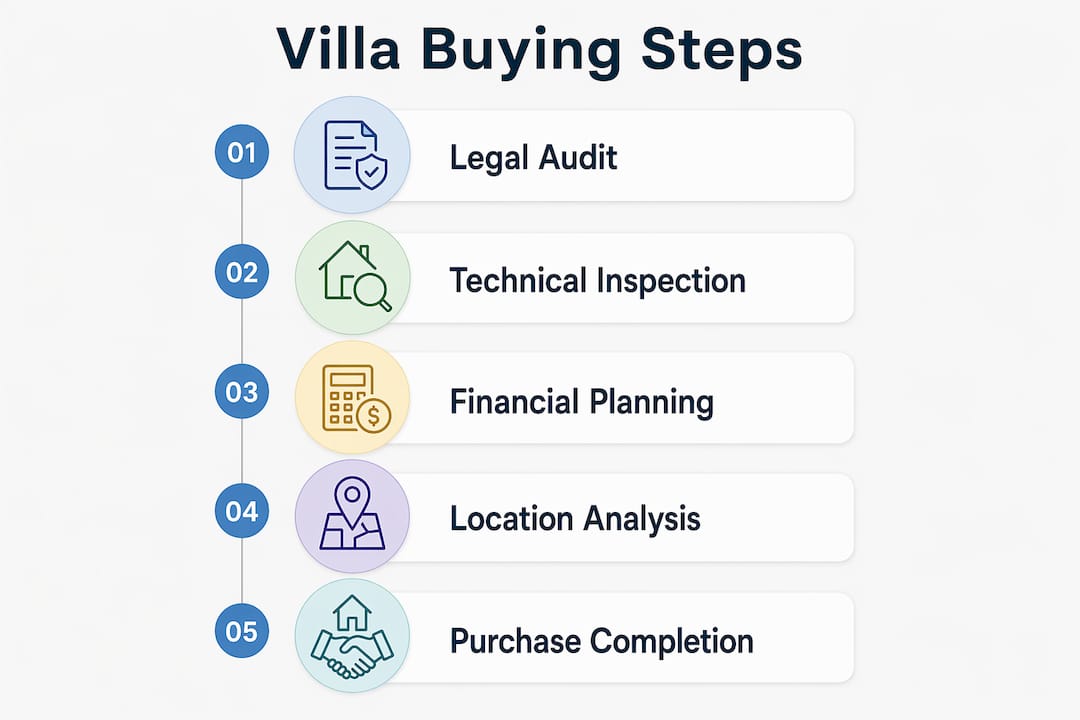
Evaluating a Mallorca villa requires a structured process combining legal audits, technical inspections, and financial due diligence before any contract is signed. Under Spanish property law, the “caveat emptor” principle places full responsibility on the buyer to verify every aspect of a property. This means the seller’s word, the notary’s review, or a glossy brochure for a luxury villa in Mallorca carries no legal protection for you. The due diligence process must include legal and urbanistic audits, technical inspections, and administrative and tax verification to avoid hidden defects and illegalities. Knowing how to evaluate Mallorca villas correctly is the single most important skill you bring to this purchase.
How to evaluate Mallorca villas: the legal checks that matter most
Legal due diligence is the foundation of any sound villa purchase in Mallorca. The checks you perform before signing protect you from risks that no amount of renovation budget can fix after the fact.
The core legal verification steps include:
- Title and ownership confirmation. Obtain a current Nota Simple from the Registro de la Propiedad. This document confirms the registered owner, the exact surface area, and any mortgages, liens, or encumbrances attached to the property.
- Urbanistic and planning compliance. The urbanistic audit must verify that the exact surface area matches registry records and detect any unpermitted constructions that cannot be legalized. Discrepancies between the physical property and registry records are more common than buyers expect.
- Administrative and tax status. Confirm that all municipal taxes, including the IBI (Impuesto sobre Bienes Inmuebles), are current. Outstanding debts transfer with the property under Spanish law, not with the seller.
- Holiday rental license verification. Checking rental licenses is critical for buyers seeking rental income, because not all properties in Mallorca can legally be rented out. The Balearic Islands government imposes strict caps on new tourist rental licenses in many municipalities.
- Zoning classification. Confirm whether the land is classified as urban, rustic, or protected. Buyers often underestimate the complexity of Mallorca’s zoning restrictions, especially in protected or rustic areas that limit renovations and expansions.
The buyer is solely responsible for verifying legal compliance. No third party in the transaction assumes this liability on your behalf.
Pro Tip: Hire an independent Spanish property lawyer, not one recommended by the selling agent, to conduct your legal audit. The conflict of interest in agent-referred lawyers is real and documented.
For a detailed walkthrough of the document verification process, the Uli-lisa guide on verifying property documents covers each step for international buyers.
What does a technical inspection reveal about a villa’s condition?
A legal audit tells you what the paperwork says. A technical inspection tells you what the building actually is. These are two entirely different things, and both are non-negotiable when assessing majorca luxury villas at the €1M+ level.
Structural and installation issues can exist even in legally compliant properties. A villa can hold a clean Nota Simple and still have a failing foundation, outdated electrical wiring, or a roof that requires full replacement within two years. The technical inspection must cover:
- Structural integrity. Foundation stability, load-bearing walls, and roof condition. Cracks in exterior walls can indicate settlement issues that are expensive to remediate.
- Mechanical and electrical systems. Inspect the electrical panel, plumbing, and HVAC systems. Many older Mallorca villas were built before current Spanish electrical standards (REBT) and require full rewiring to meet code.
- Moisture and façade condition. Moisture infiltration is the most commonly underreported defect in Mediterranean properties. Inspect terraces, flat roofs, and basement areas specifically.
- Renovation feasibility. Villa evaluations must address the feasibility of future renovation under local zoning and building regulations. A villa in a protected zone may prohibit the pool extension or guest house you are planning.
Pro Tip: Commission your technical inspection from an independent architect or aparejador (technical architect) registered in the Balearic Islands. They understand local construction methods, common failure points in island properties, and the permit requirements that govern any future works.
The Uli-lisa resource on property viewing tips provides a practical framework for what to observe during your initial visits before the formal inspection.

What are the full financial costs of buying a luxury villa in Mallorca?
The listed price of a luxury villa in Mallorca is not your total cost. Experienced buyers budget 10 to 15% extra beyond the villa price to cover taxes, notary fees, registry costs, and legal and technical audit fees. That figure on a €2 million property means €200,000 to €300,000 in transaction costs before you own the keys.
| Cost Component | Typical Range | Notes |
|---|---|---|
| Property Transfer Tax (ITP) | 8–11% of purchase price | Applies to resale properties; rate is progressive in the Balearics |
| Notary fees | €1,000–€3,000 | Scales with transaction value |
| Land Registry fees | €500–€2,000 | Mandatory for title registration |
| Legal audit (lawyer) | €2,000–€5,000+ | Independent lawyer strongly recommended |
| Technical inspection | €800–€2,500 | Architect or aparejador fee |
For a detailed breakdown of Spanish buying fees in 2026, including the progressive ITP rates specific to the Balearic Islands, review the current fee schedule before finalizing your budget.
Currency fluctuation adds another layer of complexity for US buyers. A purchase priced in euros means your effective dollar cost shifts with the EUR/USD rate between offer acceptance and closing. Buyers who lock in a forward contract with a currency specialist at the time of the reservation agreement protect themselves from adverse moves during the typical 60 to 90 day closing window. The comprehensive buying guide for Mallorca villas recommends treating currency risk as a budget line item, not an afterthought.
How does location affect investment value in Mallorca luxury villas?
Location in Mallorca is not a single variable. It determines rental income potential, resale liquidity, renovation permissions, and the lifestyle experience you actually get. Popular residential areas for investment and living include Santa Ponsa and Port d’Andratx, both noted for attracting international buyers and offering strong lifestyle amenities. These two areas illustrate the trade-off every buyer faces.
| Area | Buyer Profile | Rental License Availability | Renovation Flexibility |
|---|---|---|---|
| Port d’Andratx | Ultra-high-net-worth, privacy-focused | Highly restricted | Limited in protected zones |
| Santa Ponsa | Families, lifestyle buyers | More accessible | Moderate, urban classification |
| Palma Old Town | Urban lifestyle, culture | Very restricted | Heritage building constraints |
| Pollença / Alcúdia | Nature, rural lifestyle | Restricted in rustic zones | Heavily restricted |
The rental license question deserves direct attention. The Balearic government has frozen new tourist rental licenses in many zones. A villa without an existing license cannot generate legal short-term rental income, which directly affects your yield calculation and resale value to future investors. Verify license status as part of your legal audit, not as a secondary consideration.
Mallorca’s position as a stable European real estate market adds a macro-level argument for investment. The island’s constrained land supply, strong international demand, and Spain’s legal property ownership framework make it a recognized safe-haven asset class for high-net-worth buyers seeking a secure European base during periods of global uncertainty.
Common mistakes buyers make when evaluating Mallorca villas
The most expensive mistakes in Mallorca villa purchases follow a predictable pattern. Recognizing them in advance costs nothing. Discovering them after signing costs everything.
- Relying on seller-provided information. Due diligence must begin before signing any document, including reservation contracts. Seller disclosures in Spain carry no legal warranty equivalent to US disclosure requirements.
- Missing illegal extensions. Illegal extensions, planning noncompliance, and municipal sanctions are common risks identified through proper due diligence. A terrace, pool house, or garage added without a building permit can be subject to demolition orders.
- Skipping the technical inspection. Buyers who skip independent inspections to accelerate a deal routinely discover structural defects, moisture damage, or outdated systems after closing. The cost of an inspection is always less than the cost of the defects it would have found.
- Underestimating renovation restrictions. A villa in a rustic or protected zone may prohibit the additions you are planning. Confirm what is buildable before you price the renovation into your offer.
- Incomplete budget planning. Transaction costs of 10 to 15% are a known quantity. Buyers who fail to account for them either overpay for the property or face a liquidity shortfall at closing.
“The buyer who conducts thorough due diligence before the reservation agreement has the negotiating power. The buyer who skips it has none.”
The Uli-lisa guide on Mallorca property due diligence details the full process for protecting US buyers through each stage of the transaction.
Key takeaways
Evaluating Mallorca villas correctly requires legal, technical, and financial due diligence completed before any contract is signed, because the caveat emptor principle places full liability on the buyer.
| Point | Details |
|---|---|
| Legal audit is non-negotiable | Verify title, urbanistic compliance, tax status, and rental licenses before any commitment. |
| Technical inspection protects your budget | Independent architects identify structural defects and renovation restrictions that documents never reveal. |
| Budget 10–15% above the listed price | Transaction costs including ITP, notary, registry, and legal fees add significantly to the total outlay. |
| Location drives investment return | Rental license availability and zoning classification directly determine income potential and resale value. |
| Due diligence before reservation | Starting the process after signing a reservation contract is too late to protect your deposit. |
What I’ve learned about evaluating Mallorca villas after years in this market
Most buyers arrive in Mallorca with a clear picture of what they want and an underestimation of what they need to verify. The villa looks perfect. The location is right. The price feels fair. And then the legal audit reveals an unpermitted guest house, or the technical inspection finds a roof that needs full replacement, or the rental license turns out to be non-transferable. These are not edge cases. They are routine findings in a market where properties have changed hands multiple times and building regulations have tightened significantly over the past decade.
The single most valuable shift I see in experienced buyers is moving due diligence to the front of the process, not the back. The buyer’s comprehensive evaluation early in the process improves negotiation power and confidence. When you know exactly what a property costs to bring into full compliance, you negotiate from fact, not from hope.
Independent representation matters here in a way that is genuinely different from most real estate markets. In Mallorca, most agents represent the seller. Their incentive is to close the deal. An independent buyer agent’s incentive is to protect your purchase. That distinction is not philosophical. It determines which properties you see, which risks get flagged, and whether your offer reflects the property’s actual condition or its marketing presentation.
— Uli
How Uli-lisa protects your Mallorca villa investment
Uli-lisa operates exclusively as an independent buyer agent in Mallorca, representing only the buyer in every transaction. That means full access to the entire Mallorca property market across all agencies, with no conflict of interest and no seller-side incentive. For international buyers, particularly those based in the US, Uli-lisa coordinates the complete due diligence process, including legal audits, technical inspections, financial cost analysis, and rental license verification, so you arrive at closing with full confidence in what you are buying. Mallorca remains one of Europe’s most stable and secure real estate markets, and the right guidance makes the difference between a sound investment and a costly mistake. Start your safe property search in Mallorca with Uli-lisa today.
FAQ
What legal checks are required when buying a villa in Mallorca?
Buyers must verify title ownership via the Nota Simple, confirm urbanistic compliance, check for outstanding tax debts, and verify rental license status. The caveat emptor principle means the buyer bears full legal responsibility for these checks.
How much should I budget beyond the listed price for a Mallorca villa?
Budget an additional 10 to 15% of the purchase price to cover property transfer tax, notary fees, land registry costs, and legal and technical audit fees. On a €2 million villa, that represents €200,000 to €300,000 in transaction costs.
Can all Mallorca villas be legally rented out as holiday properties?
No. The Balearic Islands government has frozen new tourist rental licenses in many municipalities. Buyers seeking rental income must verify that an existing, transferable license is attached to the property before purchase.
What does a technical inspection find that a legal audit does not?
A technical inspection identifies physical defects including structural issues, moisture infiltration, outdated electrical systems, and roof condition. These problems can exist in legally compliant properties and are invisible in title documents.
Which areas of Mallorca offer the best investment potential for luxury villas?
Santa Ponsa and Port d’Andratx consistently attract international buyers and offer strong resale liquidity. Investment potential depends on rental license availability, zoning classification, and proximity to amenities, all of which vary significantly by location.
Recommended
- How to Evaluate Mallorca Real Estate: A Comprehensive Guide - ULI & LISA Mallorca Property Blog
- How to Evaluate Mallorca Real Estate: A Comprehensive Guide - ULI & LISA Mallorca Property Blog
- How to Navigate Mallorca Real Estate Market: Luxury Buyer’s Guide - ULI & LISA Mallorca Property Blog
- How to Navigate Mallorca Real Estate Market: Luxury Buyer’s Guide - ULI & LISA Mallorca Property Blog